


Pashinyan warns that Black Shirts threaten Armenian democracy

Armenian prime minister Nikol Pashinyan has warned of a threat to democracy in the country from groups of "black shirts" who are planning to use violence to distabilise the political situation. The prime minister told a meeting of the cabinet of Ministers in the capital Yerevan on Thursday morning (6  June) that any kind of promotion of violence and hatred in Armenia must receive strong counter-action,

"One year ago a non-violent, velvet revolution took place in Armenia and afterwards a number of forces, including those directly or indirectly linked with the former corrupt system, attempted to create a certain space of political activities for themselves. This is natural in any democratic country. However, after one year of attempts and activities these forces finally understood that they are irreversibly marginalised, and lately faced with the prospect of not receiving any political support, certain circles decided to carry out promotion of political legitimisation of violence in Armenia. In this context an organised campaign is being carried out, the main message being that they are preparing to solve political issues through violence. And these messages and rhetoric are now more and more organised. We have operative information that a certain segment of these circles decided to form groups of so-called men-in-black, who will tour around town in an attempt to create a certain mood, to stand out with a certain behavior and more," Pashinyan said.

In this context, the PM noted that in a country where a non-violent revolution has won, and where calls for violence are taking place, the response of the law enforcement bodies cannot be a velvet one. "In such conditions the law enforcement system must give a very strong counter-blow to all such occurrences", Pashinyan said.

The prime minister said that he had spoken about the issue with Police Chief Valery Osipyan in the morning.

"Regarding these men-in-black groups, they must be located, their clothing problem must be solved, they should be given colorful bow ties, and seen off towards a normal, civilized and law abiding life with the brightest possible flowers," the prime minister said.

"This is a matter of public safety and national security. And treating these issues only as infringements of the criminal code in my opinion is not enough. If there is a need then legislative changes must be initiated, and the promotion of violence and hatred must receive a very strong counteraction. I want to emphasize that it doesn't matter whatsoever whether these persons carrying out the promotion of violence or hatred are acting as supporters or opposition of the government. Anyone promoting violence in Armenia must receive a strong counterblow. I want you to understand correctly, this isn't about political activities, criticism or strong criticism, which is irreversible guaranteed in Armenia", the prime minister said, adding that the counterblow to the promotion of violence must be "iron-hard".

source: commonspace.eu with armenpress.am and agencies.

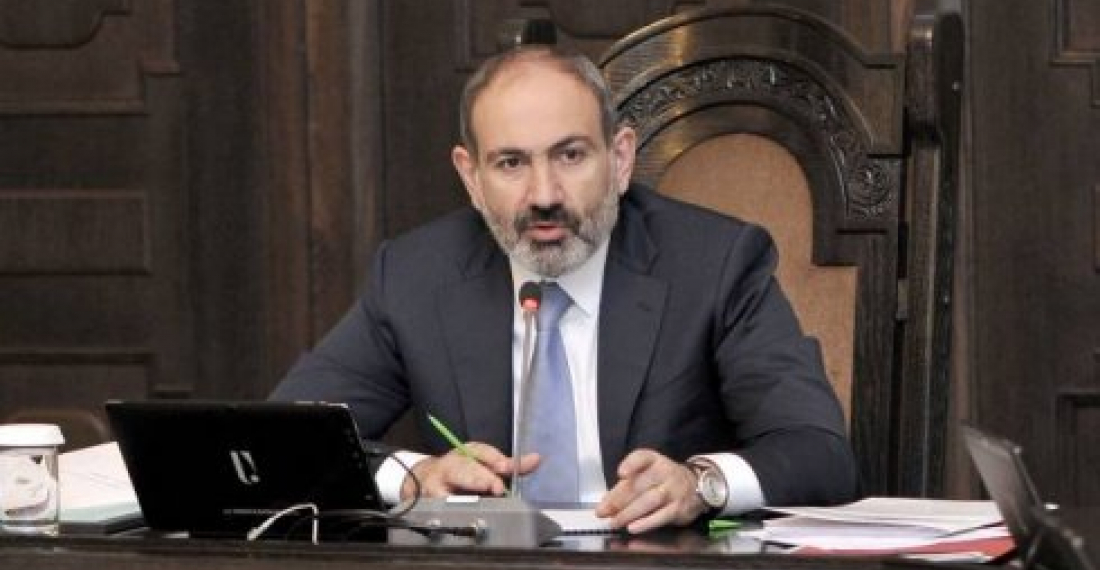
Photo: Nikol Pashinyan


Related articles

Editor's choice
News
Borrell tells the European Parliament that the situation in Afghanistan was critical, but the EU will remain engaged

Borrell tells the European Parliament that the situation in Afghanistan was critical, but the EU will remain engaged

Borrell underlined that the European Union will make every effort to support the peace process and to remain a committed partner to the Afghan people. "Of course, we will have to take into account the evolving situation, but disengagement is not an option.  We are clear on that: there is no alternative to a negotiated political settlement, through inclusive peace talks.
Editor's choice
News
NATO Chief says war is on Europe's doorstep, and warns against complacency

NATO Chief says war is on Europe's doorstep, and warns against complacency

Russia could attack a NATO country within the next five years, the Secretary General of NATO, Mark Rutte, said in a stark new warning. "NATO's own defences can hold for now," Rutte warned in Berlin, but conflict was "next door" to Europe, and he feared "too many are quietly complacent, and too many don't feel the urgency, too many believe that time is on our side. "Russia is already escalating its covert campaign against our societies," Rutte said in a speech in Germany. "We must be prepared for the scale of war our grandparents or great-grandparents endured." Earlier this month, Russia's President Vladimir Putin said his country was not planning to go to war with Europe, but it was ready "right now" if Europe wanted to - or started a war. But similar reassurances were given by Moscow in 2022, just before 200,000 Russian troops crossed the border and invaded Ukraine. Putin has accused European countries of hindering US efforts to bring peace in Ukraine - a reference to the role Ukraine's European allies have recently played in trying to change a US peace plan to end the war, whose initial draft was seen as favouring Russia. But Putin was not sincere, Nato's secretary-general said in the German capital, Berlin. Supporting Ukraine, he added, was a guarantee for European security. "Just imagine if Putin got his way; Ukraine under the boot of Russian occupation, his forces pressing against a longer border with Nato, and the significantly increased risk of an armed attack against us." Russia's economy has been on a war footing for more than three years now - its factories churn out ever more supplies of drones, missiles and artillery shells. According to a recent report by the Kiel Institute for the World Economy, Russia has been producing each month around 150 tanks, 550 infantry fighting vehicles, 120 Lancet drones and more than 50 artillery pieces. The UK, and most of its Western allies, are simply not anywhere near this point. Analysts say it would take years for Western Europe's factories to come close to matching Russia's mass-production of weapons. "Allied defence spending and production must rise rapidly, our armed forces must have what they need to keep us safe," the Nato chief said.

Popular

Editor's choice
News
NATO Chief says war is on Europe's doorstep, and warns against complacency

NATO Chief says war is on Europe's doorstep, and warns against complacency

Russia could attack a NATO country within the next five years, the Secretary General of NATO, Mark Rutte, said in a stark new warning. "NATO's own defences can hold for now," Rutte warned in Berlin, but conflict was "next door" to Europe, and he feared "too many are quietly complacent, and too many don't feel the urgency, too many believe that time is on our side. "Russia is already escalating its covert campaign against our societies," Rutte said in a speech in Germany. "We must be prepared for the scale of war our grandparents or great-grandparents endured." Earlier this month, Russia's President Vladimir Putin said his country was not planning to go to war with Europe, but it was ready "right now" if Europe wanted to - or started a war. But similar reassurances were given by Moscow in 2022, just before 200,000 Russian troops crossed the border and invaded Ukraine. Putin has accused European countries of hindering US efforts to bring peace in Ukraine - a reference to the role Ukraine's European allies have recently played in trying to change a US peace plan to end the war, whose initial draft was seen as favouring Russia. But Putin was not sincere, Nato's secretary-general said in the German capital, Berlin. Supporting Ukraine, he added, was a guarantee for European security. "Just imagine if Putin got his way; Ukraine under the boot of Russian occupation, his forces pressing against a longer border with Nato, and the significantly increased risk of an armed attack against us." Russia's economy has been on a war footing for more than three years now - its factories churn out ever more supplies of drones, missiles and artillery shells. According to a recent report by the Kiel Institute for the World Economy, Russia has been producing each month around 150 tanks, 550 infantry fighting vehicles, 120 Lancet drones and more than 50 artillery pieces. The UK, and most of its Western allies, are simply not anywhere near this point. Analysts say it would take years for Western Europe's factories to come close to matching Russia's mass-production of weapons. "Allied defence spending and production must rise rapidly, our armed forces must have what they need to keep us safe," the Nato chief said.

