Moldova votes in crucial parliamentary elections

Moldova is voting in crucial parliamentary elections that will determine the country's future.

Sunday's general election will be the most crucial since Moldova gained independence from the Soviet Union in 1991. Russia is doing all it can to divert the country from its European course.

If a flood of videos on TikTok is to be believed, the people of Moldova are currently living through a reign of terror.

These short videos claim that the country is being governed by a "dictatorship" of its pro-European President, Maia Sandu, and the ruling liberal-conservative Action and Solidarity Party (PAS).

They also allege that this "puppet regime" has sold itself to the EU and NATO and US billionaire George Soros with a view to destroying Moldova's agriculture, "introducing LGBTQ ideology" and leading the country into a war against the Russian Federation.

One of the people who posts such things on TikTok almost daily is former President Igor Dodon, a devoted follower of Russian President Vladimir Putin.

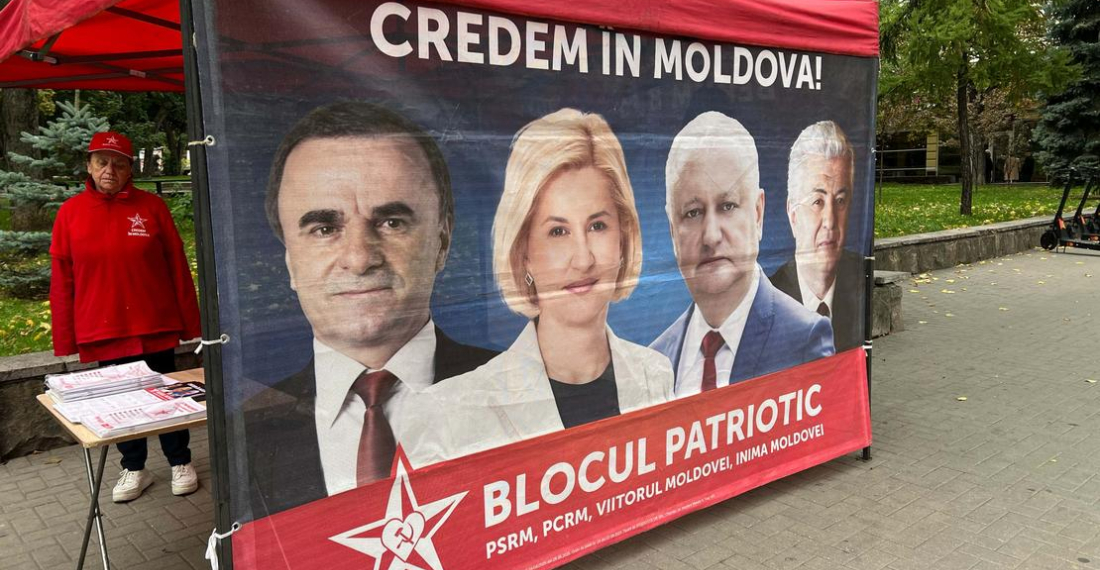
Dodon is leader of the Party of Socialists of the Republic of Moldova (PSRM) and head of the Patriotic Electoral Bloc alliance. The logo of the alliance features a red-and-white star surrounding a heart with the Soviet hammer and sickle at its center.

Dodon describes himself as right-wing and committed to "traditional values," closing his videos with the Orthodox Christian salutation "God help us!"

This blend of hatred of Europe and the West, Soviet nostalgia, loyalty to the Kremlin, Orthodox Christian piety and right-wing populism appeals to a large part of Moldovan society, particularly in view of the precarious economic situation of many people in the country, especially pensioners.

On Sunday, Moldovans go to the polls to elect a new parliament. This will be the first scheduled general election since Moldova and Ukraine were granted candidate status by the EU in 20

For months now, the poll has been seen as a pivotal election and one that could take the country either further along the road to the EU or back to Russia.

Opinion polls in the country are considered notoriously unreliable. The unpredictability of the vote is further compounded by the fact that almost half of all voters have still not made up their mind who they are going to vote for.

Even though Sandu's liberal-conservative, pro-European, anti-corruption civil rights party PAS is expected to remain the strongest party, it might lose the absolute majority it got in 2021.

Two other electoral alliances that opinion polls indicate will be represented in the new parliament are both clearly pro-Russian.

These are the Patriotic Electoral Bloc and the political alliance known as Alternative, which was founded by Mayor of Chisinau, Ion Ceban.

Our Party (PN) is another party that could enter parliament. It was founded by businessman Renato Usatii, a political adventurer and populist who made his fortune in Russia and is hard to pin down politically.

Usatii could end up holding the balance of power and determining whether the country keeps its pro-European government or gets a pro-Russian one.

Russia is doing everything it can to sway the election in its favour.

One way of doing so is the buying of votes via app. Last year, up to 300,000 voters registered for the app. At the time, the Moldovan government spoke of an "unprecedented hybrid attack" on the country.

The buying of votes is coordinated by a network run by the Moldovan-Israeli businessman Ilan Shor, who is commissioned by people in the Russian secret services and, ultimately, the Kremlin.

Shor was the mastermind behind what is known in Moldova as the "theft of the century," where a billion dollars was stolen from Moldova's banking system by means of complex lending structure between 2012 and 2014.

Sentenced to 15 years in prison in Moldova, Shor fled first to Israel in 2019 and later to Russia. Several parties, which he founded specially for this election, have been banned.  

For months now, the Moldovan police have been warning citizens not to get mixed up in vote-buying. Unfortunately, however, they don't seem to have been very successful. Raids against people involved in electoral fraud and coordinating the vote-buying scheme and arrests are being made across the country almost every day.

source:commonspace.eu with Deutche Welle (Cologne)

photo: Opposition n posters in Moldova's elections.
 

Related articles

Editor's choice
News
Council of Europe launches new International Claims Commission for Ukraine

Council of Europe launches new International Claims Commission for Ukraine

Thirty-four countries and the European Union have signed a new convention establishing an International Claims Commission for Ukraine at a diplomatic conference co-hosted by the 46-nation Council of Europe and the Netherlands in the Hague. The diplomatic conference was attended by leaders and high-level representatives from over 50 states, including the President of Ukraine, Volodymyr Zelenskyy, the President of the Republic of Moldova, Maia Sandu, and the Prime Minister of the Netherlands, Dick Schoof.  “Today marks a major step forward in ensuring accountability for Ukraine. The International Claims Commission represents justice and hope for tens of thousands of victims—our determination that those who have suffered will not be forgotten. I call for quick ratifications so we can get the commission rapidly up and running for the people of Ukraine,” said Council of Europe Secretary General Alain Berset. Ukrainian President Volodymyr Zelenskyy said: “We expect that every mechanism for compensation from the Register of Damage and Claims Commission to the actual payments – will start working and receive strong and sufficient international support, so that people can truly feel that any kind of damage caused by the war can be compensated. This war, and Russia’s responsibility for it, MUST become a clear example – so that others learn not to choose aggression.” “Accountability is about creating the conditions for peace that endures. And therefore, accountability is a condition of security – today and for the future. But accountability is not only about Ukraine. And it is not only about one aggressor and one victim. Accountability is about Europe. About every country in Europe. It is about whether Europe, as a whole, is willing to defend its peace,” said Maia Sandu, President of the Republic of Moldova, which currently holds the Presidency of the Council of Europe’s Committee of Ministers. The Prime Minister of the Netherlands, Dick Schoof, said: “Every day Russia is deliberately bombarding homes, destroying businesses and damaging infrastructure in Ukraine. Russia must compensate Ukraine for the damage caused. That is why we have launched the International Claims Commission for Ukraine and we are honoured to host it.” The International Claims Commission will be the second part of a comprehensive compensation mechanism related to Russia’s war of aggression, building on the existing Register of Damage for Ukraine. The claims commission will be established within the framework of the Council of Europe and will also be open to other countries. The Register of Damage for Ukraine, created in 2023, collects and records compensation claims submitted by individuals, organisations and public bodies in Ukraine. Forty-four states and the European Union have so far joined the Register, which has already received 86,000 claims. The International Claims Commission will review, assess and decide upon claims submitted to the Register of Damage for Ukraine and determine the amount of compensation, if any, which is due in each case. The convention establishing the commission will enter into force once it has been ratified by 25 signatories, as long as sufficient funds have been secured to support its initial work.

Popular

Editor's choice
News
Council of Europe launches new International Claims Commission for Ukraine

Council of Europe launches new International Claims Commission for Ukraine

Thirty-four countries and the European Union have signed a new convention establishing an International Claims Commission for Ukraine at a diplomatic conference co-hosted by the 46-nation Council of Europe and the Netherlands in the Hague. The diplomatic conference was attended by leaders and high-level representatives from over 50 states, including the President of Ukraine, Volodymyr Zelenskyy, the President of the Republic of Moldova, Maia Sandu, and the Prime Minister of the Netherlands, Dick Schoof.  “Today marks a major step forward in ensuring accountability for Ukraine. The International Claims Commission represents justice and hope for tens of thousands of victims—our determination that those who have suffered will not be forgotten. I call for quick ratifications so we can get the commission rapidly up and running for the people of Ukraine,” said Council of Europe Secretary General Alain Berset. Ukrainian President Volodymyr Zelenskyy said: “We expect that every mechanism for compensation from the Register of Damage and Claims Commission to the actual payments – will start working and receive strong and sufficient international support, so that people can truly feel that any kind of damage caused by the war can be compensated. This war, and Russia’s responsibility for it, MUST become a clear example – so that others learn not to choose aggression.” “Accountability is about creating the conditions for peace that endures. And therefore, accountability is a condition of security – today and for the future. But accountability is not only about Ukraine. And it is not only about one aggressor and one victim. Accountability is about Europe. About every country in Europe. It is about whether Europe, as a whole, is willing to defend its peace,” said Maia Sandu, President of the Republic of Moldova, which currently holds the Presidency of the Council of Europe’s Committee of Ministers. The Prime Minister of the Netherlands, Dick Schoof, said: “Every day Russia is deliberately bombarding homes, destroying businesses and damaging infrastructure in Ukraine. Russia must compensate Ukraine for the damage caused. That is why we have launched the International Claims Commission for Ukraine and we are honoured to host it.” The International Claims Commission will be the second part of a comprehensive compensation mechanism related to Russia’s war of aggression, building on the existing Register of Damage for Ukraine. The claims commission will be established within the framework of the Council of Europe and will also be open to other countries. The Register of Damage for Ukraine, created in 2023, collects and records compensation claims submitted by individuals, organisations and public bodies in Ukraine. Forty-four states and the European Union have so far joined the Register, which has already received 86,000 claims. The International Claims Commission will review, assess and decide upon claims submitted to the Register of Damage for Ukraine and determine the amount of compensation, if any, which is due in each case. The convention establishing the commission will enter into force once it has been ratified by 25 signatories, as long as sufficient funds have been secured to support its initial work.