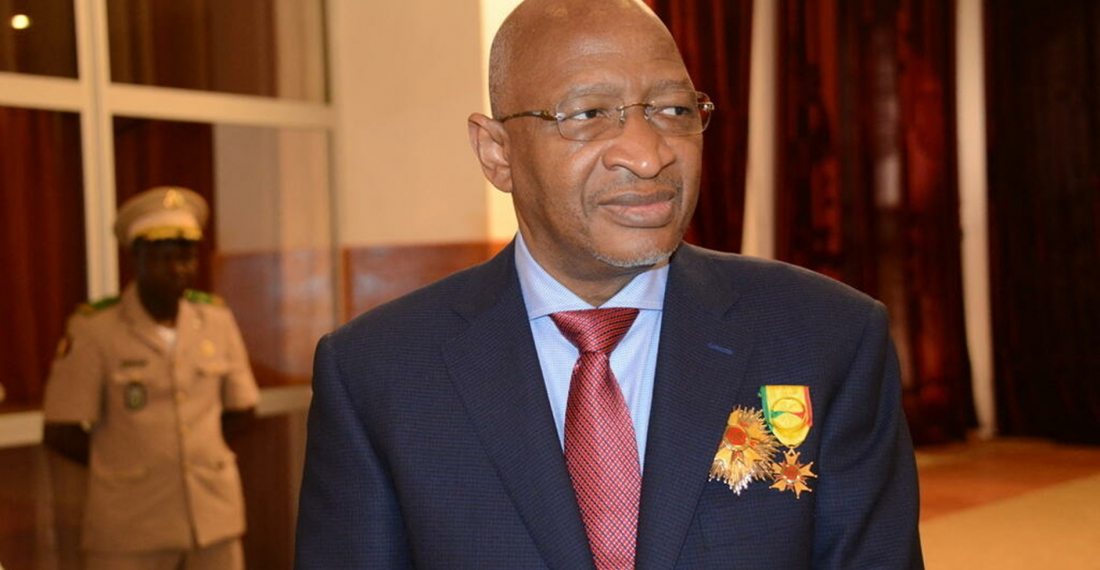
Former Malian Prime Minister Soumeylou Boubèye Maïga (2017-2019) died on Monday 21 March in detention in Bamako, aged 67. Boubèe Maiga, who was facing corruption charges, died in a private clinic named Pasteur, where he had been transferred on 16 December for intensive care.
Despite numerous alerts from his relatives about his deteriorating health, and requests from several West African leaders for medical evacuation, the transfer had been refused by the ruling military junta.
In a statement, the Malian transitional government announced that he had died of a “long illness” and offered their condolences to Boubèye Maiga's family.
Mr Maiga, 67, was arrested last August over allegations of corruption in the purchase of a presidential plane during the rule of ex-president Ibrahim Boubacar Keita, ousted in a military coup a year earlier.
Boubèye Maïga was awaiting trial, as the charges date back to 2014 when he was still minister of defence under Keita’s administration.
These accusations did not prevent him from becoming Prime Minister in 2017, but the massacre of more than 160 Fulani herders by an ethnic vigilante group and a series of demonstrations denouncing the poor management of the country forced him to resign.
Boubèye Maïga was considered a heavyweight in Malian politics.
A sports journalist by profession, but also a specialist in security and defence issues, the man nicknamed "the Tiger" became involved in Malian politics very early on.
In March 1991, he took part in the revolution and then worked for the three following heads of state. But it was really under the presidency of Alpha Oumar Konaré that his political ascent began in earnest as he became Director of State Security, and then Minister of Defence. He forged a reputation as a tough politician, notably by foiling a coup d'état, before running, unsuccessfully, in the 2007 Malian presidential election.
The newly elected President Amadou Toumani Touré appointed him Minister of Foreign Affairs and in 2013, the then-President Ibrahim Boubacar Keïta appointed Mr Maiga as Minister of Defence. It is therefore with his experience and his extensive network of connections that Mr Maiga was promoted by President Keita as Prime Minister in 2017, contributing largely to the re-election of his leader in 2018.