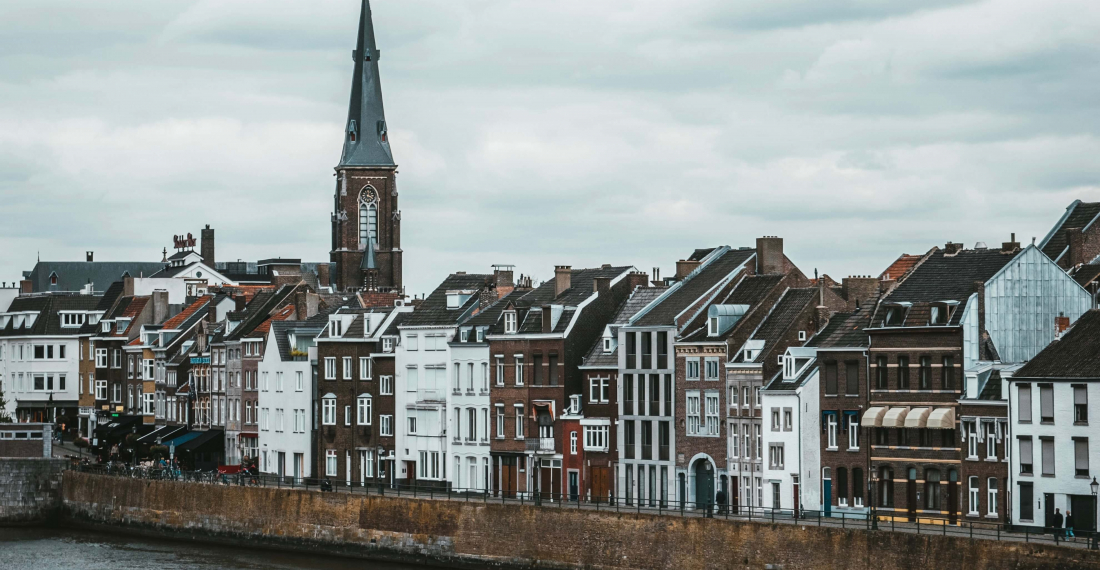
Maastricht hosts European Citizens' Summit on ‘Conference on the Future of Europe'

The European Institute of Public Administration (EIPA) and Studio Europa of Maastricht University have been selected to organise a European Citizens' Summit in the Dutch city, Maastricht, as part of the Conference on the Future of Europe.

The Citizens' Summit in Maastricht will take place from 14 until 16 January 2022 and will address the themes of the EU in the world and migration. Besides Maastricht, citizens' panels will be organised in Dublin, Florence and Warsaw.

The Conference on the Future of Europe is a joint initiative of the European Parliament, the European Council and the European Commission whereby European citizens can express their views on the future of Europe through a series of debates and discussions.
 

source: commonspace.eu with agencies
photo: Maastricht. archive

Related articles

Editor's choice
News
KEY NATO SUMMIT TO OPEN IN ANKARA TODAY

KEY NATO SUMMIT TO OPEN IN ANKARA TODAY

A key NATO summit will open in Ankara today, Tuesday, 7th July. Leaders of the members of the alliance, including US president Donald Trump, are travelling to the Turkish capital for the summit. On Monday (6 July) Turkish President Recep Tayyip Erdoğan met in Ankara with NATO Secretary General Mark Rutte. According to Turkish media, the parties discussed the agenda for the upcoming NATO summit, as well as current regional and global issues. Erdogan stated that Turkey had completed preparations for the leaders' meeting and expressed hope that the summit would be successful. According to the Turkish president, the key topics of the summit will be collective defense and expanding allied cooperation in the defense industry. He also noted the importance of the Defense Industry Forum, which will be held on the sidelines of the NATO summit. On Monday (6 July 2026), NATO Secretary General Mark Rutte previewed the Ankara Summit, explaining that it will focus on delivery. Allies are expected to demonstrate how they are transforming the commitments made at The Hague last year into stronger armed forces, increased defence production, and more capabilities needed to defend the Alliance. The Secretary General highlighted the progress made by European Allies and Canada in investing 5% of GDP on defence by 2035.  “Here in Ankara, I expect nations to present clear, concrete and credible plans to reach that 5% goal. And the evidence we see so far is impressive,” said Mr Rutte, “Just one year into a 10-year project, we see that European Allies and Canada are already investing around 4% of their GDP in defence and security.” The Secretary General set out how NATO Allies are turning the extra cash into capabilities. “We will announce tens of billions in new contracts that will provide the crucial kit we need to deter and defend”, said Mr Rutte in Ankara, “This will help grow our economies, spread innovation and support hundreds of thousands of jobs, on both sides of the Atlantic.” Support for Ukraine will also be an important focus of the Summit of Allied Heads of State and Government. “Allies and NATO partners must continue to ensure Ukraine gets what it needs,” said the Secretary General, “And let me be clear, all Allies need to pull their weight, so that our support to Ukraine continues to flow. Because Ukraine’s security is so closely linked with our own.” Please read more on our live blog
Editor's choice
News
Nearly half a million Russians killed in Ukraine but Moscow far from reaching its objectives despite the bombing of civilian targets in Kyiv (updated)

Nearly half a million Russians killed in Ukraine but Moscow far from reaching its objectives despite the bombing of civilian targets in Kyiv (updated)

Nearly half a million Russians have died in fighting in Ukraine, as Vladimir Putin continues to push his country to the brink. His aim of completely controlling the Donbass region, which he annexed after invading Ukraine in 2022, seems more distant than ever. However, Putin can still bomb civilian targets in Kyiv. The Ukrainian Air Force says a "serious shortage" of interceptor missiles meant none of the 23 ballistic missiles fired by Russia at Kyiv on Sunday night were shot down. At least 15 people were killed in the second large-scale Russian attack on the Ukrainian capital in a week, officials said. Seven more were killed in the wider Kyiv region. Ukrainian President Volodymyr Zelensky has appealed for allies to take "strong decisions" at this week's Nato summit to provide Kyiv with air defences. After the strikes, he said the Ukrainian military had been successful in intercepting cruise missiles and drones – but not ballistic missiles. Sunday's "massive Russian attack" consisted of 68 missiles and 351 strike drones, he said in a post on X. The air force shot down or suppressed 37 missiles and 326 drones, it said. Zelensky warned that Moscow would continue to hit residential buildings as long as defensive Patriot missiles "remain in our allies' stockpiles". After a bleak winter which saw months of fierce Russian bombing of Ukrainian energy infrastructure, the future is beginning to look more positive for Kyiv Russia’s frontline advances have slowed almost to a halt, as Ukrainian counter-attacks and defensive tactics become more effective. Successes in local counterattacks have become more frequent, as Ukrainian forces scale up their use of ground robots and sshort-range drone warfare. The Centre for Strategic and International Studies (CSIS) paints a bleak picture of Russian casualties. Between February 2022 and June 2026, there have been as many as 450,000 Russian battlefield deaths and 1.4 million casualties, it says. The UK’s biggest spy agency, GCHQ, has produced a similar figure. In May, GCHQ director Anne Keast-Butler said in her inaugural public speech that nearly 500,000 Russian soldiers had been killed. The massive death toll is a product of several factors, including an attritional warfare strategy in which Moscow sends thousands of troops towards fortified Ukrainian defences, attempting to grind Kyiv’s forces down with sheer manpower. (click image to read more)

Popular

Editor's choice
Interview
Thursday Interview: Murad Muradov

Thursday Interview: Murad Muradov

Today, commonspace.eu starts a new regular weekly series. THURSDAY INTERVIEW, conducted by Lauri Nikulainen, will host  persons who are thinkers, opinion shapers, and implementors in their countries and spheres. We start the series with an interview with Murad Muradov, a leading person in Azerbaijan's think tank community. He is also the first co-chair of the Action Committee for a new Armenian-Azerbaijani Dialogue. Last September he made history by being the first Azerbaijani civil society activist to visit Armenia after the 44 day war, and the start of the peace process. Speaking about this visit Murad Muradov said: "My experience was largely positive. My negative expectations luckily didn’t play out. The discussions were respectful, the panel format bringing together experts from Armenia, Azerbaijan, and Turkey was particularly valuable during the NATO Rose-Roth Seminar in Yerevan, and media coverage, while varied in tone, remained largely constructive. Some media outlets though attempted to represent me as more of a government mouthpiece than an independent expert, which was totally misleading.  Overall, I see these initiatives as important steps in rebuilding trust and normalising professional engagement. The fact that soon a larger Azerbaijani civil society visits to Armenia followed, reinforces the sense that this process is moving in the right direction." (click the image to read the interview in full)