Incidents on Armenia-Azerbaijan border

Both Armenia and Azerbaijan have reported incidents at the northern sector of their international border on Monday evening. The two sides have accused each other of targetting civilian settlements.

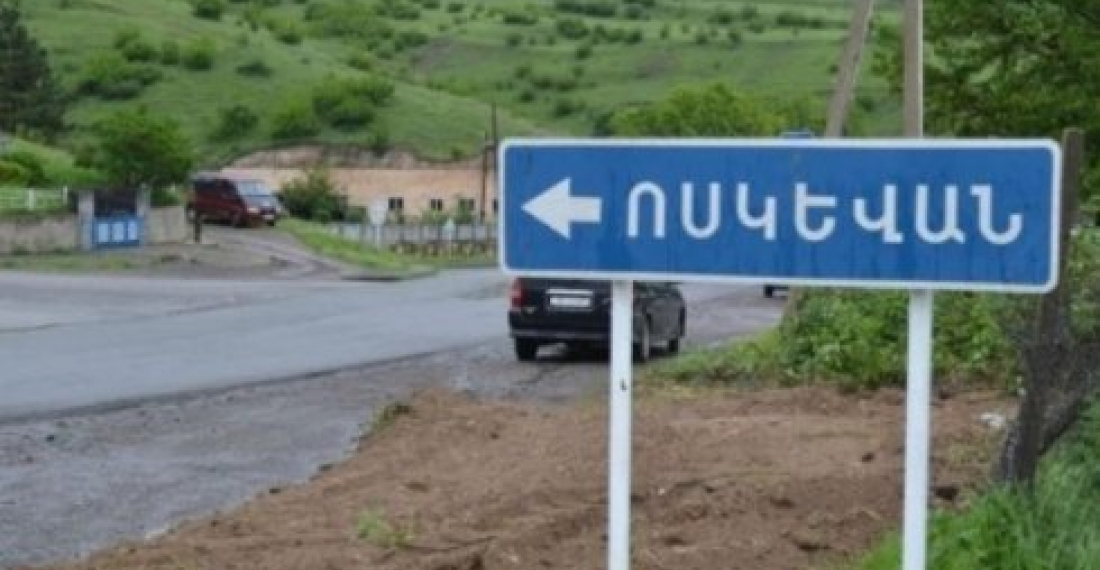
The Azerbaijani side says that starting from 17:30 on March 30, "in the village of Gushchu Ayrim, Gazakh region, houses and civilian vehicles were intensively fired at by large-caliber weapons of the Armenian Armed Forces located near the villages of Boganis and Voskevan in the Noyemberyan region of Armenia. Enemy provocations were prevented, and the positions of the Armenian Armed Forces, which opened fire on our settlement and civilian vehicles, were silenced by retaliatory fire.".

On its part, the Armenian side said that at 19.00 on Monday "the Azerbaijani side launched a diversion penetration attempt on the Armenian positions in the Noyemberyan region of Tavush region. Due to the actions of the Armenian forces, the enemy was thrown back, the information about the losses is being clarified. The Armenian side has no casualties, as a result of the operations two soldiers were slightly injured. At the same time, the enemy targeted the villages of Baghanis and Voskevan, and a boy who was on the balcony was injured".

The State Border Service of Azerbaijan in a statement on Tuesday morning denied they had targeted civilian settlements.

Armenian media sources report that the boy who was injured in the incident is from the Voskevan and that he has a bullet wound to his chest. The boy has now been transferred to a hospital in Yerevan.

related content on commonspace.eu: The conflict that keeps ticking despite the pandemic

source: commonspace.eu with agencies



Related articles

Editor's choice
News
"Peace Bridge" between Armenia and Azerbaijan takes next step

"Peace Bridge" between Armenia and Azerbaijan takes next step

From 10 to 12 April 2026, within the framework of the “Peace Bridge” Initiative, another bilateral roundtable with the participation of representatives of Azerbaijani and Armenian civil society is taking place, this time in Azerbaijan. "Peace Bridge" was launched in November 2025 with the support of the governments of Armenia and Azerbaijan, to foster dialogue and direct engagement between civil society representatives from Azerbaijan and Armenia. On Friday, 10 April, an Armenian group arrived in Azerbaijan via the land border, crossing through a formally delimited and demarcated section and undergoing all relevant border and passport control procedures.  According to the website of the Armenian public broadcaster, 1lurer.am, this weekend's meeting  includes discussions on the current state of the peace process; the activities undertaken by participants in the “Peace Bridge” Initiative in their respective countries and the results of those efforts; as well as the situation in the region. The meeting agenda also includes separate sessions devoted to efforts to advance peace at the societal level and to increase trust during the next stages of the peace process. (click picture to read the news item in full)

Popular

Editor's choice
Interview
Thursday Interview: Murad Muradov

Thursday Interview: Murad Muradov

Today, commonspace.eu starts a new regular weekly series. THURSDAY INTERVIEW, conducted by Lauri Nikulainen, will host  persons who are thinkers, opinion shapers, and implementors in their countries and spheres. We start the series with an interview with Murad Muradov, a leading person in Azerbaijan's think tank community. He is also the first co-chair of the Action Committee for a new Armenian-Azerbaijani Dialogue. Last September he made history by being the first Azerbaijani civil society activist to visit Armenia after the 44 day war, and the start of the peace process. Speaking about this visit Murad Muradov said: "My experience was largely positive. My negative expectations luckily didn’t play out. The discussions were respectful, the panel format bringing together experts from Armenia, Azerbaijan, and Turkey was particularly valuable during the NATO Rose-Roth Seminar in Yerevan, and media coverage, while varied in tone, remained largely constructive. Some media outlets though attempted to represent me as more of a government mouthpiece than an independent expert, which was totally misleading.  Overall, I see these initiatives as important steps in rebuilding trust and normalising professional engagement. The fact that soon a larger Azerbaijani civil society visits to Armenia followed, reinforces the sense that this process is moving in the right direction." (click the image to read the interview in full)