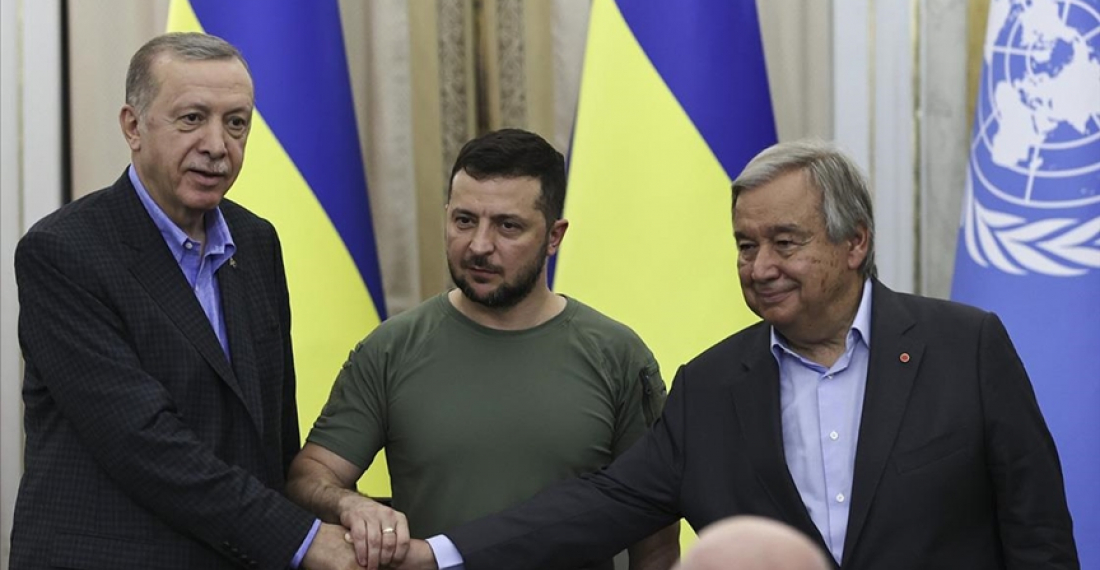
Historic Lviv hosts meeting between Zelensky, Erdogan and Gutteres

The visit of Turkish president Recip Tayip Erdogan and UN Secretary General, Antoniuo Gutteres, to Lviv on Thursday once more opened the possibility of negotiations between Ukraine and Russia.  However a lot of the discussions were focused on the more immediate issue of the Zaporizhzhia nuclear plant,

Ukrainian President Volodymyr Zelenskyy says he has agreed to the parameters of a potential mission of the International Atomic Energy Agency to the Zaporizhzhia nuclear plant, after repeated shelling of the complex raised fears of a nuclear catastrophe..

Speaking at a news conference in Lviv on Thursday following a trilateral meeting with the Turkish president and the UN secretary-general, Zelenskyy said “only absolute transparency and control of the situation” by the UN’s International Atomic Energy Agency (IAEA), among other bodies, could guarantee nuclear safety.

It was not immediately clear if Russia would agree to the parameters.

The Ukrainian leader also reiterated a call for Russia to immediately withdraw its forces from the nuclear power plant in southern Ukraine and stop all military activity in the area.

Concerns about the plant mounted on Thursday when Russian and Ukrainian authorities accused each other of plotting to attack the site and then blame the other side.

Kyiv and Moscow have accused each other of multiple recent incidents of shelling at Europe’s largest nuclear power plant, which Russian troops captured early in the war. 

Turkey’s President Recep Tayyip Erdogan expressed worry about the flare-up of military activity in Zaporizhzhia. “We don’t want another Chernobyl,” he said.

UN chief Antonio Guterres also expressed grave concern about the situation at the plant and said it had to be demilitarised. “We must tell it like it is — any potential damage to Zaporizhzhia is suicide,” he said.

The secretary-general also called for the demilitarisation of the area around the vast nuclear power plant. “The facility must not be used as part of any military operation. Instead, agreement is urgently needed to re-establish Zaporizhzhia’s purely civilian infrastructure and to ensure the safety of the area,” he said.

IAEA chief Rafael Mariano Grossi repeatedly called on both warring sides to cooperate in order to allow his agency to conduct a fact-finding mission and verify the plant’s safety.

Erdogan, who was on his first visit to Ukraine since Russia invaded on February 24, insisted the war should be resolved through diplomatic channels and renewed his offer to act as a mediator.

“We are ready to act as a facilitator or mediator towards the goal of reviving the negotiations,” he said. “What matters is to find the shortest and fairest way to the negotiating table.”

Zelenskyy ruled out peace with Russia unless it withdraws its troops from Ukraine.

Zelenskyy told reporters he was “very surprised” to hear from Erdogan that Russia was “ready for some kind of peace”, adding, “First, they should leave our territory and then we’ll see.”


__________________________


Turkey's president Recip Tayip Erdogan met with president Volodymyr Zelenskiy of Ukraine in Lviv on Thursday afternoon. The meeting took place at Pottsky Palace and started at 1440 local time.

-------------------------

The president of Ukraine, Volodymyr Zelensky will welcome to  the historic city of Lviv in Western Ukraine on Thursday (18 August), the president of Turkey, Recip Tayip Erdogan and the Secretary-General of the United Nations, Antonio Gutteres.

As Ukraine's war with Russia rages on, Turkey became an important intermediary helping to facilitate a deal allowing the export of Ukrainian grains and agricultural products through the Black Sea and the world markets. The deal negotiated by Turkey with Russia was also endorsed by the United Nations, which became a signatory to the arrangement.

This will be Erdogan's first visit to Ukraine since the war broke out. Erdogan has tried hard to arrange a summit between himself, Zelensky and Russian president Vladimir Putin, but the Russians keep saying it is not yet time.

During his visit, Erdogan will also attend a trilateral summit with the participation of Zelensky and Guterres. The trilateral summit will focus on potential steps aimed at increasingly maintaining the activities of the mechanism formed to export the Ukrainian grain to world markets and ending the Ukraine-Russia war through diplomatic avenues.

Thanks to the initiatives by Turkey and the U.N. that resulted in two different protocols with Russia and Ukraine, the latter could resume its grain exports to the world markets. The process is being controlled and coordinated through a Joint Coordination Center based in Istanbul that brought the officials from Ukraine and Russia together, along with Turkey and the U.N.
source: commonspace.eu with agencies

Related articles

Editor's choice
News
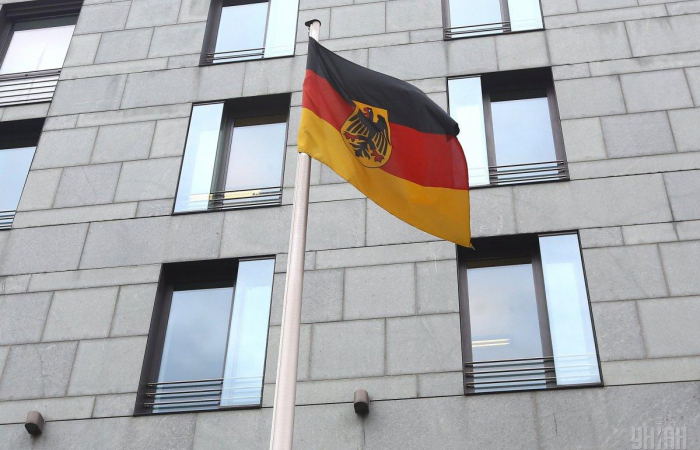
Germany accuses Russia of cyberattacks and disinformation campaign

Germany accuses Russia of cyberattacks and disinformation campaign

The German government holds Russia responsible for a cyberattack on German air traffic control, and for targeted disinformation campaigns before the last federal election. According to the German Foreign Office in Berlin, the incidents could be clearly attributed to the Russian military intelligence service, the GRU. In response, the Russian ambassador to Berlin was summoned to the Foreign Ministry. "We have been observing a massive increase in threatening hybrid activities by Russia for some time now," a spokesperson for the Foreign Ministry stated. These range from disinformation campaigns and espionage to cyberattacks and sabotage attempts. The aim is to divide society, sow distrust, and undermine confidence in democratic institutions. The spokesperson added that with these actions, Russia is "very concretely threatening our security, not only through its war of aggression against Ukraine, but also here in Germany."  The Foreign Ministry spokesperson explained that the cyberattack on air traffic control in August 2024 was clearly attributed to the hacker collective "APT28," known as "Fancy Bear," and to the responsibility of the Russian military intelligence service, the GRU. Furthermore, it could now be "conclusively stated" that Russia had attempted "to influence and destabilize both the last Federal election and the ongoing internal affairs of the Federal Republic of Germany." There was "absolutely irrefutable evidence" for this". The so-called "Storm 1516" campaign, which has been running since 2024, is allegedly backed by "reliable information" that the Moscow-based think tank "Center for Geopolitical Expertise" is behind it. The Center is also said to be supported by Russian military intelligence. Its primary aim is to influence democratic elections in the West. (Click the image to read more).
Editor's choice
News
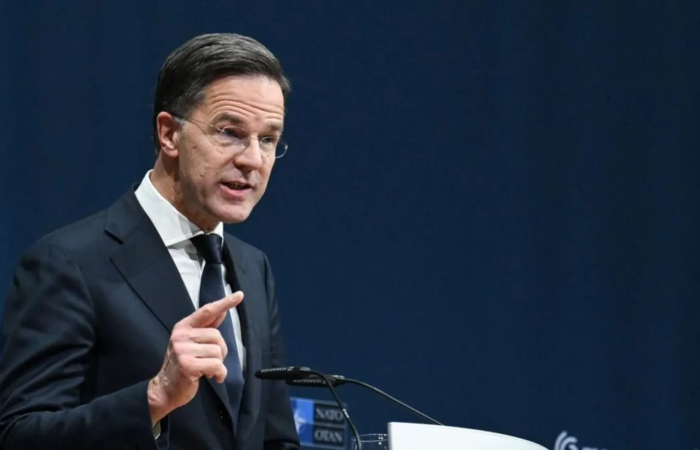
NATO Chief says war is on Europe's doorstep, and warns against complacency

NATO Chief says war is on Europe's doorstep, and warns against complacency

Russia could attack a NATO country within the next five years, the Secretary General of NATO, Mark Rutte, said in a stark new warning. "NATO's own defences can hold for now," Rutte warned in Berlin, but conflict was "next door" to Europe, and he feared "too many are quietly complacent, and too many don't feel the urgency, too many believe that time is on our side. "Russia is already escalating its covert campaign against our societies," Rutte said in a speech in Germany. "We must be prepared for the scale of war our grandparents or great-grandparents endured." Earlier this month, Russia's President Vladimir Putin said his country was not planning to go to war with Europe, but it was ready "right now" if Europe wanted to - or started a war. But similar reassurances were given by Moscow in 2022, just before 200,000 Russian troops crossed the border and invaded Ukraine. Putin has accused European countries of hindering US efforts to bring peace in Ukraine - a reference to the role Ukraine's European allies have recently played in trying to change a US peace plan to end the war, whose initial draft was seen as favouring Russia. But Putin was not sincere, Nato's secretary-general said in the German capital, Berlin. Supporting Ukraine, he added, was a guarantee for European security. "Just imagine if Putin got his way; Ukraine under the boot of Russian occupation, his forces pressing against a longer border with Nato, and the significantly increased risk of an armed attack against us." Russia's economy has been on a war footing for more than three years now - its factories churn out ever more supplies of drones, missiles and artillery shells. According to a recent report by the Kiel Institute for the World Economy, Russia has been producing each month around 150 tanks, 550 infantry fighting vehicles, 120 Lancet drones and more than 50 artillery pieces. The UK, and most of its Western allies, are simply not anywhere near this point. Analysts say it would take years for Western Europe's factories to come close to matching Russia's mass-production of weapons. "Allied defence spending and production must rise rapidly, our armed forces must have what they need to keep us safe," the Nato chief said.

Popular

Editor's choice
News
Germany accuses Russia of cyberattacks and disinformation campaign

Germany accuses Russia of cyberattacks and disinformation campaign

The German government holds Russia responsible for a cyberattack on German air traffic control, and for targeted disinformation campaigns before the last federal election. According to the German Foreign Office in Berlin, the incidents could be clearly attributed to the Russian military intelligence service, the GRU. In response, the Russian ambassador to Berlin was summoned to the Foreign Ministry. "We have been observing a massive increase in threatening hybrid activities by Russia for some time now," a spokesperson for the Foreign Ministry stated. These range from disinformation campaigns and espionage to cyberattacks and sabotage attempts. The aim is to divide society, sow distrust, and undermine confidence in democratic institutions. The spokesperson added that with these actions, Russia is "very concretely threatening our security, not only through its war of aggression against Ukraine, but also here in Germany."  The Foreign Ministry spokesperson explained that the cyberattack on air traffic control in August 2024 was clearly attributed to the hacker collective "APT28," known as "Fancy Bear," and to the responsibility of the Russian military intelligence service, the GRU. Furthermore, it could now be "conclusively stated" that Russia had attempted "to influence and destabilize both the last Federal election and the ongoing internal affairs of the Federal Republic of Germany." There was "absolutely irrefutable evidence" for this". The so-called "Storm 1516" campaign, which has been running since 2024, is allegedly backed by "reliable information" that the Moscow-based think tank "Center for Geopolitical Expertise" is behind it. The Center is also said to be supported by Russian military intelligence. Its primary aim is to influence democratic elections in the West. (Click the image to read more).