


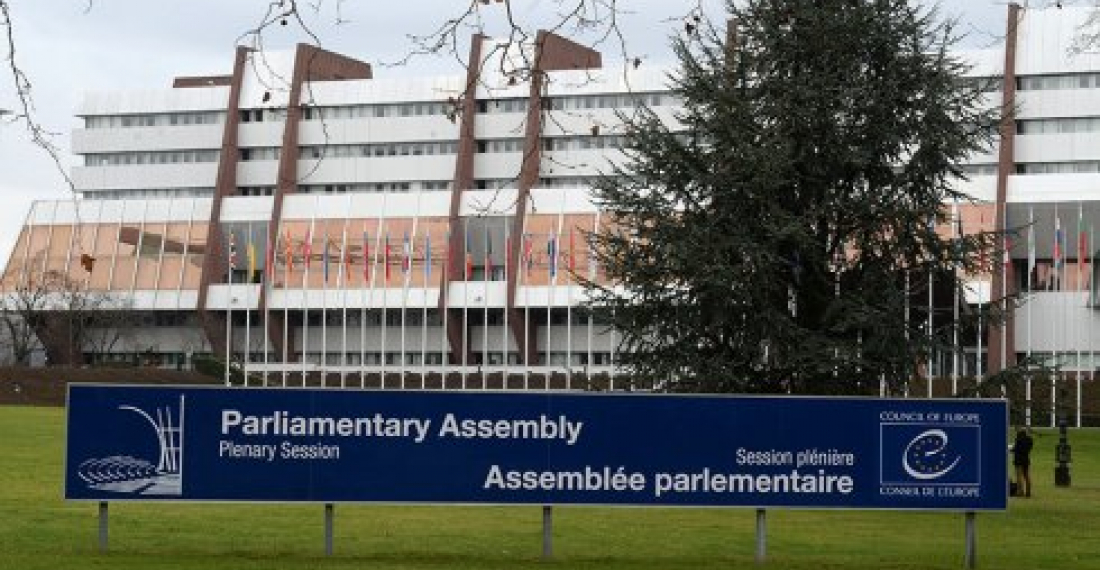
A delegation of the Parliamentary Assembly of the Council of Europe (PACE) was in Tbilisi on 13 and 14 September 2016 to assess the pre-electoral climate of the parliamentary elections scheduled for 8 October 2016.
The delegation,was led by Emanuelis Zingeris (Lithuania, EPP/CD),and included Maryvonne Blondin (France, SOC),Jordi Xuclà (Spain, ALDE), Ingebjørg Godskesen (Norway, EC), Andrej Hunko (Germany, UEL)as well as the co-Rapporteurs of the Monitoring Committee: Boriss Cilevics (Latvia) and Kerstin Lundgren (Sweden).
In a statement the Delegation said it "felt that there was an environment for democratic elections in the country. It saw a pluralistic political and media landscape and a working legal framework. Although the delegation felt that the general climate was clearly less tense than it was during past elections, following discussions with various interlocutors, it considered necessary to underline that all parties should denounce all forms of campaign violence and harassment of opponents and that they should publicly call upon all their supporters to refrain from any actions that could undermine the democratic character of the elections".
The statement added:
"The delegation indeed heard allegations of unacceptable acts of violence, intimidation, harassment and blackmail directed at candidates and voters. In this context, such acts, even if isolated, against candidates, party members or supporters, as well as threats against journalists, must be prevented. Perpetrators of such acts must be identified and punished. The delegation also said that any misuse of administrative resources in the electoral campaign must not happen.
The delegation underlined that all parties should focus on the real issues and avoid questioning the election framework as a campaign strategy, as this could undermine public trust in the elections themselves.
The delegation called on all stakeholders, and in particular on the authorities, to avoid any actions that could increase the tensions in the political environment in the run-up to the elections. It expressed the hope that all political players would spare no efforts to pave the way towards building a genuine election culture, based on mutual respect between political forces of opposing orientations."
The PACE pre-electoral delegation was in Tbilisi at the invitation of the Minister of Foreign Affairs of Georgia. It met with the Prime Minister, with the Speaker of the Parliament and its first Deputy, with members of the delegation to PACE, with the Chairperson of the State Election Commission, with the Minister of Internal Affairs, with the Head of the National Communications Commission, with leaders and representatives of parliamentary and non-parliamentary parties running in the elections, with representatives of civil society and the media, with the Deputy Head of the OSCE/ODIHR election observation mission and with diplomats based in Tbilisi.
A full-fledged 32-member delegation from the Parliamentary Assembly of the Council of Europe will arrive in Georgia prior to the parliamentary elections to observe the vote.
source: commonspace.eu with the press service of the Parliamentary Assembly of the Council of Europe (PACE)



