This is a commentary prepared for commonspace.eu by Benyamin Poghosyan
Trump's hard line approach towards Iran may derail its ambitious plans to develop trade and transport corridors to the north through the South Caucasus
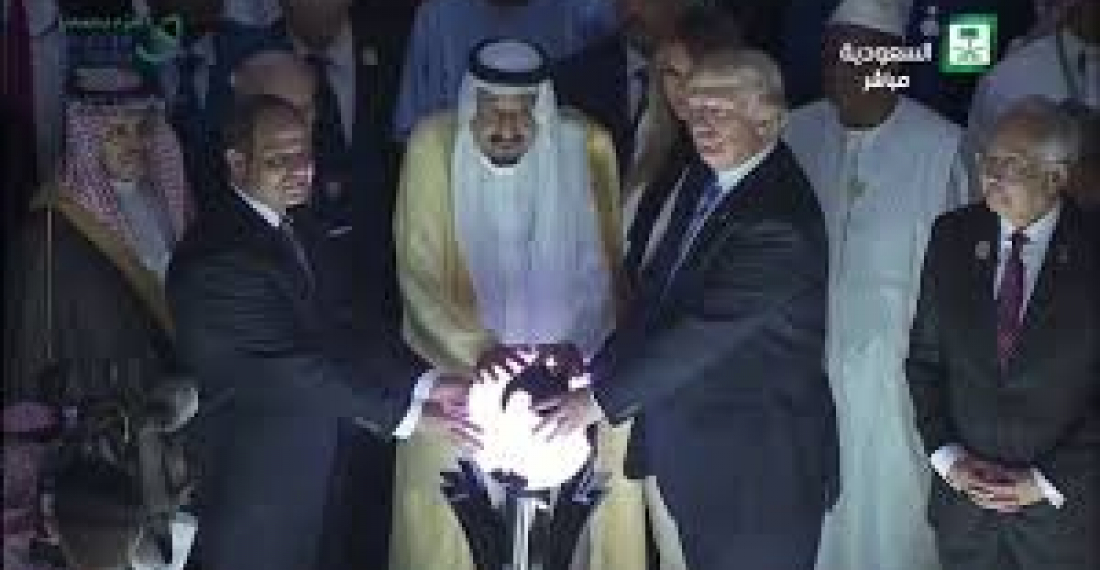
On May 20, 2017, US President Donald Trump arrived in Saudi Arabia on his first stop of his week-long international trip. The visit had both a bilateral and regional agenda. The key point of the relaunching of US - Saudi Arabia relations was the arms deal worth of $110 billion. The new US President chose the Saudi visit as a focal point for presenting key pillars of his Middle East policy. Delivering a speech to the Arab - Islamic - American Summit, which gathered leaders and representatives of more than 50 mostly Sunni Muslim states, President Trump stressed the significance of the fight against terrorism and the important role regional states have to play in that struggle. Another key point of his speech was his tough criticism directed against Iran. President Trump accused Iran of providing terrorists with a safe haven, financial backing, and the social standing needed for recruitment. Trump emphasized that from Lebanon to Iraq to Yemen, Iran funds, arms, and trains terrorists, militias, and other extremist groups that spread destruction and chaos across the region and called for its isolation. Trump continued this anti-Iranian rhetoric during his visit to Israel and meetings with the Israeli President and Prime Minister. Newly re-elected Iranian President Rouhani for his turn described the Trump's visit as a "show" which will have no political and practical value.
President Trump was skeptical about any possibilities of improving US - Iran relations during his campaign. He harshly chastised the Iran Nuclear Deal and promised to review it after the elections. Just 11 days after the inauguration, his Administration officially put Iran on notice after Tehran conducted missile tests. Regardless of the possibility of cancelling or reviewing the Iran nuclear deal, which will be a really hard task for the US taking into account the positions of Russia, China and other members of P5 +1 group, Trump's new policy targeting Iran may bring back a pattern of the Middle East geopolitics where the US is backing its Sunni Gulf allies in their fight against Iran. Taking into account the overlapping of anti - Iranian positions of Sunni monarchies and Israel, Trump's new policy may lay a ground for tacit coordination of anti - Iran efforts between Gulf Cooperation Council (GCC) members and Israel, which itself will be a turning point in the region.
The new US administration Iran-focused Middle East policy will have implications for the South Caucasus too. Iran is bordering both Azerbaijan and Armenia and views the region as an alternative transit route to connect the Persian Gulf to Europe via North - South corridor using Azerbaijan - Russia railway link or Armenia - Georgia - Bulgaria corridor through the Black Sea. Iran is interested to thwart Western and Israeli influence in the South Caucasus not to allow the region to be used as a launchpad for anti - Iranian activities which may also target several million strong Azeri speaking population of Iran. President Aliyev's participation in the Riyadh summit, despite the fact that Azerbaijani population is mostly Shia, may complicate the delicate balance which Azerbaijan tries to pursue between Iran, Russia, the US and its strategic ally Turkey. Azerbaijan - Iran - Russia trilateral summit held in Baku in August 2016 and Aliyev's visit to Tehran and Rouhani's visit to Moscow in March 2017 were marked by mutual recognition of the importance of launching the North - South transportation corridor and deepening of cooperation. After the Riyadh summit Azerbaijan may be forced to clarify its position regarding the formation of new anti - Iranian alliance and Azerbaijani vision for future development of Iran - Azerbaijan relations.
The US new policy in the Middle East may well complicate Armenian foreign policy too. The lingering conflict with Azerbaijan and blockade imposed by Turkey due to the Nagorno Karabakh conflict has left Georgia and Iran as the only corridors for Armenia to connect to the world. During both George W. Bush and Obama Administrations Armenia managed to receive tacit American consent concerning its relations with Iran. Meanwhile the international sanctions imposed on Tehran put serious restrictions on future development of Armenia - Iran relations. The 2015 Iran nuclear deal raised hopes in Armenia that time is ripe to significantly improve bilateral economic relations. Armenia's membership in the Eurasian Economic Union gave another momentum for Iran - Armenia economic cooperation as Iranian companies have an opportunity to launch production lines in Armenia and export their products to the EEU markets. The Armenian Government is planning to launch a Free Economic Zone near the Iranian border in Autumn 2017 trying to multiple positive effects of developing cooperation with Iran. The Persian Gulf - Black Sea transport corridor project passing through Armenia and pushed forward by Iran is the first tangible opportunity for Yerevan to be involved in regional transit programs breaking the isolation imposed by Azerbaijan and Turkey, and simultaneously to lessen its economic overdependence on Russia.
Simultaneously, Armenia is keen to continue its friendly relations with the US viewing American partnership as a potential tool to avoid to be put under total Russian control. Trump's anti - Iran rhetoric may force Armenia to make an uneasy choice between friendly relations with the US and deepening economic cooperation with Iran. Taking into account the vital interest of Armenia in developing relations with both sides such situation may force Armenia to put on hold relations with either US or Iran which will negatively affect Armenia's geostrategic position and play well for Russia to tighten its control over Yerevan.
As for Georgia, it has limited interactions with Iran due to its euro-Atlantic aspirations and absence of land borders. A project is underway to launch Iran - Armenia - Georgia energy corridor for electricity export/import purposes, and preliminary discussions have been held on possible transit of Iranian gas through Armenia to Georgia, but in case of a serious deterioration of US - Iran relations, Georgia may afford to put on hold its cooperation with Iran without any danger to its vital national interests.
source: This commentary was prepared for commonspace.eu by Benyamin Poghosyan. Dr Poghosyan is the Executive Director of the Political Science Association of Armenia.
photo: Donald Trump in Saudi Arabia