European Court rules on case of Azerbaijani IDPs

In today’s Grand Chamber judgment in the case of Chiragov and Others v. Armenia (application no. 13216/05) the European Court of Human Rights ruled on the question of just satisfaction. It held, unanimously, that the Armenian Government had to pay 5,000 euros in respect of pecuniary and non-pecuniary damage to each of the applicants and a total amount of 28,642.87 pounds sterling for costs and expenses.

The case concerned the complaints by six Azerbaijani refugees that they were unable to return to their homes and property in the district of Lachin, in Azerbaijan, from where they had been forced to flee in 1992 during the Nagorno-Karabakh conflict. The Court observed that the principle of subsidiarity underpinned the system of the European Convention on Human Rights. Thus, Armenia and Azerbaijan had given undertakings prior to their accession to the Council of Europe, committing themselves to the peaceful settlement of the Nagorno-Karabakh conflict.

The Court could only underline that it was their responsibility to find a solution on a political level to the conflict. Without prejudice to any compensation to be awarded to the applicants as just satisfaction, the effective execution of the principal judgment called for the creation of general measures at national level. The Court also noted that the damage did not lend itself to precise calculation. Certain difficulties in assessing the damage derived from the passage of time: the time element made the link between a breach of the Convention and the damage less certain. In conclusion, the Court underlined the responsibility of the two States concerned to find a resolution to the Nagorno-Karabakh conflict. Pending a solution on the political level, the Court considered it appropriate to award the applicants aggregate sums for pecuniary and non-pecuniary damage. 

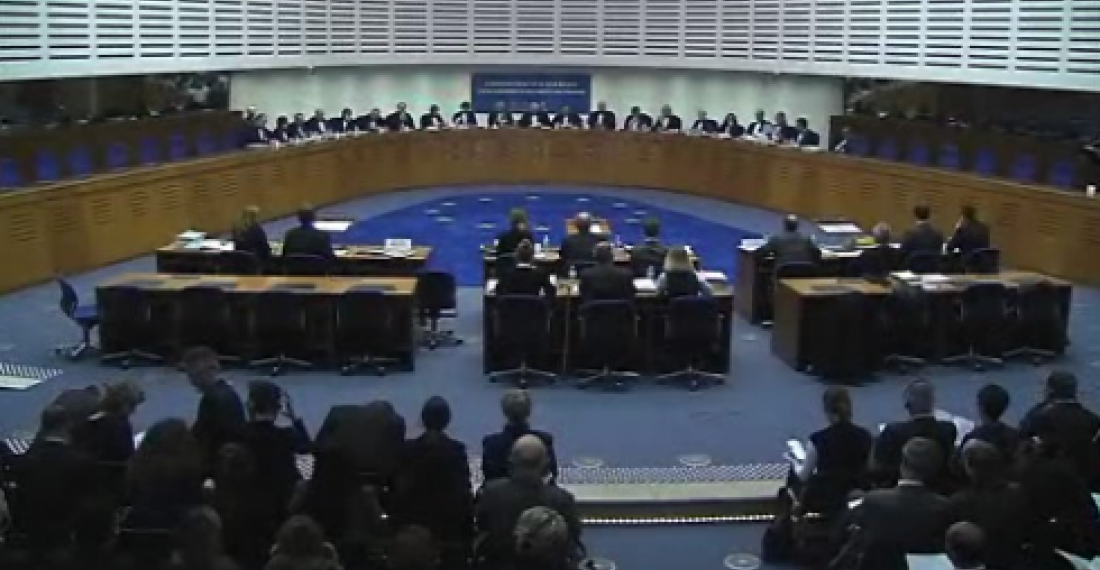
Decisions of the Grand Chamber are final. The Grand Chamber that gave the judgement consisted of 17 judges, led by Italian Judge, Guido Raimondi.

You may read more on the website of the Europeah Court for Human Rights here

source: commonspace.eu with the press service of the European Court for Human Rights

photo: The Grand Chamber of the European Court for Human Rights (archive picture)

Related articles

Editor's choice
News
Borrell tells the European Parliament that the situation in Afghanistan was critical, but the EU will remain engaged

Borrell tells the European Parliament that the situation in Afghanistan was critical, but the EU will remain engaged

Borrell underlined that the European Union will make every effort to support the peace process and to remain a committed partner to the Afghan people. "Of course, we will have to take into account the evolving situation, but disengagement is not an option.  We are clear on that: there is no alternative to a negotiated political settlement, through inclusive peace talks.
Editor's choice
News
Germany accuses Russia of cyberattacks and disinformation campaign

Germany accuses Russia of cyberattacks and disinformation campaign

The German government holds Russia responsible for a cyberattack on German air traffic control, and for targeted disinformation campaigns before the last federal election. According to the German Foreign Office in Berlin, the incidents could be clearly attributed to the Russian military intelligence service, the GRU. In response, the Russian ambassador to Berlin was summoned to the Foreign Ministry. "We have been observing a massive increase in threatening hybrid activities by Russia for some time now," a spokesperson for the Foreign Ministry stated. These range from disinformation campaigns and espionage to cyberattacks and sabotage attempts. The aim is to divide society, sow distrust, and undermine confidence in democratic institutions. The spokesperson added that with these actions, Russia is "very concretely threatening our security, not only through its war of aggression against Ukraine, but also here in Germany."  The Foreign Ministry spokesperson explained that the cyberattack on air traffic control in August 2024 was clearly attributed to the hacker collective "APT28," known as "Fancy Bear," and to the responsibility of the Russian military intelligence service, the GRU. Furthermore, it could now be "conclusively stated" that Russia had attempted "to influence and destabilize both the last Federal election and the ongoing internal affairs of the Federal Republic of Germany." There was "absolutely irrefutable evidence" for this". The so-called "Storm 1516" campaign, which has been running since 2024, is allegedly backed by "reliable information" that the Moscow-based think tank "Center for Geopolitical Expertise" is behind it. The Center is also said to be supported by Russian military intelligence. Its primary aim is to influence democratic elections in the West. (Click the image to read more).

Popular

Editor's choice
News
Germany accuses Russia of cyberattacks and disinformation campaign

Germany accuses Russia of cyberattacks and disinformation campaign

The German government holds Russia responsible for a cyberattack on German air traffic control, and for targeted disinformation campaigns before the last federal election. According to the German Foreign Office in Berlin, the incidents could be clearly attributed to the Russian military intelligence service, the GRU. In response, the Russian ambassador to Berlin was summoned to the Foreign Ministry. "We have been observing a massive increase in threatening hybrid activities by Russia for some time now," a spokesperson for the Foreign Ministry stated. These range from disinformation campaigns and espionage to cyberattacks and sabotage attempts. The aim is to divide society, sow distrust, and undermine confidence in democratic institutions. The spokesperson added that with these actions, Russia is "very concretely threatening our security, not only through its war of aggression against Ukraine, but also here in Germany."  The Foreign Ministry spokesperson explained that the cyberattack on air traffic control in August 2024 was clearly attributed to the hacker collective "APT28," known as "Fancy Bear," and to the responsibility of the Russian military intelligence service, the GRU. Furthermore, it could now be "conclusively stated" that Russia had attempted "to influence and destabilize both the last Federal election and the ongoing internal affairs of the Federal Republic of Germany." There was "absolutely irrefutable evidence" for this". The so-called "Storm 1516" campaign, which has been running since 2024, is allegedly backed by "reliable information" that the Moscow-based think tank "Center for Geopolitical Expertise" is behind it. The Center is also said to be supported by Russian military intelligence. Its primary aim is to influence democratic elections in the West. (Click the image to read more).