


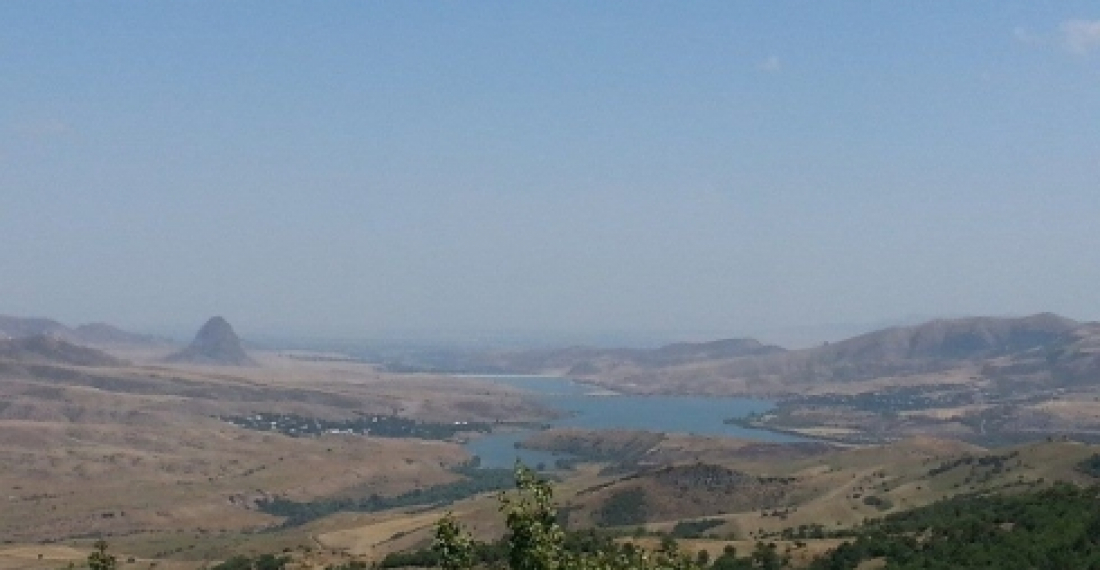
A call for peace in Karabakh. Intellectuals and activists from around the world call for an immediate halt to the shooting and attacks

We, the undersigned citizens of Azerbaijan, Armenia and other countries demand that the parties to the Nagorno-Karabakh conflict stop the shooting and attacks on the Line of Contact and Armenian-Azerbaijani border immediately.

We demand that, as a sign of good will, either side stops shooting unilaterally and then asks the other side to do the same.

Mahatma Gandhi once said, "An eye for an eye only ends up making the whole world blind." On the Karabakh front-line, a sniper shot for a sniper shot, an attack for an attack will only make more young Armenians and Azerbaijanis dead, wounded and disabled. A few meters of territory or "strategic heights" gained are worth nothing if they put young people under the ground and leave their loved ones traumatized.

The Karabakh ceasefire regime was agreed and signed in May of 1994. In February 1995, the parties agreed to strengthen and monitor the ceasefire regime. But that has not been enough to prevent dozens of young people being killed each year. Many of them, some of them born after the ceasefire agreement was signed, died over the last week. We appreciate that the ceasefire in itself is not enough and that the status quo inflicts harm on the lives of hundreds of thousands of people across the region.

We demand that mediators and parties to the conflict find a new legal and practical framework that will stop the violence. In 2008 in Helsinki the foreign ministers of France, Russia and the United States called for the removal of snipers from the ceasefire line. The UN Secretary General Ban Ki Moon endorsed the idea in 2010. We regret that that proposal, which could have saved dozens of lives, has never been implemented.

Finally, we urge citizens, civil society leaders, state and independent media to uphold ethical and professional standards as they discuss the conflict, not to glorify or otherwise encourage violence, to engage in sincere efforts towards peaceful conflict resolution and demand from their respective governments that they halt the escalation of the conflict and start real negotiations for peace.

August 9, 2014

Veronika Aghajanyan, Imagine Center for Conflict Transformation, Yerevan

Anar K. Ahmadov, Assistant Professor of Comparative Political Economy, Leiden University, The Hague

Rashad Aliyev, freelance journalist, social media and conflict resolution trainer, Baku

Zinaddin Babayev, Imagine Center for Conflict Transformation, Boston

Bayram Balci, visiting scholar, Middle East Program, Carnegie Endowment, Washington

Sofie Bedford, researcher, Center for Russian and Eurasian Studies, Uppsala University

Jean-Baptiste Blanc, University of Lausanne

Laurence Broers, Editor, Caucasus Survey and Research Associate, School of Oriental and African Studies, University of London

Michael Cecire, associate scholar, Foreign Policy Research Institute, Philadelphia

Alexander Cooley, Professor of Political Science at Barnard College, Columbia University, New York

Dzovinar Derderian, University of Michigan, Ann Arbor

John Evans, former U.S. Ambassador to Armenia (2004-2006)

Arzu Geybullayeva, Imagine Center for Conflict Transformation, Istanbul

Philip Ghamagelyan, Imagine Center for Conflict Transformation, Washington

Natalya Ghurbanyan, International Development Expert, Washington

Richard Giragosian, Regional Studies Center, Yerevan

Hamida Giyasbayli, Imagine Center for Conflict Transformation, Baku

Sevil Huseynova, Institute for European Ethnology, Berlin

Ulvi Ismayil, Public Policy Expert, Washington

Irakly Kakabadze, Institute for Multi-Track Diplomacy, Tbilisi

Maria Karapetyan, Rondine Cittadella della Pace, Arezzo

Richard D. Kauzlarich, former US Ambassador to Azerbaijan (1994-1997) and Adjunct Professor School of Policy, Government and International Affairs, George Mason University, Arlington

Arsen Kharatyan, Institute for Multi-Track Diplomacy, Yerevan

Brady Kiesling, former Deputy U.S. Special Negotiator, Minsk Group, Athens

Charles King, Professor of International Affairs and Government, Georgetown University, Washington

Marion Kipiani, Norwegian Helsinki Committee, Tbilisi

Michael Lemmon, former U.S. Ambassador to Armenia (1998-2001)

S. Neil MacFarlane, Professor International Relations and Fellow, St. Anne's College, Oxford University

Simon Maghakyan, Lecturer in International Relations, University of Colorado, Denver

Mikail Mamedov, Adjunct Professor, Department of History, George Mason University, Fairfax, VA

Karen Ohanjanyan, Nagorno-Karabakh Committee of "Helsinki Initiative-92″, Stepanakert

Yelena Osipova, School of International Service, American University, Washington

Mane Papyan, journalist, Vanadzor

Karl Rahder, former CEP Visiting Faculty Fellow at Baku State and Baku Slavic universities, 2004, Naperville

Alakbar Raufoglu, journalist, Washington

Natalya T. Riegg, Professor of Political Science and Global Studies, University of Saint Mary, Leavenworth

Dennis Sammut, Director LINKS and Oxford University

Emil Sanamyan, Editor, The Armenian Reporter, Washington

Emil Souleimanov, Charles University, Prague

Ronald Grigor Suny, Professor of Social and Political History at the University of Michigan

Margarita Tadevosyan, School for Conflict Analysis and Resolution, George Mason University, Arlington

Albert Voskanyan, Center for Civic Initiatives, Stepanakert

Thomas de Waal, Senior Associate, Carnegie Endowment, Washington

Cory Welt, Associate Research Professor of International Affairs, George Washington University, Washington


 

Related articles

Editor's choice
News
Borrell tells the European Parliament that the situation in Afghanistan was critical, but the EU will remain engaged

Borrell tells the European Parliament that the situation in Afghanistan was critical, but the EU will remain engaged

Borrell underlined that the European Union will make every effort to support the peace process and to remain a committed partner to the Afghan people. "Of course, we will have to take into account the evolving situation, but disengagement is not an option.  We are clear on that: there is no alternative to a negotiated political settlement, through inclusive peace talks.
Editor's choice
News
NATO Chief says war is on Europe's doorstep, and warns against complacency

NATO Chief says war is on Europe's doorstep, and warns against complacency

Russia could attack a Nato country within the next five years, the Secretary General of NATO, Mark Rutte, said in a stark new warning. "Nato's own defences can hold for now," Rutte warned in Berlin, but conflict was "next door" to Europe and he feared "too many are quietly complacent, and too many don't feel the urgency, too many believe that time is on our side. "Russia is already escalating its covert campaign against our societies," Rutte said in a speech in Germany. "We must be prepared for the scale of war our grandparents or great-grandparents endured." Earlier this month, Russia's President Vladimir Putin said his country was not planning to go to war with Europe, but it was ready "right now" if Europe wanted to - or started a war. But similar reassurances were given by Moscow in 2022, just before 200,000 Russian troops crossed the border and invaded Ukraine. Putin has accused European countries of hindering US efforts to bring peace in Ukraine - a reference to the role Ukraine's European allies have recently played in trying to change a US peace plan to end the war, whose initial draft was seen as favouring Russia. But Putin was not sincere, Nato's secretary-general said in the German capital, Berlin. Supporting Ukraine, he added, was a guarantee for European security. "Just imagine if Putin got his way; Ukraine under the boot of Russian occupation, his forces pressing against a longer border with Nato, and the significantly increased risk of an armed attack against us." Russia's economy has been on a war footing for more than three years now - its factories churn out ever more supplies of drones, missiles and artillery shells. According to a recent report by the Kiel Institute for the World Economy, Russia has been producing each month around 150 tanks, 550 infantry fighting vehicles, 120 Lancet drones and more than 50 artillery pieces. The UK, and most of its Western allies, are simply not anywhere near this point. Analysts say it would take years for Western Europe's factories to come close to matching Russia's mass-production of weapons. "Allied defence spending and production must rise rapidly, our armed forces must have what they need to keep us safe," the Nato chief said.

Popular

Editor's choice
News
NATO Chief says war is on Europe's doorstep, and warns against complacency

NATO Chief says war is on Europe's doorstep, and warns against complacency

Russia could attack a Nato country within the next five years, the Secretary General of NATO, Mark Rutte, said in a stark new warning. "Nato's own defences can hold for now," Rutte warned in Berlin, but conflict was "next door" to Europe and he feared "too many are quietly complacent, and too many don't feel the urgency, too many believe that time is on our side. "Russia is already escalating its covert campaign against our societies," Rutte said in a speech in Germany. "We must be prepared for the scale of war our grandparents or great-grandparents endured." Earlier this month, Russia's President Vladimir Putin said his country was not planning to go to war with Europe, but it was ready "right now" if Europe wanted to - or started a war. But similar reassurances were given by Moscow in 2022, just before 200,000 Russian troops crossed the border and invaded Ukraine. Putin has accused European countries of hindering US efforts to bring peace in Ukraine - a reference to the role Ukraine's European allies have recently played in trying to change a US peace plan to end the war, whose initial draft was seen as favouring Russia. But Putin was not sincere, Nato's secretary-general said in the German capital, Berlin. Supporting Ukraine, he added, was a guarantee for European security. "Just imagine if Putin got his way; Ukraine under the boot of Russian occupation, his forces pressing against a longer border with Nato, and the significantly increased risk of an armed attack against us." Russia's economy has been on a war footing for more than three years now - its factories churn out ever more supplies of drones, missiles and artillery shells. According to a recent report by the Kiel Institute for the World Economy, Russia has been producing each month around 150 tanks, 550 infantry fighting vehicles, 120 Lancet drones and more than 50 artillery pieces. The UK, and most of its Western allies, are simply not anywhere near this point. Analysts say it would take years for Western Europe's factories to come close to matching Russia's mass-production of weapons. "Allied defence spending and production must rise rapidly, our armed forces must have what they need to keep us safe," the Nato chief said.

