NATO and Turkey continue to need each other

Commentary: Benyamin Poghosyan discusses current difficulties between Turkey and some of the member states of NATO, but argues that Turkey and the Atlantic alliance share vital common interests, and any action that will seriously jeopardize Turkey-NATO relations is unlikely.

In recent months Turkey has been facing increasing difficulties with key NATO member states. The United States' growing reliance on Syrian Kurdish forces in Syria as a key force capable of effectively fighting Islamic State and US President Donald Trump's decision to arm Kurdish YPG units placed additional strains on bilateral US-Turkey relations, which have been sharply deteriorating since the July 2016 military coup and with Turkey's unsuccessful efforts to organize Fethullah Gulen extradition from the US.

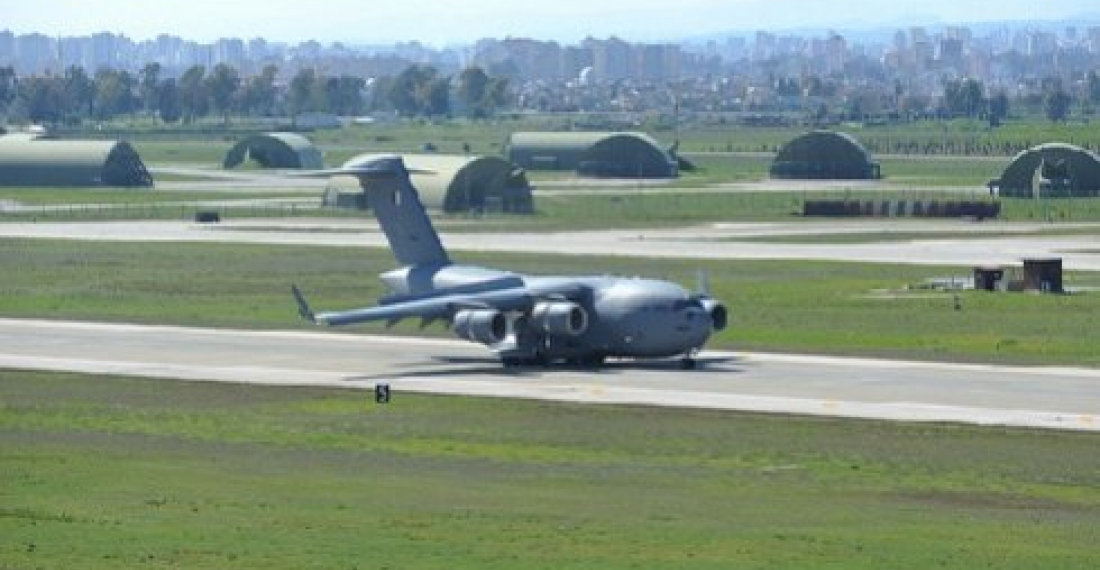
A second example is the rift between Turkey and Germany, caused by Germany's refusal to allow Turkish politicians to campaign in Germany for the constitutional changes put forward by President Erdogan and a reciprocal decision by Turkey not to allow German MPs to visit German soldiers deployed at the Incirlik air base has resulted in Germany's unprecedented decision to withdraw its forces from Incirlik.

Obviously, these developments will have some implications for Turkey - NATO relations.  However, taking into account that Turkey and NATO shave vital common interests, any action that will seriously jeopardize Turkey-NATO relations is unlikely.

Turkey is a significant player in the Middle East, and is heavily involved both in Syria and in the Gulf region. The recent standoff between Saudi Arabia and some other Gulf states and Qatar, and Turkey's decision to deploy additional troops to its Qatari base, serve as another proof of Turkey's willingness and ability to intervene in disputes in the Sunni "world". Middle East geopolitics is likely to be increasingly important for NATO, especially as the US pushes the alliance towards more active involvement in the fight against terrorism and extremism. In this geopolitical juncture NATO simply cannot afford to lose an asset like Turkey. Given the anti-Iranian rhetoric of the current US Administration, and Turkey's balanced relations with Tehran, Turkey can also be useful in both deterring Iranian influence in the Middle East, and reaching out to Tehran if necessary.

Another key issue for NATO is its approach towards Russia. Despite Donald Trump's rhetoric on getting along with Russia, no tangible improvements of relations are visible, and NATO continues to push forward Wales 2014 and Warsaw 2016 summits' decisions on strengthening its military posture in Central and Eastern Europe and the Baltic region. One of the significant theatres of operation between NATO and Russia is the Black Sea, where only Turkey has an ability to counter the steadily growing Russian military presence and protect NATO's vital interests in the region.

As for Turkey, membership of the NATO alliance is one of the key pillars of its security policy. Given the current turmoil in the Middle East, membership in NATO provides additional security guarantees to Turkey.  It enables Turkey to be firm in its interactions with both Russia and Iran, and any rift with the Alliance may impair Turkey's regional standing.

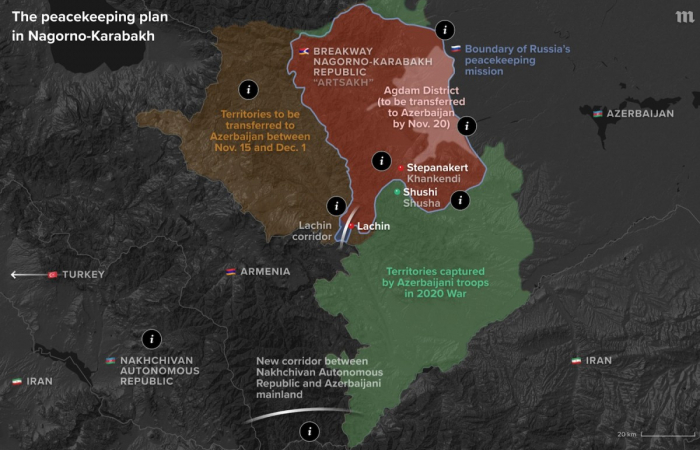
Both NATO and Turkey are involved in the South Caucasus geopolitics, albeit with different levels of engagement. Turkey is a strategy ally of Azerbaijan, and is actively fostering its relations with Georgia. Azerbaijan - Georgia - Turkey strategic partnership has both political and economic aspects, with Georgia playing the role of bridge connecting Azerbaijan with Turkey. The Baku - Tbilisi - Ceyhan oil and Baku Tbilisi - Erzurum gas pipelines, as well as Baku - Akhalkalaki - Kars railway scheduled to be launched later this year are economic bonds that ensure there are no major setbacks in trilateral relations. Besides, Georgia's aspiration for NATO membership makes Turkey more valuable for Georgia. As for Turkish - Armenian relations, the two states have no diplomatic ties, and Turkey has closed its borders with Yerevan due to the conflict in Nagorno-Karabakh.

NATO's policy in the South Caucasus is a part of its broad agenda in the post-soviet space. Here the top priority for NATO, as for the whole Euro-Atlantic community is to foster state building processes through the implementation of political and economic reforms. Successful state building is considered the best way to lessen the dependence of the post-soviet states on Russia, making it more difficult  for Russia to regain its influence over them. In this context the EU plays the role of trigger for political and economic reforms - supporting programs aimed at strengthening good governance, rule of law, and so on - whilst NATO emphasizes the significance of defense reforms. NATO implements Individual Partnership Actions Plans (IPAP) with Armenia and Azerbaijan, and has a much broader cooperation agenda with Georgia. Turkey, as the only NATO member state bordering the South Caucasus, plays an important role in NATO's post - soviet strategy including the South Caucasus.  

Given the economic and political significance of Turkey for NATO, and vice versa, as well as the unlikelihood of any breakthrough in US-Russia, and NATO-Russia relations, the recent rifts between key NATO member states and Turkey will have no tangible impact on the South Caucasus. Turkey will continue its efforts to strengthen its strategic alliance with Azerbaijan, to deepen the involvement of Georgia into trilateral Turkey-Azerbaijan-Georgia cooperation, and to put pressure on Armenia by trying to isolate it. NATO will continue to support defense reforms in all three South Caucasian states, putting more emphasize on its relations with Georgia, even though both NATO and Georgia understand that for foreseeable future there are no prospects for Georgia to attain NATO membership.

Armenia will continue its policy of strategic alliance with Russia which has been solidified by Armenia's membership into Eurasian Economic Union. Simultaneously, Armenia will make efforts to pursue relations with NATO and the EU hoping to sign the Comprehensive and Enhanced Partnership Agreement with EU in upcoming Eastern Partnership summit later this year, and to continue its cooperation with NATO within the IPAP framework.  


Benyamin Poghosyan is the Executive Director, Political Science Association of Armenia. He contributed this commentary to commonspace.eu

Photo: The Incerlik Air Base in Turkey 
Related articles

Editor's choice
News
Council of Europe launches new International Claims Commission for Ukraine

Council of Europe launches new International Claims Commission for Ukraine

Thirty-four countries and the European Union have signed a new convention establishing an International Claims Commission for Ukraine at a diplomatic conference co-hosted by the 46-nation Council of Europe and the Netherlands in the Hague. The diplomatic conference was attended by leaders and high-level representatives from over 50 states, including the President of Ukraine, Volodymyr Zelenskyy, the President of the Republic of Moldova, Maia Sandu, and the Prime Minister of the Netherlands, Dick Schoof.  “Today marks a major step forward in ensuring accountability for Ukraine. The International Claims Commission represents justice and hope for tens of thousands of victims—our determination that those who have suffered will not be forgotten. I call for quick ratifications so we can get the commission rapidly up and running for the people of Ukraine,” said Council of Europe Secretary General Alain Berset. Ukrainian President Volodymyr Zelenskyy said: “We expect that every mechanism for compensation from the Register of Damage and Claims Commission to the actual payments – will start working and receive strong and sufficient international support, so that people can truly feel that any kind of damage caused by the war can be compensated. This war, and Russia’s responsibility for it, MUST become a clear example – so that others learn not to choose aggression.” “Accountability is about creating the conditions for peace that endures. And therefore, accountability is a condition of security – today and for the future. But accountability is not only about Ukraine. And it is not only about one aggressor and one victim. Accountability is about Europe. About every country in Europe. It is about whether Europe, as a whole, is willing to defend its peace,” said Maia Sandu, President of the Republic of Moldova, which currently holds the Presidency of the Council of Europe’s Committee of Ministers. The Prime Minister of the Netherlands, Dick Schoof, said: “Every day Russia is deliberately bombarding homes, destroying businesses and damaging infrastructure in Ukraine. Russia must compensate Ukraine for the damage caused. That is why we have launched the International Claims Commission for Ukraine and we are honoured to host it.” The International Claims Commission will be the second part of a comprehensive compensation mechanism related to Russia’s war of aggression, building on the existing Register of Damage for Ukraine. The claims commission will be established within the framework of the Council of Europe and will also be open to other countries. The Register of Damage for Ukraine, created in 2023, collects and records compensation claims submitted by individuals, organisations and public bodies in Ukraine. Forty-four states and the European Union have so far joined the Register, which has already received 86,000 claims. The International Claims Commission will review, assess and decide upon claims submitted to the Register of Damage for Ukraine and determine the amount of compensation, if any, which is due in each case. The convention establishing the commission will enter into force once it has been ratified by 25 signatories, as long as sufficient funds have been secured to support its initial work.

Popular

Editor's choice
News
Council of Europe launches new International Claims Commission for Ukraine

Council of Europe launches new International Claims Commission for Ukraine

Thirty-four countries and the European Union have signed a new convention establishing an International Claims Commission for Ukraine at a diplomatic conference co-hosted by the 46-nation Council of Europe and the Netherlands in the Hague. The diplomatic conference was attended by leaders and high-level representatives from over 50 states, including the President of Ukraine, Volodymyr Zelenskyy, the President of the Republic of Moldova, Maia Sandu, and the Prime Minister of the Netherlands, Dick Schoof.  “Today marks a major step forward in ensuring accountability for Ukraine. The International Claims Commission represents justice and hope for tens of thousands of victims—our determination that those who have suffered will not be forgotten. I call for quick ratifications so we can get the commission rapidly up and running for the people of Ukraine,” said Council of Europe Secretary General Alain Berset. Ukrainian President Volodymyr Zelenskyy said: “We expect that every mechanism for compensation from the Register of Damage and Claims Commission to the actual payments – will start working and receive strong and sufficient international support, so that people can truly feel that any kind of damage caused by the war can be compensated. This war, and Russia’s responsibility for it, MUST become a clear example – so that others learn not to choose aggression.” “Accountability is about creating the conditions for peace that endures. And therefore, accountability is a condition of security – today and for the future. But accountability is not only about Ukraine. And it is not only about one aggressor and one victim. Accountability is about Europe. About every country in Europe. It is about whether Europe, as a whole, is willing to defend its peace,” said Maia Sandu, President of the Republic of Moldova, which currently holds the Presidency of the Council of Europe’s Committee of Ministers. The Prime Minister of the Netherlands, Dick Schoof, said: “Every day Russia is deliberately bombarding homes, destroying businesses and damaging infrastructure in Ukraine. Russia must compensate Ukraine for the damage caused. That is why we have launched the International Claims Commission for Ukraine and we are honoured to host it.” The International Claims Commission will be the second part of a comprehensive compensation mechanism related to Russia’s war of aggression, building on the existing Register of Damage for Ukraine. The claims commission will be established within the framework of the Council of Europe and will also be open to other countries. The Register of Damage for Ukraine, created in 2023, collects and records compensation claims submitted by individuals, organisations and public bodies in Ukraine. Forty-four states and the European Union have so far joined the Register, which has already received 86,000 claims. The International Claims Commission will review, assess and decide upon claims submitted to the Register of Damage for Ukraine and determine the amount of compensation, if any, which is due in each case. The convention establishing the commission will enter into force once it has been ratified by 25 signatories, as long as sufficient funds have been secured to support its initial work.