


The Nagorno-Karabakh conflict has entered a new phase

This is an editorial comment prepared by the editorial team of commonspace.eu.

Since the beginning of the year the number of incidents between Armenian and Azerbaijani forces on the line of contact separating them in the Nagorno-Karabakh conflict zone, and on the international border between them, have increased substantially - not only in number, but also in their  gravity. The tension on the front line continues to be accompanied by sharp exchanges of verbal tirades from Baku and Yerevan (with Stepanakert chipping in on the side of the latter from time to time). On the other hand both sides have excelled themselves in spreading disinformation -distorting real information on the causes of the incidents, the number of casualties that they suffered, or that they have inflicted on their opponents. Despite the fog of lies we can conclude that casualties in January 2015 were high, on average of one a day.

On Friday ( 23 January) the Personal Representative of the OSCE Chairman-in-Office Ambassador Andrzej Kasprzyk said developments on the contact line are a cause for concern  citing reports of use of heavier weapons in ceasefire violations, and an increasing number of incursions across the border and the line of contact resulting in increased casualties.

In the past there have been occasions when violence on the front line momentarily increased for a day or two, to settle down soon after to a routine of exchange of bullets during the night, often blamed on bored soldiers in trenches venting their frustration. Clearly what we have seen since the beginning of the year is something different: more serious, more sustained, and more dangerous.

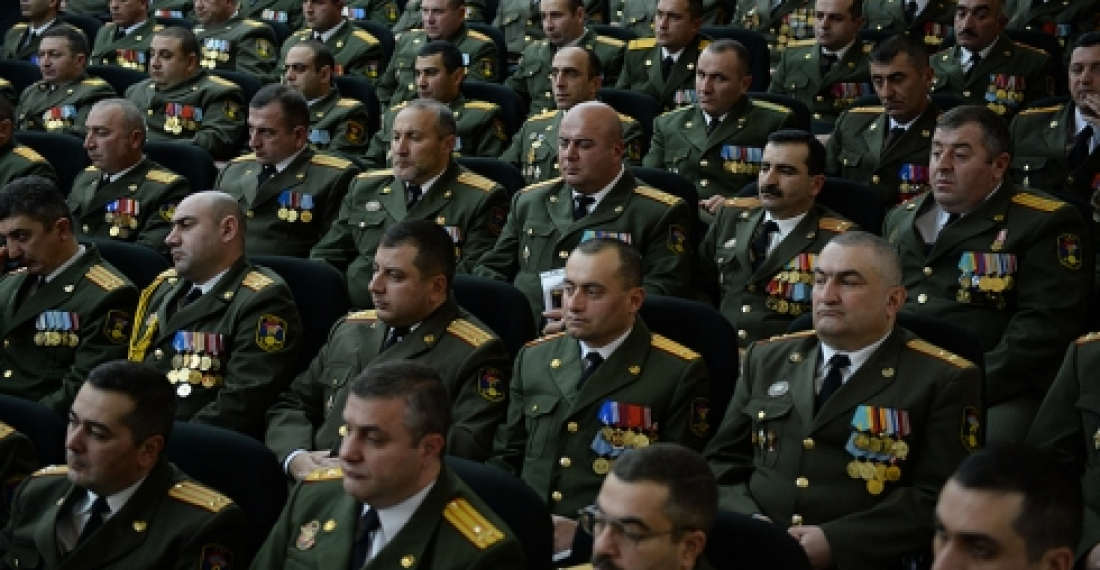
Both sides blame each other. On Monday (26 January), President Serzh Sargsyan gave the Armenian perspective when he spoke to the Board of the Armenian Ministry of Defence in Yerevan. The President said that the start of the year has been tense and admitted that Armenia had suffered casualties. He accused Azerbaijan of wanting to create constant tension around the Armenian side. Sargsyan added: "This is a simply a policy of blackmail aimed not so much at us, but at the international community. Official Baku is attempting to show everyone what it can do if all of its whims are not met."

On the other hand Azerbaijan blames Armenia of intransigence in the peace negotiations. President Ilham Aliev, speaking in Davos on 22 January warned that failure to resolve the conflict could create a precedent: "If the Nagorno-Karabakh conflict is not resolved based on international law, then you must be ready to see similar things in other parts of the world", he said.

Some may argue that none of this is very different from what we have seen in the past twenty years, and especially in the last five years. There is however one significant difference. The peace process, facilitated by the OSCE Minsk Process is in deep crisis. We have not been told this officially, either by the sides, or by the mediators, but we can easily conclude this from the fact that the two Presidents now seem to have pulled out of the discussions altogether, and their foreign ministers now do not seem to bear being in the same city together, let alone in the same room.

What comes next is a matter of speculation. Most analysts agree that neither side wants  total war if possible, yet there is also some reason to understand that neither Armenia, nor Azerbaijan, are able to sustain the amount of military spending, high level of military alertness, and overall commitment to sustain their positions, for too much longer. Something is going to have to give - and this can be either through negotiations or through war. With the negotiations stalled the options are now very narrow for both sides.

All this is happening whilst the international community is distracted by other very serious crisis right across the world: Ukraine, Yemen, Syria - not to mention the terrorist attacks in Paris, have absorbed the attention of world leaders this long January month.  In comparison Karabakh may seem like a small local difficulty that will blow over. It is not, and it is impossible to say that the situation we have today is the same as that of one five or fifteen years ago.  We have entered a new phase in the Karabakh conflict, and it is a dangerous moment. The standoff between Russia and the rest of the international community on Ukraine means that mobilising a unified response to the escalation is more difficult than ever. The responsibility of the sides to assume themselves responsibility for resolving this terrible conflict is now therefore heavier than ever before. For the sake of their own nations they need to do so.


This is an editorial comment prepared by the editorial team of commonspace.eu

photo: Armenian Army officers listening to an address by President Serzh Sargsyan in Yerevan on Monday, 26 January 2015. (Picture courtesy of the Press Service of the President of Armenia).


Related articles

Editor's choice
News
Council of Europe launches new International Claims Commission for Ukraine

Council of Europe launches new International Claims Commission for Ukraine

Thirty-four countries and the European Union have signed a new convention establishing an International Claims Commission for Ukraine at a diplomatic conference co-hosted by the 46-nation Council of Europe and the Netherlands in the Hague. The diplomatic conference was attended by leaders and high-level representatives from over 50 states, including the President of Ukraine, Volodymyr Zelenskyy, the President of the Republic of Moldova, Maia Sandu, and the Prime Minister of the Netherlands, Dick Schoof.  “Today marks a major step forward in ensuring accountability for Ukraine. The International Claims Commission represents justice and hope for tens of thousands of victims—our determination that those who have suffered will not be forgotten. I call for quick ratifications so we can get the commission rapidly up and running for the people of Ukraine,” said Council of Europe Secretary General Alain Berset. Ukrainian President Volodymyr Zelenskyy said: “We expect that every mechanism for compensation from the Register of Damage and Claims Commission to the actual payments – will start working and receive strong and sufficient international support, so that people can truly feel that any kind of damage caused by the war can be compensated. This war, and Russia’s responsibility for it, MUST become a clear example – so that others learn not to choose aggression.” “Accountability is about creating the conditions for peace that endures. And therefore, accountability is a condition of security – today and for the future. But accountability is not only about Ukraine. And it is not only about one aggressor and one victim. Accountability is about Europe. About every country in Europe. It is about whether Europe, as a whole, is willing to defend its peace,” said Maia Sandu, President of the Republic of Moldova, which currently holds the Presidency of the Council of Europe’s Committee of Ministers. The Prime Minister of the Netherlands, Dick Schoof, said: “Every day Russia is deliberately bombarding homes, destroying businesses and damaging infrastructure in Ukraine. Russia must compensate Ukraine for the damage caused. That is why we have launched the International Claims Commission for Ukraine and we are honoured to host it.” The International Claims Commission will be the second part of a comprehensive compensation mechanism related to Russia’s war of aggression, building on the existing Register of Damage for Ukraine. The claims commission will be established within the framework of the Council of Europe and will also be open to other countries. The Register of Damage for Ukraine, created in 2023, collects and records compensation claims submitted by individuals, organisations and public bodies in Ukraine. Forty-four states and the European Union have so far joined the Register, which has already received 86,000 claims. The International Claims Commission will review, assess and decide upon claims submitted to the Register of Damage for Ukraine and determine the amount of compensation, if any, which is due in each case. The convention establishing the commission will enter into force once it has been ratified by 25 signatories, as long as sufficient funds have been secured to support its initial work.

Popular

Editor's choice
News
Council of Europe launches new International Claims Commission for Ukraine

Council of Europe launches new International Claims Commission for Ukraine

Thirty-four countries and the European Union have signed a new convention establishing an International Claims Commission for Ukraine at a diplomatic conference co-hosted by the 46-nation Council of Europe and the Netherlands in the Hague. The diplomatic conference was attended by leaders and high-level representatives from over 50 states, including the President of Ukraine, Volodymyr Zelenskyy, the President of the Republic of Moldova, Maia Sandu, and the Prime Minister of the Netherlands, Dick Schoof.  “Today marks a major step forward in ensuring accountability for Ukraine. The International Claims Commission represents justice and hope for tens of thousands of victims—our determination that those who have suffered will not be forgotten. I call for quick ratifications so we can get the commission rapidly up and running for the people of Ukraine,” said Council of Europe Secretary General Alain Berset. Ukrainian President Volodymyr Zelenskyy said: “We expect that every mechanism for compensation from the Register of Damage and Claims Commission to the actual payments – will start working and receive strong and sufficient international support, so that people can truly feel that any kind of damage caused by the war can be compensated. This war, and Russia’s responsibility for it, MUST become a clear example – so that others learn not to choose aggression.” “Accountability is about creating the conditions for peace that endures. And therefore, accountability is a condition of security – today and for the future. But accountability is not only about Ukraine. And it is not only about one aggressor and one victim. Accountability is about Europe. About every country in Europe. It is about whether Europe, as a whole, is willing to defend its peace,” said Maia Sandu, President of the Republic of Moldova, which currently holds the Presidency of the Council of Europe’s Committee of Ministers. The Prime Minister of the Netherlands, Dick Schoof, said: “Every day Russia is deliberately bombarding homes, destroying businesses and damaging infrastructure in Ukraine. Russia must compensate Ukraine for the damage caused. That is why we have launched the International Claims Commission for Ukraine and we are honoured to host it.” The International Claims Commission will be the second part of a comprehensive compensation mechanism related to Russia’s war of aggression, building on the existing Register of Damage for Ukraine. The claims commission will be established within the framework of the Council of Europe and will also be open to other countries. The Register of Damage for Ukraine, created in 2023, collects and records compensation claims submitted by individuals, organisations and public bodies in Ukraine. Forty-four states and the European Union have so far joined the Register, which has already received 86,000 claims. The International Claims Commission will review, assess and decide upon claims submitted to the Register of Damage for Ukraine and determine the amount of compensation, if any, which is due in each case. The convention establishing the commission will enter into force once it has been ratified by 25 signatories, as long as sufficient funds have been secured to support its initial work.

