


This Monday Commentary was prepared by Dr Dennis Sammut, Director of LINKS Europe, and Managing Editor of commonspace.eu
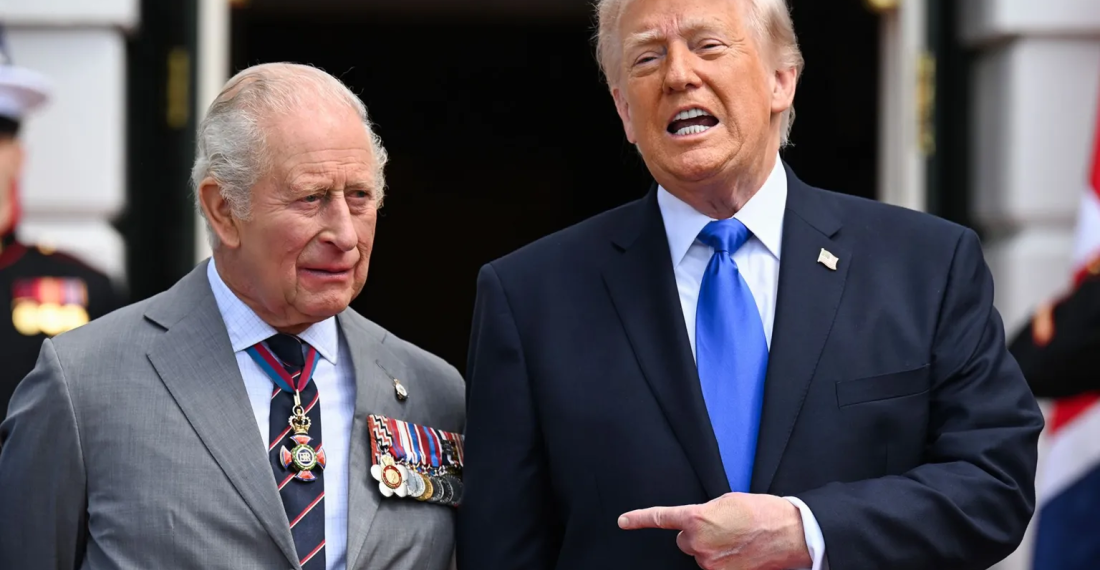
The visit of King Charles III to the USA last week was a huge success. It greatly contributed to the image of Britain and the monarchy, but it also contributed to improving the image of the United States in the world, at a time when its global position is at a long-time low.
In his speeches, at a joint session of Congress, and at the State Dinner in the White House, the King was measured and forceful. He said everything that needed to be said, but without causing offence. In fact, in Congress, he was given twelve standing ovations.
In a country that seems to agree on almost nothing, the King received a warm reception from both sides of the political divide, where neutral ground is rare.
The King visited the US at a time when UK-US relations were seen as being in crisis, and with an unpredictable president in the White House, known to ambush his guests.
A commentator in the conservative Washington Examiner wrote that the UK needed more than conventional diplomacy - and that King Charles delivered.
As the BBC noted, ” for months, Donald Trump - a committed Anglophile and avid fan of the Royals - repeatedly told reporters that he was excited for the King's visit. That excitement was on full display throughout the King's visit to Washington, in which the world saw a warmer version of a president not shy to make his feelings known. Uncharacteristically, Trump largely stuck to a script, making no mention of policy disagreements with Downing Street and lauding the long ties between the US and Britain.”
Trump, following the King’s speech to Congress, remarked: "He got the Democrats to stand; I've never been able to do that. I couldn't believe it. They liked him more than they've ever liked any Republican or Democrat, actually."
Sir David Manning, a former UK ambassador to the US, told the BBC before the trip the King was "a stabiliser, a shock absorber" who could "provide a better climate for re-engaging with the Trump administration over some of the very difficult bilateral issues".
Before an audience that is so polarised, the King gently reminded Americans of where they came from and what united them as a nation. He spoke of "the living mosaic of the United States", praising it and the UK both as "vibrant, diverse and free societies".
Republican senator Lindsey Graham said the King had given a "much-needed morale boost" for US politicians.
"Most members of Congress feel better after the speech than they did before," he said on social media. "I will admit it was a bit odd that the unifying feeling had to come from the King of England… but so be it!"
The King made some very serious points that directly challenged Trump’s narrative.
NATO, he said, had not only supported the US "shoulder to shoulder" after the 9/11 attacks, but it also helps us "meet the challenges of an increasingly complex and contested world".
He said "unyielding resolve" was needed for "the defence of Ukraine and her most courageous people".
He praised "the international rules that have allowed us to trade and have kept power in balance for 80 years", rules Trump and his administration have repeatedly denigrated.
Then the King made his argument explicit: "The challenges we face are too great for any one nation to bear alone."
When King Charles noted that executive power "subject to checks and balances" was a British legal tradition, enshrined in the Magna Carta, which became a bedrock principle in the US Constitution, he received another standing.
The King, who is also “Admiral of the Fleet”, also stood up for the Royal Navy.
Trump has derided the British Navy, called its ships "toys", and said their aircraft carriers "didn't work".
King Charles, who served for five years in the Royal Navy, made a specific mention of his time in the service – using it as an entry point to remark on the benefits of security and intelligence relations between the two nations – and between America and Europe.
He even found an avenue to mention climate change, an issue that has been a longtime concern of his.
"From the depths of the Atlantic to the disastrously melting ice-caps of the Arctic, the commitment and expertise of the United States Armed Forces and its allies lie at the heart of NATO, pledged to each other's defence, protecting our citizens and interests, keeping North Americans and Europeans safe from our common adversaries," he said.
Britain has a political system that often appears to be broken, an economy that often appears to be tired, and a young generation that often appears to be confused. Yet there is a parallel British system, with the monarchy at its head, that remains robust and ambitious, and that can deliver when necessary. Some call it a deep state. In fact, it is much more subtle and wider, and can rise to the occasion. The visit of Charles III to the US last week proved that.
All the jeremiahs, particularly in the mainstream British media, who have been singing the futility of the monarchy and heralding its demise, had to eat humble pie last week as King Charles maneuvered around the many obstacles of his trip to the US.
King Charles showed he has personality, acumen, and personal charm, and did the British people proud.
source: This Monday Commentary was prepared by Dr Dennis Sammut, Director of LINKS Europe, and Managing Editor of commonspace.eu.
photo: King Charles III with US President Trump



