This is a commentary by the political editor of commonspace.eu
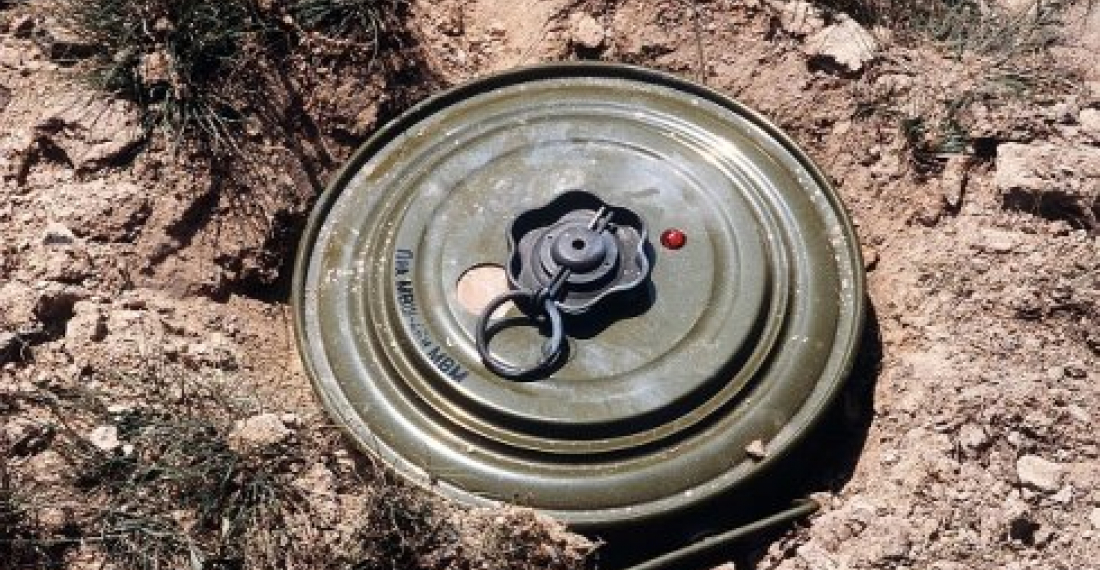
A nineteen-year-old Armenian soldier died on Friday (1 September) as a result of a landmine explosion. Although not much information is available about the circumstances of the death, it is understood that he did not die in a combat situation. An official statement by the de facto authorities in Nagorno-Karabakh said that "Hayk Khachatryan, 19, was fatally wounded in a Karabakh Defence Army military unit located in the northern direction of the line of contact". He was later awarded posthumously the medal 'For Service in Battle' "for bravery shown during the defence of the NKR state border", according to the same sources.
The issue of mines and unexploded ordinance is one of the most serious aspects of the Karabakh conflict, a continuous threat to the population in the conflict-affected region, both Armenian and Azerbaijani. The area is heavily mined, and the problem will take a long time to resolve even in an ideal situation if peace returns to the region. In the present tense situation on the line of contact, resolving the problem is all but impossible as long as both sides do not recognise its seriousness and agree to take mutually-agreed steps to deal with it.
Part of the problem is simply its scale: mines were seen as a cheap way of defence in the 1990s - their lethal consequences often not fully understood. Both sides used them extensively. Since then, other unexploded ordinance from the original conflict, and from the subsequent flare-ups of the last twenty-five years, have exacerbated the problem. Very often people die as a result of mines planted by their own side, whose location has been forgotten.
The main obstacle however is not the scale of the problem but the current political and military impasse. Given the tense stand-off between the two sides, and the frequent outbursts of violence, mine and unexploded ordinance clearance often blurs into military activity. Because the borders are contested, as is the status of Karabakh itself, any activity, even if of a humanitarian nature, is prone to controversy. Some argue that a solution to the problem is impossible until there is a resolution of the conflict itself. Both sides however are increasingly aware of the seriousness of the situation. In Karabakh itself the de-facto authorities have struggled with the problem for many years, and more than three hundred people have died since 1994 in incidents involving mines and unexploded ordinance. The Halo Trust has been engaged in demining efforts in Nagorno-Karabakh where it has a staff of more than two hundred people, but its presence on only one side of the conflict divide is a matter of controversy. Mines and unexploded ordinance remain a serious problem for the population of the territory.
On the Azerbaijani side of the line of contact the situation is not much different. There are regular incidents. Sometimes unexploded mines wash down rivers to areas where they were not expected. And in the village of Jojug Marjanli which Azerbaijan retook possession of after the April 2016 fighting, the Azerbaijani land clearance organisation ANAMA struggled for months to make the area safe for displaced villagers to return. In July it said that it had defused 176 mines and other unexploded ordinance. This was in one village alone. ANAMA's Director, Gazanfar Ahmadov was quoted by the news agency APA on 18 July as saying that since it was established in 1998 ANAMA has neutralised 760,000 mines and unexploded ordinance.
It should therefore be amply clear to both sides that the time has come for the issue to be dealt with separately from the wider discussion on the conflict and its resolution. With the help of the international community the sides should work out modalities on how they can deal with the humanitarian aspects of the problem without compromising either their political positions, or weaken their military postures.
This commentary was prepared by the political editor of commonspace.eu