Our live blog on the coronavirus pandemic and its impact on the world is on every day from 1200-1600 Central European Summer Time (equivalent to 1400-1800 in Tbilisi and Dubai).
This blog is compiled by our team of journalists and researchers based in The Hague in the Netherlands and in Tbilisi, Georgia, working with partners and associates in a number of different countries. You can also follow us on twitter @commonspaceEU. We are happy to hear from you wherever you are. Please send us your comments, stories and suggestions by email to editor@commonspace.eu
This live blog has been running daily since 19 March. You can read earlier blogs here
_____________________________________________________________________
Tuesday, 21 April 2020
1600 CEST (1800 Tbilisi/Dubai)
We are now pausing this blog for today. We will be back with this live blog tomorrow Wednesday, 22 April 2020 at 12 noon CEST (1400 in Tbilisi and Dubai).
Till then from our team in the Hague and in Tbilisi a good evening
Be safe! Be healthy! Be happy!
_________________________________________________________________________
1550 CEST / 1750 Tbilisi/Dubai)
 Turkey
Turkish president describes pandemic as biggest crisis since WWII
"This pandemic, which is basically a health problem, has become the biggest crisis after World War II in terms of its economic results," President Recip Tayip Erdoğan said, speaking to his party's Central Execution Board meeting via teleconference.
Especially the "desperation" of the developed countries in the face of such a comprehensive crisis necessitates reconstruction of all future predictions, he stated.
It was not possible for Turkey to stay out of the pandemic given the situation in all European countries and Iran was severe.
Turkey to impose four-day lockdownTurkey to impose four-day lockdown "However, our difference from other countries is that we both have a strong health infrastructure and take the necessary precautions over time," he said.
1530 CEST (1730 Tbilisi/Dubai)
 Austria
Chancellor Sebastian Kurz says Austria intends to go ahead with plans to open all shops at the beginning of May and restaurants in mid-May.
Austria allowed small shops to open a week ago. Kurz said Tuesday that coronavirus infections have continued to drop, so the government can move ahead with the reopening plan it already sketched out. He said the government will review the situation at two-week intervals, "so as always to have the opportunity to pull the emergency brake if that is necessary."
The plan calls for the remaining shops, along with services such as hairdressers and manicurists, to open at the beginning of May. Schools are scheduled to start opening in May and religious services resuming May 15.
The government also plans to allow the catering industry to restart on May 15, with all staff required to wear masks. There will be restrictions on how many customers can be present.
Kurz advised Austrians against "prematurely" expecting unlimited freedom to travel around Europe. He said that he will take his summer vacation in Austria, and "can only recommend to Austrians that they do the same."
_________________________________
1515 CEST (1715 Tbilisi/Dubai)
 EU report set to expose Russian and Chinese disinformation during the pandemic
Russian and Chinese "official and state-backed" actors are targeting audiences in the EU and its neighbourhood with misinformation and "conspiracy narratives" about COVID-19, according to a report from the European External Action Service's StratCom division.
According to the Politico.eu website the report, which is expected to be published today, states that Russian "official sources and state-controlled media and social media channels have been running a coordinated campaign ... promoting false health information." Particularly affected are "smaller media markets within and outside the EU" where "tech companies face lower incentives to take adequate counter-measures," according to the report.
Misinformation emanating from China, appears to be aimed at improving the country's image. "China has continued to run a global disinformation campaign to deflect blame for the outbreak of the pandemic and improve its international image. Both overt and covert tactics have been observed," the report said.
The authors say that false information about the pandemic is already having an impact. "A growing body of evidence suggests that coronavirus related disinformation can have [a] direct impact on public health and security," they wrote.
StratCom was set up to counter disinformation and strengthen the media environment.
________________________________________
1430 CEST (1630 Tbilisi/Dubai)
We have decided to put these two stories together, to give our readers a sense of the huge gap between how different people in different circumstances are being impacted by the pandemic.
The first is a report about the UN World Food Programme prepared by Maximiliaan van Lange
The United Nations World Food Programme (WFP), sees a doubling of the number of people worldwide in an acute famine by the end of 2020.
This is double the number compared to last year and is a result of the pandemic. The WFP expects an increase to 265 million people being in acute famine. According to WFP economic specialists, the cause lies with the vulnerable group of people who can only eat if they earn a wage.
The second story is from London. Here people are worried about getting their favorite cocktail
Bacardi, the world's largest family-owned spirits company, has launched a partnership with Deliveroo Editions, allowing customers to order premium cocktails from top bars to their front door in as little as 30 minutes. The new delivery service is part of the Bacardi #RaiseYourSpirits initiative, helping UK bars and bartenders to generate income during the coronavirus crisis.
Available from Thursday 16 April at 5pm, this first-ever virtual bar from Deliveroo Editions sites gives cocktail lovers the chance to support their favourite local bars and bartenders while their doors are closed. A rotating menu of five professionally crafted cocktails, made using Bacardi brands and including a lower ABV option, will be available in each area. Customers will also be able to tap into fun online content, helping to make that cocktail moment even more special.
We prefer not to comment, but we ask our readers to reflect.
___________________________________________________
1415 CEST (1615 Tbilisi/Dubai)
More about that cancelled Oktoberfest
The Bavarian Prime Minister, Markus Söder, announced today (21 April) the annual Oktoberfest in Munich, which normally attracts six million visitors, is cancelled due to Covid-19. Söder thinks the risk is ''simply too great'' and ''keeping distance and wearing mouth caps is impossible''.
Oktoberfest is the world's largest and best-known beer festival, which was to have taken place from 19 September to 4 October. The festival would normally yield the Munich region around 1 billion euros in revenues annually.
________________________________________
1350 CEST (1550 Tbilisi/Dubai)
No Oktoberfest  and no Pampalona

Two of Europe's most iconic festivals will be cancelled this year.
Spain's famous annual San Fermin bull-running festival in July has been cancelled because of the coronavirus crisis.
"As expected as it was, it still leaves us deeply sad," said acting mayor Ana Elizalde in a statement from the local Pamplona town hall.
The festival, which draws thousands of participants and was made famous in Ernest Hemingway's novel "The Sun Also Rises", has seldom been cancelled in its history.

It is the second major European tourist event to be cancelled today after it was announced that Oktoberfest, the famous annual German beer-drinking festival which sees six million people travel to Munich, will not take place.
__________________________________________________________
1315 CEST (1515 Tbilisi/Dubai)
We have already reported on this blog that more than one hundred thousand Europeans have died from covid 19 so far. Two thirds of these fatalities were in three EU countries: France, Italy and Spain. An update from France, by Maximiliaan van Lange, a member of our research team.
 France
 is the fourth country in the world with more than 20,000 confirmed Covid-19 deaths.
French health authorities report that yesterday (20 April) the country became the fourth country in the world with 20,000 deaths from Covid-19 in hospitals and health care institutions. Earlier, Spain, Italy and the United States already passed the ''symbolic'' figure of 20,000 victims.
Covid-19, according to the French Ministry of Health, Jérôme Salomon, ''results in more victims than any flu epidemic'', and ''also more than the heatwave of summer 2003''. During the 2003 heatwave, 19,000 people died.
However, in France the number of new Covid-19 cases in hospitals and intensive care units is gradually decreasing.
___________________________________________________
1300 CEST (1500 Tbilisi/Dubai)
An update now from Azerbaijan
 Azerbaijan
Head of EU Delegation to Azerbaijan, Ambassador Kestutis Jankauskas has emphasised the importance of co-operation between countries in the fight against covid-19. he told the website news.az
"This still ongoing pandemic has put all of us into a completely new situation, and we have to deal with it together. We keep learning from each other," said the diplomat, noting that in this respect Azerbaijan has been a quick learner, taking strict but necessary measures at the right time.
The better we all cooperate, the sooner they will be over. We need to make sure that current temporary restrictions should not be misused and should be lifted as soon as possible. In recent days we see positive tendencies which are a result of these measures, so we hope to see these restrictions gradually being eased up".
The ambassador stressed that the EU Delegation continues working with the Azerbaijani authorities on programs aimed at the quickest possible socio-economic recovery in line with the government‘s needs and priorities.
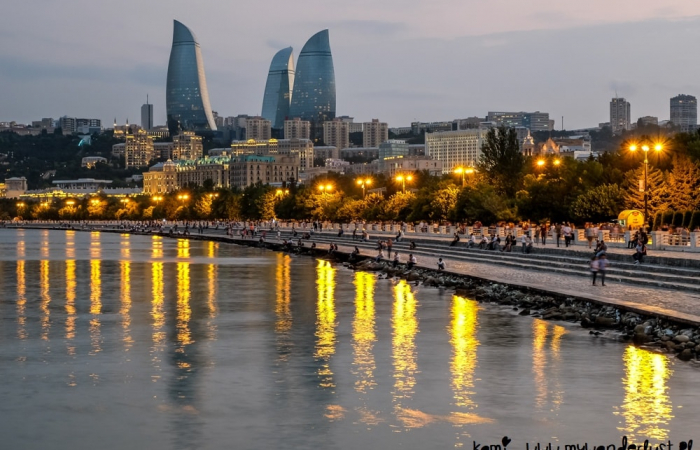
Jankauskas also commended the illumination of the Heydar Aliyev Center with the EU flag last week. "I very much appreciate the illumination of the Heydar Aliyev Centre with the EU flag last week in a sign of solidarity," he added. (picture below)
Currently Azerbaijan is reporting 1436 cases of covid 19 and 19 deaths.

1245 CEST (1445 Tbilisi/Dubai)
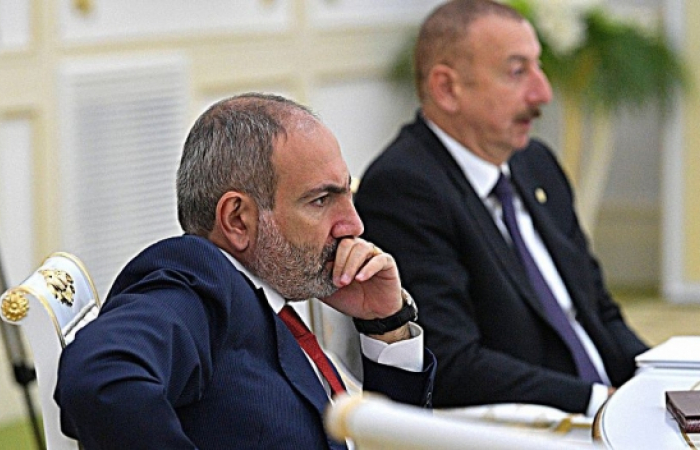
We now have some updates from across the Caucasus region. We start with Armenia
 Armenia
Reports from Armenia suggest that the number of crimes committed since the state of emergency was declared in March as part of measures to contain covid-19 has gone done dramatically to about 20% of the same figures last year.
Armenia this morning reported that the number of coronavirus cases has risen to 1401.There are 24 deaths.
 Georgia
 continues to report relatively small numbers of covid-19, but Georgian medical specialists are warning the population against complacency. The number of cases has now reached 408 and 4 people have died.
This morning the European web portal Euractiv carried a report about Georgia's fight against covid-19 and the impact of the pandemic on the country's conflict regions of Abkhazia and South Ossetia.
read it here
Nagorno-Karabakh
In the meantime people have been asked not to travel between Armenia and the self-declared Nagorno-Karabakh Republic. The NKR authorities said this was due to measures connected with the containment of covid-19.
___________________________________________
1215 CEST (1415 Tbilisi/Dubai)
Egypt is a country of nearly a hundred million people, most of who live around the Nile, and in the two big metropolis of Cairo and Alexandria. And Egypt without crowds of people was something unimaginable until now. Yet coronavirus has created some very unusual emptiness. Noman Ahmed from the commonspace.eu research team has an update on Egypt and other MENA countries.
 Egypt
Yesterday, Egyptians celebrated the Spring holiday, Sham El-Nassim, at home. Streets were almost empty in Egypt's two largest cities. The country has enacted a curfew at night and during weekends or official holidays.
The holiday comes a day after the Coptic Easter and marks the beginning of Spring, a tradition held since the ancient Kingdoms. The last known time when the festival was cancelled is 1984 during a Cholera outbreak. Check on this photo essay on a local blogspot showcasing Egypt's empty streets.

 Lebanon
Protesters in Lebanon defied curfews and took on the streets demanding to reopen business and complaining about the economic impact of the crisis.
Young people in Beirut organized a motorcycle convoy to the home of the Prime Minister chanting against the increase in prices and the deterioration in living conditions.
Lebanon has been witnessing protests since last year against corruption and economic conditions.
The return of protestors to the streets is driven by the declining spread of the coronavirus. Officials are expected to ease restrictions soon.
 Saudi Arabia
The number of #COVID19 cases have surpassed 10,000 in Saudi Arabia. The Health Ministry has already reported that it expects a spike due to active testing. The country has reported 103 deaths and 1490 recoveries.
"Instead of waiting for someone to tell us they suspect a person might be infected and putting him in quarantine, we actively go to the high-risk areas and carry out tests to identify cases early," the health minister said.
Authorities have urged citizens to abide by curfew and social distancing regulations. All Ramadan prayers and services will not be held in mosques or public spaces.
_______________________________________________
1205 CEST (1405 Tbilisi/Dubai)
Oil prices plummet
The American oil market usually moves with the global oil price but became negative yesterday (20 April). A report prepared by Maximiliaan van Lange, a member of our Commonspace.eu research team.
The US oil price for a barrel of crude STI oil has turned negative for the first time in history. The fall in price means that oil companies will have to pay traders of American oil barrels to buy oil. The result is a drop from 20 US dollars to zero. This is related to oversupply, and also to storage facilities being full to capacity.
Because of Covid-19 the oil demand has plummeted in recent months, because world economies are down. In the meantime, there is a price war going on between Saudi Arabia and Russia. The price of Brent oil, the benchmark for oil from the Middle East and the North Sea, also dropped by more than 5 per cent on Monday. Europe generally depends on Brent oil for its supplies.
________________________________________________
Good day and welcome to this live blog on commonspace.eu
It is Tuesday, 21 April 2020 - 12 noon Central European Summer Time (CEST) equivalent to 14.00 hours in Tbilisi and Dubai.
The stories of death and horror that has filled the world's news programmes in the last two or three months has left many exhausted. With the number of covid-19 confirmed cases world-wide reaching two and half million, and with 170,000 people already killed by the virus, the new is sobering indeed. But at the same time all over the world artist, musicians and other entertainers are rallying around in communities and on line to keep up spirits, say thank you to those on the front line of the battle against coronavirus, and generally keep us all amused and entertained in this time of lockdown.
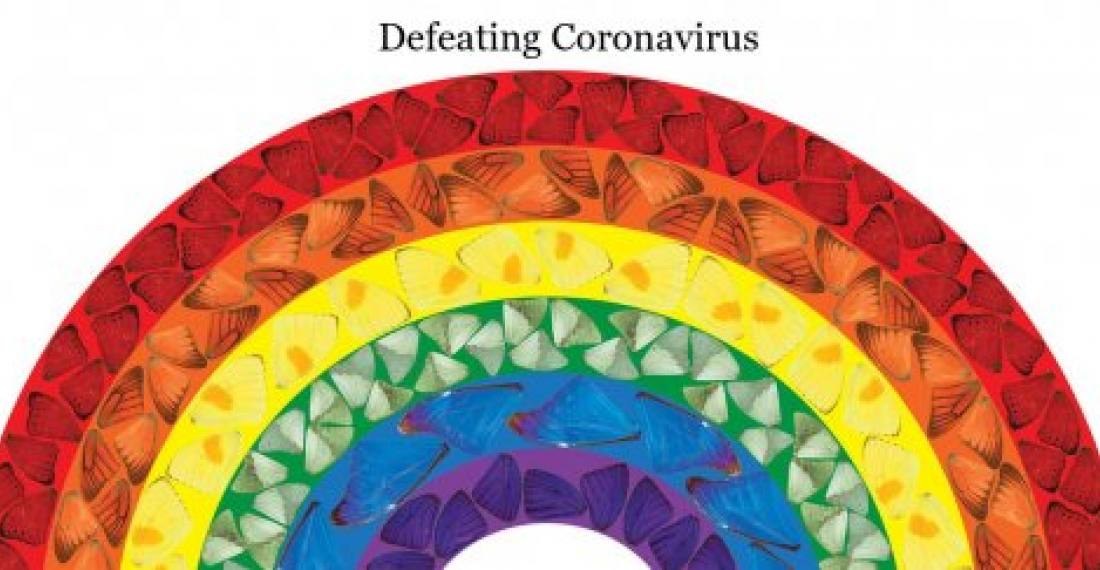
One such artist is the famous British painter Damien Hirst
Hirst has created a new rainbow artwork to show support for the British health care service, the NHS, in the current Coronavirus crisis. The work, titled Butterfly Rainbow, is made up of bands of coloured butterfly wings, one of the artist's best‐known motifs.
It is the cover page for our blog today.
A limited edition of the work is also being produced which will be sold with all profits donated to the NHS.
Damien Hirst said: "I wanted to do something to pay tribute to the wonderful work NHS staff are doing in hospitals around the country. The rainbow is a sign of hope and I think it is brilliant that parents and children are creating their own version and putting them up in the windows of their homes."
You can also download Damien Hirst's Butterfly Rainbow poster at the following link