Theme

Diplomacy

Editor's choice
Monday Commentary
Monday Commentary: 2025 was a momentous year for the South Caucasus

Monday Commentary: 2025 was a momentous year for the South Caucasus

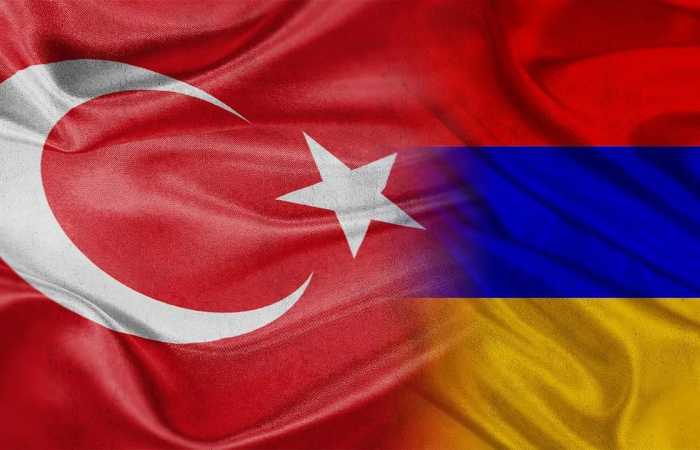
The year 2025 has ended up being a momentous year for the South Caucasus, writes Dennis Sammut in his Monday Commentary. Armenia-Azerbaijan relations have been redefined, with consequences for the whole region and beyond. That huge development overshadowed key moments in the domestic trajectory of the two countries, which however have deep consequences for the two countries, and even beyond. It has also been a tumultuous year for Georgia too. The country has been gripped in a political crisis throughout 2025, with no obvious end in sight. Whatever the domestic arguments, on the international stage Georgia is today a shadow of what it used to be until recently. It not only has lost the chance of joining the European Union any time soon, but it has also lost its position as the leading South Caucasus country. Today, in the new reality of the region, it lags as a tired third. Important as 2025 was, it ended with a lot of unfinished business. So 2026 will also be crucial for the three countries. Since regaining its statehood in 1991 after the dissolution of the Soviet Union, Armenia-Azerbaijan relations have been defined by war. The two fought open wars, wars of attrition, and propaganda wars, incessantly. Tens of thousands of people lost their lives, and hundreds of thousands were displaced. Many had lost hope that the two could try the alternative – i.e. peaceful co-existence. Yet in 2025 they were proven wrong.
Editor's choice
News
Germany accuses Russia of cyberattacks and disinformation campaign

Germany accuses Russia of cyberattacks and disinformation campaign

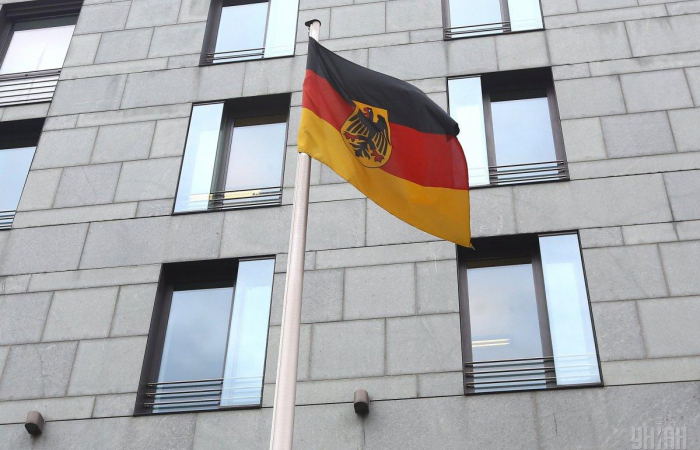
The German government holds Russia responsible for a cyberattack on German air traffic control, and for targeted disinformation campaigns before the last federal election. According to the German Foreign Office in Berlin, the incidents could be clearly attributed to the Russian military intelligence service, the GRU. In response, the Russian ambassador to Berlin was summoned to the Foreign Ministry. "We have been observing a massive increase in threatening hybrid activities by Russia for some time now," a spokesperson for the Foreign Ministry stated. These range from disinformation campaigns and espionage to cyberattacks and sabotage attempts. The aim is to divide society, sow distrust, and undermine confidence in democratic institutions. The spokesperson added that with these actions, Russia is "very concretely threatening our security, not only through its war of aggression against Ukraine, but also here in Germany."  The Foreign Ministry spokesperson explained that the cyberattack on air traffic control in August 2024 was clearly attributed to the hacker collective "APT28," known as "Fancy Bear," and to the responsibility of the Russian military intelligence service, the GRU. Furthermore, it could now be "conclusively stated" that Russia had attempted "to influence and destabilize both the last Federal election and the ongoing internal affairs of the Federal Republic of Germany." There was "absolutely irrefutable evidence" for this". The so-called "Storm 1516" campaign, which has been running since 2024, is allegedly backed by "reliable information" that the Moscow-based think tank "Center for Geopolitical Expertise" is behind it. The Center is also said to be supported by Russian military intelligence. Its primary aim is to influence democratic elections in the West. (Click the image to read more).

Filter archive

Publication date
Editor's choice
News
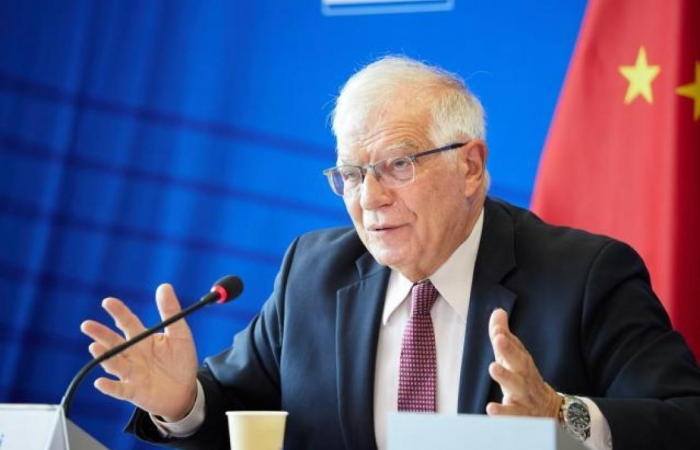
Borrell addresses European Parliament on EU-China relations

Borrell addresses European Parliament on EU-China relations

The Vice-President of the European Commission and European Union High Representative for Foreign Affairs and Security Policy Josep Borrell addressed the European Parliament on Tuesday (18 April) on "The need for a coherent strategy for EU-China Relations”. Beginning by recognising that different member states have different interests vis-a-vis China, Borrell said, "if we want to define a coherent EU strategy towards China, it is necessary for each and every EU actor to exercise their respective roles and responsibilities in accordance with, and in full respect of, the Treaties. "The main focus of his address was on integrating "economic security" into wider "national security" strategies. "This concept of ‘national security’ - ‘economic security’ - will have a determining influence on the way we conceive our foreign relations," Borrell said, adding that the EU should aim to replicate the strategies of the USA and Japan in this regard. Borrell said the four key issues in the EU's relationship with China are "values, economic security, Taiwan, and Ukraine".
Editor's choice
Editorial
Editorial: Chinese strategy in Central Asia aims to keep the west out, the Russians down, and everyone else on the margin

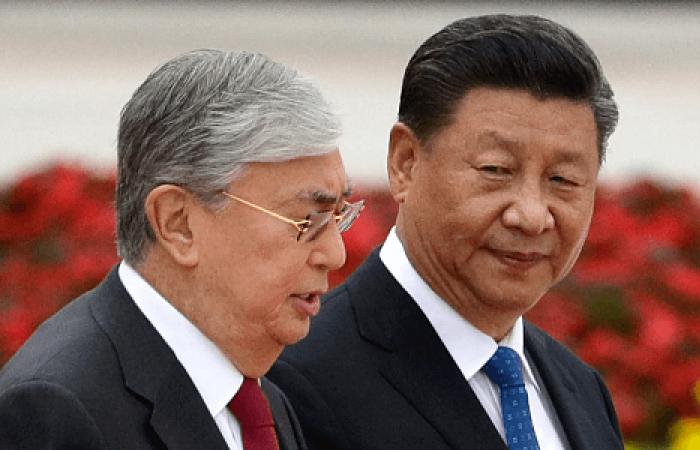
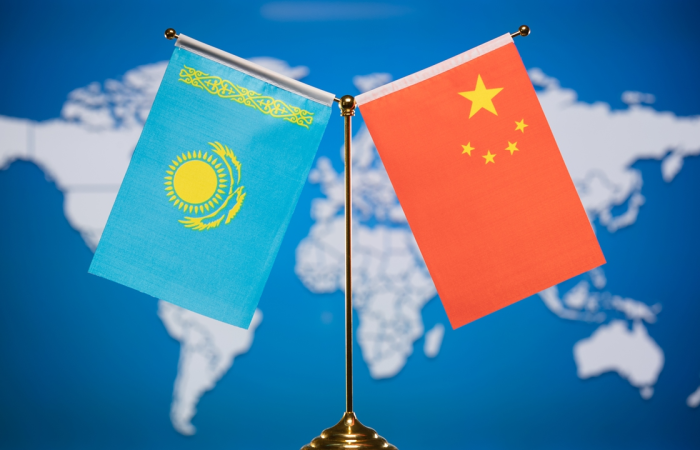
Editorial: Chinese strategy in Central Asia aims to keep the west out, the Russians down, and everyone else on the margin

Events of the past year have unleashed a new "Great Game" in Central Asia, writes commonspace.eu in this editorial. "The plan, it seems, builds on China’s “Belt and Road” programme, but there also now appears to be a much stronger political angle to China’s engagement. China is worried that Russia’s increasing weakness is creating a vacuum in Central Asia that others may be tempted to fill. It is determined to get there first. China’s approach seems to be to keep the west out, the Russians down, and everyone else on the margin." There is little doubt that the big loser in this “great game in the new era” is Russia. But the Kremlin at this point has little choice but to try to cut its losses. It desperately needs China’s support - at least economically, politically and diplomatically, if not militarily - as it tries to sort out the mess it created for itself in Ukraine, and resist Western sanctions imposed after its invasion.
Editor's choice
News
Qatar and Bahrain agree to restore diplomatic ties

Qatar and Bahrain agree to restore diplomatic ties

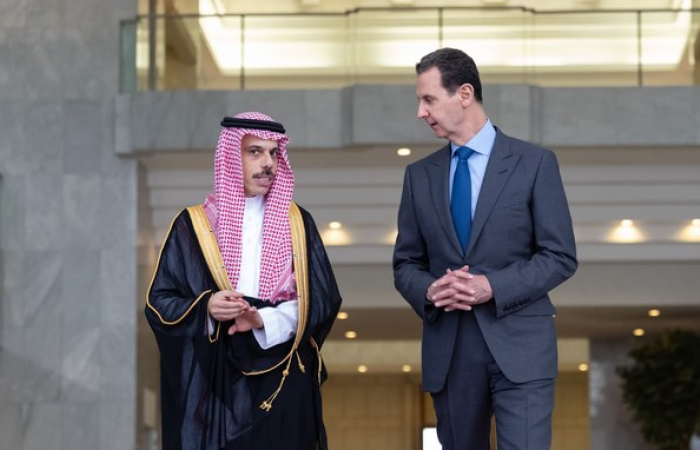
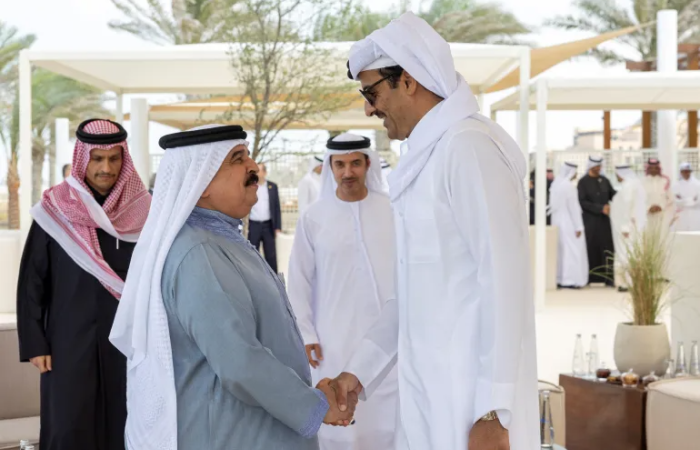
Qatar and Bahrain have announced that they have agreed on restoring diplomatic ties after a meeting on Wednesday (12 April) at the headquarters of the Gulf Cooperation Council (GCC) General Secretariat in Riyadh, Saudi Arabia. According to a statement released by the Qatari foreign ministry, both sides agreed to "enhance the Gulf unity and integration according to the GCC Charter". The agreement ends a dispute that began in 2017, when Bahrain, Saudi Arabia, the United Arab Emirates and Egypt, imposed a diplomatic blockade on Qatar alleging it had worked to support "terrorism", backed hardline groups, maintained too close ties with Iran, and had meddled in those countries' internal affairs. Doha has always firmly denied the allegations. Saudi Arabia, Bahrain, the UAE and Egypt had banned Qatari planes and ships from using their airspace and waters, as well as cutting trade links. All but Bahrain resumed these ties in 2021, however, but UAE and Qatar have not yet opened their respective embassies. The agreement between Bahrain and Qatar is the latest in a series of regional rapprochements. Most significant was the 10 March deal struck between Saudi Arabia and Iran to normalise relations between them. 
Editor's choice
Editorial
Editorial: the surge towards peace across the Muslim Middle East is an expression of pragmatism, not heavenly inspiration

Editorial: the surge towards peace across the Muslim Middle East is an expression of pragmatism, not heavenly inspiration

Although we are in the middle of the holy month of Ramadan, and peace is in the air across the whole of the Muslim Middle East, commonspace.eu writes in this editorial that "problems are being patched up, not resolved. Many of the causes or factors that triggered the conflicts in the first place remain as acute as ever. But for the moment the region is exhausted. Visionary leaders need time and space to implement their reforms; others such as the Iranian clerical regime, need time to regroup after being rattled by internal and external turmoil. There is then the issue of the wider picture. The Gulf region has for decades been the epicentre of geopolitical rivalry, which often overspilled into violence. It appears to be now losing this unenviable role. Open warfare is ongoing on the European continent following the Russian invasion of Ukraine in February 2022. This is unlikely to end any time soon."
Editor's choice
Monday Commentary
Opinion: The claim that a multipolar world is necessarily a better one is a fallacy

Opinion: The claim that a multipolar world is necessarily a better one is a fallacy

The European and Global international system is broken. Whilst others have contributed to its decline and subversion in the past, it was Russia’s actions in Ukraine, and other parts of the former Soviet space before that, that have dealt it the decisive fatal blow."What is desperately needed in the international system are rules, and the mechanism to ensure that these rules are abided with", writes Dennis Sammut in today's Monday Commentary. "Multi-polarity may sound like an attractive solution, especially to small countries who have been under pressure from bigger players or international actors, but with closer inspection, on its own, it is not."
Editor's choice
Commentary
Commentary: is this the end of the love affair between Georgia and the United States?

Commentary: is this the end of the love affair between Georgia and the United States?

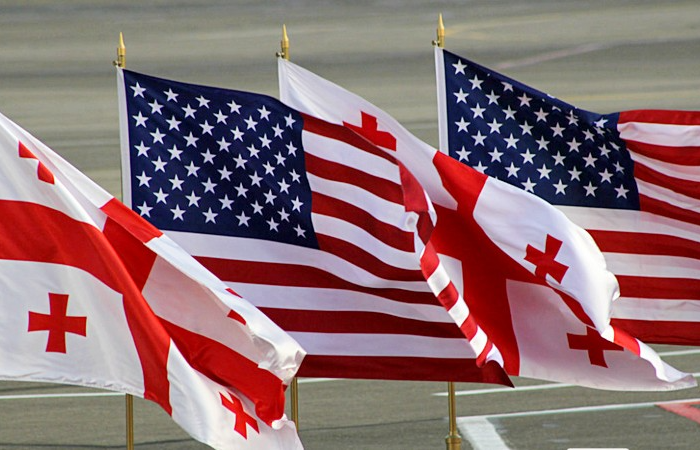
The imposition of US sanctions against four Georgian judges now makes the rift between the US and Georgian governments formal, writes commonspace.eu in this commentary. "It will have consequences, and both sides have much to lose. The GD government may decide to drift further away from the US. Given that any relations with Moscow remain, in Georgian domestic political terms, toxic, its room for manoeuvre is limited. That does not mean that most Georgians want their country to become a US client state either. But it is unlikely that Georgian nationalist sensibilities are going to be disturbed by the fact that Judge Maisuradze and company cannot travel to the US. But there are always things the GD government can do, some without too much attention in the public eye, to further erode US influence. Weakening the two pillars of US engagement with Georgia is now likely to become a GD priority."