Theme

Diplomacy

Editor's choice
Monday Commentary
Monday Commentary: 2025 was a momentous year for the South Caucasus

Monday Commentary: 2025 was a momentous year for the South Caucasus

The year 2025 has ended up being a momentous year for the South Caucasus, writes Dennis Sammut in his Monday Commentary. Armenia-Azerbaijan relations have been redefined, with consequences for the whole region and beyond. That huge development overshadowed key moments in the domestic trajectory of the two countries, which however have deep consequences for the two countries, and even beyond. It has also been a tumultuous year for Georgia too. The country has been gripped in a political crisis throughout 2025, with no obvious end in sight. Whatever the domestic arguments, on the international stage Georgia is today a shadow of what it used to be until recently. It not only has lost the chance of joining the European Union any time soon, but it has also lost its position as the leading South Caucasus country. Today, in the new reality of the region, it lags as a tired third. Important as 2025 was, it ended with a lot of unfinished business. So 2026 will also be crucial for the three countries. Since regaining its statehood in 1991 after the dissolution of the Soviet Union, Armenia-Azerbaijan relations have been defined by war. The two fought open wars, wars of attrition, and propaganda wars, incessantly. Tens of thousands of people lost their lives, and hundreds of thousands were displaced. Many had lost hope that the two could try the alternative – i.e. peaceful co-existence. Yet in 2025 they were proven wrong.
Editor's choice
News
Germany accuses Russia of cyberattacks and disinformation campaign

Germany accuses Russia of cyberattacks and disinformation campaign

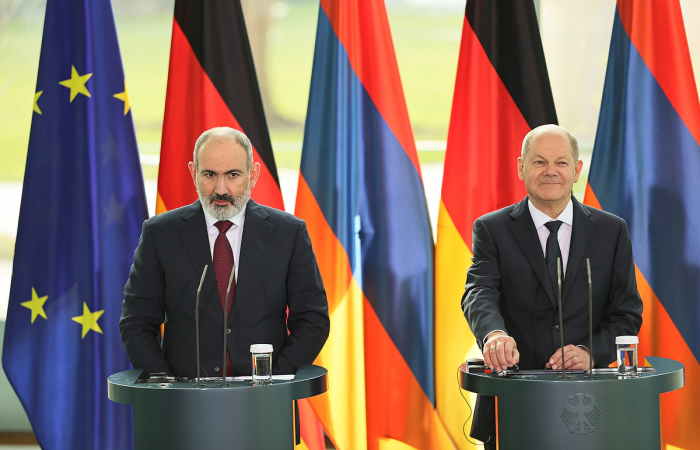
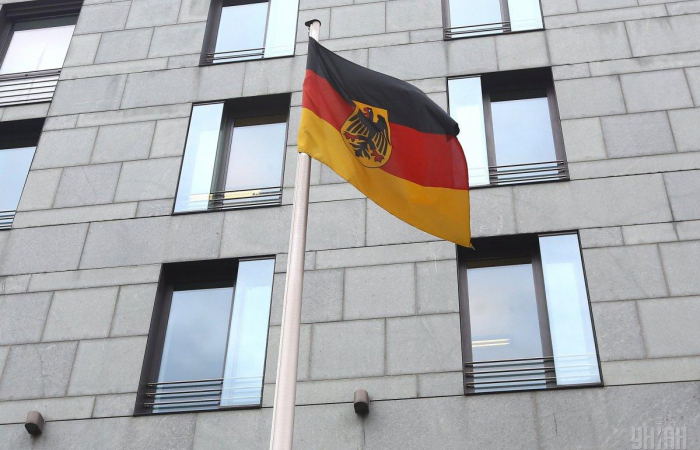
The German government holds Russia responsible for a cyberattack on German air traffic control, and for targeted disinformation campaigns before the last federal election. According to the German Foreign Office in Berlin, the incidents could be clearly attributed to the Russian military intelligence service, the GRU. In response, the Russian ambassador to Berlin was summoned to the Foreign Ministry. "We have been observing a massive increase in threatening hybrid activities by Russia for some time now," a spokesperson for the Foreign Ministry stated. These range from disinformation campaigns and espionage to cyberattacks and sabotage attempts. The aim is to divide society, sow distrust, and undermine confidence in democratic institutions. The spokesperson added that with these actions, Russia is "very concretely threatening our security, not only through its war of aggression against Ukraine, but also here in Germany."  The Foreign Ministry spokesperson explained that the cyberattack on air traffic control in August 2024 was clearly attributed to the hacker collective "APT28," known as "Fancy Bear," and to the responsibility of the Russian military intelligence service, the GRU. Furthermore, it could now be "conclusively stated" that Russia had attempted "to influence and destabilize both the last Federal election and the ongoing internal affairs of the Federal Republic of Germany." There was "absolutely irrefutable evidence" for this". The so-called "Storm 1516" campaign, which has been running since 2024, is allegedly backed by "reliable information" that the Moscow-based think tank "Center for Geopolitical Expertise" is behind it. The Center is also said to be supported by Russian military intelligence. Its primary aim is to influence democratic elections in the West. (Click the image to read more).

Filter archive

Publication date
Editor's choice
Editorial
Editorial: Armenia-Azerbaijan talks are down to the nitty-gritty

Editorial: Armenia-Azerbaijan talks are down to the nitty-gritty

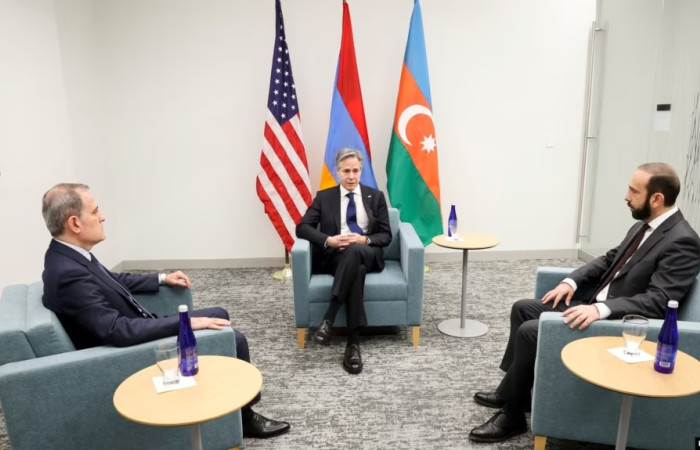
After months of diplomacy by e-mail, Armenia and Azerbaijan met in Washington DC in the first week of May for negotiations led by the foreign ministers of the two countries, with the United States providing facilitation and support, writes commonspace.eu in this editorial. The presence of US Secretary of State, Antony Blinken, at the opening of the talks, raised expectations that the talks may be conclusive. They were not, but enough progress was made for Blinken to return for the closing session, telling his guests that the US appreciated that the last bit of any negotiating process was going to be the most difficult. "The temptation to draw out the ongoing situation for many more months, with the hope that time is on their side, has big risks. Unplanned incidents still have the capacity to escalate quickly and spiral out of control, feeding on the existing level of mistrust. The violence between Armenia and Azerbaijan reported this morning (11 May) is a case in point. So in many ways this is the moment of truth, even if some would argue that we have been here before. Somehow however this time it feels different, even if the nitty-gritty problems have not gone away," they add.
Editor's choice
News
Russia lifts ban on flights to Georgia, removes visa restrictions for Georgian citizens

Russia lifts ban on flights to Georgia, removes visa restrictions for Georgian citizens

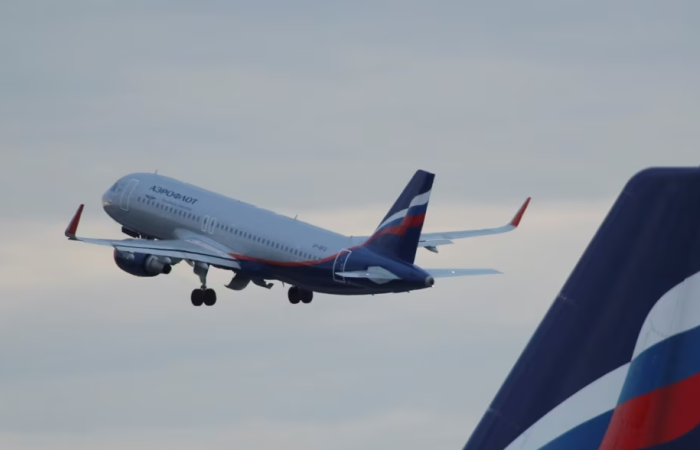
On Wednesday (10 May), Russian President Vladimir Putin signed two separate decrees lifting a ban on flights to Georgia, and abolishing visas for Georgian citizens. From 15 March, Georgian nationals will be allowed to enter Russia without visas for up to 90 days. Lifting the ban on flights reverses a 2019 decision in which the Kremlin banned air traffic with Georgia following a wave of anti-Kremlin protests there. After President Putin signed the decrees, the Russian Foreign Ministry also released a statement reversing its 2019 advice against Russian citizens travelling to Georgia. The statement added that Putin's decrees "are in line with our principled approach of consistently facilitating the conditions for communication and contacts between the citizens of Russia and Georgia, despite the absence of diplomatic relations". Later, Russian state media outlet RIA Novosti reported that the Georgian Deputy Minister of the Economy and Sustainable Development Mariam Kvrivishvili said that Georgia would issue permits for direct flights to non-sanctioned airlines, before adding that authorities were yet to receive any such requests from Russian airlines.
Editor's choice
News
Syria readmitted to the Arab League 11 years after suspension

Syria readmitted to the Arab League 11 years after suspension

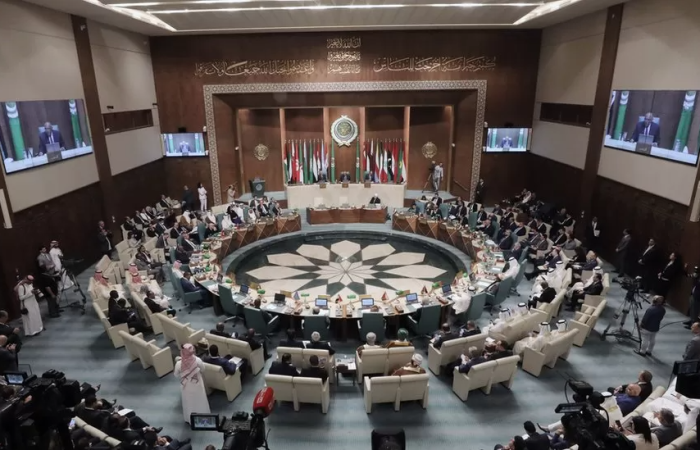
Syria has been readmitted to the Arab League 11 years after its membership was suspended over the government's violent crackdown of pro-democracy protests in 2011 that led to the outbreak of the Syrian Civil War. In a meeting of 13 out of 22 foreign ministers at the Arab League's headquarters in the Egyptian capital Cairo on Sunday (7 May), they agreed to "resume the participation of the delegations of the government of the Syrian Arab Republic in the meetings of the Council of the League of Arab States", according to a statement.  The Arab League Secretary General Ahmed Aboul Gheit also told journalists on Sunday that Syrian President Bashar al-Assad could participate in the upcoming Arab League summit in Saudi Arabia if he is invited and if he wants to attend. In the statement released after the vote to readmit Syria, which was reportedly not unanimous, the Arab League said that the "resolution of the Syria conflict is a step-by-step matter", of which Syria's readmission to the group was only a first step. The statement added that the Arab League supports Syria's territorial integrity and the "withdrawal of all foreign forces" from the country.