Theme

Diplomacy

Editor's choice
News
Germany accuses Russia of cyberattacks and disinformation campaign

Germany accuses Russia of cyberattacks and disinformation campaign

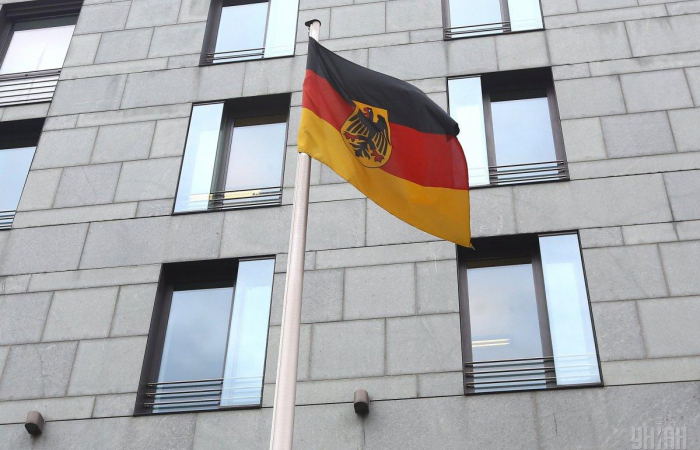
The German government holds Russia responsible for a cyberattack on German air traffic control, and for targeted disinformation campaigns before the last federal election. According to the German Foreign Office in Berlin, the incidents could be clearly attributed to the Russian military intelligence service, the GRU. In response, the Russian ambassador to Berlin was summoned to the Foreign Ministry. "We have been observing a massive increase in threatening hybrid activities by Russia for some time now," a spokesperson for the Foreign Ministry stated. These range from disinformation campaigns and espionage to cyberattacks and sabotage attempts. The aim is to divide society, sow distrust, and undermine confidence in democratic institutions. The spokesperson added that with these actions, Russia is "very concretely threatening our security, not only through its war of aggression against Ukraine, but also here in Germany."  The Foreign Ministry spokesperson explained that the cyberattack on air traffic control in August 2024 was clearly attributed to the hacker collective "APT28," known as "Fancy Bear," and to the responsibility of the Russian military intelligence service, the GRU. Furthermore, it could now be "conclusively stated" that Russia had attempted "to influence and destabilize both the last Federal election and the ongoing internal affairs of the Federal Republic of Germany." There was "absolutely irrefutable evidence" for this". The so-called "Storm 1516" campaign, which has been running since 2024, is allegedly backed by "reliable information" that the Moscow-based think tank "Center for Geopolitical Expertise" is behind it. The Center is also said to be supported by Russian military intelligence. Its primary aim is to influence democratic elections in the West. (Click the image to read more).
Editor's choice
Opinion
Opinion: A sustainable peace requires consistent long-term European involvement

Opinion: A sustainable peace requires consistent long-term European involvement

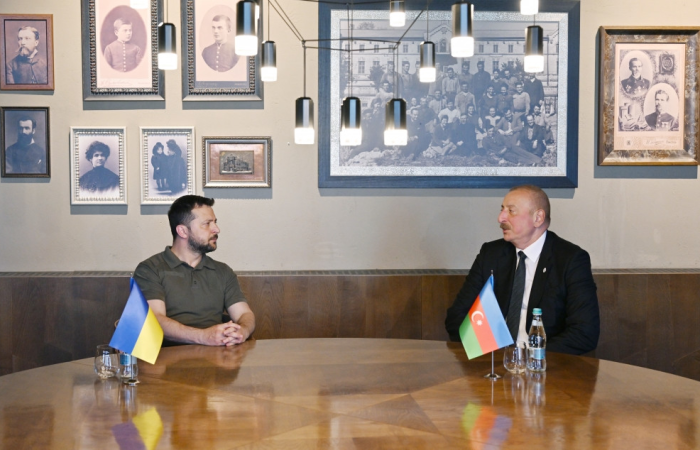
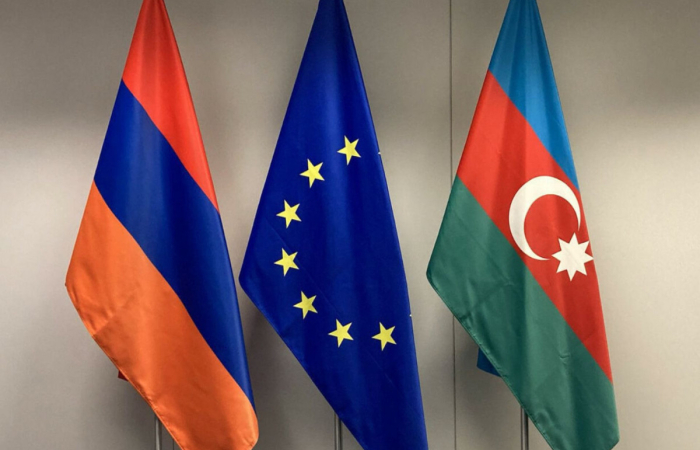
There is no denying that the EU, especially key member states acting in support, helped bring Baku and Yerevan closer to the Washington Declaration of August 8, 2025. But a declaration is not a treaty. Turning principles into a peace deal and eventually to a sustainable peace requires consistent long-term European involvement, writes Yalchin Mammadov in this-op-ed for commonspace.eu Before facilitating trust between Armenia and Azerbaijan, the EU is first expected to address its own credibility gap with Baku. A more balanced approach—such as including Azerbaijan, alongside Armenia, in the European Peace Facility—could be a useful first step. Diplomats can negotiate peace; societies must build peace. In this context, the EU can do what it does the best: long-term societal engagement. By expanding youth and academic exchange programmes, investing in cross-border civil society initiatives, and fostering people-to-people cooperation, Brussels can help shape a new generation equipped to sustain peace beyond political cycles. Such tools are slow and unglamorous, but if ignored, even the strongest treaty risks collapse. And obviously, these aspects require two-way engagement and genuine willingness by both governments to facilitate contact. If Brussels wants to remain influential, it needs to replace outdated one-size-fits-all policies with ambitious, interest-driven and differentiated approaches. Without a clear regional strategy, which appears to be the current situation, the South Caucasus will continue to sit at the margins of Europe’s security architecture—leaving space for other powers to take the lead. (You can read the op-ed in full by clicking the image.)

Filter archive

Publication date
Editor's choice
News
The Hague to host three meetings on the South Caucasus this week

The Hague to host three meetings on the South Caucasus this week

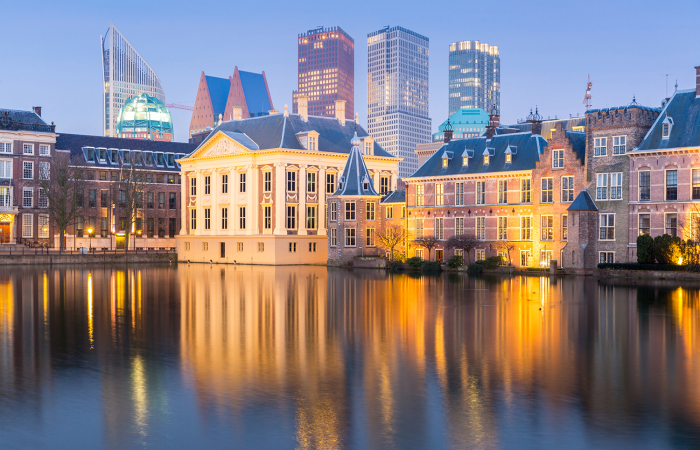
This week in the city of the Hague, the foundation LINKS Europe will host three important meetings related to the South Caucasus region. The city will welcome participants from Armenia, Azerbaijan and Georgia and beyond, many of who are involved in the delicate process of building trust and confidence between people after years of warfare and animosity in the South Caucasus Region. A spokesperson for LINKS Europe said that the three meetings are,in their different ways, all symbolic and significant, and are being held at a critical juncture for the future of the South Caucasus region, and its relations with Europe.  LINKS Europe has a long history of engagement with the region, and has for many years been particularly active in promoting peace, dialogue and reconciliation. "We are looking forward to three days of intensive meetings, discussions and debates, and we hope the outcome of the meetings will contribute to the wider ongoing process for  peace and reconciliation in the region, and for stronger relations between the region and the rest of Europe", the spokesperson said.
Editor's choice
Editorial
Editorial: the next few weeks will define the South Caucasus for a decade

Editorial: the next few weeks will define the South Caucasus for a decade

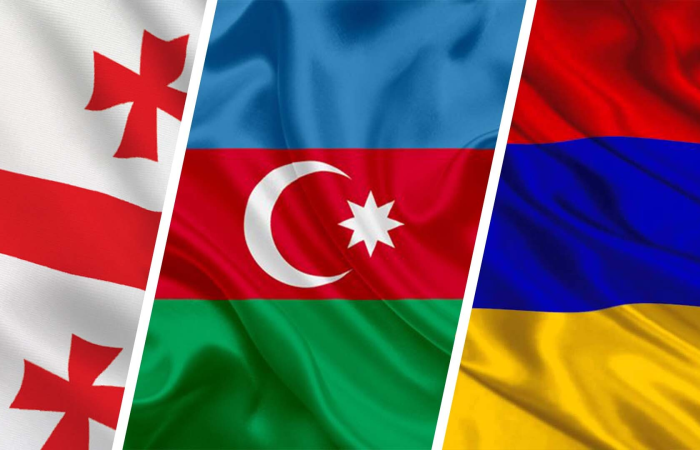
In the chancelleries of Europe diplomats are preparing to go on their annual summer holidays. There are a number of files they would like to neatly close before they do so. The South Caucasus is one of them, writes commonspace.eu in this editorial. "Hard luck. There is no chance that any of the major issues facing the region can be brought to a conclusion yet, and it promises to be a long summer full of surprises. But on a number of issues an end game is approaching. The region is in one of those defining moments which everyone agrees will have a deep and long term impact on the future. People are hoping for the best, but worried about the worst. First, there is Georgia. By October, it should be clear if the country will get candidate status for EU membership, a hugely symbolic step that would make the possibility of Georgia becoming an EU member state within a decade a reality for the first time [...] Then there is the business of war or peace between Armenia and Azerbaijan. Both sides appear not convinced its going to be either one or the other. The foreign ministers of the two countries are meeting in Washington this week under the watchful eye of Antony Blinken. They may register progress, but it is unlikely to be enough."
Editor's choice
Commentary
Commentary: EU reaches out to Central Asia’s “Cinderella”

Commentary: EU reaches out to Central Asia’s “Cinderella”

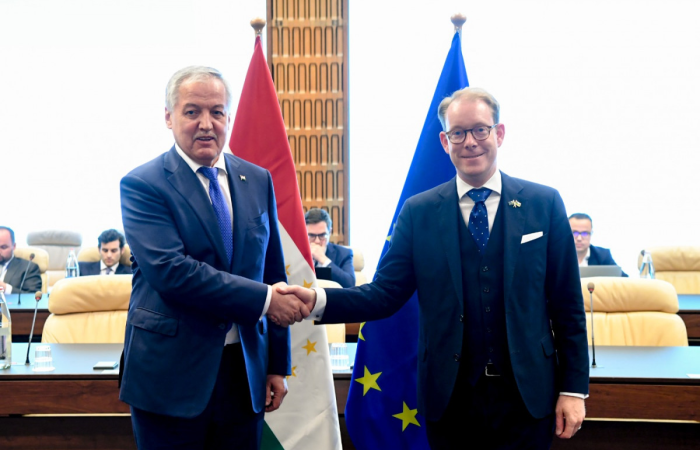
"Whilst this week’s EU-Tajikistan meeting can be dismissed as another piece of EU bureaucracy at play, for Tajikistan this mechanism is also a lifeline to the wider world," writes commonspace.eu in this commentary. "Tajikistan has a lot of potential, in terms of natural resources, tourism and connectivity which remains untapped. It has in the last couple of years made various overtures to the EU indicating a willingness to engage more. It is right that this week the EU has sent a message that it is interested too." Following an EU-Tajikistan meeting on Monday (26 June), a statement said that “the participants reviewed their cooperation, including economic and trade relations, issues related to the security of energy supply, and connectivity both within Central Asia and between Central Asia and Europe. The two sides assessed progress in implementing the outcomes of both the EU-Central Asia Sustainable Connectivity Conference, and the EU-Central Asia Economic Forum [...] During their discussions, the two sides also touched on matters of regional and international interest, including the situation in Afghanistan and Russia’s war of aggression against Ukraine. The EU encouraged Tajikistan’s engagement with Central Asia’s neighbouring countries and welcomed its constructive role for broader cooperation within the Central Asia region and beyond.”
Editor's choice
News
UAE and Qatar become the latest Gulf countries to resume ties in regional rapprochement

UAE and Qatar become the latest Gulf countries to resume ties in regional rapprochement

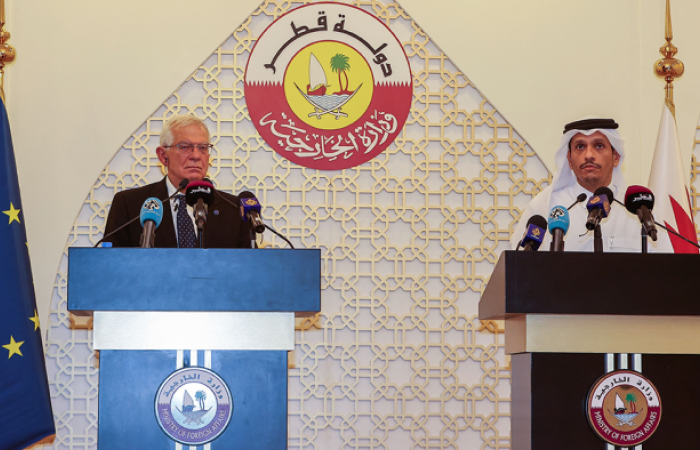
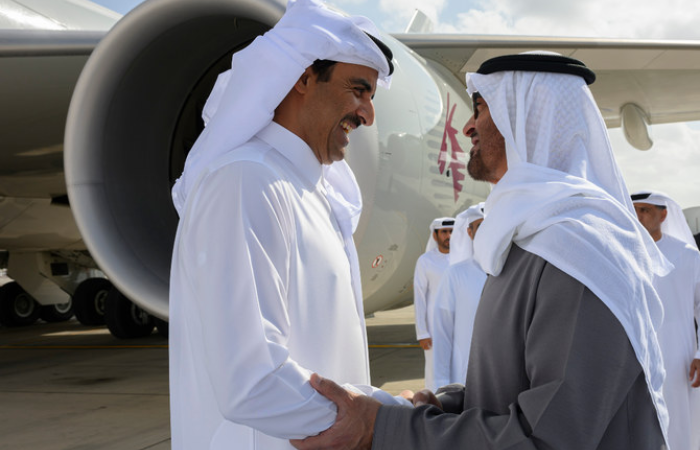
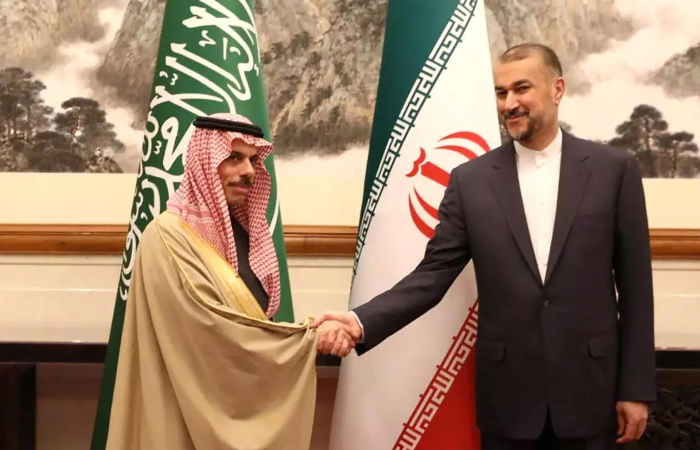
The United Arab Emirates (UAE) and Qatar have become the latest Gulf countries to resume diplomatic ties in a string of diplomatic rapprochements in the region. Qatar's Ministry of Foreign Affairs announced the decision in a tweet on Monday (19 June), adding that embassies and consulates would reopen and resume work on the same day. The restoration of ties "represents the will of both countries’ leaders to strengthen joint Arab collaboration and achieve the aspirations of both peoples," the ministry said in a statement. The UAE’s Foreign Minister Sheikh Abdullah bin Zayed Al-Nahyan and his Qatari counterpart Sheikh Mohammed bin Abdulrahman Al-Thani, who is also the Prime Minister, exchanged congratulations on the return of embassies, with both officials hailing the restoration of ties as heralding a “new stage of cooperation and partnership” that confirms the deeply rooted relations that bind both countries, according to a statement on Emirates News Agency (WAM). The current regional trend was in large part set in train by the announcement on 10 March that Saudi Arabia and Iran would restore diplomatic ties that had been broken since 2016.
Editor's choice
Editorial
Editorial: Give Georgia EU candidate status before the end of the year

Editorial: Give Georgia EU candidate status before the end of the year

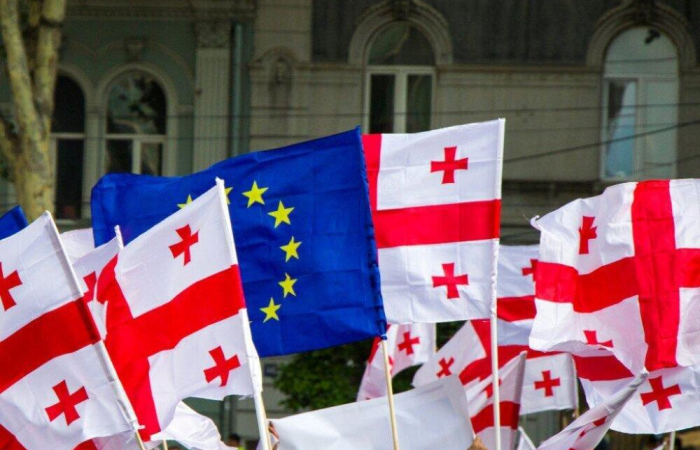
"These are difficult times for Georgia, for Europe, and for the whole world. Yet from every crisis, an opportunity arises. The Ukraine crisis has created conditions that open Georgia’s door for EU membership. Regardless of the rather unorthodox path this endeavour has taken, future generations of both Georgians and Europeans will look back at this historic moment, and say that the right thing was done," writes commonspace.eu in this editorial. "But before that, there is much work to be done. Candidate status will only be the beginning of a long, laborious and difficult process. And as a priority, the EU needs to develop a much more sophisticated communication strategy for dealing with Georgia and the Georgian people. It's useless preaching values or stating hard truths unless you can explain them in the way that your audience can understand them. Those that wanted to drive a wedge between Georgia and the EU have played on this weakness. If Georgia becomes a candidate country, dealing with this issue will become easier to deliver, even if achieving the objective will still be difficult."
Editor's choice
News
Georgian PM visits Brussels, says government "spares no effort to obtain EU candidate status"

Georgian PM visits Brussels, says government "spares no effort to obtain EU candidate status"

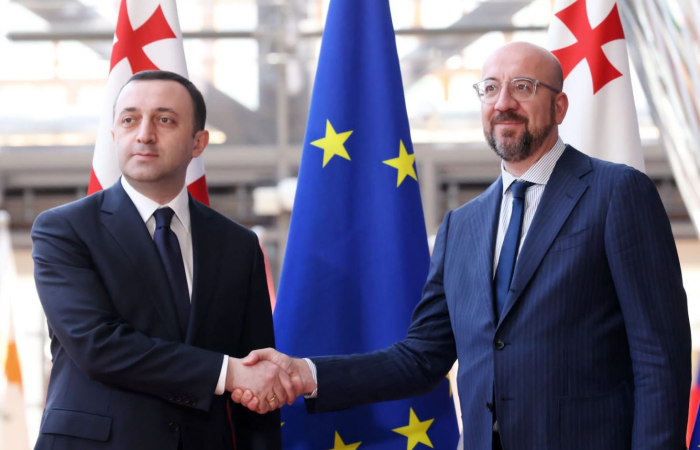
The Prime Minister of Georgia Irakli Garibashvili paid an official visit to Brussels yesterday Wednesday (14 June), in which he met with the European Council President, Charles Michel, and addressed this year’s Europalia biennial multidisciplinary arts festival, which is showcasing Georgian arts and culture. In a statement posted on the website of the Georgian PM, it was announced that Garibashvili held a business lunch at the invitation of President Michel, in which the process of Georgia's accession to the EU was the main topic of discussion. "Dignitaries reviewed the progress achieved by Georgia towards the implementation of 12 priorities defined by the European Commission. Leaders noted that recognition of the European Perspective of the country is a historic decision, thereby highlighting that granting the status of an EU Candidate Country to Georgia by the end of the year is critical, inter alia for ending the polarization in the country. Special attention was paid during the discussion to the security architecture in the region, along with the grave humanitarian and security position in the occupied territories of Georgia," the statement added.