Theme

Diplomacy

Editor's choice
News
Germany accuses Russia of cyberattacks and disinformation campaign

Germany accuses Russia of cyberattacks and disinformation campaign

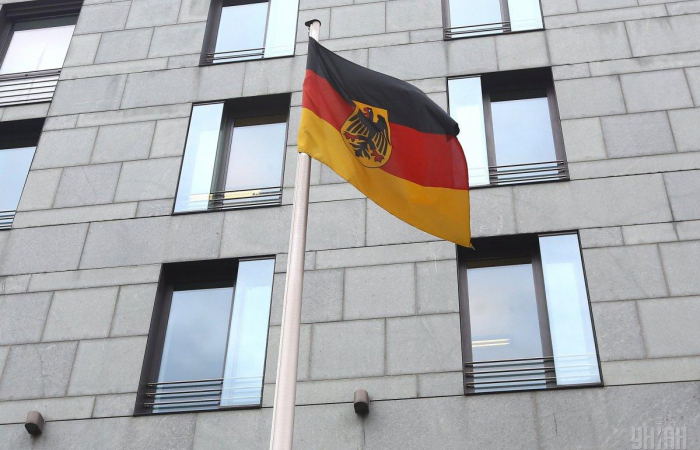
The German government holds Russia responsible for a cyberattack on German air traffic control, and for targeted disinformation campaigns before the last federal election. According to the German Foreign Office in Berlin, the incidents could be clearly attributed to the Russian military intelligence service, the GRU. In response, the Russian ambassador to Berlin was summoned to the Foreign Ministry. "We have been observing a massive increase in threatening hybrid activities by Russia for some time now," a spokesperson for the Foreign Ministry stated. These range from disinformation campaigns and espionage to cyberattacks and sabotage attempts. The aim is to divide society, sow distrust, and undermine confidence in democratic institutions. The spokesperson added that with these actions, Russia is "very concretely threatening our security, not only through its war of aggression against Ukraine, but also here in Germany."  The Foreign Ministry spokesperson explained that the cyberattack on air traffic control in August 2024 was clearly attributed to the hacker collective "APT28," known as "Fancy Bear," and to the responsibility of the Russian military intelligence service, the GRU. Furthermore, it could now be "conclusively stated" that Russia had attempted "to influence and destabilize both the last Federal election and the ongoing internal affairs of the Federal Republic of Germany." There was "absolutely irrefutable evidence" for this". The so-called "Storm 1516" campaign, which has been running since 2024, is allegedly backed by "reliable information" that the Moscow-based think tank "Center for Geopolitical Expertise" is behind it. The Center is also said to be supported by Russian military intelligence. Its primary aim is to influence democratic elections in the West. (Click the image to read more).
Editor's choice
Opinion
Opinion: A sustainable peace requires consistent long-term European involvement

Opinion: A sustainable peace requires consistent long-term European involvement

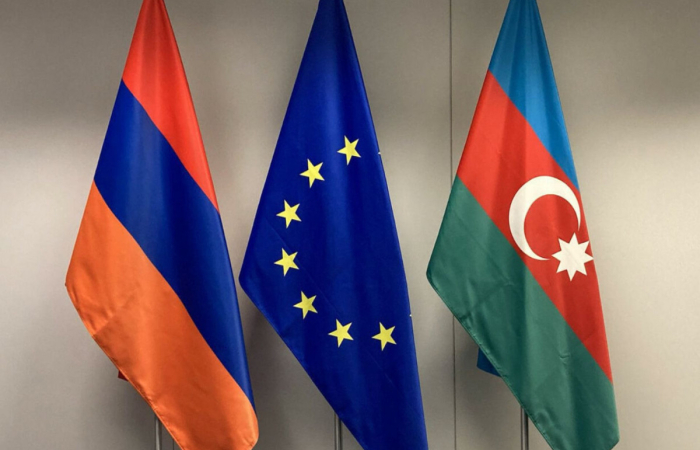
There is no denying that the EU, especially key member states acting in support, helped bring Baku and Yerevan closer to the Washington Declaration of August 8, 2025. But a declaration is not a treaty. Turning principles into a peace deal and eventually to a sustainable peace requires consistent long-term European involvement, writes Yalchin Mammadov in this-op-ed for commonspace.eu Before facilitating trust between Armenia and Azerbaijan, the EU is first expected to address its own credibility gap with Baku. A more balanced approach—such as including Azerbaijan, alongside Armenia, in the European Peace Facility—could be a useful first step. Diplomats can negotiate peace; societies must build peace. In this context, the EU can do what it does the best: long-term societal engagement. By expanding youth and academic exchange programmes, investing in cross-border civil society initiatives, and fostering people-to-people cooperation, Brussels can help shape a new generation equipped to sustain peace beyond political cycles. Such tools are slow and unglamorous, but if ignored, even the strongest treaty risks collapse. And obviously, these aspects require two-way engagement and genuine willingness by both governments to facilitate contact. If Brussels wants to remain influential, it needs to replace outdated one-size-fits-all policies with ambitious, interest-driven and differentiated approaches. Without a clear regional strategy, which appears to be the current situation, the South Caucasus will continue to sit at the margins of Europe’s security architecture—leaving space for other powers to take the lead. (You can read the op-ed in full by clicking the image.)

Filter archive

Publication date
Editor's choice
News
NATO PA Rose-Roth Seminar in Yerevan opens new horizons in public diplomacy

NATO PA Rose-Roth Seminar in Yerevan opens new horizons in public diplomacy

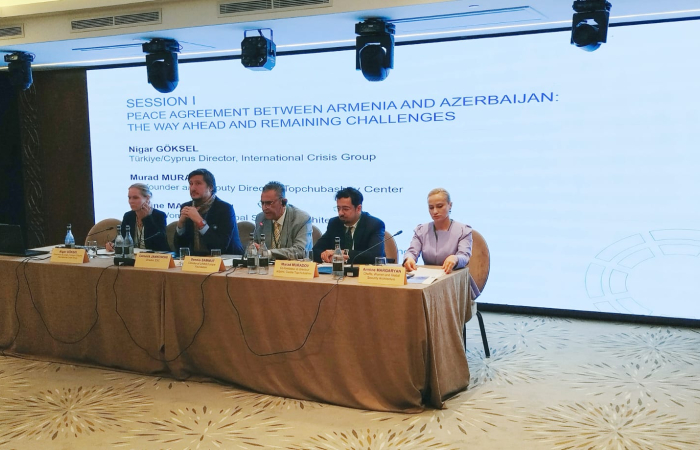
The 108th Rose Roth Seminar, organised by the NATO Parliamentary Assembly, is taking place in the Armenian Capital, Yerevan 22-23 September 2025. The Rose-Roth Seminar has not been held in Armenia since 2015, and the Armenian National Assembly put effort in ensuring the success of the event. Among the speakers at the opening session on Monday was Defence Minister, Suren Papikyan; Security Council Secretary, Armen Grigoryan; and Deputy Speaker of the Parliament, Ruben Rubenian. But the panel immediately following got a lot of attention because quite uniquely it included an Armenian, an Azerbaijani and a Turkish speaker. Chaired by the Director of LINKS Europe, Dennis Sammut, the panelists were Armine Margaryan, Murad Muradov; and Nigar Goksel. They made robust presentations, but were elegant and courteous in their demeanor. The panel was an expression of a new Armenia and a new South Caucasus. It also marked a new beginning in public diplomacy.
Editor's choice
News
UK, Canada, Australia and Portugal recognise Palestinian State; More EU countries are expected to follow in the next days

UK, Canada, Australia and Portugal recognise Palestinian State; More EU countries are expected to follow in the next days

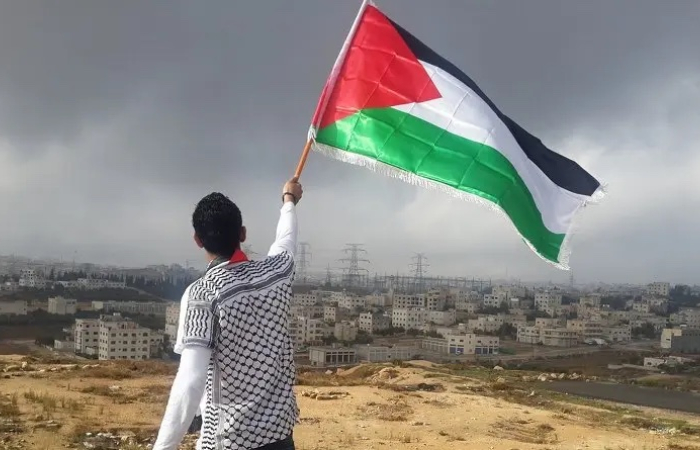
The United Kingdom, Canada, Australia and Portugal, announced on Sunday (21 September) that they were formally recognising the State of Palestine. British prime minister, Sir Keir Starmer, announced the UK's recognition of a Palestinian state, in what represents a significant change in government policy. In a video statement on X, the prime minister said: "In the face of the growing horror in the Middle East we are acting to keep alive the possibility of peace and a two-state solution." Australia, Canada and Portugal also announced formal recognition of the state of Palestine, with France and other EU states expected to follow. Responding on Sunday, Israeli Prime Minister Benjamin Netanyahu said a Palestinian state "will not happen".
Editor's choice
News
Turkic States Deepen Cooperation at Bishkek Meeting

Turkic States Deepen Cooperation at Bishkek Meeting

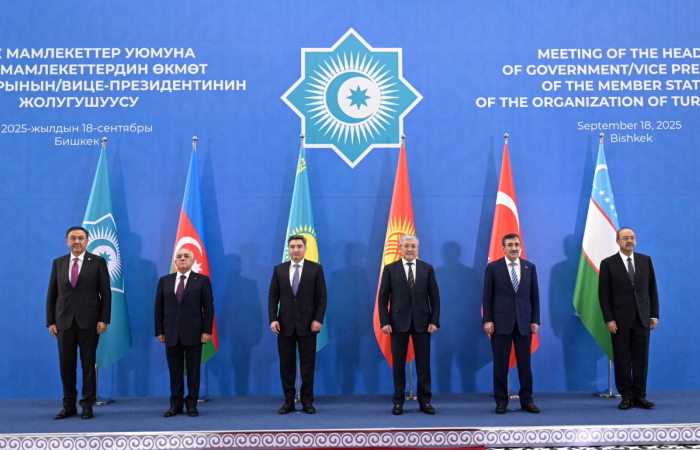
On Thursday (18 September) the leaders of the Organization of Turkic States (OTS) convened in Bishkek to push forward an agenda of regional integration, digital transformation, and infrastructural development. The gathering, which included Prime Ministers and senior officials from Azerbaijan, Kazakhstan, Kyrgyzstan, Uzbekistan, and Turkey, among others, reaffirmed their commitment to enhancing transit potential, modernising transport infrastructure, and accelerating digital cooperation.
Editor's choice
News
Azerbaijan and China Forge Defence Ties

Azerbaijan and China Forge Defence Ties

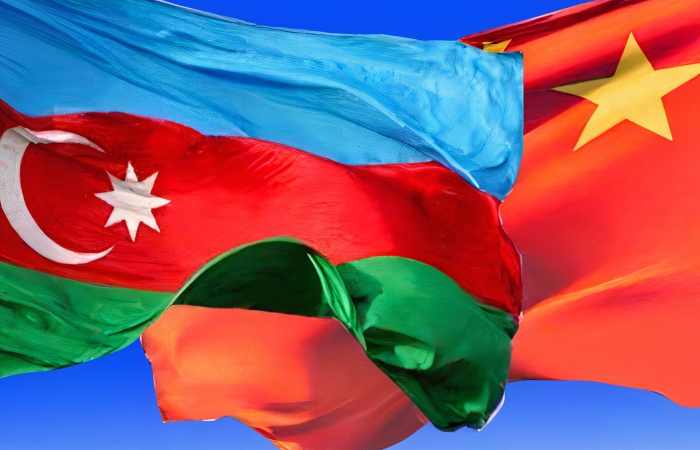
At the 12th Beijing Xiangshan Forum, which was held from Wednesday to Friday (17 - 19  September), Azerbaijan’s Defence Minister, Colonel-General Zakir Hasanov, led Baku’s delegation and held high-level discussions with his Chinese counterpart on advancing joint military capabilities.
Editor's choice
News
US Blocks Again the UN Call for an Immediate Gaza Ceasefire

US Blocks Again the UN Call for an Immediate Gaza Ceasefire

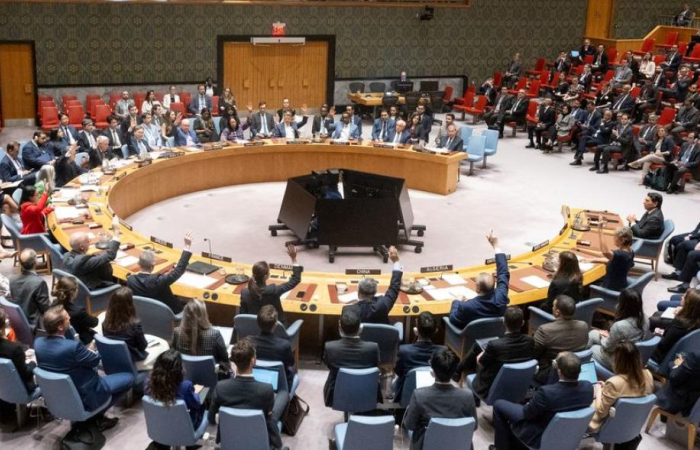
On Thursday (18 September), the United States exercised its veto power at the United Nations Security Council to block a draft resolution that demanded an immediate, unconditional, and permanent ceasefire in Gaza. The resolution also called for the lifting of restrictions on humanitarian aid to the enclave and the unconditional release of all hostages held by Hamas and other groups. Fourteen of the fifteen council members backed the resolution; the US alone opposed it.
Editor's choice
Opinion
The 3+3 Initiative in Retrospect: A Framework Out of Step with Current Realities

The 3+3 Initiative in Retrospect: A Framework Out of Step with Current Realities

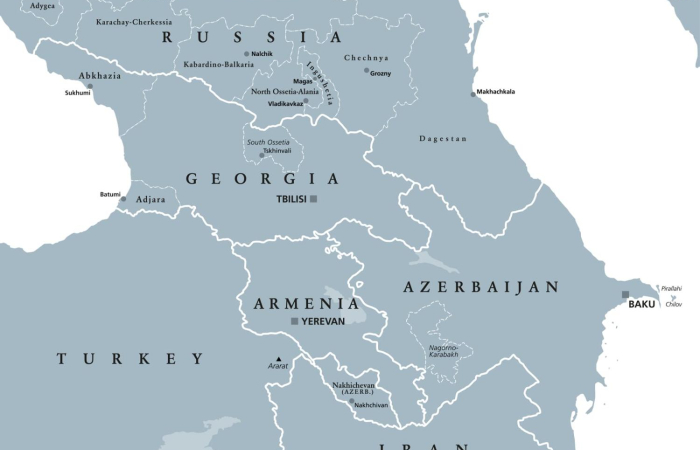
On September 8, 2025, during his address at the Moscow State Institute of International Relations (MGIMO), Russian Foreign Minister Sergey Lavrov discussed the potential revival of the “3+3” format in the South Caucasus while commenting on Russia’s relations with regional countries. He noted that the initiative was initially proposed by Turkey and Azerbaijan and highlighted that it is also supported by Iran, signaling broader regional backing. Lavrov further referenced the trilateral agreement between Azerbaijan, Armenia, and Russia on restoring transport links and welcomed the ongoing process of normalization between Armenia and Turkey.
Editor's choice
News
Donald Trump meets Keir Starmer on final day of state visit to UK

Donald Trump meets Keir Starmer on final day of state visit to UK

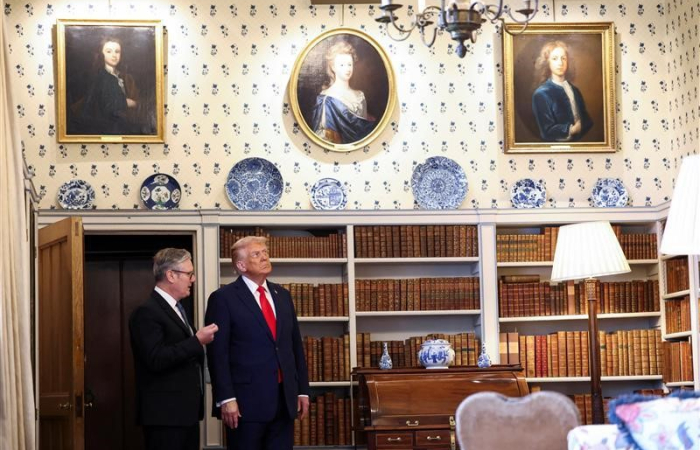
US President Donald Trump is meeting UK Prime Minister Keir Starmer on Thursday 18 September, the final day of the U.S. leader’s state visit to the UK with tech investment, steel tariffs and potentially tricky topics on the agenda. The President and first lady Melania Trump were feted by King Charles III and Queen Camilla on Wednesday at Windsor Castle with significant pageantry including gold-trimmed carriages, scarlet-clad soldiers, artillery salutes and a glittering banquet in a grand ceremonial hall. 
Editor's choice
Opinion
Symbolism Meets Realpolitik in Armenia-Türkiye Normalization Efforts

Symbolism Meets Realpolitik in Armenia-Türkiye Normalization Efforts

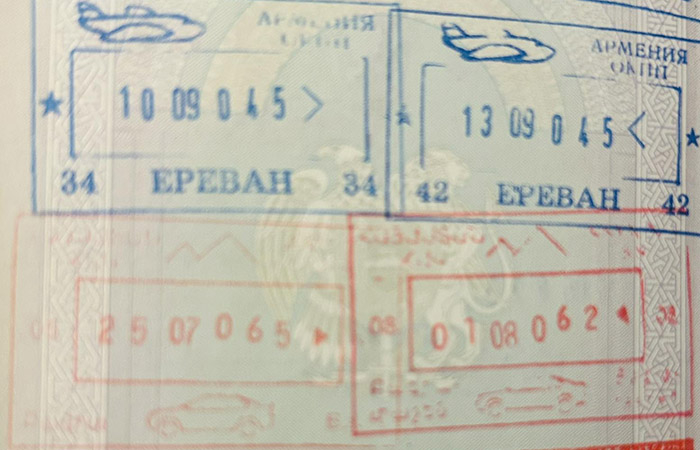
The prospect of peace in the South Caucasus may finally be within reach. Following the high-profile meeting between Armenian Prime Minister Nikol Pashinyan and Azerbaijani President Ilham Aliyev at the White House as facilitated by U.S. President Donald Trump on 8 August, hopes are rising that Yerevan and Baku could soon sign a long-anticipated peace treaty. That breakthrough has already been welcomed internationally, sparking renewed movement on the Armenia–Türkiye track as well. Opening the Armenian-Türkiye border has long been a policy objective for successive governments in Yerevan.