Theme

Diplomacy

Editor's choice
News
Germany accuses Russia of cyberattacks and disinformation campaign

Germany accuses Russia of cyberattacks and disinformation campaign

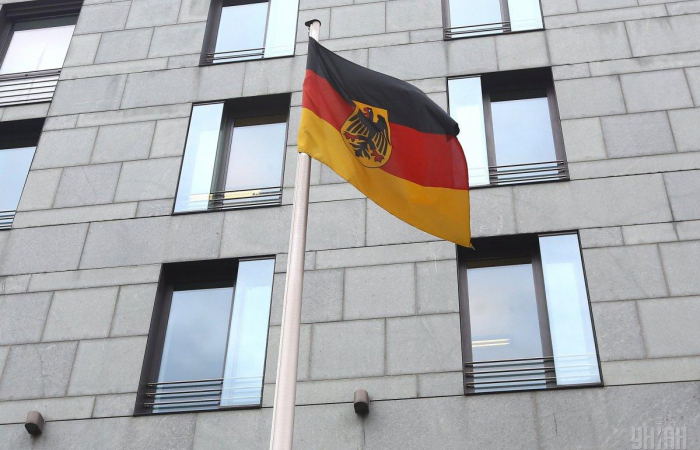
The German government holds Russia responsible for a cyberattack on German air traffic control, and for targeted disinformation campaigns before the last federal election. According to the German Foreign Office in Berlin, the incidents could be clearly attributed to the Russian military intelligence service, the GRU. In response, the Russian ambassador to Berlin was summoned to the Foreign Ministry. "We have been observing a massive increase in threatening hybrid activities by Russia for some time now," a spokesperson for the Foreign Ministry stated. These range from disinformation campaigns and espionage to cyberattacks and sabotage attempts. The aim is to divide society, sow distrust, and undermine confidence in democratic institutions. The spokesperson added that with these actions, Russia is "very concretely threatening our security, not only through its war of aggression against Ukraine, but also here in Germany."  The Foreign Ministry spokesperson explained that the cyberattack on air traffic control in August 2024 was clearly attributed to the hacker collective "APT28," known as "Fancy Bear," and to the responsibility of the Russian military intelligence service, the GRU. Furthermore, it could now be "conclusively stated" that Russia had attempted "to influence and destabilize both the last Federal election and the ongoing internal affairs of the Federal Republic of Germany." There was "absolutely irrefutable evidence" for this". The so-called "Storm 1516" campaign, which has been running since 2024, is allegedly backed by "reliable information" that the Moscow-based think tank "Center for Geopolitical Expertise" is behind it. The Center is also said to be supported by Russian military intelligence. Its primary aim is to influence democratic elections in the West. (Click the image to read more).
Editor's choice
Opinion
Opinion: A sustainable peace requires consistent long-term European involvement

Opinion: A sustainable peace requires consistent long-term European involvement

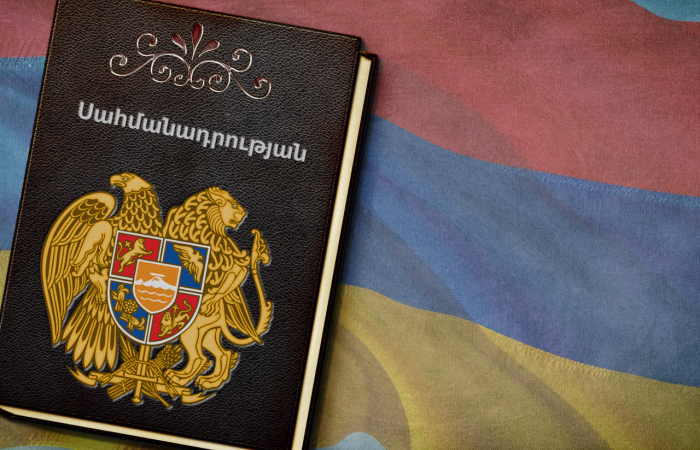
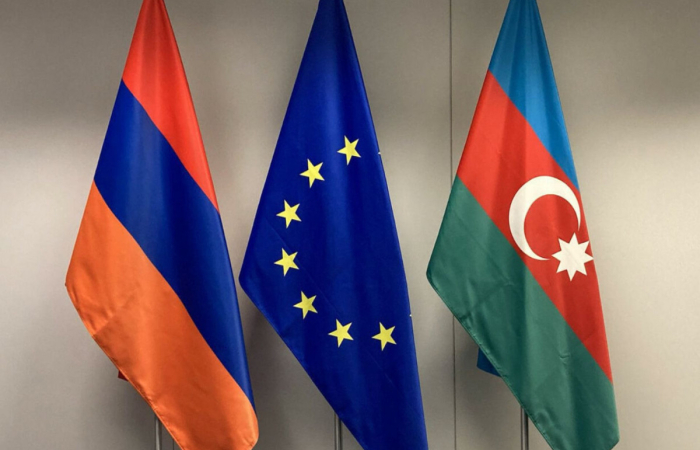
There is no denying that the EU, especially key member states acting in support, helped bring Baku and Yerevan closer to the Washington Declaration of August 8, 2025. But a declaration is not a treaty. Turning principles into a peace deal and eventually to a sustainable peace requires consistent long-term European involvement, writes Yalchin Mammadov in this-op-ed for commonspace.eu Before facilitating trust between Armenia and Azerbaijan, the EU is first expected to address its own credibility gap with Baku. A more balanced approach—such as including Azerbaijan, alongside Armenia, in the European Peace Facility—could be a useful first step. Diplomats can negotiate peace; societies must build peace. In this context, the EU can do what it does the best: long-term societal engagement. By expanding youth and academic exchange programmes, investing in cross-border civil society initiatives, and fostering people-to-people cooperation, Brussels can help shape a new generation equipped to sustain peace beyond political cycles. Such tools are slow and unglamorous, but if ignored, even the strongest treaty risks collapse. And obviously, these aspects require two-way engagement and genuine willingness by both governments to facilitate contact. If Brussels wants to remain influential, it needs to replace outdated one-size-fits-all policies with ambitious, interest-driven and differentiated approaches. Without a clear regional strategy, which appears to be the current situation, the South Caucasus will continue to sit at the margins of Europe’s security architecture—leaving space for other powers to take the lead. (You can read the op-ed in full by clicking the image.)

Filter archive

Publication date
Editor's choice
Opinion
Opinion: Committing to doing what it takes for Ukraine to achieve victory

Opinion: Committing to doing what it takes for Ukraine to achieve victory

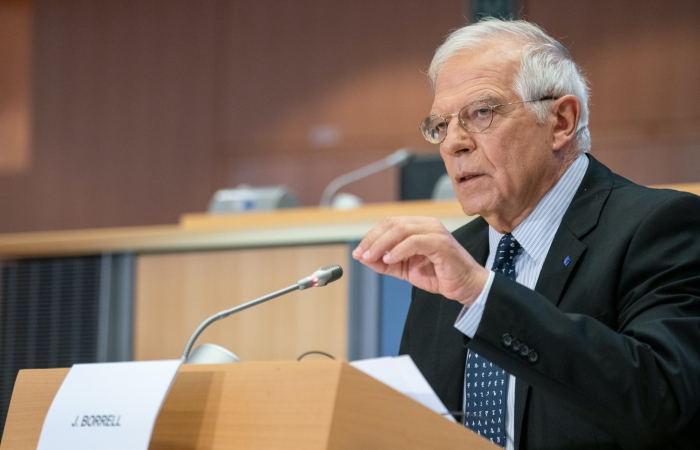
2024 started with an unprecedented number of Russian drones and ballistic missiles raining down on Ukraine. In this op-ed published this week on various media outlets, the European Union's High Representative for Foreign and Security Policy, Josep Borrell, argues that Ukraine prevailing against the Russian aggression is the best security guarantee for Europe and that a paradigm shift is needed from supporting Ukraine for 'as long as it takes' to committing to 'what it takes' for Ukraine to achieve victory. Borrell argues that we must intensify our efforts to win the race against time with Putin’s Russia. "We cannot allow him to prevail. Our own security is at stake. Should Putin’s strategy prove successful, it would embolden Russia and other autocracies to pursue their imperialist agendas. We must at any cost prevent a world where might makes right, where powerful countries change borders at will, and the weak fall prey to the strong. Allowing such a scenario would cast a long shadow over our future for decades to come. Ukraine prevailing against the Russian aggression is the best security guarantee for Europe. A Russia that learnt to stay within its borders will lessen pressure on its neighbours, ease Ukraine’s path to EU membership and allow Europe and the world to shift attention to the many other challenges that need solving. With our assistance, Ukraine can consign Russia’s imperial ambitions to the pages of history. This must guide our actions and thinking."
Editor's choice
News
Sweden one step closer to joining NATO

Sweden one step closer to joining NATO

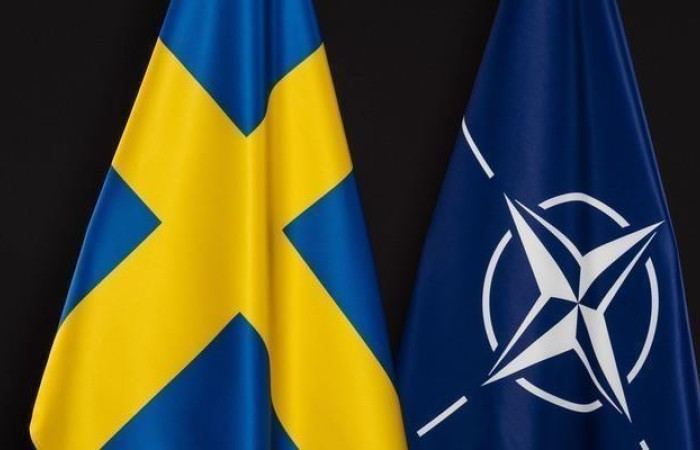
The Turkish Grand National Assembly (Parliament), on Tuesday, 23 January, ratified the agreement on Swedish membership of NATO, bringing the Scandinavian country one step closer to fulfilling its historic decision to abandon its decades-long neutrality and join the military alliance in the face of Russian aggression against Ukraine, and the threat that poses to the European security order. The ratification was adopted by the national assembly in a vote of 287 to 55. President Recep Tayyip Erdoğan is now expected to sign the accession agreement. formalising the process of Turkish ratification. All members of NATO have to approve the addition of new members to the organisation. The only remaining NATO country to finalise the ratification process is Hungary  “Today we are one step closer to becoming a full member of NATO,” tweeted Swedish Prime Minister Ulf Kristersson. On Tuesday, Hungarian Prime Minister Viktor Orbán reached out to Kristersson, asking him to come down to Budapest and negotiate about the NATO bid, an idea swiftly rejected by Swedish Foreign Minister Tobias Billström.
Editor's choice
Analysis
Unblocking the Caspian route for Turkmen gas

Unblocking the Caspian route for Turkmen gas

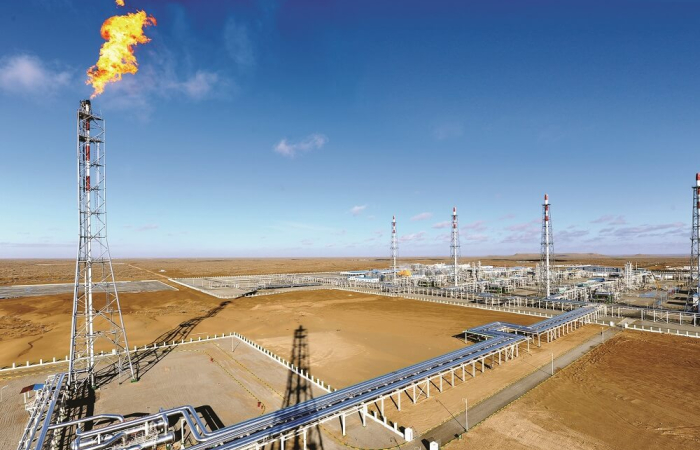
Turkmenistan, for decades considered one of the most closed countries in the world, is moving towards modest attempts at opening up its economy. Western sanctions against Russia which caused a gradual halt to energy supply from Russia to Europe and swelling Russian gas supplies to China, once Turkmenistan’s almost-exclusive client, made Ashgabat face a new reality that challenged its longstanding economic model, resulting in a significant deterioration of living standards and social discontent. Against this background, the country had to start considering options for diversifying its gas export geography and attracting foreign investment, writes Murad Muradov in this analysis prepared for commonspace.eu. The big question remains however whether the long-cherished idea of the Transcaspian pipeline, a link which would bring Turkmenistan’s gas to European markets, will finally come to fruition after many years of aborted attempts and uncertainty. This may be within reach sooner and faster than expected.
Editor's choice
News
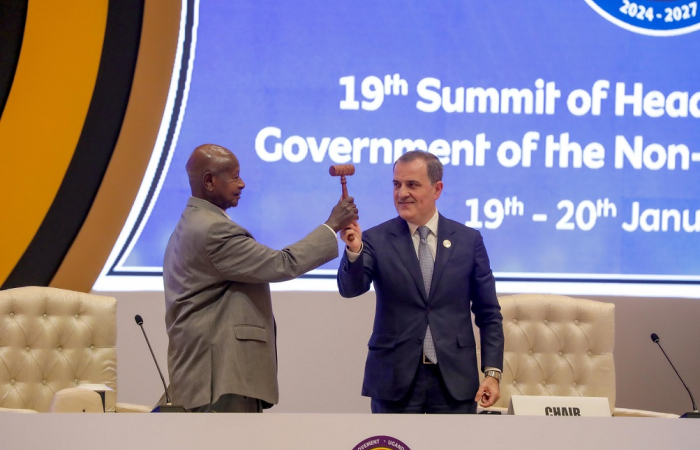
Chairmanship of Non-Aligned Movement passes from Azerbaijan to Uganda

Chairmanship of Non-Aligned Movement passes from Azerbaijan to Uganda

The chairmanship of the Non-Aligned Movement, a grouping of 120 countries, mainly in the global South, passed on Friday morning from Azerbaijan to Uganda. President Yoweri Museveni was elected by acclamation as the chair of the 19th NAM Heads of State and Government Summit taking over from Ilham Aliyev. Azerbaijani foreign minister, Jeyhun Bayramov, represented the outgoing president Aliyev. He congratulated Uganda and President Museveni for assuming the NAM chairmanship and promised that his country will extend all the necessary support to ensure success of the movement. “Azerbaijan chairmanship has done its best to make the voice of our members heard in all possible platforms with successful initiatives and there’s no doubt that Uganda’s chairmanship will continue with this legacy, even further building upon it,” he said. “At this historic moment, after four years of proudly chairing the movement, we are handing over the chairmanship to the Republic of Uganda with a rich substantial and institutional legacy and we are confident that Uganda will further enhance the development feasibility of the movement and strengthen unity among its member states. I would like to reiterate that our passion and determination for the success of NAM will always remain strong and we will continue to contribute to the just cause.”
Editor's choice
News
EU, AU and US say crises in Sudan and in Ethiopia-Somalia relations threaten regional stability in the Horn of Africa

EU, AU and US say crises in Sudan and in Ethiopia-Somalia relations threaten regional stability in the Horn of Africa

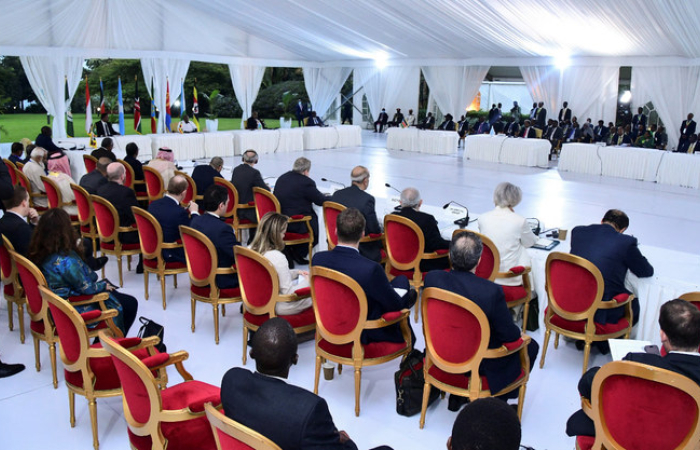
The African Union, European Union, and United States called Thursday (18 January) for an immediate cease-fire and constructive dialogue between warring factions in Sudan. They also called for an end to tension between Somalia and Ethiopia over an agreement signed between Ethiopia and Somalia’s breakaway region Somaliland. Representatives of the AU, EU and US spoke in Kampala, Uganda, after the meeting of an East African regional bloc. They said the two crises are threatening regional stability in the Horn of Africa. Annette Weber, the EU special envoy for the Horn of Africa, said the two crises have a common link with Red Sea, which she called a critical waterway carrying 10 percent of global cargo. Weber also said there needs to be a collective response among Horn of Africa countries against attacks on ships by Yemen-based Houthi rebels. Regarding Somalia, the AU, EU and US said they recognize the country’s sovereignty, unity and territorial integrity, including the breakaway region of Somaliland.