Theme

Diplomacy

Editor's choice
News
Germany accuses Russia of cyberattacks and disinformation campaign

Germany accuses Russia of cyberattacks and disinformation campaign

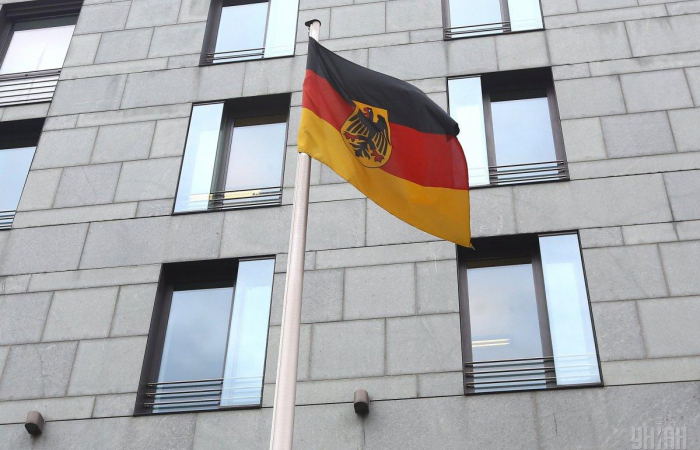
The German government holds Russia responsible for a cyberattack on German air traffic control, and for targeted disinformation campaigns before the last federal election. According to the German Foreign Office in Berlin, the incidents could be clearly attributed to the Russian military intelligence service, the GRU. In response, the Russian ambassador to Berlin was summoned to the Foreign Ministry. "We have been observing a massive increase in threatening hybrid activities by Russia for some time now," a spokesperson for the Foreign Ministry stated. These range from disinformation campaigns and espionage to cyberattacks and sabotage attempts. The aim is to divide society, sow distrust, and undermine confidence in democratic institutions. The spokesperson added that with these actions, Russia is "very concretely threatening our security, not only through its war of aggression against Ukraine, but also here in Germany."  The Foreign Ministry spokesperson explained that the cyberattack on air traffic control in August 2024 was clearly attributed to the hacker collective "APT28," known as "Fancy Bear," and to the responsibility of the Russian military intelligence service, the GRU. Furthermore, it could now be "conclusively stated" that Russia had attempted "to influence and destabilize both the last Federal election and the ongoing internal affairs of the Federal Republic of Germany." There was "absolutely irrefutable evidence" for this". The so-called "Storm 1516" campaign, which has been running since 2024, is allegedly backed by "reliable information" that the Moscow-based think tank "Center for Geopolitical Expertise" is behind it. The Center is also said to be supported by Russian military intelligence. Its primary aim is to influence democratic elections in the West. (Click the image to read more).
Editor's choice
Opinion
Opinion: A sustainable peace requires consistent long-term European involvement

Opinion: A sustainable peace requires consistent long-term European involvement

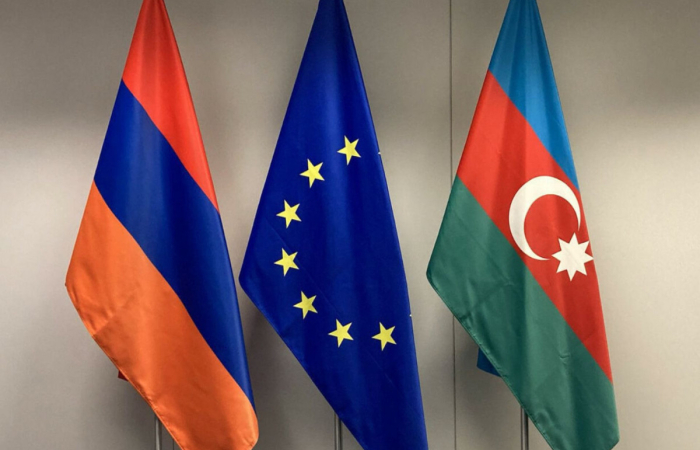
There is no denying that the EU, especially key member states acting in support, helped bring Baku and Yerevan closer to the Washington Declaration of August 8, 2025. But a declaration is not a treaty. Turning principles into a peace deal and eventually to a sustainable peace requires consistent long-term European involvement, writes Yalchin Mammadov in this-op-ed for commonspace.eu Before facilitating trust between Armenia and Azerbaijan, the EU is first expected to address its own credibility gap with Baku. A more balanced approach—such as including Azerbaijan, alongside Armenia, in the European Peace Facility—could be a useful first step. Diplomats can negotiate peace; societies must build peace. In this context, the EU can do what it does the best: long-term societal engagement. By expanding youth and academic exchange programmes, investing in cross-border civil society initiatives, and fostering people-to-people cooperation, Brussels can help shape a new generation equipped to sustain peace beyond political cycles. Such tools are slow and unglamorous, but if ignored, even the strongest treaty risks collapse. And obviously, these aspects require two-way engagement and genuine willingness by both governments to facilitate contact. If Brussels wants to remain influential, it needs to replace outdated one-size-fits-all policies with ambitious, interest-driven and differentiated approaches. Without a clear regional strategy, which appears to be the current situation, the South Caucasus will continue to sit at the margins of Europe’s security architecture—leaving space for other powers to take the lead. (You can read the op-ed in full by clicking the image.)

Filter archive

Publication date
Editor's choice
Opinion
Opinion: Russian withdrawal from Karabakh allows Azerbaijan to strengthen its ties with its Turkic "family"

Opinion: Russian withdrawal from Karabakh allows Azerbaijan to strengthen its ties with its Turkic "family"

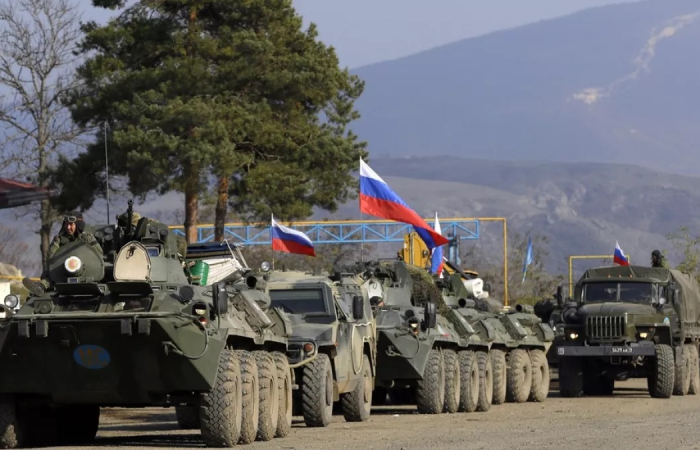
The geopolitics of the South Caucasus is as unpredictable as ever. Even as recently as the beginning of April, few, if any, would have imagined that Russia may withdraw its peacekeeping contingent from the Karabakh region of Azerbaijan anytime soon. Many observers were even skeptical about the possibility of their withdrawal in November 2025 – the date which was stipulated in the November 2020 trilateral statement as the potential but not fixed date for the ending of the peacekeeping mission of Russia. This skepticism was grounded in the understanding that for Russia, Karabakh holds paramount importance in the broader context of the South Caucasus. In the wake of Russia’s unexpected withdrawal of its peacekeeping mission from the Karabakh region, the South Caucasus enters a new geopolitical dynamic. This historic development not only signifies Azerbaijan's attainment of complete sovereignty over its territories but also heralds the definitive end of the Karabakh conflict. President Ilham Aliyev's adept diplomatic maneuvers have secured Azerbaijan's territorial integrity and positioned Baku as a confident actor on the regional stage. The withdrawal of Russian peacekeepers marks a pivotal moment, shaping the future landscape of Azerbaijan-Russia relations and regional geopolitics. As Azerbaijan charts its course forward, its commitment to regional integration remains, however, steadfast, with a focus on strengthening ties within the Turkic world.
Editor's choice
Opinion
Opinion: Civil society should actively support Armenia-Azerbaijan border demarcation

Opinion: Civil society should actively support Armenia-Azerbaijan border demarcation

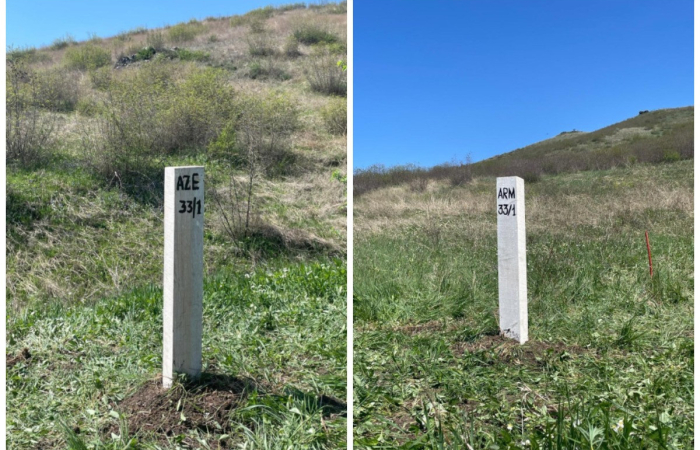
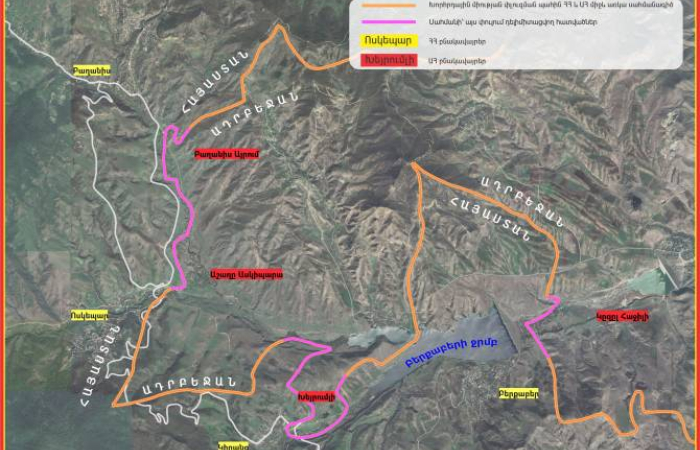
The announcement of the return of the four non-enclave villages of Baghanis Ayrim, Ashagi Askipara, Kheyrimli, and Gizilhajili comes as a welcome development. That is not to say that there won’t be problems as the physical process of delimitation/demarcation takes place, and military forces are replaced by border guards, and nor does it ignore the distinct lack of trust between Yerevan and Baku, but it does highlight the need for more focused work in order to build confidence between the sides. Pashinyan has already hinted at the idea of trade between the two communities at some point in an albeit distant future but this is also a region that has experienced significant cross-border incidents for over 30 years. The task won’t be simple, but civil society in both countries could and should play an important role alongside the work of the two governments.
Editor's choice
News
Armenia and Azerbaijan edge closer to a peace deal

Armenia and Azerbaijan edge closer to a peace deal

Armenia and Azerbaijan last week announced they had agreed on the process of demarcation of their border in the Tavush region that will result in the return of four villages that had been under Armenian control since the conflict in the 1990s to Azerbaijan. The agreement is being seen as a milestone event that will greatly contribute to finalising the process leading towards the signing of a peace agreement between the two countries, who have been in conflict for more than three decades. The agreement comes after months of negotiations, and controversy, including some opposition from Armenian residents in the proximity of the four villages. On 19 April, it was announced that the eighth meeting of the Committee on Demarcation and Border Security of the State Border between the Republic of Armenia and the Republic of Azerbaijan and the State Committee on the Demarcation of the State Border between the Republic of Azerbaijan and the Republic of Armenia was held under the chairmanship of Armenian Deputy Prime Minister Mher Grigoryan and Azerbaijani Deputy Prime Minister Shahin Mustafaev. There are of course many small details that will have to be ironed out later, but the fact that the sides have agreed the basic parameters, and especially their re-affirmation that they will "be guided by Alma Ata's 1991 Declaration in the demarcation process" is a huge step forward. No wonder that the international community in the last few days have lined up to congratulate the two sides on their success and to nudge them forward to complete the process of signing a peace agreement between them. Seasoned observers now see the signing of such an agreement as being truly within reach. Of course, there will be those who for one reason or another will not like these developments and will try to spoil the process. Armenia and Azerbaijan must remain focused on overcoming any last obstacles, and on its part, the international community must also remain focused in helping them do so as a priority.
Editor's choice
News
EU and US make a generous financial pledge to Armenia as they affirm their support for its sovereignty, democracy, territorial integrity, and socio-economic resilience

EU and US make a generous financial pledge to Armenia as they affirm their support for its sovereignty, democracy, territorial integrity, and socio-economic resilience

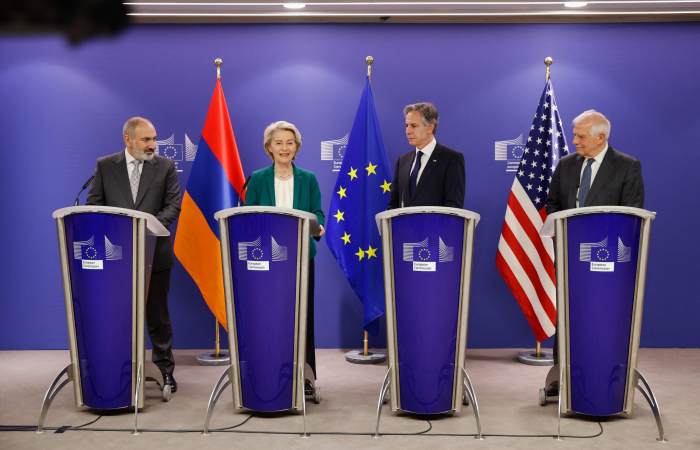
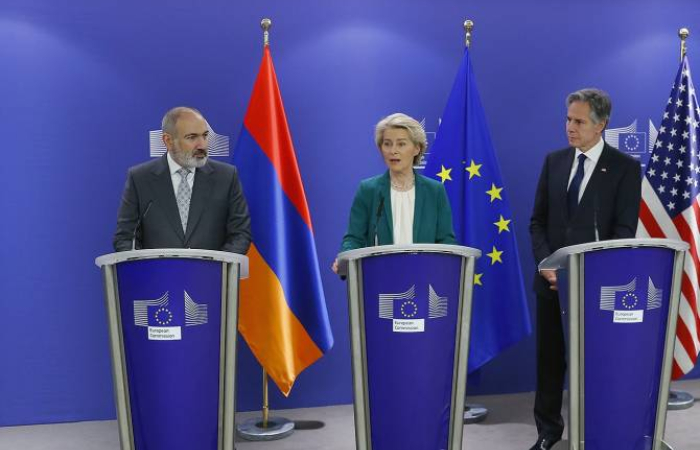
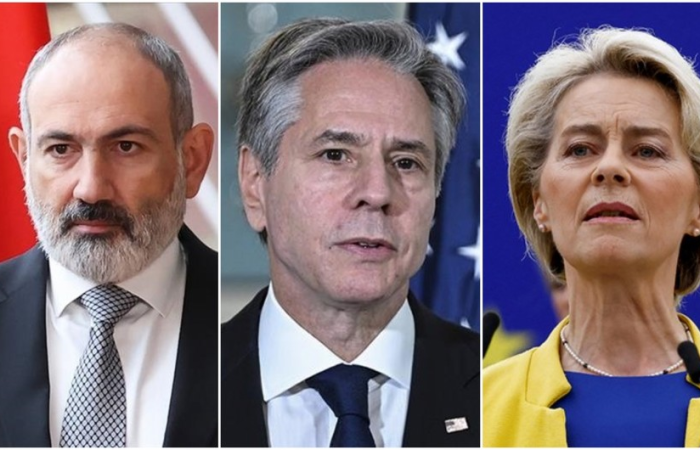
The European Union and the United States have made a generous financial pledge to Armenia and reaffirmed their support for its sovereignty, democracy, territorial integrity, and socio-economic resilience. President of the European Commission, Ursula von der Leyen, EU High Representative/Vice-President, Josep Borrell, Secretary of State of the United States of America, Antony Blinken, USAID Administrator Samantha Power, and Prime Minister of the Republic of Armenia, Nikol Pashinyan, met today, April 5, 2024 in Brussels to reaffirm support for Armenia's sovereignty, democracy, territorial integrity, and socio-economic resilience. The statement concluded by saying that "A prosperous, sovereign, and democratic Armenia that develops its own partnerships and freely sets its own course will contribute to regional stability and prosperity."
Editor's choice
News
Blinken and Von der Leyen speak to Aliyev ahead of their meeting with Pashinyan

Blinken and Von der Leyen speak to Aliyev ahead of their meeting with Pashinyan

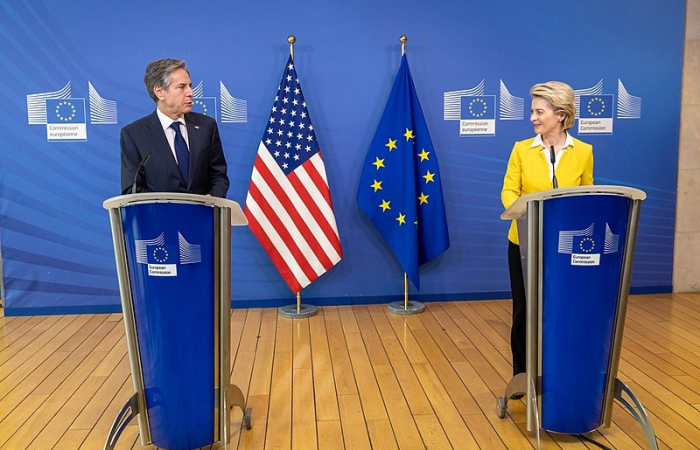
Armenian prime minister, Nikol Pashinyan, is in Brussels, where he is expected to meet on Friday afternoon (5 April) with US Secretary of State, Antony Blinken and European Commission president, Ursula von der Leyen. The unusual format of the tripartite meeting is being billed as "the joint EU-US-Armenia high-level meeting in support of Armenia’s resilience". There has been intense speculation about the purpose of the meeting, and the likely outcomes. Azerbaijan has seen it as an attempt to encourage Armenia to take a more hardline position in its dealings with it, including in the current negotiations of an Armenia-Azerbaijan peace treaty. Russia has been vocal in criticising the meeting, seeing it as yet another western attempt at snatching Armenia away from the Russian orbit. Other countries, such as Turkey and Iran have also been critical of the three way meeting. Behind the scenes there have been a lot of work going on in order to calm down neves, especially in Baku, and ahead of the meeting, both Secretary of State Blinken and President von der Leyen, spoke to Azerbaijani president Ilham Aliyev.