Theme

Diplomacy

Editor's choice
News
Germany accuses Russia of cyberattacks and disinformation campaign

Germany accuses Russia of cyberattacks and disinformation campaign

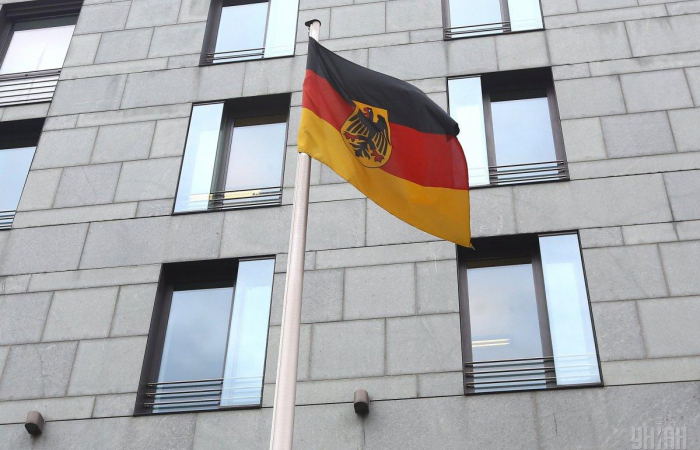
The German government holds Russia responsible for a cyberattack on German air traffic control, and for targeted disinformation campaigns before the last federal election. According to the German Foreign Office in Berlin, the incidents could be clearly attributed to the Russian military intelligence service, the GRU. In response, the Russian ambassador to Berlin was summoned to the Foreign Ministry. "We have been observing a massive increase in threatening hybrid activities by Russia for some time now," a spokesperson for the Foreign Ministry stated. These range from disinformation campaigns and espionage to cyberattacks and sabotage attempts. The aim is to divide society, sow distrust, and undermine confidence in democratic institutions. The spokesperson added that with these actions, Russia is "very concretely threatening our security, not only through its war of aggression against Ukraine, but also here in Germany."  The Foreign Ministry spokesperson explained that the cyberattack on air traffic control in August 2024 was clearly attributed to the hacker collective "APT28," known as "Fancy Bear," and to the responsibility of the Russian military intelligence service, the GRU. Furthermore, it could now be "conclusively stated" that Russia had attempted "to influence and destabilize both the last Federal election and the ongoing internal affairs of the Federal Republic of Germany." There was "absolutely irrefutable evidence" for this". The so-called "Storm 1516" campaign, which has been running since 2024, is allegedly backed by "reliable information" that the Moscow-based think tank "Center for Geopolitical Expertise" is behind it. The Center is also said to be supported by Russian military intelligence. Its primary aim is to influence democratic elections in the West. (Click the image to read more).
Editor's choice
Opinion
Opinion: A sustainable peace requires consistent long-term European involvement

Opinion: A sustainable peace requires consistent long-term European involvement

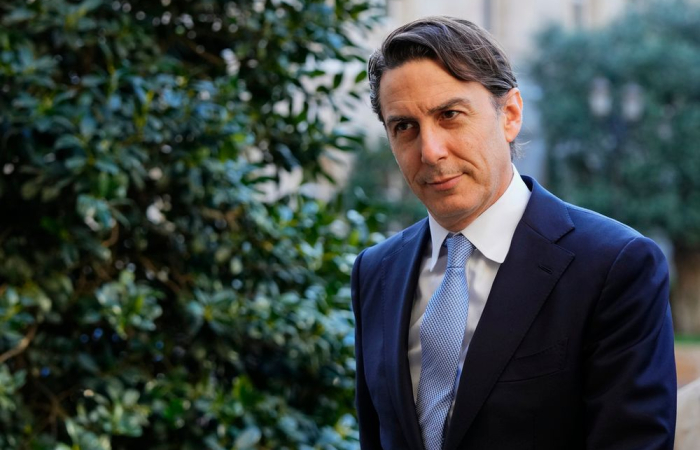
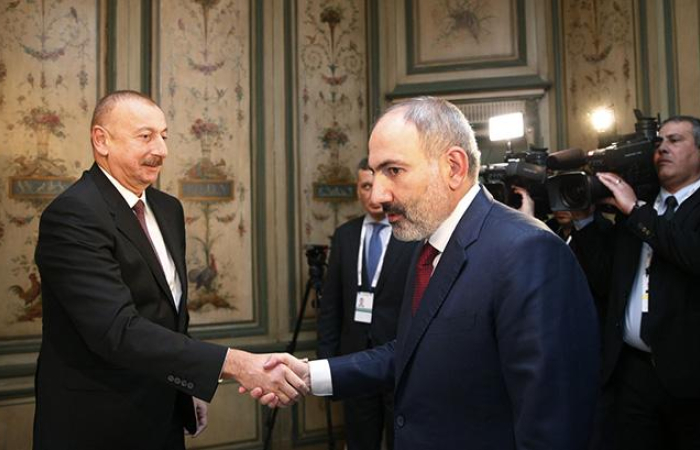
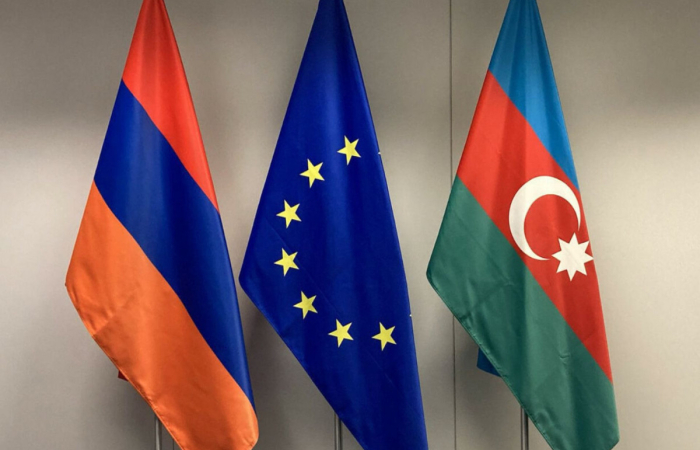
There is no denying that the EU, especially key member states acting in support, helped bring Baku and Yerevan closer to the Washington Declaration of August 8, 2025. But a declaration is not a treaty. Turning principles into a peace deal and eventually to a sustainable peace requires consistent long-term European involvement, writes Yalchin Mammadov in this-op-ed for commonspace.eu Before facilitating trust between Armenia and Azerbaijan, the EU is first expected to address its own credibility gap with Baku. A more balanced approach—such as including Azerbaijan, alongside Armenia, in the European Peace Facility—could be a useful first step. Diplomats can negotiate peace; societies must build peace. In this context, the EU can do what it does the best: long-term societal engagement. By expanding youth and academic exchange programmes, investing in cross-border civil society initiatives, and fostering people-to-people cooperation, Brussels can help shape a new generation equipped to sustain peace beyond political cycles. Such tools are slow and unglamorous, but if ignored, even the strongest treaty risks collapse. And obviously, these aspects require two-way engagement and genuine willingness by both governments to facilitate contact. If Brussels wants to remain influential, it needs to replace outdated one-size-fits-all policies with ambitious, interest-driven and differentiated approaches. Without a clear regional strategy, which appears to be the current situation, the South Caucasus will continue to sit at the margins of Europe’s security architecture—leaving space for other powers to take the lead. (You can read the op-ed in full by clicking the image.)

Filter archive

Publication date
Editor's choice
Editorial
Hajj tests Saudi Government, year after year

Hajj tests Saudi Government, year after year

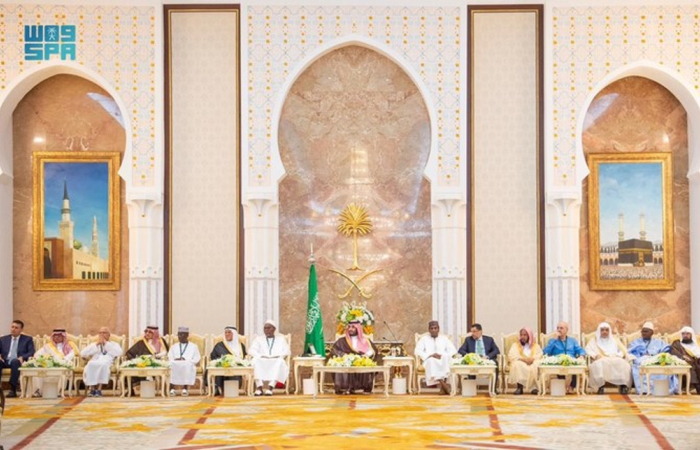
Last week, Saudi Crown Prince Mohammed bin Salman, politely declined an invitation by Italian Prime Minister, Georgia Meloni, to attend as a special guest at the G7 summit held in Italy. Prince Mohammed said he could not attend as he had to oversee the annual Hajj. Whilst to some, this may have seemed like a weak diplomatic excuse, in fact, it was a very real one. Year after year, the Hajj has presented a serious political, logistical, and humanitarian challenge to the Saudi authorities. Domestically, Saudi governments are often judged by how they manage the Hajj. The Hajj is an annual Islamic pilgrimage to Mecca in Saudi Arabia,  the holiest city for Muslims. The Hajj is a mandatory religious duty for Muslims that must be carried out at least once in their lifetime by all adult Muslims who are physically and financially capable of undertaking the journey, and of supporting their family during their absence from home.
Editor's choice
News
UN Security Council calls for an end to the siege of el-Fasher in Sudan's North Darfur province; Russia does not vote

UN Security Council calls for an end to the siege of el-Fasher in Sudan's North Darfur province; Russia does not vote

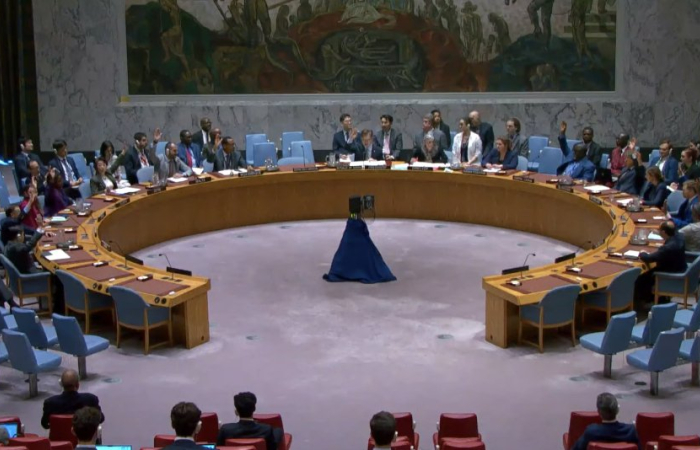
The UN Security Council, at the initiative of the United Kingdom, recently adopted a resolution on Thursday (13 June) calling for an immediate end to the siege of Al Fasher, the capital of Sudan's North Darfur state. The city, some 800 kilometres west of Khartoum, remains a key conflict zone as it is the last major western city not yet in the hands of the Rapid Support Forces (RSF). The RSF, a former elite unit made up of ethnic Arab militias and once part of the regime of dictator Omar Hassan al Bashir, is now led by General Mohamed Hamdan “Hemedti” Dagalo. Daglo, a military leader and wealthy businessman from Darfur, plays a central role in the current power struggle in Sudan. The violence has killed at least 14,000 people and displaced more than 10 million others, according to UN estimates.
Editor's choice
Opinion
Opinion: Are France and Azerbaijan drifting back to normal?

Opinion: Are France and Azerbaijan drifting back to normal?

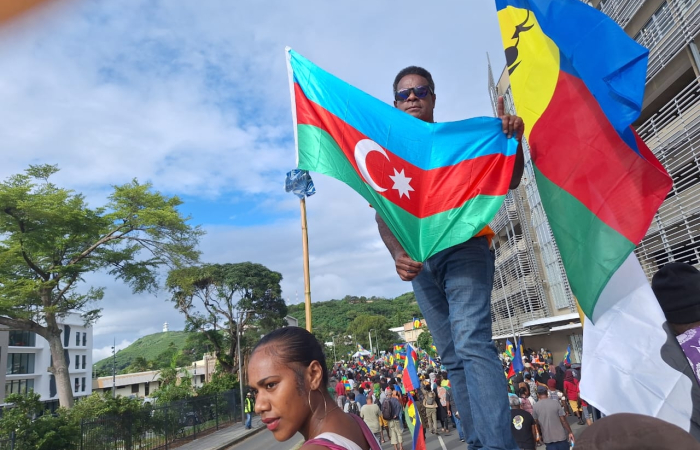
Relations between France and Azerbaijan have been on a downward slope since the 44-day war in 2020, when Paris emerged as Armenia’s major international supporter, and the French parliament even voted, almost unanimously, for a resolution calling for the recognition of independence of the so-called “Republic of Artsakh”. Already during the war, Azerbaijani MFA claimed that Paris “ceased to be an honest broker”, and this position only hardened over time. Since then, the bilateral ties have been progressively deteriorating, especially after Azerbaijan’s military operation in Karabakh in September 2023: France became the country where calls to sanction Baku for its “ethnic cleansing” were the most vocal, while Azerbaijan started to attack Paris over its “neo-colonial” policies, targeting continued French sovereignty over several overseas territories, primarily New Caledonia whose independence movement has been active for decades.
Editor's choice
Editorial
Approaching the end game for Armenia-Azerbaijan peace

Approaching the end game for Armenia-Azerbaijan peace

Nikol Pashinyan has taken Armenia on a long journey, and brought it close to peace with Azerbaijan. Few if any believed that he could achieve what has been done so far. It is true that Azerbaijani military superiority, the victory in 2020, and the puzzling events of September 2023, which saw the overnight collapse of the Armenian political project in Nagorno-Karabakh and the subsequent exodus of the entire Armenian population from the territory, in many ways pre-determined what is about to follow. But given the entrenched nationalist positions and hard-line narratives that have traditionally characterised Armenia’s political thinking, even these developments were not enough to guarantee peace. The last part of the journey had to be done in the minds of Armenians, and Pashinyan set about doing this with conviction and determination, challenging the narrative of a historical Armenia, that is only the imagination of the nationalist elites and advocating instead, "a real" Armenia with fixed border.
Editor's choice
News
G7 explores ways to use frozen Russian assets to help Ukraine 

G7 explores ways to use frozen Russian assets to help Ukraine 

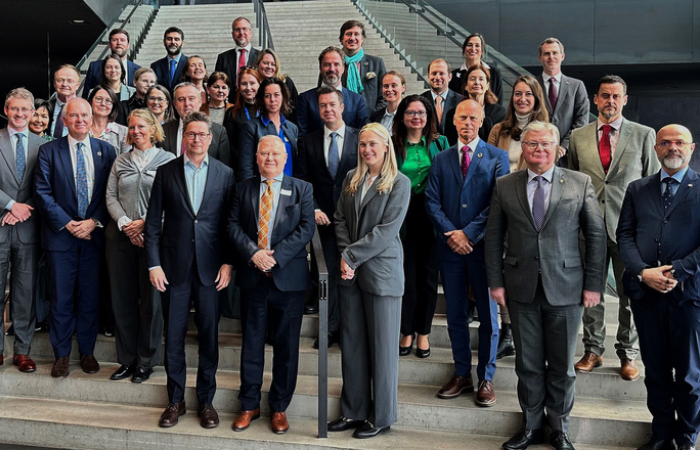
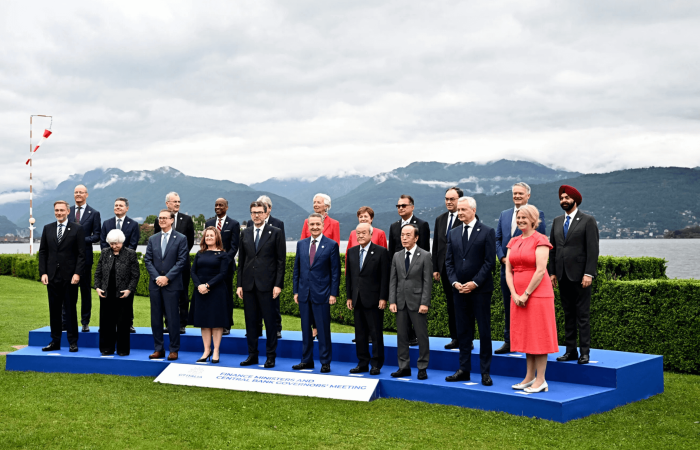
The G7 will explore ways to use future revenues from frozen Russian assets to help Ukraine. Following Russia's invasion of Ukraine in February 2022, the G7 and its allies froze around $300 billion in Russian assets. "We are making progress in our discussions on potential avenues to bring forward the extraordinary profits stemming from immobilized Russian sovereign assets to the benefit of Ukraine," the draft statement said. G7 negotiators have been discussing for weeks how best to use these assets, which include major currencies and government bonds held mainly in European vaults. The United States (US) has been urging its G7 partners - Japan, Germany, France, Britain, Italy and Canada - to support a loan that could provide Kyiv with up to $50 billion in the near term. The cautious language of the statement, lacking figures or specifics, underlines the many legal and technical issues that would need to be resolved before such a loan could be issued. A G7 source indicated that there would be no significant changes to the statement before the final version is released later on Saturday (25 May).