Theme

Diplomacy

Editor's choice
News
Germany accuses Russia of cyberattacks and disinformation campaign

Germany accuses Russia of cyberattacks and disinformation campaign

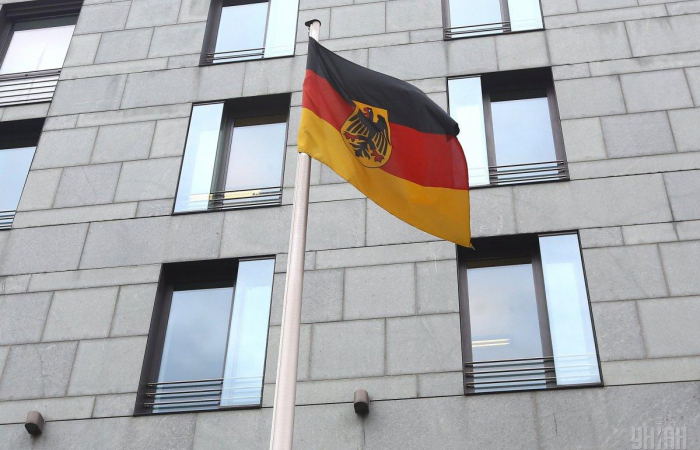
The German government holds Russia responsible for a cyberattack on German air traffic control, and for targeted disinformation campaigns before the last federal election. According to the German Foreign Office in Berlin, the incidents could be clearly attributed to the Russian military intelligence service, the GRU. In response, the Russian ambassador to Berlin was summoned to the Foreign Ministry. "We have been observing a massive increase in threatening hybrid activities by Russia for some time now," a spokesperson for the Foreign Ministry stated. These range from disinformation campaigns and espionage to cyberattacks and sabotage attempts. The aim is to divide society, sow distrust, and undermine confidence in democratic institutions. The spokesperson added that with these actions, Russia is "very concretely threatening our security, not only through its war of aggression against Ukraine, but also here in Germany."  The Foreign Ministry spokesperson explained that the cyberattack on air traffic control in August 2024 was clearly attributed to the hacker collective "APT28," known as "Fancy Bear," and to the responsibility of the Russian military intelligence service, the GRU. Furthermore, it could now be "conclusively stated" that Russia had attempted "to influence and destabilize both the last Federal election and the ongoing internal affairs of the Federal Republic of Germany." There was "absolutely irrefutable evidence" for this". The so-called "Storm 1516" campaign, which has been running since 2024, is allegedly backed by "reliable information" that the Moscow-based think tank "Center for Geopolitical Expertise" is behind it. The Center is also said to be supported by Russian military intelligence. Its primary aim is to influence democratic elections in the West. (Click the image to read more).
Editor's choice
Opinion
Opinion: A sustainable peace requires consistent long-term European involvement

Opinion: A sustainable peace requires consistent long-term European involvement

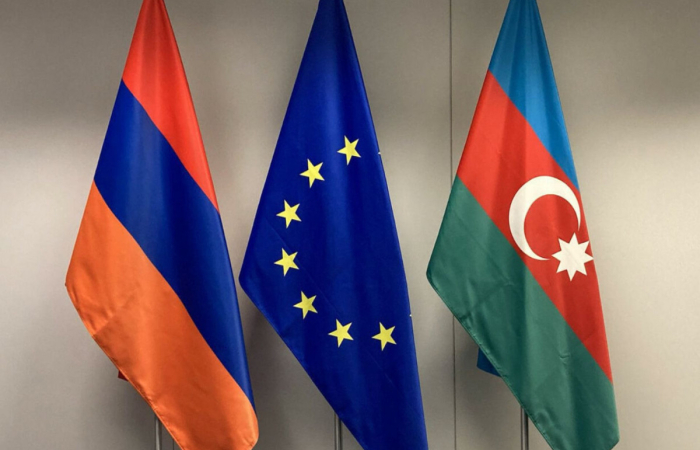
There is no denying that the EU, especially key member states acting in support, helped bring Baku and Yerevan closer to the Washington Declaration of August 8, 2025. But a declaration is not a treaty. Turning principles into a peace deal and eventually to a sustainable peace requires consistent long-term European involvement, writes Yalchin Mammadov in this-op-ed for commonspace.eu Before facilitating trust between Armenia and Azerbaijan, the EU is first expected to address its own credibility gap with Baku. A more balanced approach—such as including Azerbaijan, alongside Armenia, in the European Peace Facility—could be a useful first step. Diplomats can negotiate peace; societies must build peace. In this context, the EU can do what it does the best: long-term societal engagement. By expanding youth and academic exchange programmes, investing in cross-border civil society initiatives, and fostering people-to-people cooperation, Brussels can help shape a new generation equipped to sustain peace beyond political cycles. Such tools are slow and unglamorous, but if ignored, even the strongest treaty risks collapse. And obviously, these aspects require two-way engagement and genuine willingness by both governments to facilitate contact. If Brussels wants to remain influential, it needs to replace outdated one-size-fits-all policies with ambitious, interest-driven and differentiated approaches. Without a clear regional strategy, which appears to be the current situation, the South Caucasus will continue to sit at the margins of Europe’s security architecture—leaving space for other powers to take the lead. (You can read the op-ed in full by clicking the image.)

Filter archive

Publication date
Editor's choice
News
European Union cancels 121 million euros in funding for Georgia

European Union cancels 121 million euros in funding for Georgia

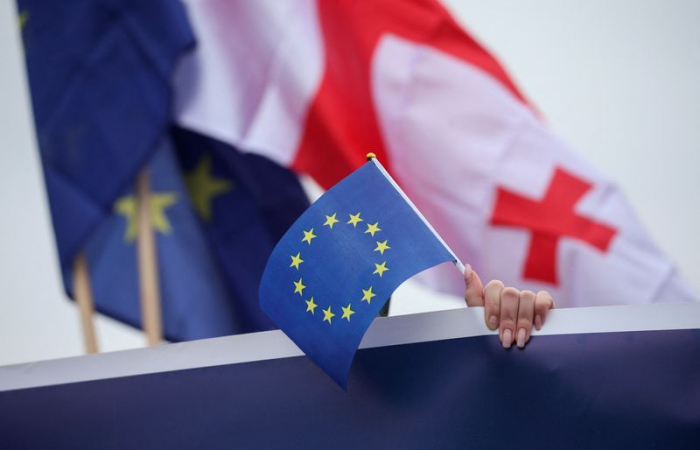
The European Union has decided to cancel €121 million in funds intended to support Georgia's economic development and its aspirations for EU membership. The decision was confirmed by the EU delegation in Georgia, which said that the growing repression of dissent was the reason for the withdrawal of financial assistance.
Editor's choice
News
Bonn Contact Group on Climate Peace and Security ahead of COP29 final report presentation was held successfully in Berlin

Bonn Contact Group on Climate Peace and Security ahead of COP29 final report presentation was held successfully in Berlin

The Bonn Contact Group on Climate, Peace and Security ahead of COP29, held its final report presentation on 9 October at the Hertie School in Berlin, Germany. The meeting was attended by representatives of Berlin-based civil society organisations, policymakers, academics and international organisations. The meeting focused on three critical reports examining the intersections of climate change with water scarcity, land degradation and food insecurity. The event was organised by LINKS Europe in collaboration with the Restart Initiative and the Candid Foundation. 
Editor's choice
News
Russia agrees to withdraw border guards from the Armenian-Iranian border

Russia agrees to withdraw border guards from the Armenian-Iranian border

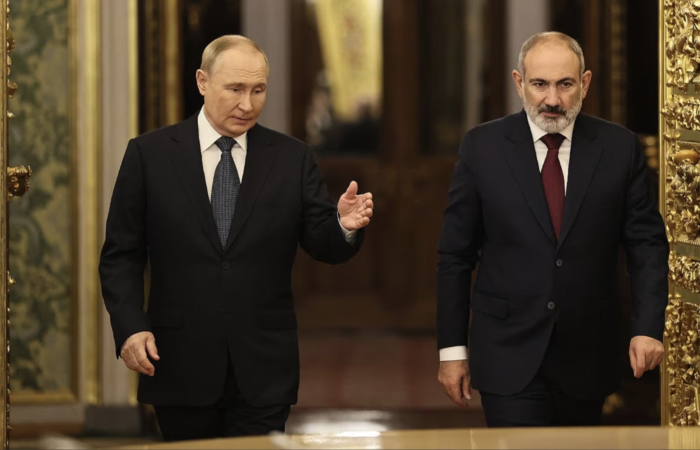
On Tuesday (8 October), Russian President Vladimir Putin and Armenian Prime Minister Nikol Pashinyan agreed at the summit of the Commonwealth of Independent States (CIS) to withdraw Russian border guards from the Armenian-Iranian frontier as of January 2025 and replace them with Armenian border guards. In addition, the Turkish border will be guarded by both Russian and Armenian guards.
Editor's choice
News
US Helsinki Commission assesses political situation in South Caucasus

US Helsinki Commission assesses political situation in South Caucasus

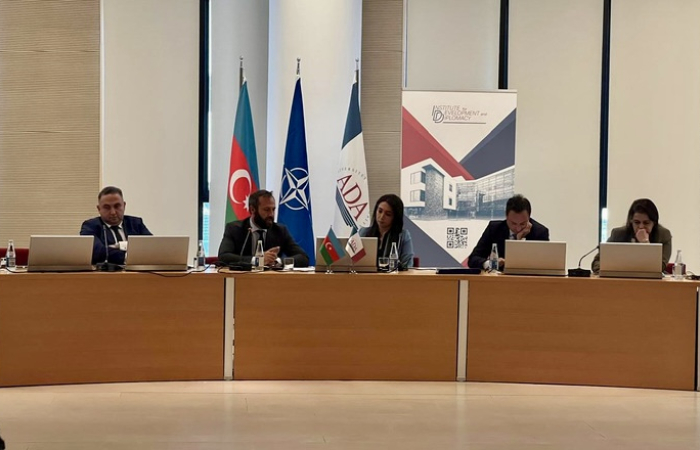
The US Helsinki Commission on Tuesday (1 October) published an analysis of Russia's political and economic agenda. The document addresses, among other things, various developments in the South Caucasus. The region is experiencing various political shifts as Russia's material influence wanes due to its focus on its war with Ukraine. On the one hand. Armenia was once one of Russia's strongest allies. However, following the Nagorno Karabakh war in 2020, Armenia has moved away from Moscow and more towards a Western agenda. On the other hand, Azerbaijan has adopted a cooperative approach with Russia, especially given the similarities between the two countries' strong governmental grip.   
Editor's choice
News
Rutte visits Ukraine on first working trip as NATO chief

Rutte visits Ukraine on first working trip as NATO chief

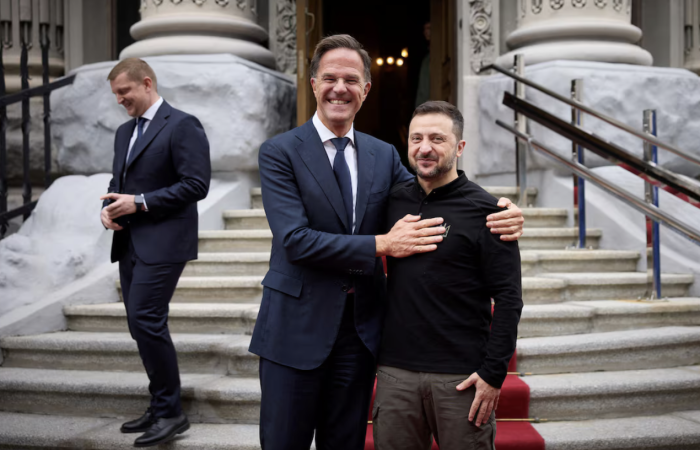
NATO's new Secretary General Mark Rutte visited Kyiv on Thursday (3 October). It is Rutte's first working trip since officially taking office earlier this week. Earlier, Rutte announced that Ukraine's NATO membership would be one of the spearheads of his policy.
Editor's choice
News
Increase in cooperation between Vietnam and Azerbaijan

Increase in cooperation between Vietnam and Azerbaijan

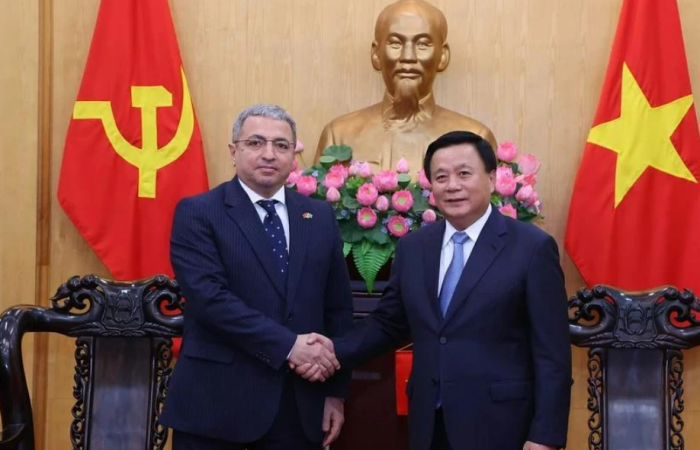
Politburo member Nguyen Xuan Thang met the Azerbaijani ambassador in Hanoi on Tuesday (1 October). Thang said that this year marks a big anniversary in the relationship between Vietnam and Azerbaijan. It is the 65th anniversary of President Ho Chi Minh's visit to Baku. Thang reaffirmed Vietnam’s commitment to strengthening its friendship and cooperation with traditional allies like Azerbaijan. 
Editor's choice
News
US to provide $20 million in security assistance to Armenia

US to provide $20 million in security assistance to Armenia

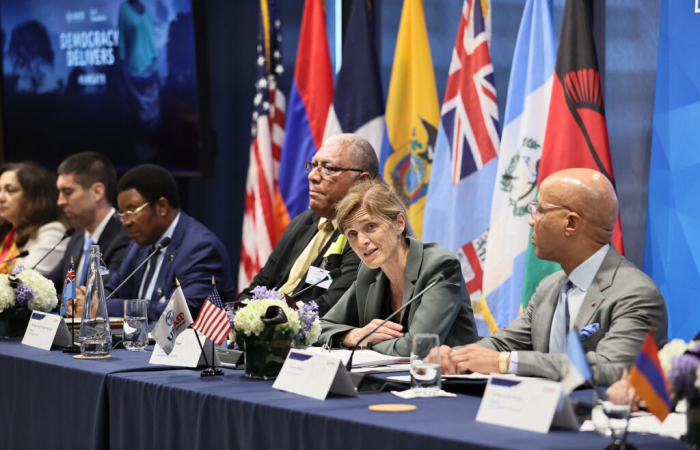
The United States has announced a $20 million aid package to strengthen Armenia's cyber, border and energy security, USAID Administrator Samantha Power announced at a Democracy Delivers Initiative event in New York. The event, co-hosted by US Secretary of State Antony Blinken, was attended by Armenian Prime Minister Nikol Pashinyan.