Theme

Diplomacy

Editor's choice
News
Germany accuses Russia of cyberattacks and disinformation campaign

Germany accuses Russia of cyberattacks and disinformation campaign

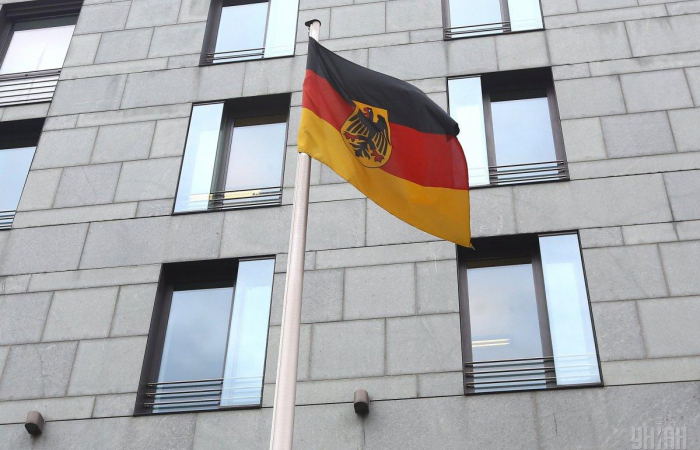
The German government holds Russia responsible for a cyberattack on German air traffic control, and for targeted disinformation campaigns before the last federal election. According to the German Foreign Office in Berlin, the incidents could be clearly attributed to the Russian military intelligence service, the GRU. In response, the Russian ambassador to Berlin was summoned to the Foreign Ministry. "We have been observing a massive increase in threatening hybrid activities by Russia for some time now," a spokesperson for the Foreign Ministry stated. These range from disinformation campaigns and espionage to cyberattacks and sabotage attempts. The aim is to divide society, sow distrust, and undermine confidence in democratic institutions. The spokesperson added that with these actions, Russia is "very concretely threatening our security, not only through its war of aggression against Ukraine, but also here in Germany."  The Foreign Ministry spokesperson explained that the cyberattack on air traffic control in August 2024 was clearly attributed to the hacker collective "APT28," known as "Fancy Bear," and to the responsibility of the Russian military intelligence service, the GRU. Furthermore, it could now be "conclusively stated" that Russia had attempted "to influence and destabilize both the last Federal election and the ongoing internal affairs of the Federal Republic of Germany." There was "absolutely irrefutable evidence" for this". The so-called "Storm 1516" campaign, which has been running since 2024, is allegedly backed by "reliable information" that the Moscow-based think tank "Center for Geopolitical Expertise" is behind it. The Center is also said to be supported by Russian military intelligence. Its primary aim is to influence democratic elections in the West. (Click the image to read more).
Editor's choice
Opinion
Opinion: A sustainable peace requires consistent long-term European involvement

Opinion: A sustainable peace requires consistent long-term European involvement

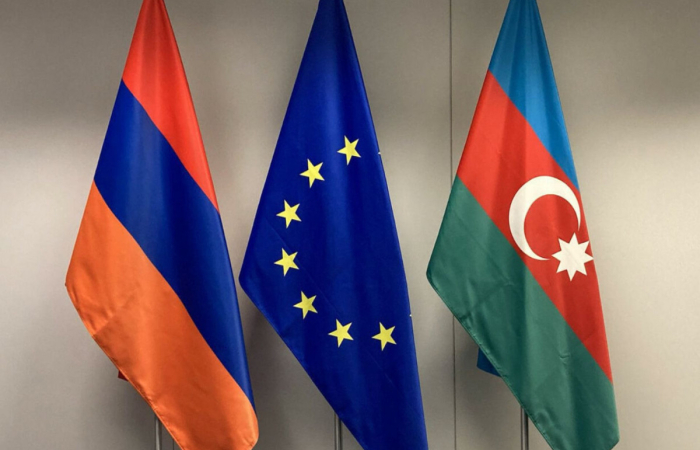
There is no denying that the EU, especially key member states acting in support, helped bring Baku and Yerevan closer to the Washington Declaration of August 8, 2025. But a declaration is not a treaty. Turning principles into a peace deal and eventually to a sustainable peace requires consistent long-term European involvement, writes Yalchin Mammadov in this-op-ed for commonspace.eu Before facilitating trust between Armenia and Azerbaijan, the EU is first expected to address its own credibility gap with Baku. A more balanced approach—such as including Azerbaijan, alongside Armenia, in the European Peace Facility—could be a useful first step. Diplomats can negotiate peace; societies must build peace. In this context, the EU can do what it does the best: long-term societal engagement. By expanding youth and academic exchange programmes, investing in cross-border civil society initiatives, and fostering people-to-people cooperation, Brussels can help shape a new generation equipped to sustain peace beyond political cycles. Such tools are slow and unglamorous, but if ignored, even the strongest treaty risks collapse. And obviously, these aspects require two-way engagement and genuine willingness by both governments to facilitate contact. If Brussels wants to remain influential, it needs to replace outdated one-size-fits-all policies with ambitious, interest-driven and differentiated approaches. Without a clear regional strategy, which appears to be the current situation, the South Caucasus will continue to sit at the margins of Europe’s security architecture—leaving space for other powers to take the lead. (You can read the op-ed in full by clicking the image.)

Filter archive

Publication date
Editor's choice
Opinion
Opinion: How to Take the Most from the Present De-Facto Peace Period in Armenia-Azerbaijan Relations

Opinion: How to Take the Most from the Present De-Facto Peace Period in Armenia-Azerbaijan Relations

The Antalya Diplomacy Forum, held on April 11-13 in the resort Turkish town of Antalya, presented a rare opportunity for trilateral engagement among the foreign ministers of the three South Caucasian countries. The candid exchange between Azerbaijan’s Jeyhun Bayramov, Armenia’s Ararat Mirzoyan, and Georgia’s Maka Bochorishvili, facilitated by Türkiye, offered a fragile yet meaningful sign that this fractured region may be inching toward regional peace and prosperity. Importantly, each minister underlined the significance of overcoming dividing lines in the South Caucasus and opening a new chapter for intraregional cooperation.
Editor's choice
News
High level U.S. talks with Europeans on ending the Russia-Ukraine war

High level U.S. talks with Europeans on ending the Russia-Ukraine war

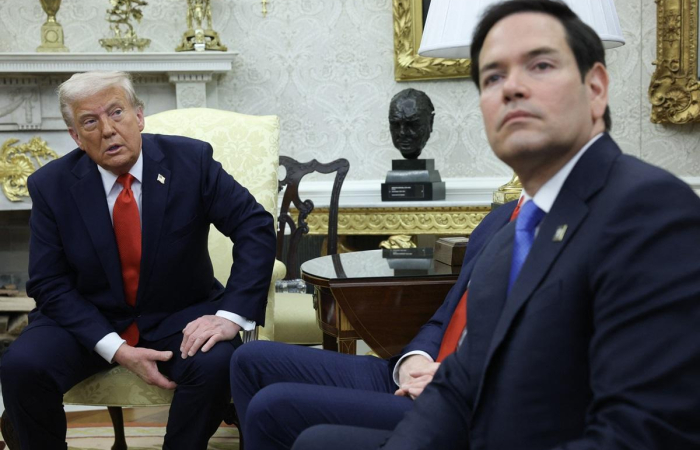
Secretary of State Marco Rubio and Steve Witkoff, President Donald Trump’s special envoy, is travelling to Paris for talks with European allies on U.S. efforts to negotiate a peace deal between Russia and Ukraine. The State Department said Rubio and Witkoff would be in the French capital Thursday for the meetings. The officials will have “talks with European counterparts to advance President Trump’s goal to end the Russia-Ukraine war and stop the bloodshed,” department spokeswoman Tammy Bruce said in a statement on Wednesday.
Editor's choice
News
Foreign Ministers of Armenia and Azerbaijan meet during Antalya Diplomacy Forum

Foreign Ministers of Armenia and Azerbaijan meet during Antalya Diplomacy Forum

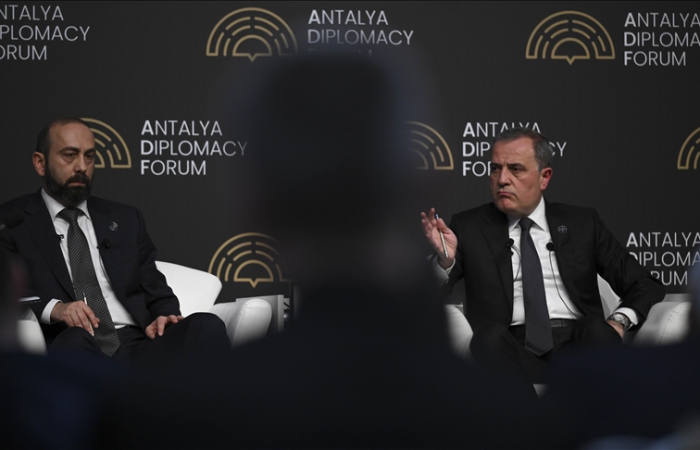
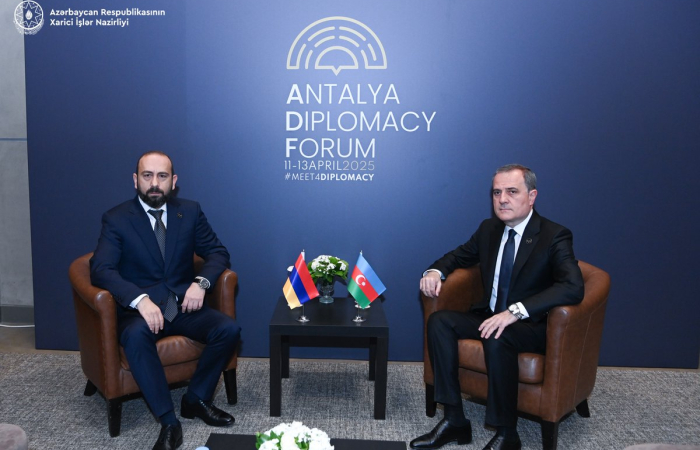
Armenia's Minister of Foreign Affairs Ararat Mirzoyan and his Azerbaijani counterpart Jeyhun Bayramov had an exchange about the pending peace agreement between the two countries during a high level diplomatic forum in Antalya. The two debated the current political situation in the region during a panel discussion titled “Challenges and Opportunities for Regional Cooperation in the South Caucasus” held during the 4th Antalya Diplomacy Forum.
Editor's choice
News
Finnish President of the OSCE’s Parliamentary Assembly in trouble after meeting Russian representative

Finnish President of the OSCE’s Parliamentary Assembly in trouble after meeting Russian representative

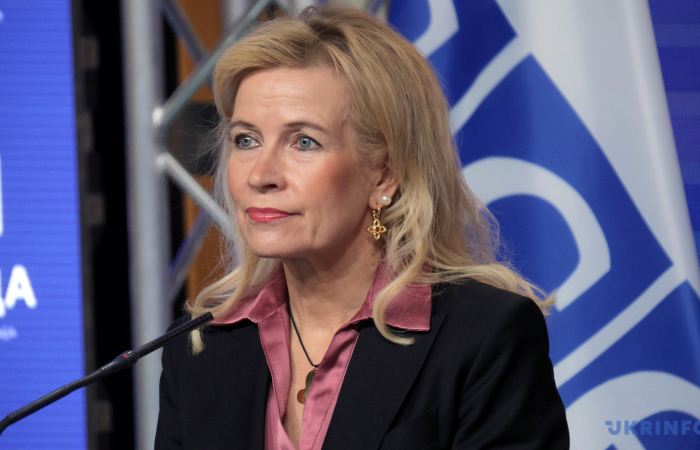
The President of the OSCE’s Parliamentary Assembly, Finnish MP Pia Kauma (NCP), met with a Russian representative during the annual meeting of the organisation’s Inter-Parliamentary Union (IPU) in Tashkent, Uzbekistan drawing fire for violating the EU policy of isolating Russia after the invasion of Ukraine three years ago.
Editor's choice
News
LINKS Europe hosts inaugural Co-Chairs meeting of the Thematic Group on Peace and Security

LINKS Europe hosts inaugural Co-Chairs meeting of the Thematic Group on Peace and Security

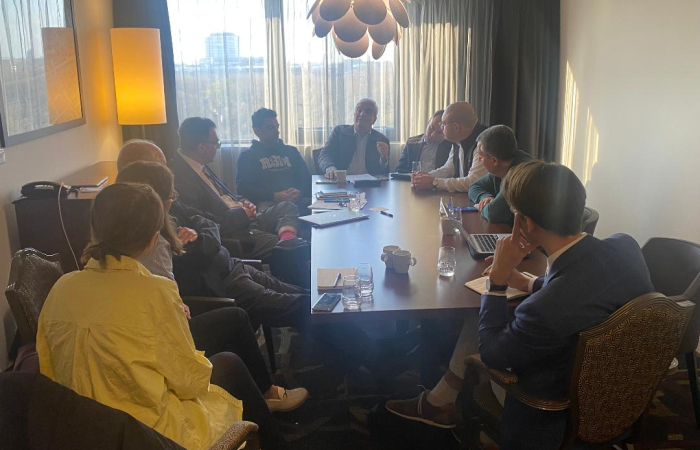
The inaugural meeting of the two co-chairs of the thematic group on Peace and Security was hosted in The Hague by LINKS Europe in parallel with the Armenia-Azerbaijan Expert Political Dialogue Platform. During the meeting held on 2 April and chaired by LINKS Europe, Leonid Nersissian (Armenia) and Murad Muradov (Azerbaijan) discussed the work plan for the next nine months.
Editor's choice
News
LINKS Europe holds expert conference in The Hague on political transition in the South Caucasus

LINKS Europe holds expert conference in The Hague on political transition in the South Caucasus

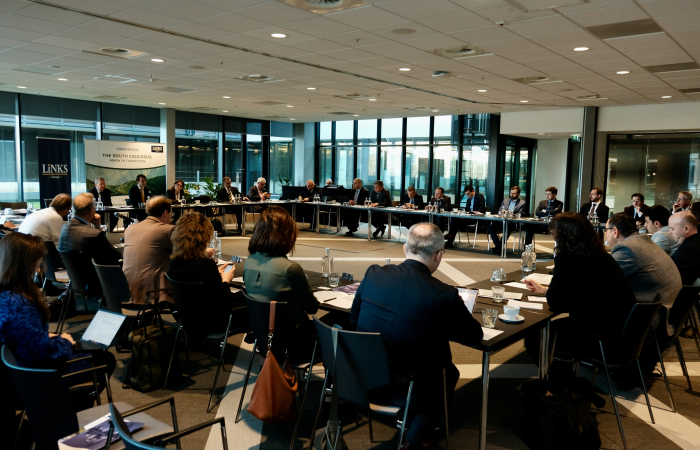
A conference organised in The Hague by LINKS Europe Foundation brought together experts and activists from the South Caucasus, the European Union and beyond to discuss the current state of political transition in the region. The gathering gave particular attention to the European Union's evolving role in the region amidst rapidly changing domestic and regional dynamics as well as Türkiye's influence as a regional power.
Editor's choice
News
Finland, Poland and Baltic countries to withdraw from anti-personnel mine ban treaty due to Russian threat

Finland, Poland and Baltic countries to withdraw from anti-personnel mine ban treaty due to Russian threat

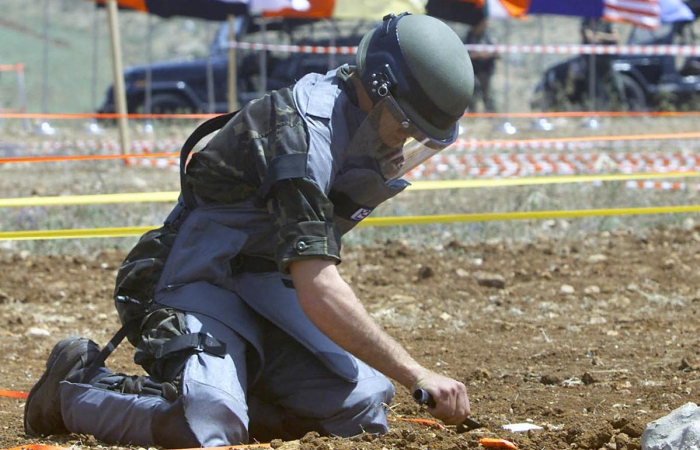
Finland's prime minister has announced that Finland plans to withdraw from the international treaty banning the use of anti-personnel mines, citing the threat from Russia. The announcement comes two weeks after Poland, Lithuania, Latvia and Estonia took a first step towards also quitting the treaty, with them all pointing to the increased security risk from Russia following its invasion of Ukraine.Finland's prime minister has announced that Finland plans to withdraw from the international treaty banning the use of anti-personnel mines, citing the threat from Russia. The announcement comes two weeks after Poland, Lithuania, Latvia and Estonia took a first step towards also quitting the treaty, with them all pointing to the increased security risk from Russia following its invasion of Ukraine.
Editor's choice
Monday Commentary
Türkiye’s changing and growing role in the South Caucasus

Türkiye’s changing and growing role in the South Caucasus

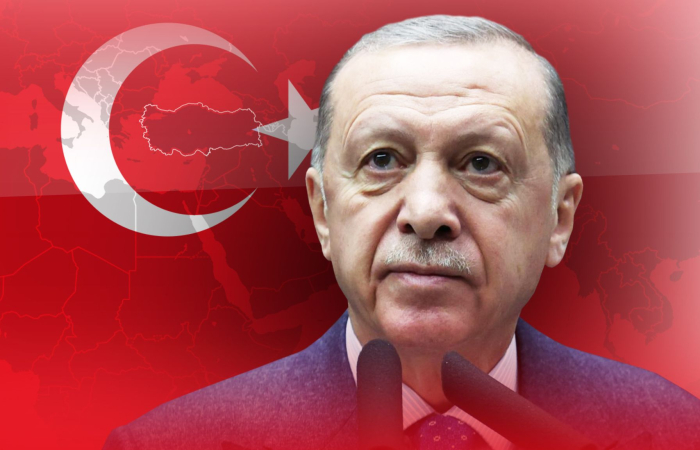
Last week, LINKS Europe organised a major conference in the Hague with the theme, “The South Caucasus, again in transition”. The event brought together experts, policy practitioners, and political voices from Armenia, Azerbaijan, and Georgia to discuss the regional dynamics in the South Caucasus and the role of the European Union and Türkiye in the region.
Editor's choice
News
Landmark EU - Central Asia summit held in Samarkand

Landmark EU - Central Asia summit held in Samarkand

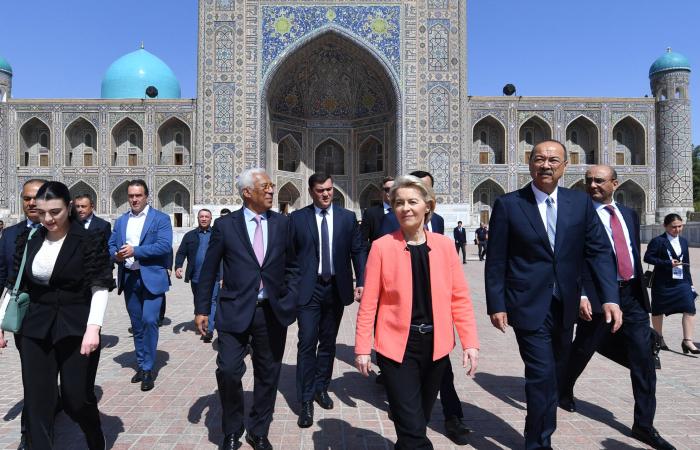
European Commission President Ursula von der Leyen and European Council President António Costa travelled to Uzbekistan to participate in a landmark EU–Central Asia summit. Held on 3–4 April, the event brings together EU leaders with the heads of state and government of the five Central Asian republics. Alongsidei the host, Uzbek President Shavkat Mirziyoyev, the summit was also attended by Kazakh President Kassym-Jomart Tokayev, Kyrgyz President Sadyr Japarov, Tajik President Emomali Rahmon, and Turkmen President Serdar Berdimuhamedov.