Theme

Defence

Stories related to defence, strategy and cooperation. 

Editor's choice
News
NATO Chief says war is on Europe's doorstep, and warns against complacency

NATO Chief says war is on Europe's doorstep, and warns against complacency

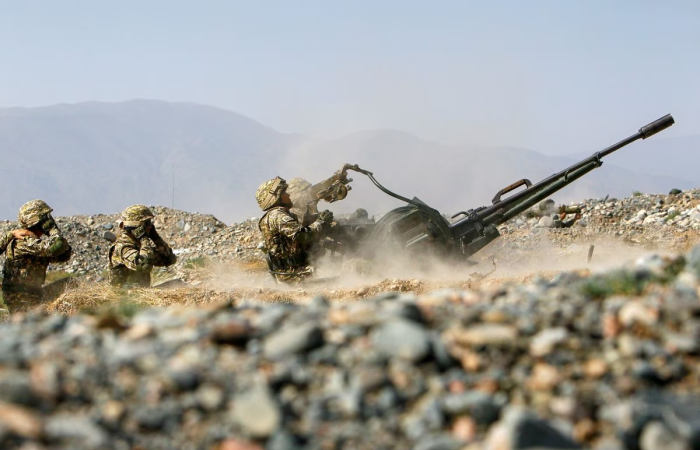
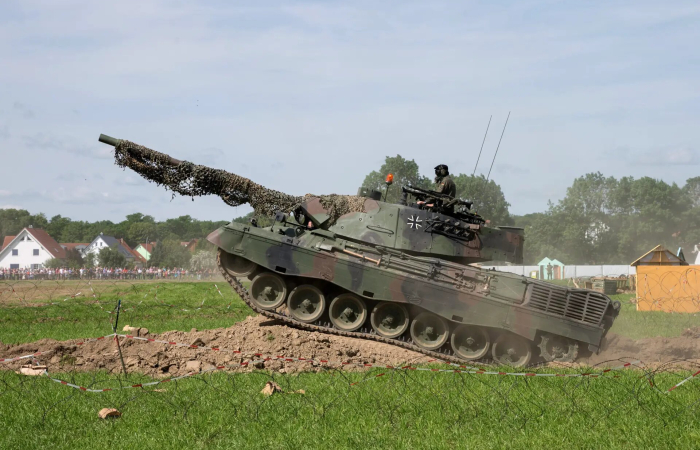
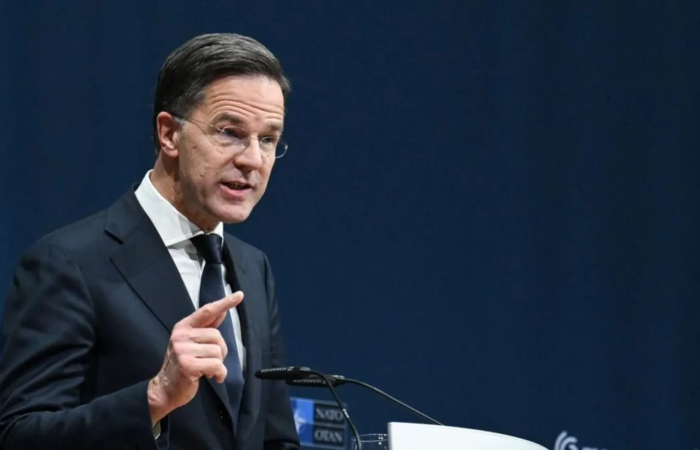
Russia could attack a NATO country within the next five years, the Secretary General of NATO, Mark Rutte, said in a stark new warning. "NATO's own defences can hold for now," Rutte warned in Berlin, but conflict was "next door" to Europe, and he feared "too many are quietly complacent, and too many don't feel the urgency, too many believe that time is on our side. "Russia is already escalating its covert campaign against our societies," Rutte said in a speech in Germany. "We must be prepared for the scale of war our grandparents or great-grandparents endured." Earlier this month, Russia's President Vladimir Putin said his country was not planning to go to war with Europe, but it was ready "right now" if Europe wanted to - or started a war. But similar reassurances were given by Moscow in 2022, just before 200,000 Russian troops crossed the border and invaded Ukraine. Putin has accused European countries of hindering US efforts to bring peace in Ukraine - a reference to the role Ukraine's European allies have recently played in trying to change a US peace plan to end the war, whose initial draft was seen as favouring Russia. But Putin was not sincere, Nato's secretary-general said in the German capital, Berlin. Supporting Ukraine, he added, was a guarantee for European security. "Just imagine if Putin got his way; Ukraine under the boot of Russian occupation, his forces pressing against a longer border with Nato, and the significantly increased risk of an armed attack against us." Russia's economy has been on a war footing for more than three years now - its factories churn out ever more supplies of drones, missiles and artillery shells. According to a recent report by the Kiel Institute for the World Economy, Russia has been producing each month around 150 tanks, 550 infantry fighting vehicles, 120 Lancet drones and more than 50 artillery pieces. The UK, and most of its Western allies, are simply not anywhere near this point. Analysts say it would take years for Western Europe's factories to come close to matching Russia's mass-production of weapons. "Allied defence spending and production must rise rapidly, our armed forces must have what they need to keep us safe," the Nato chief said.
Editor's choice
Analysis
Mehman Aliyev on what "peace" can look like for Ukraine

Mehman Aliyev on what "peace" can look like for Ukraine

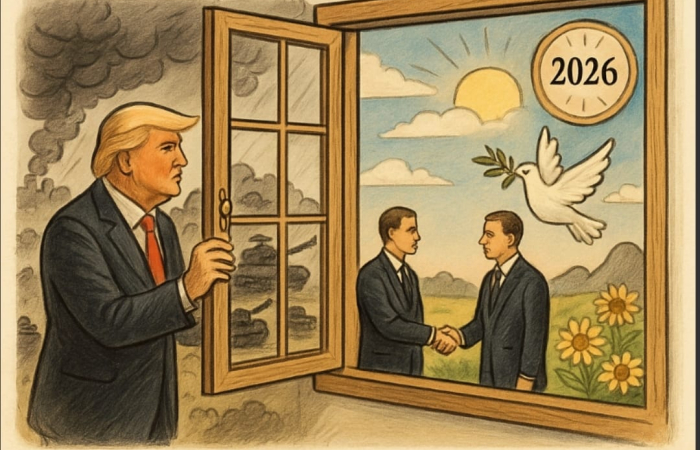
In this analysis,  veteran Azerbaijani journalist and political commentator, Mehman Aliyev, draws lessons from the 1994 Armenia-Azerbaijan ceasefire, to assess what can be possible impact of ceasefire in Ukraine. According to diplomats, a negotiating format or a partial ceasefire based on a modified version of the twenty-eight points is entirely plausible in 2026. A frozen line of contact, monitored by international mechanisms while talks drag on, is more likely than a fully implemented peace treaty by early that same year. “This document opens a window,” said political commentator Farid Gakhramanov. “Whether it means the end of the war or the beginning of a new frozen conflict will depend on the decisions of Moscow, Kyiv, Washington, and Brussels — not on the document itself.” (You can read the full analysis by clicking the image)

Filter archive

Publication date
Editor's choice
News
Finland set to join NATO after Turkey finally approves membership

Finland set to join NATO after Turkey finally approves membership

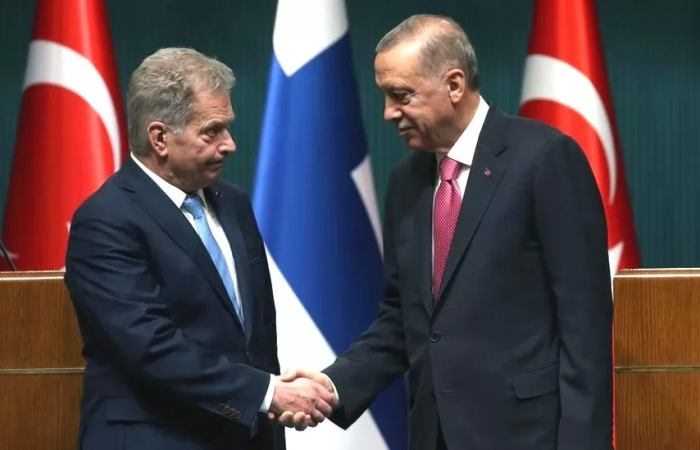
Finland is set to become the 31st member of the North Atlantic Treaty Organization (NATO) military alliance after approving its membership in a parliamentary vote late on Thursday (30 March). After months of stalling over claims that Finland, along with its nordic neighbour Sweden, were supporting Kurdish "terrorists", the Turkish parliament finally approved Finland's membership in a vote of 276 MPs voting for, and 0 voting against. While Finland will now be formally admitted into the military alliance at its next summit in July in Lithuania, Sweden's membership bid, which was submitted at the same time as Finland's, is still being held up by Ankara and Budapest. In a statement following the Turkish vote, the Finnish government said joining the alliance would strengthen the country's security, and improve stability and security in the region. Meanwhile the Finnish Prime Minister Sanna Marin tweeted, "as allies, we will give and receive security. We will defend each other. Finland stands with Sweden now and in the future and supports its application."
Editor's choice
News
Hungarian Parliament approves Finland NATO membership

Hungarian Parliament approves Finland NATO membership

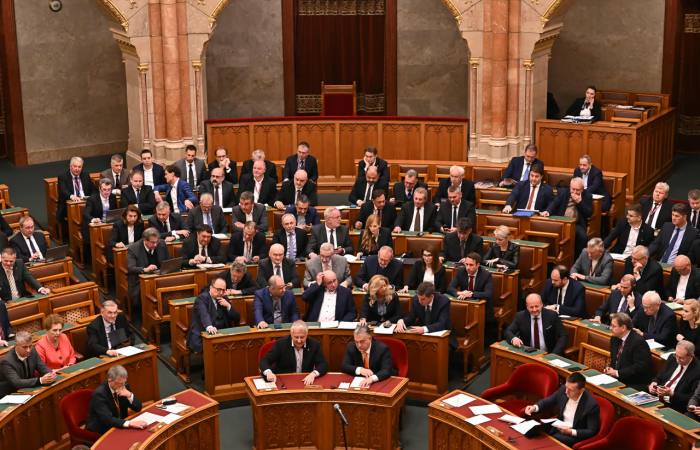
Over 10 months after Finland applied to join the NATO military alliance, the Hungarian Parliament has ratified Finland's application to the currently 30-member bloc in a vote on Monday (27 March). The vote was passed by 182 votes for and only 6 votes against. In order to become a NATO member, an applicant country must be approved by every member state individually, and following Hungary's approval yesterday only one country remains, Turkey. Turkey's approval of Finland's application to NATO is indeed expected soon as the country after the country's parliamentary committee on foreign affairs approved their application last week. A parliamentary vote on accession is expected before the country's presidential elections on 14 May. Yesterday's vote comes after months of delay in both Budapest and Ankara over Finland and Sweden's NATO membership prospects. While Hungarian officials had spent months insisting that they simply busy with other business, at the end of last month the Hungarian Prime Minister Viktor Orbán threatened to throw a spanner in the works over Finland and Sweden's history of open criticism of rule-of-law in Hungary.
Editor's choice
News
European Council President Michel heads to Kyiv amid calls to send Ukraine tanks

European Council President Michel heads to Kyiv amid calls to send Ukraine tanks

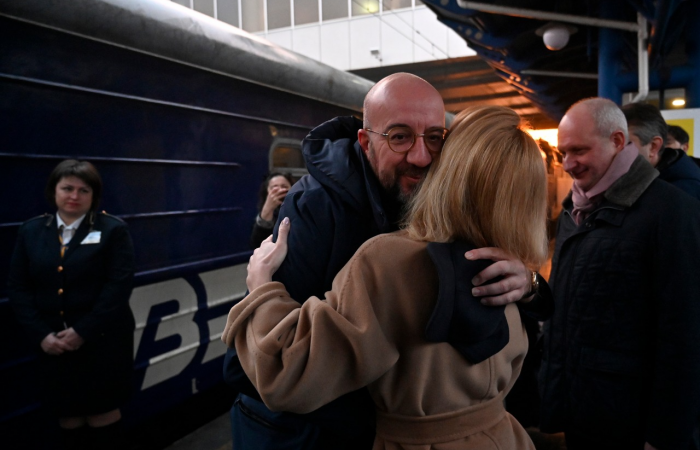
The President of the European Council Charles Michel is in Kyiv, announcing his arrival on Twitter on Thursday morning (19 January). In a video, he said: "I am on my way to Kyiv because I will have the occasion to meet again with the President Volodymyr Zelensky and the Prime Minister, and members of parliament. And we know that the Ukrainians are resisting, and they are fighting. They are fighting for their land, they are fighting for the future, and for the future of their children. We all know they are also fighting for our common European values and principles. And also for the promise of European Union peace and prosperity. They need and deserve our support, and that is why we will discuss with President Zelensky and his team what are the measures we can develop in order to make sure they are stronger and more powerful." In a speech to the European Parliament yesterday (18 January), President Michel explicitly expressed his support for supplying Ukraine with tanks, saying: "The time is now. They urgently need more equipment and I'm personally in favour of supplying tanks to Ukraine."
Editor's choice
Opinion
Opinion: Armenia - India Relations: Time is right to develop a strategic partnership

Opinion: Armenia - India Relations: Time is right to develop a strategic partnership

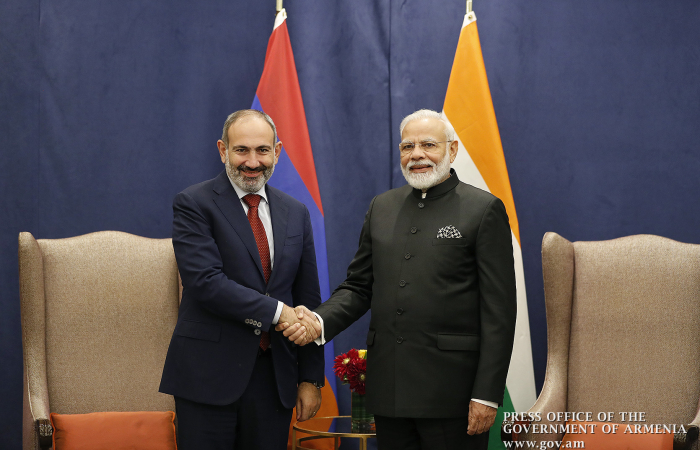
The defeat in the 2020 Nagorno Karabakh war shocked Armenia and Armenians all around the world, and destroyed many deeply entrenched perspectives on Armenia's geo-political realities, writes Benyamin Poghosyan in this op-ed for commonspace.eu. "Armenia should establish new partnerships that will allow Yerevan to decrease its economic and military development gap with Azerbaijan while adding a new layer of deterrence against Turkey in addition to the existing strategic alliance with Russia. In this context, India is the natural choice for Armenia", he argues. All the necessary ingredients are there to boost Armenia – India relations and bring them to the level of strategic partnership. There is an urgent need to institutionalize the ties, and the first step toward that direction could be establishing an Armenia - India high-level cooperation council. It should have annual sessions with the participation of Armenian and Indian Prime Ministers. At the same time, joint strategic planning groups should be established under the council to develop concrete projects in different spheres.