Theme

Conflict and Peace

Stories related to violent conflicts, diplomatic tensions, and conflict prevention, mediation and resolution.

Editor's choice
News
European leaders set out their plan for Ukraine

European leaders set out their plan for Ukraine

The leaders of Germany, Denmark, Finland, France, Italy, Netherlands, Norway, Poland, Sweden, and United Kingdom, together with the President of the European Council, and the President of the European Commission, o  Monday (15 December) issued a statement, outlining their plan for Ukraine. In their statement, Chancellor Merz, Prime Minister Frederiksen, President Stubb, President Macron, Prime Minister Meloni, Prime Minister Schoof, Prime Minister Støre, Prime Minister Tusk, Prime Minister Kristersson, Prime Minister Starmer, as well as President Costa and President von der Leyen spoke about "Peace for Ukraine". The Leaders welcomed significant progress on President Trump’s efforts to secure a just and lasting peace in Ukraine. They also welcomed the close work between President Zelenskyy’s and President Trump’s teams as well as European teams over the recent days and weeks. They agreed to work together with President Trump and President Zelenskyy to get to a lasting peace which preserves Ukrainian sovereignty and European security. Leaders appreciated the strong convergence between the United States, Ukraine and Europe. Leaders agreed that ensuring the security, sovereignty, and prosperity of Ukraine was integral for wider Euro-Atlantic security. They were clear that Ukraine and its people deserved a prosperous, independent, and sovereign future, free from fear of future Russian aggression. Both the US and European leaders committed to work together to provide robust security guarantees and economic recovery support measures for Ukraine in the context of an agreement on ending the war. This would include commitments to: Provide sustained and significant support to Ukraine to build its armed forces, which should remain at a peacetime level of 800,000 to be able to deter conflict and defend Ukraine’s territory. A European-led ‘multinational force Ukraine’ made up from contributions from willing nations within the framework of the Coalition of the Willing and supported by the US. It will assist in the regeneration of Ukraine’s forces, in securing Ukraine’s skies, and in supporting safer seas, including through operating inside Ukraine. (Click the image to read the statement in full).
Editor's choice
News
NATO Chief says war is on Europe's doorstep, and warns against complacency

NATO Chief says war is on Europe's doorstep, and warns against complacency

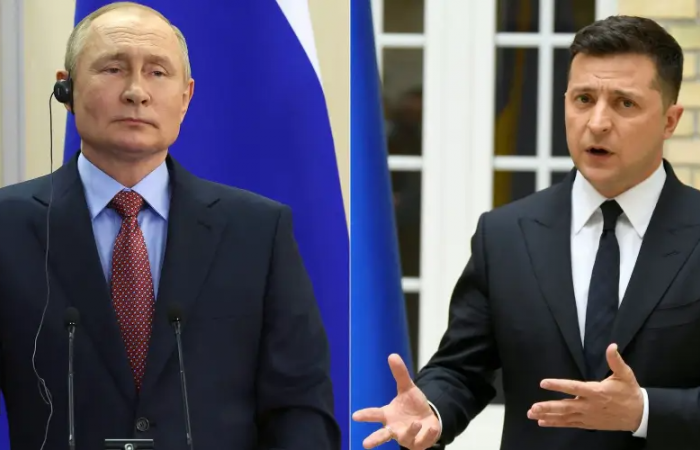
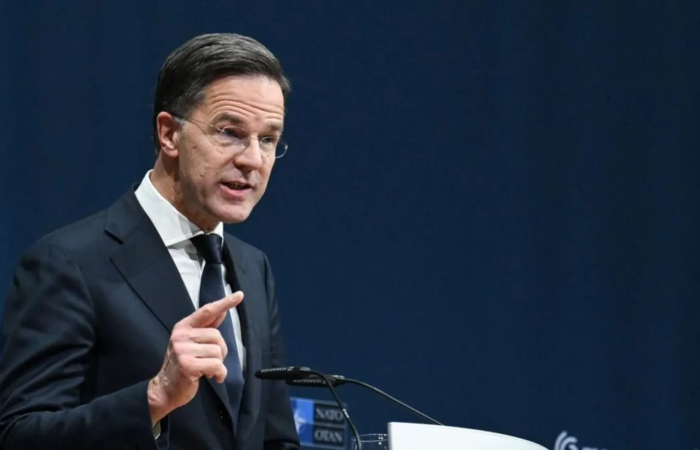
Russia could attack a NATO country within the next five years, the Secretary General of NATO, Mark Rutte, said in a stark new warning. "NATO's own defences can hold for now," Rutte warned in Berlin, but conflict was "next door" to Europe, and he feared "too many are quietly complacent, and too many don't feel the urgency, too many believe that time is on our side. "Russia is already escalating its covert campaign against our societies," Rutte said in a speech in Germany. "We must be prepared for the scale of war our grandparents or great-grandparents endured." Earlier this month, Russia's President Vladimir Putin said his country was not planning to go to war with Europe, but it was ready "right now" if Europe wanted to - or started a war. But similar reassurances were given by Moscow in 2022, just before 200,000 Russian troops crossed the border and invaded Ukraine. Putin has accused European countries of hindering US efforts to bring peace in Ukraine - a reference to the role Ukraine's European allies have recently played in trying to change a US peace plan to end the war, whose initial draft was seen as favouring Russia. But Putin was not sincere, Nato's secretary-general said in the German capital, Berlin. Supporting Ukraine, he added, was a guarantee for European security. "Just imagine if Putin got his way; Ukraine under the boot of Russian occupation, his forces pressing against a longer border with Nato, and the significantly increased risk of an armed attack against us." Russia's economy has been on a war footing for more than three years now - its factories churn out ever more supplies of drones, missiles and artillery shells. According to a recent report by the Kiel Institute for the World Economy, Russia has been producing each month around 150 tanks, 550 infantry fighting vehicles, 120 Lancet drones and more than 50 artillery pieces. The UK, and most of its Western allies, are simply not anywhere near this point. Analysts say it would take years for Western Europe's factories to come close to matching Russia's mass-production of weapons. "Allied defence spending and production must rise rapidly, our armed forces must have what they need to keep us safe," the Nato chief said.

Filter archive

Publication date
Editor's choice
News
First Summit of the European Political Community opens in Prague

First Summit of the European Political Community opens in Prague

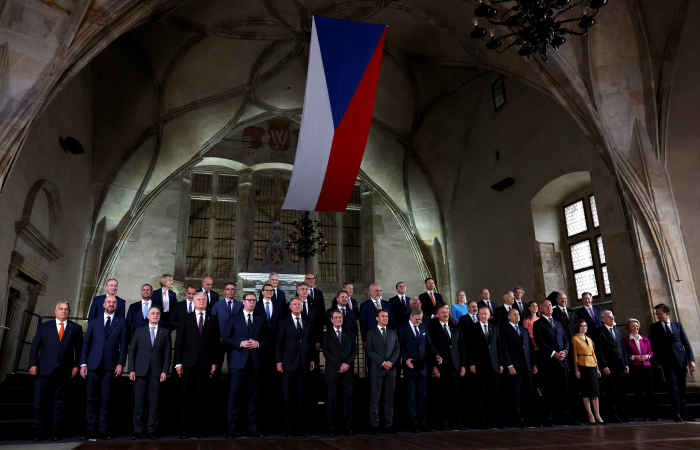
In the historic settings of Prague Castle, leaders from across Europe gathered on Thursday for the first summit of the European Political Community. Apart from the leaders of the 27 EU member states, leaders from non EU member states are also attending, including Albania, Armenia, Azerbaijan. Bosnia and Herzegovina, Georgia, Iceland, Kosovo, Liechtenstein, Moldova, Montenegro, North Macedonia, Norway, Serbia, Switzerland, Turkey, Ukraine and the United Kingdom With the dramatic consequences of Russia’s aggression war, EU leaders agreed during the European Council meeting in June 2022 to launch the European Political Community with the aim of bringing together countries on the European continent. The ambition is to bring leaders together on the European continent and to foster their cooperation on issues of common interest, revolving around peace and security, the economic situation, energy and climate, and migration and mobility. No formal written outcome of the European Political Community is envisaged. After the traditional family photo, the meeting kicked off with a round table discussion on peace and security in Europe. This story will be updated throughout the day.
Editor's choice
Opinion
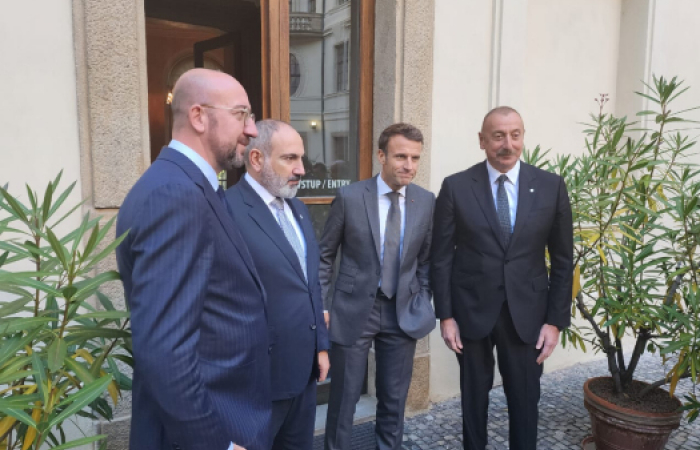
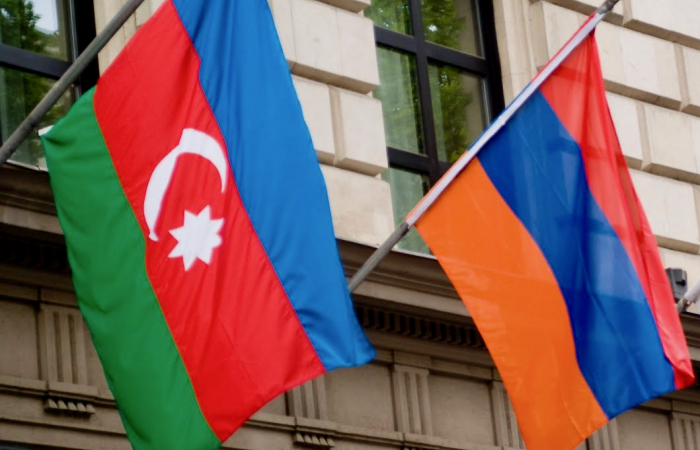
Opinion: Armenia and Azerbaijan have embarked on a long and arduous journey towards sustainable peace.

Opinion: Armenia and Azerbaijan have embarked on a long and arduous journey towards sustainable peace.

In this Joint Policy Discussion Paper, Ahmad Alili and Benyamin Poghosyan welcome the start of negotiations between Armenia and Azerbaijan on a meaningful peace treaty. They warn however that, at all levels, trust between the two sides remains very low and that this will make the process difficult. They urge both sides to conduct the negotiations with a strong sense of realism, and to ensure that the speed of the negotiations is well calibrated.
Editor's choice
News
Fighting breaks out across Yemen after Houthis refuse to renew truce

Fighting breaks out across Yemen after Houthis refuse to renew truce

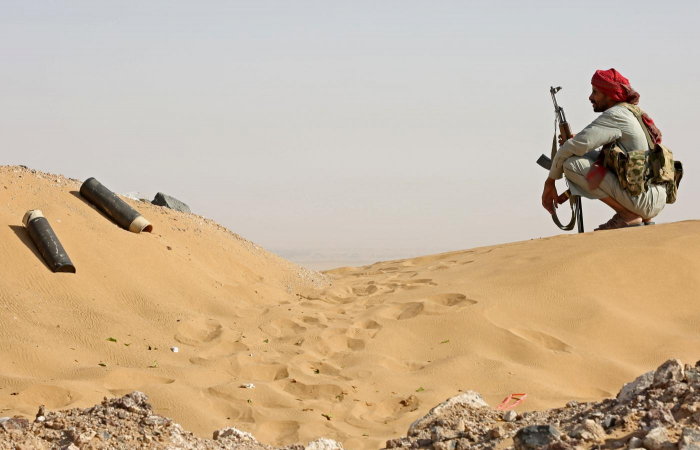
Fighting has broken out across different parts of Yemen after Houthi rebels, who at the moment control large chunks of the country, including the capital, Sanaa, refused to agree to a renewal of a UN brokered truce which lapsed on Sunday (2 October). The fiercest battles took place outside the central city of Marib and in Al-Fakher area of Dhale province, where the Houthis barraged government forces with mortar rounds, cannonballs, tanks and drones fitted with explosives. UN Special Envoy for Yemen Hans Grundberg said on Sunday that the UN-brokered truce, which went into effect on April 2 and was renewed twice, would not be renewed a third time. The failure to renew it sparked outrage and criticism, primarily directed at the Houthis, as the truce has significantly reduced violence in Yemen, allowed Sanaa airport to reopen and made it possible for dozens of fuel ships to dock at Hodeidah port. There is also fear that the end of the truce will also renew Houthi attacks on neighbouring Arab countries. The Houthi military spokesman, Yahya Saree, has already issued a warning to Saudi Arabia and the UAE, which have been targeted in the past with missile attacks. “The [Houthi] armed forces give oil companies operating in the UAE and Saudi Arabia an opportunity to organise their situation and leave,” Saree tweeted.
Editor's choice
News
Pope urges Putin to stop "spiral of violence and death"

Pope urges Putin to stop "spiral of violence and death"

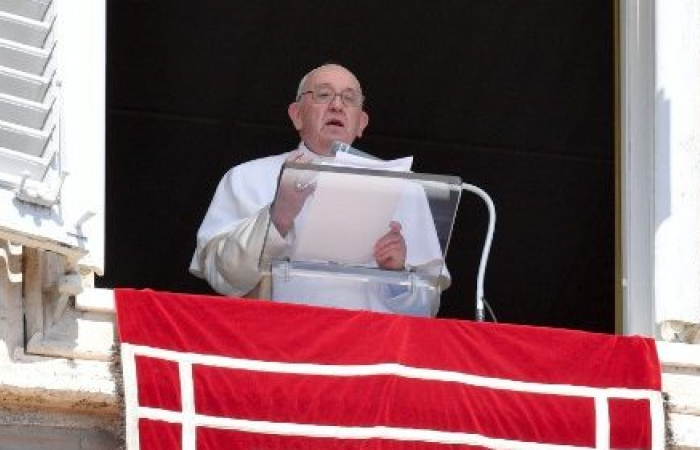
Pope Francis on Sunday (2 October) expressed concern over the nuclear threat and military escalation in the war in Ukraine, dedicating his entire Angelus address to the situation and issuing a powerful appeal for an immediate ceasefire. He deplored the annexation of Ukrainian territory by Russia, called for respect for the territorial integrity of every country and the rights of minorities. He expressed his saddness for the thousands of victims, especially children. "How much blood must still flow for us to realize that war is never a solution, only destruction? In the name of God and in the name of the sense of humanity that dwells in every heart, I renew my call for an immediate ceasefire. Let there be a halt to arms, and let us seek the conditions for negotiations that will lead to solutions that are not imposed by force, but consensual, just and stable. And they will be so if they are based on respect for the sacrosanct value of human life, as well as the sovereignty and territorial integrity of each country, and the rights of minorities and legitimate concerns", the Pope said. Pope Francis appealed to Russian President Vladimir Putin, imploring him to “stop this spiral of violence and death” in Ukraine and denounced the “absurd” risk to humanity of catastrophic nuclear war as tensions escalate.
Editor's choice
Monday Commentary
Opinion: Preparing for the worst, whilst working to avoid it

Opinion: Preparing for the worst, whilst working to avoid it

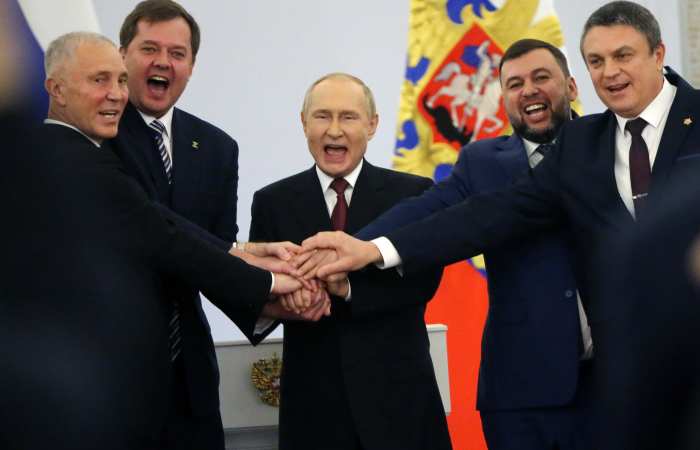
Putin’s annexation of parts of Ukraine takes the world to the verge of War, but a stronger and more united global condemnation of Russian aggression can still make Putin step back. Monday Commentary is back. Every Monday, commonspace.eu Managing Editor, Dennis Sammut discusses a hot topic on the European and international agenda. This week he weighs the implications of Russia’s annexation of parts of Ukraine, and the dilemma it poses to the rest of the world. He argues that it takes the world to the verge of a world war involving nuclear-armed states. But this can still be avoided if there is more global unity in condemnation of the Russian aggression.