Region

Russia

Stories under this heading cover Russia, as well as countries in the eastern part of the European continent, such as Belarus, Ukraine, and Moldova.

Editor's choice
News
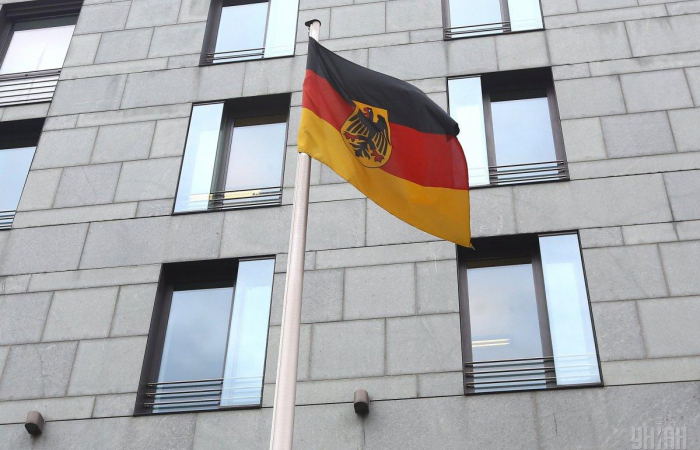
Germany accuses Russia of cyberattacks and disinformation campaign

Germany accuses Russia of cyberattacks and disinformation campaign

The German government holds Russia responsible for a cyberattack on German air traffic control, and for targeted disinformation campaigns before the last federal election. According to the German Foreign Office in Berlin, the incidents could be clearly attributed to the Russian military intelligence service, the GRU. In response, the Russian ambassador to Berlin was summoned to the Foreign Ministry. "We have been observing a massive increase in threatening hybrid activities by Russia for some time now," a spokesperson for the Foreign Ministry stated. These range from disinformation campaigns and espionage to cyberattacks and sabotage attempts. The aim is to divide society, sow distrust, and undermine confidence in democratic institutions. The spokesperson added that with these actions, Russia is "very concretely threatening our security, not only through its war of aggression against Ukraine, but also here in Germany."  The Foreign Ministry spokesperson explained that the cyberattack on air traffic control in August 2024 was clearly attributed to the hacker collective "APT28," known as "Fancy Bear," and to the responsibility of the Russian military intelligence service, the GRU. Furthermore, it could now be "conclusively stated" that Russia had attempted "to influence and destabilize both the last Federal election and the ongoing internal affairs of the Federal Republic of Germany." There was "absolutely irrefutable evidence" for this". The so-called "Storm 1516" campaign, which has been running since 2024, is allegedly backed by "reliable information" that the Moscow-based think tank "Center for Geopolitical Expertise" is behind it. The Center is also said to be supported by Russian military intelligence. Its primary aim is to influence democratic elections in the West. (Click the image to read more).
Editor's choice
News
NATO Chief says war is on Europe's doorstep, and warns against complacency

NATO Chief says war is on Europe's doorstep, and warns against complacency

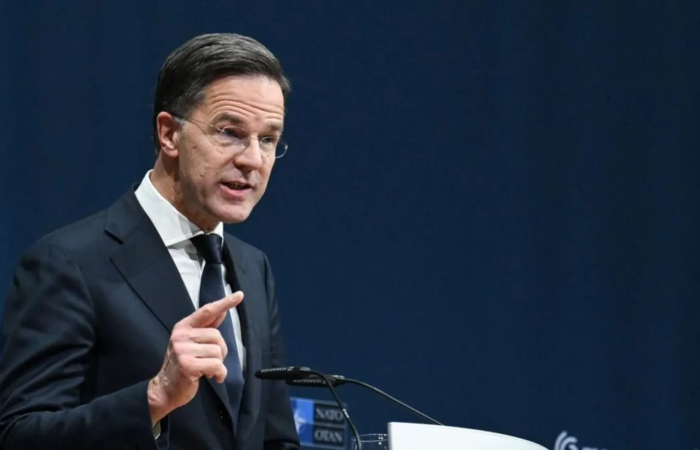
Russia could attack a NATO country within the next five years, the Secretary General of NATO, Mark Rutte, said in a stark new warning. "NATO's own defences can hold for now," Rutte warned in Berlin, but conflict was "next door" to Europe, and he feared "too many are quietly complacent, and too many don't feel the urgency, too many believe that time is on our side. "Russia is already escalating its covert campaign against our societies," Rutte said in a speech in Germany. "We must be prepared for the scale of war our grandparents or great-grandparents endured." Earlier this month, Russia's President Vladimir Putin said his country was not planning to go to war with Europe, but it was ready "right now" if Europe wanted to - or started a war. But similar reassurances were given by Moscow in 2022, just before 200,000 Russian troops crossed the border and invaded Ukraine. Putin has accused European countries of hindering US efforts to bring peace in Ukraine - a reference to the role Ukraine's European allies have recently played in trying to change a US peace plan to end the war, whose initial draft was seen as favouring Russia. But Putin was not sincere, Nato's secretary-general said in the German capital, Berlin. Supporting Ukraine, he added, was a guarantee for European security. "Just imagine if Putin got his way; Ukraine under the boot of Russian occupation, his forces pressing against a longer border with Nato, and the significantly increased risk of an armed attack against us." Russia's economy has been on a war footing for more than three years now - its factories churn out ever more supplies of drones, missiles and artillery shells. According to a recent report by the Kiel Institute for the World Economy, Russia has been producing each month around 150 tanks, 550 infantry fighting vehicles, 120 Lancet drones and more than 50 artillery pieces. The UK, and most of its Western allies, are simply not anywhere near this point. Analysts say it would take years for Western Europe's factories to come close to matching Russia's mass-production of weapons. "Allied defence spending and production must rise rapidly, our armed forces must have what they need to keep us safe," the Nato chief said.

Filter archive

Publication date
Editor's choice
News
Russian attacks on Ukraine's Kryvyi Rih, Odesa and Donetsk Oblast kill 18, injure many more

Russian attacks on Ukraine's Kryvyi Rih, Odesa and Donetsk Oblast kill 18, injure many more

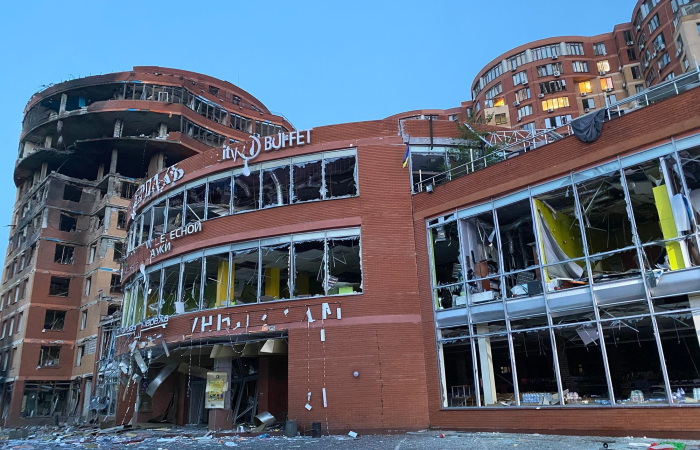
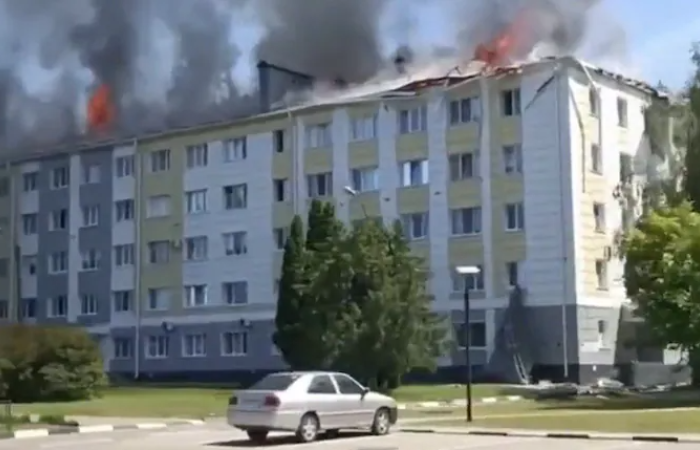
The past two days have seen Russian missile and drone strikes targeting the Ukrainian cities of Kryvyi Rih, Odesa, and Kramatorsk and Kostiantynivka in Donetsk Oblast, in total killing at least 18 people and injuring at least 50. At approximately 3.20am on Tuesday morning (13 June), only one of six missiles fired by Russian forces at the home town of Ukrainian President Volodymyr Zelensky breached air defenses, striking an appartment block and a food warehouse. As of 9am CET on Wednesday (14 June), Ukrainian authorities have said the strike has killed 12 people, and injured at least 35. More than 70 residential buildings were also damaged as a result of the missile strike, as well as three schools, three buildings of two other educational institutions, and a dormitory. Then, at approximately 2.30am on Wednesday morning, reports emerged of another Russian overnight attack on the southern city of Odesa. Ukraine's Southern Command has reported that at least 3 people were killed by a strike on the warehouse of a retail chain, which caused a large fire.
Editor's choice
News
Russia blows up Nova Kakhovka dam in Ukraine causing widespread flooding

Russia blows up Nova Kakhovka dam in Ukraine causing widespread flooding

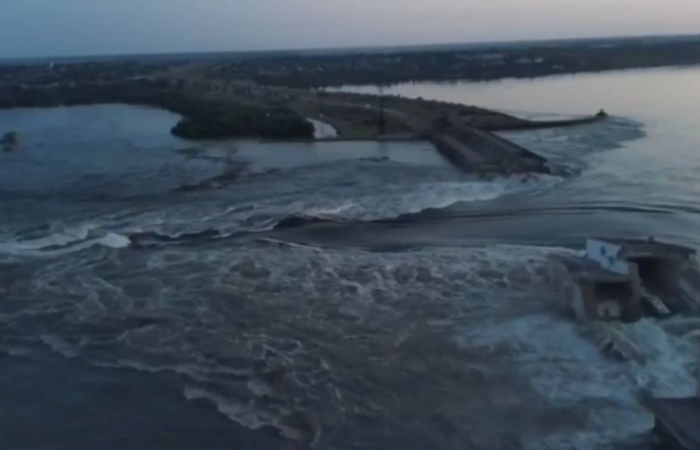
Russia has blown up a dam in southern Ukraine's Kherson region. This was reported by Ukraine's Southern Operational Command early in the morning on Tuesday (6 June). The Soviet-era hydroelectric plant lies on the Dnipro river, next to the city of Nova Kakhovka and approximately 50km east of the city of Kherson. Videos have emerged online of a major breach towards the Russian-occupied side of the river, and there are already reports of flooding in dozens of towns and villages downstream. Ukrainska Pravda, citing a nearby resident, said there was a single explosion, after which the dam "collapsed like a house of cards." Ukrainian authorities say that approximately 16,000 people are in the critical zone, and evacuations have already begun. It is expected that flooding down stream will reach critical levels at around 11am local time. At 9am, Kherson Oblast governor Oleksandr Prokudin reported that the villages of Tyaginka, Lvove, Odradokamyanka, Ivanivka, Mykilske Tokarivka, Ponyativka, Bilozerka, and the Ostriv district in Kherson were "fully or partially flooded." Ukrainian President Volodymyr Zelensky has called an emergency meeting of the National Security and Defense Council of Ukraine, according to the council's head, Oleksii Danilov. 
Editor's choice
News
Reports of increased fighting along Ukraine front line, Russia claims large attack thwarted

Reports of increased fighting along Ukraine front line, Russia claims large attack thwarted

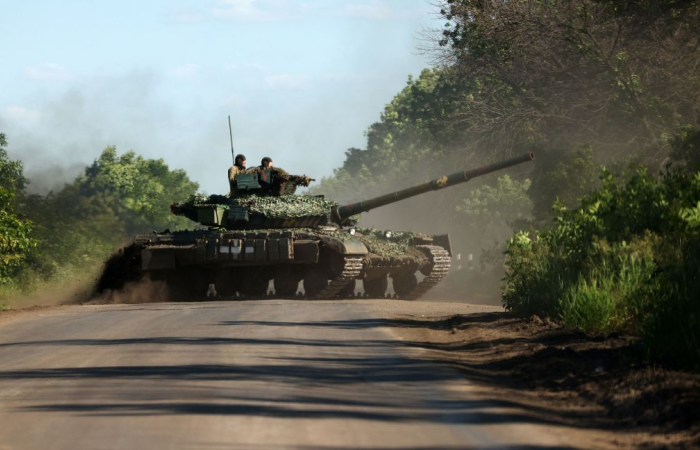
Reports have emerged online during Sunday (4 June) and early Monday morning (5 June) of increased fighting along the front line in Ukraine. Various social media sources that have regularly provided updates on the current situation on the ground in Ukraine since the start of the full-scale invasion in February 2022 reported forward Ukrainian troop movements in a number of locations along the front line over the last 24 hours. On Monday morning, the commander of Ukraine's ground forces, Oleksandr Syrskyi, said troops were "moving forward" towards the eastern city of Bakhmut, and had destroyed a Russian position near the city. As of 09.30 CET on Monday (4 June), nothing else regarding the ostensible counteroffensive has been officially stated by Ukrainian authorities. Yesterday, Ukrainian authorities published a video asking for people to withhold any precise information they may have on Ukrainian troop movements, saying "Plans love silence. There will be no announcement of the start [of the counteroffensive]." The footage featured masked and well-armed troops holding their fingers to their lips, stressing the importance of operational security.
Editor's choice
News
Drones fly above Kyiv and Moscow, Russia attacks three times in 24 hours

Drones fly above Kyiv and Moscow, Russia attacks three times in 24 hours

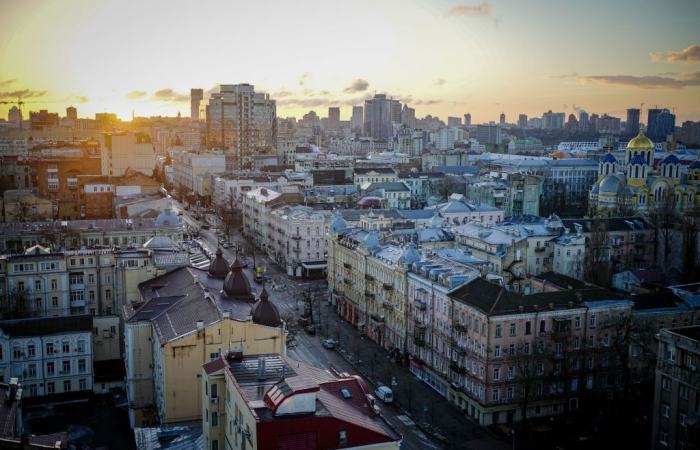
Russia has launched three mass aerial assaults on the Ukrainian capital Kyiv in 24 hours, with the latest coming in the early hours of Tuesday (30 May).  It was the 17th such attack just this month, with the Kyiv City Military Administration reporting that Iranian-made Shahed drones approached the city from different directions, and in several waves. According to Ukrainian authorities, the country's Air Defense shot down 29 out of 31 drones mostly fired at Kyiv. There are reports of one woman being killed and three others being injured after debris from a destroyed drone fell on a tower block, causing a fire. Drones shot down over other parts of Kyiv did not cause any other casualties, Kyiv City Military Administration reported. Between midnight and 5am yesterday, on Monday (29 May), Ukrainian Air Defenses had also fought off yet another aerial attack from Russia, shooting down 37 out of 40 cruise missiles, and 29 out of 35 Shahed drones. No casualties were reported on that occasion, although a second attack that came late morning yesterday reportedly injured one. Meanwhile, also on Tuesday morning, Muscovites awoke to the sound of explosions as alleged Ukrainian drones were shot down over Moscow. Although Russia's state-run RIA Novosti reports that eight drones were shot down over Moscow, reports on social media suggest that as many as two dozen drones flew over Moscow. Russian authorities have reported that falling debris damaged a tower block, injuring two people, although they were not hospitalised. Ukraine has not commented on the claims.
Editor's choice
News
Moscow and Minsk to deploy nuclear weapons in Belarus, use remains “extraordinarily unlikely”

Moscow and Minsk to deploy nuclear weapons in Belarus, use remains “extraordinarily unlikely”

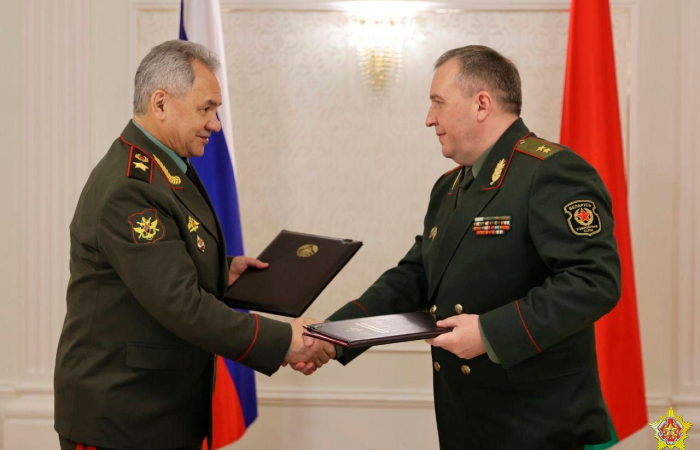
Yesterday on Thursday (25 May), the Russian and Belarusian defence ministers Sergei Shoigu and Viktor Khrenin signed documents on placing Russian non-strategic nuclear weapons in Belarus. According to the Russian state-controlled news agency Interfax, Shoigu said at the meeting that decisions over the control and use of the nuclear weapons stationed in Belarus would remain under the control of Russia.  Shoigu added that Russia may take "additional measures" in the future "to ensure the security of the Union State [of Russia and Belarus] and respond to the military-political situation". Russian President Vladimir Putin, and especially TV propagandists, have consistently threatened the West with nuclear weapons as Russia's full-scale invasion of Ukraine launched on 24 February last year has foundered. On 25 March this year, President Putin threatened to place tactical nuclear weapons in Belarus "for training", although Belarus has worked towards this development for some time.In their daily assessment of the Russian offensive campaign against Ukraine, the Washington DC-based Institute for the Study of War (ISW) said that the chance of Russia using the nuclear weapons in Ukraine or elsewhere is "extraordinarily unlikely".