Reports of increased fighting along Ukraine front line, Russia claims large attack thwarted

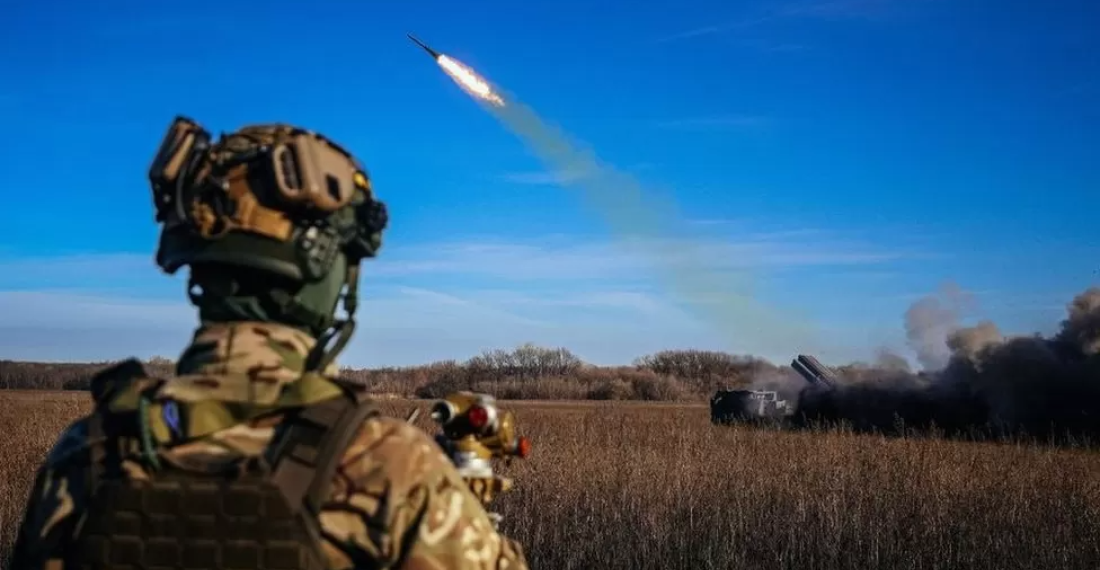
Reports have emerged online during Sunday (4 June) and early Monday morning (5 June) of increased fighting along the front line in Ukraine.

Various social media sources that have regularly provided updates on the current situation on the ground in Ukraine since the start of the full-scale invasion in February 2022 reported forward Ukrainian troop movements in a number of locations along the front line over the last 24 hours.

On Monday morning, the commander of Ukraine's ground forces, Oleksandr Syrskyi, said troops were "moving forward" towards the eastern city of Bakhmut, and had destroyed a Russian position near the city. As of 09.30 CET on Monday (4 June), nothing else regarding the ostensible counteroffensive has been officially stated by Ukrainian authorities.

Yesterday, Ukrainian authorities published a video asking for people to withhold any precise information they may have on Ukrainian troop movements, saying "Plans love silence. There will be no announcement of the start [of the counteroffensive]." The footage featured masked and well-armed troops holding their fingers to their lips, stressing the importance of operational security.

In their latest update, the Washington D.C.-based Institute for the Study of War wrote that Ukrainian forces conducted local ground attacks and reportedly made limited tactical gains in western Donetsk Oblast and eastern Zaporizhzhia Oblast on 4 June.

The recent reported developments follow an interview that Ukrainian President Volodymyr Zelensky gave to The Wall Street Journal published on Saturday (3 June) in which he said that Ukraine is ready to launch its long-awaited counteroffensive.

Russia claims major Ukrainian attack thwarted

Early on Monday morning, the Russian Ministry of Defence claimed that a major Ukrainian attack had been thwarted, in which they said they killed as many as 250 Ukrainian troops.

Ukraine had launched the "large-scale offensive" in the Donetsk region on Sunday using six mechanised and two tank battalions, they said, claiming that Ukraine "did not achieve its tasks, it had no success".

Throughout its full-scale invasion of Ukraine, Russia has often claimed certain successes without ever providing evidence or substantiation. For example, in September 2022 Russia claimed to have destroyed 4 US-made Bradley infantry fighting vehicles, only a few days after the US announced they would sent them to Ukraine and way before they had actually arrived there.

Meanwhile, the Russian state-controlled news agency RIA Novosti on Monday morning reported the words of Russian collaborationist Vladimir Rogov, who said that active hositilities have also resumed in Zaporizhzhia oblast to the west of the claimed thwarted Ukrainian counter-attack.

"The enemy threw even greater forces into the attack than yesterday, approaching the breakthrough attempt on a larger scale and in an organized manner. There is a fight going on," said Rogov.

source: commonspace.eu with agencies
photo: Getty Images



Related articles

Editor's choice
News
Borrell tells the European Parliament that the situation in Afghanistan was critical, but the EU will remain engaged

Borrell tells the European Parliament that the situation in Afghanistan was critical, but the EU will remain engaged

Borrell underlined that the European Union will make every effort to support the peace process and to remain a committed partner to the Afghan people. "Of course, we will have to take into account the evolving situation, but disengagement is not an option.  We are clear on that: there is no alternative to a negotiated political settlement, through inclusive peace talks.
Editor's choice
News
NATO Chief says war is on Europe's doorstep, and warns against complacency

NATO Chief says war is on Europe's doorstep, and warns against complacency

Russia could attack a Nato country within the next five years, the Secretary General of NATO, Mark Rutte, said in a stark new warning. "Nato's own defences can hold for now," Rutte warned in Berlin, but conflict was "next door" to Europe and he feared "too many are quietly complacent, and too many don't feel the urgency, too many believe that time is on our side. "Russia is already escalating its covert campaign against our societies," Rutte said in a speech in Germany. "We must be prepared for the scale of war our grandparents or great-grandparents endured." Earlier this month, Russia's President Vladimir Putin said his country was not planning to go to war with Europe, but it was ready "right now" if Europe wanted to - or started a war. But similar reassurances were given by Moscow in 2022, just before 200,000 Russian troops crossed the border and invaded Ukraine. Putin has accused European countries of hindering US efforts to bring peace in Ukraine - a reference to the role Ukraine's European allies have recently played in trying to change a US peace plan to end the war, whose initial draft was seen as favouring Russia. But Putin was not sincere, Nato's secretary-general said in the German capital, Berlin. Supporting Ukraine, he added, was a guarantee for European security. "Just imagine if Putin got his way; Ukraine under the boot of Russian occupation, his forces pressing against a longer border with Nato, and the significantly increased risk of an armed attack against us." Russia's economy has been on a war footing for more than three years now - its factories churn out ever more supplies of drones, missiles and artillery shells. According to a recent report by the Kiel Institute for the World Economy, Russia has been producing each month around 150 tanks, 550 infantry fighting vehicles, 120 Lancet drones and more than 50 artillery pieces. The UK, and most of its Western allies, are simply not anywhere near this point. Analysts say it would take years for Western Europe's factories to come close to matching Russia's mass-production of weapons. "Allied defence spending and production must rise rapidly, our armed forces must have what they need to keep us safe," the Nato chief said.

Popular

Editor's choice
News
NATO Chief says war is on Europe's doorstep, and warns against complacency

NATO Chief says war is on Europe's doorstep, and warns against complacency

Russia could attack a Nato country within the next five years, the Secretary General of NATO, Mark Rutte, said in a stark new warning. "Nato's own defences can hold for now," Rutte warned in Berlin, but conflict was "next door" to Europe and he feared "too many are quietly complacent, and too many don't feel the urgency, too many believe that time is on our side. "Russia is already escalating its covert campaign against our societies," Rutte said in a speech in Germany. "We must be prepared for the scale of war our grandparents or great-grandparents endured." Earlier this month, Russia's President Vladimir Putin said his country was not planning to go to war with Europe, but it was ready "right now" if Europe wanted to - or started a war. But similar reassurances were given by Moscow in 2022, just before 200,000 Russian troops crossed the border and invaded Ukraine. Putin has accused European countries of hindering US efforts to bring peace in Ukraine - a reference to the role Ukraine's European allies have recently played in trying to change a US peace plan to end the war, whose initial draft was seen as favouring Russia. But Putin was not sincere, Nato's secretary-general said in the German capital, Berlin. Supporting Ukraine, he added, was a guarantee for European security. "Just imagine if Putin got his way; Ukraine under the boot of Russian occupation, his forces pressing against a longer border with Nato, and the significantly increased risk of an armed attack against us." Russia's economy has been on a war footing for more than three years now - its factories churn out ever more supplies of drones, missiles and artillery shells. According to a recent report by the Kiel Institute for the World Economy, Russia has been producing each month around 150 tanks, 550 infantry fighting vehicles, 120 Lancet drones and more than 50 artillery pieces. The UK, and most of its Western allies, are simply not anywhere near this point. Analysts say it would take years for Western Europe's factories to come close to matching Russia's mass-production of weapons. "Allied defence spending and production must rise rapidly, our armed forces must have what they need to keep us safe," the Nato chief said.