Region

Global

Stories in this section cover various issues and stories from all around the world.

Editor's choice
News
NATO Chief says war is on Europe's doorstep, and warns against complacency

NATO Chief says war is on Europe's doorstep, and warns against complacency

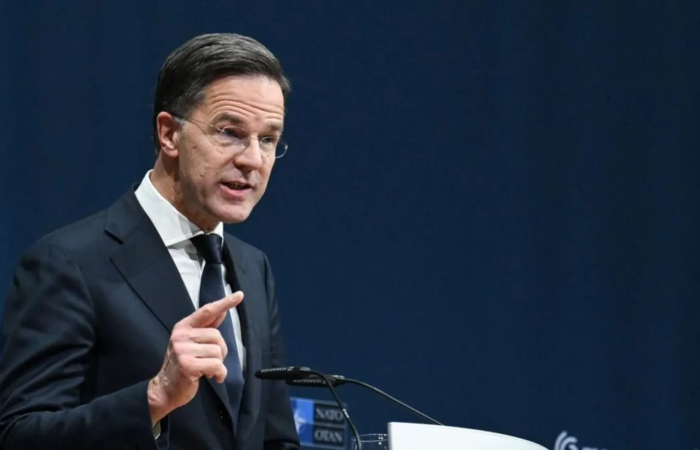
Russia could attack a NATO country within the next five years, the Secretary General of NATO, Mark Rutte, said in a stark new warning. "NATO's own defences can hold for now," Rutte warned in Berlin, but conflict was "next door" to Europe, and he feared "too many are quietly complacent, and too many don't feel the urgency, too many believe that time is on our side. "Russia is already escalating its covert campaign against our societies," Rutte said in a speech in Germany. "We must be prepared for the scale of war our grandparents or great-grandparents endured." Earlier this month, Russia's President Vladimir Putin said his country was not planning to go to war with Europe, but it was ready "right now" if Europe wanted to - or started a war. But similar reassurances were given by Moscow in 2022, just before 200,000 Russian troops crossed the border and invaded Ukraine. Putin has accused European countries of hindering US efforts to bring peace in Ukraine - a reference to the role Ukraine's European allies have recently played in trying to change a US peace plan to end the war, whose initial draft was seen as favouring Russia. But Putin was not sincere, Nato's secretary-general said in the German capital, Berlin. Supporting Ukraine, he added, was a guarantee for European security. "Just imagine if Putin got his way; Ukraine under the boot of Russian occupation, his forces pressing against a longer border with Nato, and the significantly increased risk of an armed attack against us." Russia's economy has been on a war footing for more than three years now - its factories churn out ever more supplies of drones, missiles and artillery shells. According to a recent report by the Kiel Institute for the World Economy, Russia has been producing each month around 150 tanks, 550 infantry fighting vehicles, 120 Lancet drones and more than 50 artillery pieces. The UK, and most of its Western allies, are simply not anywhere near this point. Analysts say it would take years for Western Europe's factories to come close to matching Russia's mass-production of weapons. "Allied defence spending and production must rise rapidly, our armed forces must have what they need to keep us safe," the Nato chief said.
Editor's choice
News
Thai-Cambodia border clashes enter fourth day

Thai-Cambodia border clashes enter fourth day

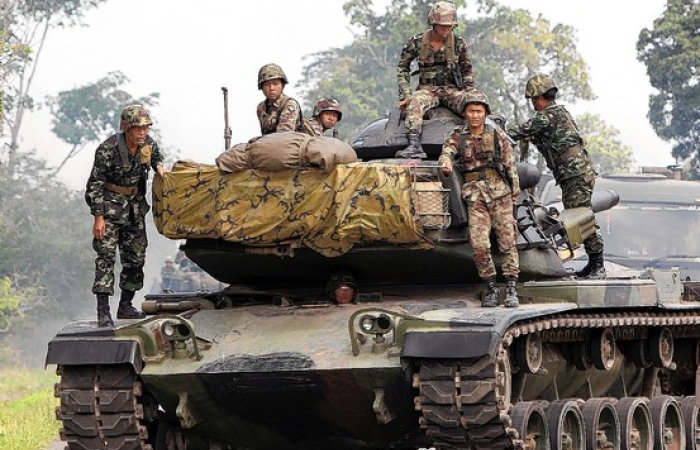
Renewed fighting between Thailand and Cambodia has entered its fourth day, with both sides accusing one another of violating international law, as they await a promised phone call from United States President Donald Trump. Cambodia’s Ministry of Defence accused Thailand’s military of carrying out numerous attacks within the country in the early hours of Thursday morning, including deploying tanks and artillery to strike targets in the country’s Pursat, Banteay Meanchey, and Oddar Meanchey provinces. In one such attack, Cambodia accused Thai soldiers of violating international humanitarian law by firing on civilians in Prey Chan village in Banteay Meanchey province. In another, it accused Thai forces of shelling “into Khnar Temple area”, and said Thai forces had also “fired artillery and support fire into the O’Smach area”. “Cambodia urges that Thailand immediately stop all hostile activities and withdraw its forces from Cambodia’s territorial integrity, and avoid acts of aggression that threaten peace and stability in the region,” the Defence Ministry said. Clashes took place on Wednesday at more than a dozen locations along the contested colonial-era demarcated 817-kilometre (508-mile) Thai-Cambodian border, with some of the most intense fighting being reported since a five-day battle in July, which saw dozens killed on both sides. Cambodia’s Ministry of the Interior said homes, schools, roads, Buddhist pagodas and ancient temples had been damaged by “Thailand’s intensified shelling and F-16 air strikes targeting villages and civilian population centres up to 30km [18.6 miles] inside Cambodian territory”. (click the image to read the full story).

Filter archive

Publication date
Editor's choice
News
Gaza War: the first hundred days

Gaza War: the first hundred days

The world on Sunday marked the 100th day of the war in Gaza. Thousands took to the streets across the world, many supporting one side or the other in the conflict. For the Palestinian people in Gaza the anniversary is simply another opportunity to count the dead and injured, not to speak of other untold suffering that they have to endure. And there seems to be no end in sight. Also Sunday, Israeli warplanes struck targets in Lebanon following a Hezbollah missile attack that killed two Israeli civilians — an older woman and her adult son — in northern Israel. The exchange of fire underscored concerns that the Gaza violence could trigger wider fighting across the region. The war in Gaza, launched by Israel in response to the unprecedented 7 October attack by the Palestinian group Hamas on Israeli territory, has killed nearly 24,000 Palestinians, devastated vast swaths of Gaza, driven around 85 percent of the territory’s 2.3 million residents from their homes and pushed a quarter of the population into starvation. In a sign of widening rift in the positions of Israel and the US, White House National Security Council spokesman John Kirby speaking to the CBS TV channel on Sunday (14 January) said the US has been speaking to Israel “about a transition to low-intensity operations” in Gaza.“We believe it’s the right time for that transition. And we’re talking to them about doing that".
Editor's choice
News
US and UK attack Houthi controlled areas in Yemen

US and UK attack Houthi controlled areas in Yemen

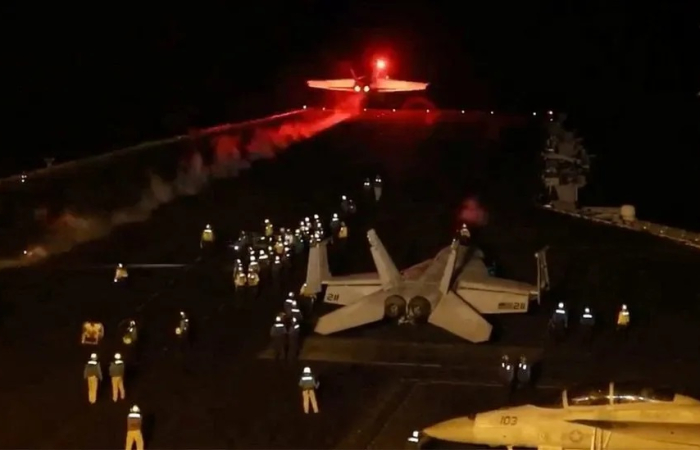
The United States and the United Kingdom have conducted overnight a series of strikes on territory in Yemen controlled by the Houthi Movement. Other countries, including Australia, Bahrain, The Netherlands and Canada provided support. Saudi Arabia allowed overflight over its territory by the attacking aircraft. The strikes were led and coordinated by the US. The Pentagon said they were intended to disrupt and degrade the Houthis' military capabilities – specifically drone and missiles sites which they’ve been using in Yemen to target international shipping in the Red Sea. In the early hours of the morning, jets from a US aircraft carrier already in the region - backed up by a tomahawk fired from US warships hit more than 12 sites - including in the capital Sanaa and the port of Hudaydah. President Biden defended the action saying the strikes were in direct response to unprecedented Houthi attacks against international shipping. The British contribution in the attack was in the form of four Typhoon jets that flew from RAF Akrotiri in Cyprus - a round trip of several thousand miles - which required refuelling. They used paveway bombs to hit 2 targets – a site said to be used for launching drones and an airfield from where the Houthis have fired missiles. In a statement soon after the strikes, Rishi Sunak said Britain would always stand up for the freedom of navigation and the free flow of trade. The Houthis were defiant before the threat of airstrikes – and also now after. One of its officials posted “the battle will be bigger and beyond the imagination and expectation of the Americans and British”. “Our country was subjected to a massive aggressive attack by American and British ships, submarines and warplanes,” Houthi Deputy Foreign Minister Hussein Al-Ezzi said, according to official rebel media. “America and Britain will have to prepare to pay a heavy price and bear all the dire consequences of this blatant aggression,” he said. US Central Command described military strikes against Houthi sites as a ‘success’ in a statement on Friday morning.  The US Central Command said they hold the Iranian-backed Houthis responsible for attacks on international shipping over the past few weeks. These strikes aimed to undermine the Houthi ability to carry out more attacks. Sixty targets at 16 Houthi locations were hit by more than 100 precision-guided munitions, it said.
Editor's choice
Event
Happy New Year 2024

Happy New Year 2024

From The Hague, the city of peace and justice, the Editorial Team of commonspace.eu extend their sincere best wishes for a Happy New Year 2024 to all our contributors, supporters, readers and subscribers. 2023 ends with war raging in many parts of the world - from Ukraine to Yemen, from Gaza to Sudan, and beyond. We hope 2024 will bring just peace to all across the world, but we also understand that this can only happen if we all work towards this objective. For 2024 also has the risk of widening further the cycle of violence, engulfing even more countries and people. We hope for a good start for the year, and that this will continue throughout 2024. Happy New Year!
Editor's choice
News
Pope prays for peace in the Holy Land and Ukraine

Pope prays for peace in the Holy Land and Ukraine

At the end of his weekly General Audience, Pope Francis prays for those suffering from violence in Palestine, Israel and Ukraine, and asks for prayers for an end to all war. Speaking at the end of his General Audience on Wednesday (27 December), Pope Francis renewed his appeal for peace in the Holy Land and Ukraine. “Please, do not forget to pray for those suffering the terrible consequences of violence and war,” he said. “Let us pray especially for martyred Ukraine and for the populations of Palestine and Israel. War is an evil. Let us pray for an end to war.” Pope Francis has been calling for a humanitarian ceasefire in Gaza since 29 October. In his traditional Urbi et Orbi message on Christmas Day, the Pope pleaded for "an end to the military operations with their appalling harvest of innocent civilian victims" and called for "an opening to the provision of humanitarian aid" in Gaza. He also said that his "heart grieves for the victims of the abominable attack of 7 October," and he repeated his "urgent appeal for the liberation of those still being held hostage.” The Pope expressed his hope that sincere dialogue with strong political will and international support might lead to a resolution of the "Palestinian question." In his Urbi et Orbi address, Pope Francis also prayed for an end to the war in Ukraine. “Contemplating the Baby Jesus,” the Pope said, “I implore peace for Ukraine.” “Let us renew our spiritual and human closeness to its embattled people,” he urged, “so that through the support of each of us, they may feel the concrete reality of God’s love."
Editor's choice
Event
Merry Christmas

Merry Christmas

The editorial team of commonspace.eu extends its best wishes for Christmas and the festive season to all our contributors, supporters, readers and subscribers. We wish all the best to all of you, but foremost we wish you peace. The accompanying picture has been circulating on the internet in the last days, and it shows the tragedy of war, during the festive season, in this case in Gaza. The message of Christmas is the message of peace. We hope everyone will have a peaceful and happy Christmas.
Editor's choice
News
New maritime task force to patrol Red Sea following Houthi attacks on shipping

New maritime task force to patrol Red Sea following Houthi attacks on shipping

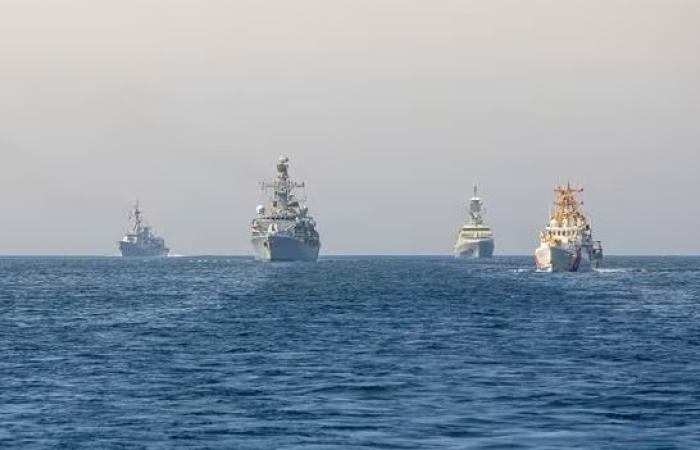
The United States has announced the establishment of Operation Prosperity Guardian, an important new multinational security initiative under the umbrella of the Combined Maritime Forces and the leadership of its Task Force 153, which focuses on security in the Red Sea. A Pentagon statement said that "Operation Prosperity Guardian is bringing together multiple countries to include the United Kingdom, Bahrain, Canada, France, Italy, Netherlands, Norway, Seychelles and Spain, to jointly address security challenges in the southern Red Sea and the Gulf of Aden, with the goal of ensuring freedom of navigation for all countries and bolstering regional security and prosperity.” The conflict between Israel and the Palestinians in Gaza has spilled over into the Red Sea as Houthi rebels in Yemen, who control parts of the country including its capital and some of its Red Sea coastline, intensify their attacks on shipping passing through the Red Sea. BP on Monday, became the latest of a number of global companies that announced the suspension of use of the vital Red Sea route which connects the Gulf region and the Indian Ocean to Europe through the Suez Canal. The United States has condemned the attacks and promised decisive action to deal with them.  The Pentagon announced on Monday the formation of a new international mission focused on countering attacks on commercial vessels in the Red Sea.
Editor's choice
Opinion
Opinion: Connectivity should give tangible benefit to all sides

Opinion: Connectivity should give tangible benefit to all sides

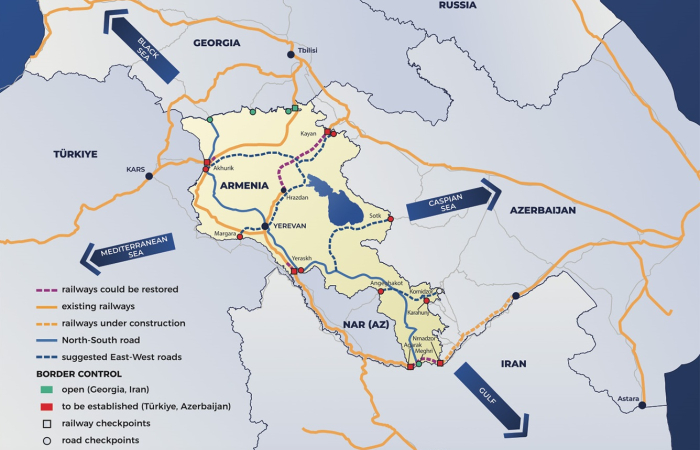
Armenian Prime Minister Nikol Pashinyan recently presented the "Crossroads of Peace" initiative at the Tbilisi Silk Road Forum held at the end of October. "Pashinyan's map depicts rehabilitated existing roads and logistical connections, adding new pathways. His message was clear: envisioning a post-conflict era for Azerbaijan and Armenia, and at the same time reaching out to Turkey. The map symbolized the potential regional landscape after the conflict, and was aimed at both the Armenian public and external actors", writes Ramazan Samadov in this op-ed for commonspace.eu "The idea itself looks attractive, however for the plan to materialize into negotiations, Pashinyan would need to offer something more substantial to Azerbaijan and Turkey – something that they genuinely need", he adds. Central is the issue of the Zangezur corridor. "The revival of discussions between Azerbaijan and Armenia on the transit regime is crucial for both tactical and regional dynamics. Currently, the corridor between Georgia and Azerbaijan operates under monopolistic conditions.   Introducing an alternative becomes strategic, offering leverage in the negotiation process. In essence, Pashinyan's "Crossroads of Peace" map presents a compelling pitch. The Azerbaijani statement about finding an alternative to Zangezur through Iran underscores the corridor's significance. Even statements of waning interest in the Zangezur corridor do not diminish its importance. If Armenia proposes a meaningful transit arrangement for Azerbaijani transits through its territory, Azerbaijan's interest in the corridor is likely to reignite", Samadov says.