Region

Central Asia

Stories under this heading cover Central Asia – a region of Asia, stretching from the Caspian Sea in the west to Mongolia in the east, from Afghanistan in the south to Russia in the north.

Editor's choice
Opinion
Opinion: The European Union must recognise that the C5 have now become the C6

Opinion: The European Union must recognise that the C5 have now become the C6

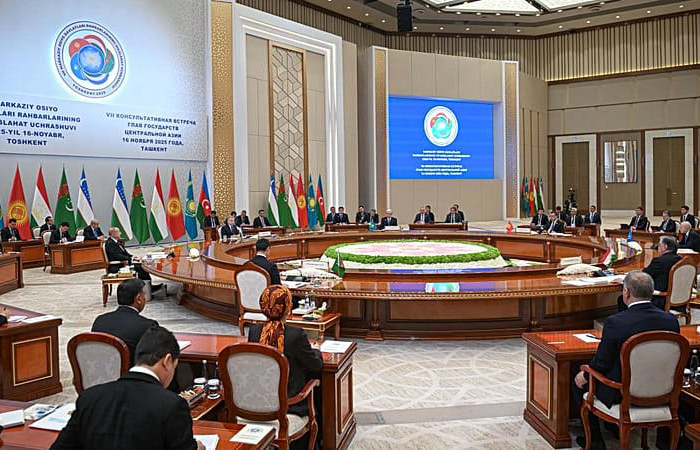
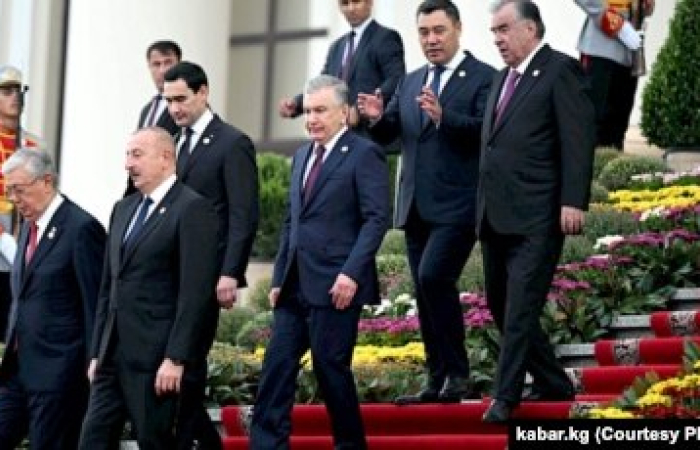
In recent years, Eurasia has undergone a structural transformation in how regions connect, trade, and cooperate. The combination of geopolitical shocks, disrupted supply chains, and the search for secure east–west routes has elevated the importance of the Trans-Caspian space. The states of Central Asia, once constrained by geography, have taken unprecedented steps to strengthen regional coordination, modernize infrastructure, and integrate more closely with Europe. Meanwhile, Azerbaijan has rapidly emerged as an indispensable connector linking Central Asia with the South Caucasus, Türkiye, and European markets. This new reality was formally acknowledged in November 2025 when Azerbaijan was unanimously welcomed as a full participant in the Consultative Meeting of Central Asian Heads of State in Tashkent. What had long been a C5 grouping transformed into a C6, marking a historic moment: the Caspian was no longer a frontier separating two regions but the center of a unified geopolitical and geo-economic space. President Ilham Aliyev described this alignment as the emergence of “a single geopolitical and geo-economic region,” while President Shavkat Mirziyoyev called Azerbaijan’s inclusion “historic” and proposed transforming the consultative platform into a structured regional institution capable of shaping security, economic, environmental, and digital policy. The Caspian is no longer a boundary; it is the heart of an integrated region. The transformation of the EU and U.S. C5+1 formats into C6+1 is the logical next step to ensure that both sides of the Caspian advance together – coherently, strategically, and with shared purpose. (click the image to read the full op-ed).
Editor's choice
News
Central Asian leaders meet in Tashkent this weekend for their 7th Consultative  Meeting. Azerbaijan participates for the third year as guest

Central Asian leaders meet in Tashkent this weekend for their 7th Consultative Meeting. Azerbaijan participates for the third year as guest

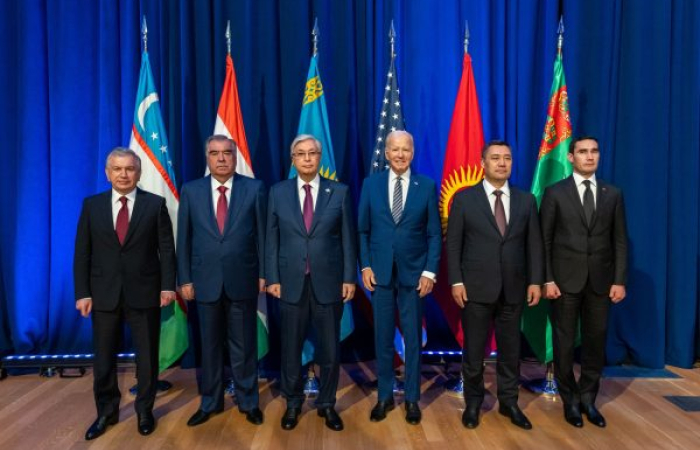
Central Asian leaders will gather in Tashkent this weekend for the Seventh Consultative Meeting of Heads of State, with plans to adopt a package of multilateral agreements to deepen regional cooperation. The summit brings together the leaders of Uzbekistan, Kazakhstan, Kyrgyzstan, Tajikistan and Turkmenistan, with Azerbaijan participating as a guest of honour for the third consecutive year. The leaders will discuss ways to advance joint projects in priority sectors and exchange views on key regional and international issues, as outlined in the agenda. The consultative meeting format originated from Mirziyoyev's initiative announced at the UN General Assembly in 2017, proposing regular high-level consultations among Central Asian states. The inaugural meeting took place in Astana in 2018. Azerbaijan's President Ilham Aliyev told the Uzbekistan press agency the meeting will be "a significant stage in fostering the centuries-old friendship between our brotherly peoples and expanding multi-level cooperation in the political, economic, transport, investment, energy, cultural and humanitarian spheres, and in the field of digital transformation." He noted that over the past three years, Central Asian heads of state have made nearly 30 visits to Azerbaijan, while he has visited the countries 13 times. Azerbaijan's engagement strengthens regional connectivity, particularly through the Middle Corridor linking Central Asia with Europe.

Filter archive

Publication date
Editor's choice
Commentary
The fate of Central Asia may be decided on the steppes and in the forests of Ukraine

The fate of Central Asia may be decided on the steppes and in the forests of Ukraine

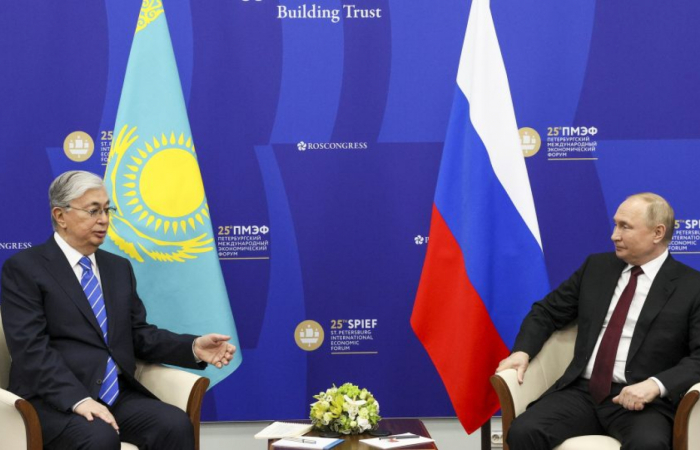
Vladimir Putin was sworn in for another six-year term as the President of Russia on Tuesday, 7 May. With Putin having been the undisputed leader of Russia for decades, continuity, one would have thought, was assured. Yet Putin himself, on Monday (13 May) speaking at a meeting of the Security Council spoke of “a new political cycle” in Russia. Some of the first decisions of the re-elected president give us a sense of what is to come. First, there was the surprise dismissal of Sergei Shoigu as Minister of Defence, and his transfer to be the Secretary of the Security Council. There had been speculation for some time that Shoigu’s time at the Ministry of Defence was up. But what was surprising was the appointment of Andrei Belousov, former Deputy Prime Minister – an efficient technocrat with an economic background to replace him. That the Russian Ministry of Defence has needed a shake-up for some time has been abundantly clear, but Andrei Belousov’s mission seems to be more ambitious than that: He is tasked with transforming the Russian Defence Ministry into a modern institution that can embrace new ideas and techniques, and that has enough flexibility to conduct the sort of hybrid warfare that is likely to be the order of the day going forward. So despite all of Putin’s bravados about the Russian nuclear arsenal, it seems he is putting his faith in a more innovative, agile, and versatile force. Then on Monday, 13 May, Putin held his first meeting of the Security Council since his inauguration. The Kremlin website only referred to one item out of apparently several that were discussed, namely relations with the post-Soviet Republics, a subject much close to the heart of the president. Putin reiterated that this was a priority in foreign policy. Putin said, “we should pay even more attention to this area in the new political cycle in Russia and discuss the way we will organise this work from all points of view, including organisational”. So it appears that there is new thinking in this sphere, details of which is not yet known.
Editor's choice
Commentary
From Blighty with love – UK charm offensive in Central Asia is well thought through

From Blighty with love – UK charm offensive in Central Asia is well thought through

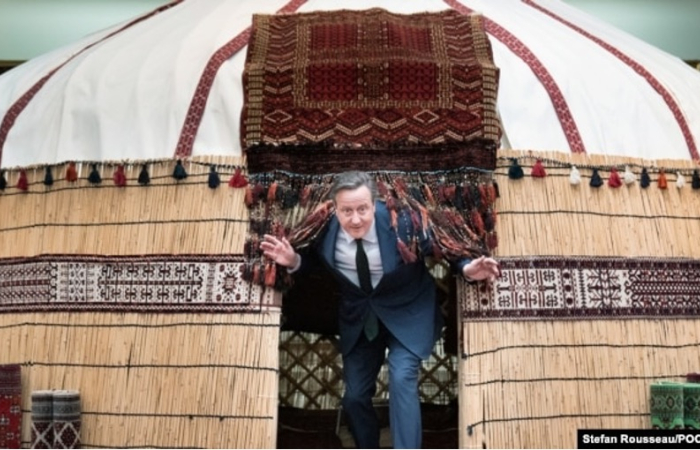
UK Foreign Secretary, Lord Cameron, conducted a whirlwind tour of the five Central Asian countries and Mongolia in the last days, visiting countries that had never before been visited by a British Foreign Secretary. There is very little you can do on a trip like this when you are in a country for one day, sometimes for a few hours. But this visit was well prepared and was part of a well-thought-through British strategy to engage with Central Asia.
Editor's choice
Commentary
The new kid on the block – Azerbaijan’s new role in Central Asia

The new kid on the block – Azerbaijan’s new role in Central Asia

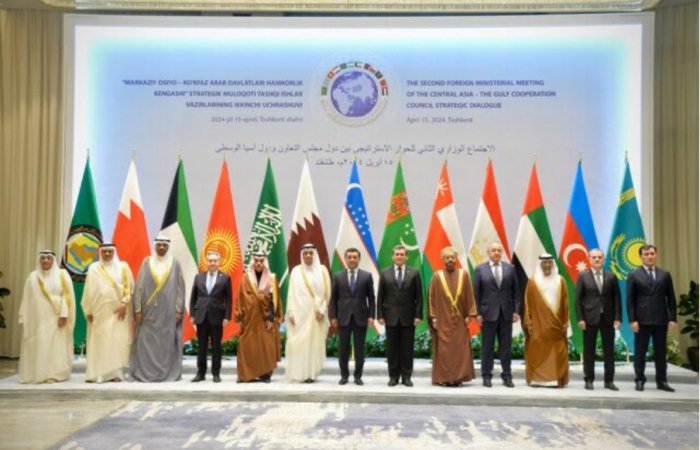
Those who know their political geography will tell you that there are five countries in Central Asia: Kazakhstan, Kyrgyzstan, Tajikistan, Turkmenistan and Uzbekistan. But in the last two years, a new kid has appeared on the block. Azerbaijan is not usually described as a Central Asian country: Caucasus or Caspian are more likely labels, but recently one could spot Azerbaijan in key summits and meetings of the Central Asian republics, including those with other blocs, such as the Gulf Co-operation Council. Two things are driving this process.
Editor's choice
News
Kazakhstan struggles to deal with massive flooding

Kazakhstan struggles to deal with massive flooding

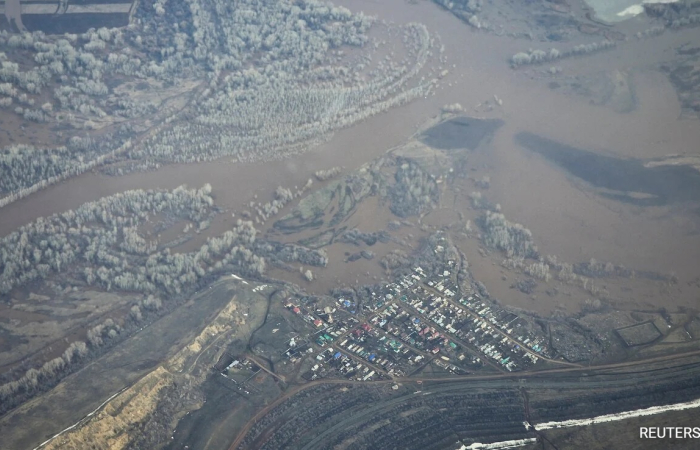
Kazakhstan has for nearly two weeks been grappling with the worst flooding in living memory after very large snow falls melted swiftly amid heavy rain over land already waterlogged before winter. Swathes of northern Kazakhstan were flooded again on Monday (15 April) as melt waters swelled the tributaries of the world's seventh longest river system, forcing more than 125,000 people to flee their homes. This is Kazakhstan's largest natural disaster in living memory.  Since the onset of the flooding, 111,194 people have been rescued and evacuated, with 39,222 of them being children, reported the Ministry of Emergency Situations on April 15. Speaking earlier Kazakh president Tokayev said “We must learn all the lessons from these massive floods. There are many, starting from the shortcomings in the organizational measures to prevent natural disasters, the shortage of skilled personnel in water management, and ending with our negligent attitude towards nature,” said Tokayev. In an unprecedented move, seen as an admission of the seriousness of the flooding crisis, the Kazakh government this week cancelled the Astana International Forum (AIF) scheduled for June 13-14, 2024. The forum is a prestige national event for Kazakhstan that annually convenes world and business leaders to engage in dialogue on pressing issues and seek new opportunities for collaboration. In 2023, it gathered over 5,000 participants from more than 50 countries in Astana.
Editor's choice
Commentary
Jittery Kremlin hits out at Central Asia NGOs

Jittery Kremlin hits out at Central Asia NGOs

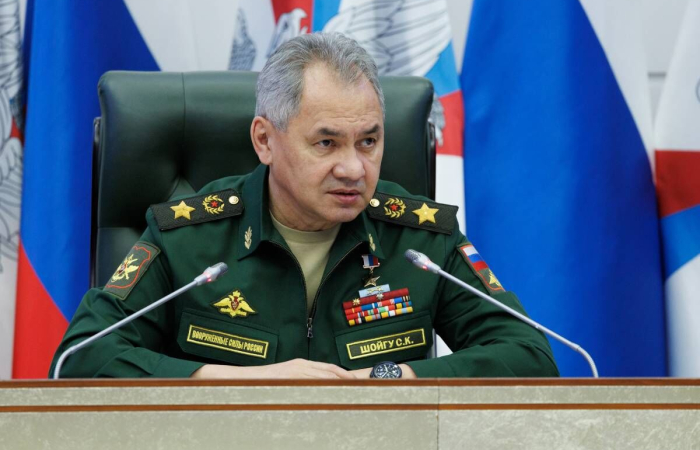
Russian Defence Minister Sergei Shoigu, speaking on the occasion of the Special Operations Forces Day at a meeting of the Board of the Ministry of Defence of the Russian Federation in Moscow on 27 February, unleashed an attack against Central Asian NGOs, accusing them of "continuously increasing hostile activities against Russia", especially in the "creation of new initiatives and structures aimed at discrediting and countering the Russian presence in countries traditionally our friends". Shoigu said the situation in this region is "very delicate", recalling the contemporary threat of the Afghan Taliban and ISIS terrorists, to which he equates the works of non-governmental organizations. In his speech, Shoigu said "over 100 large pro-Western NGOs operate in these countries, which have more than 16 thousand representations and branches, which aim to weaken the technical-military, economic and cultural collaboration with the Russian Federation, against the background of the special military operation [Ukraine War], and we have to do something."   Central Asia is hardly the first place that comes to mind when it comes to civil society activism, but the process of opening up to the world, and the reforms being put in place across the region, has widened the space for NGO activity – even if only to a small extent. Enough it seems to worry the head of the Russian Defence Ministry who one would have thought would have other things to worry about at the moment. But Kremlin observers say that Shoigu’s outburst is a jittery reaction of a paranoic Kremlin that is obsessed by criticism at home or abroad, and sees everything as one big conspiracy. Reaction in Central Asia has been mixed but in Kazakhstan, where President Tokayev has set out a course for systematic reforms in the country, and where the government is looking at civil society as partners in this process, the reaction to Shoigu’s speech was negative, and the Deputy Minister of Foreign Affairs, Roman Vasilenko, spoke out in defence of the NGOs in Kazakhstan. “As you know, support for the civil sector and support for NGOs are a top priority for the president, for the government and for the Ministry of Culture and Information, which is responsible for this area”, Vassilenko said on 29 February.
Editor's choice
News
5th European Union-Central Asia meeting on Afghanistan held in Bishkek

5th European Union-Central Asia meeting on Afghanistan held in Bishkek

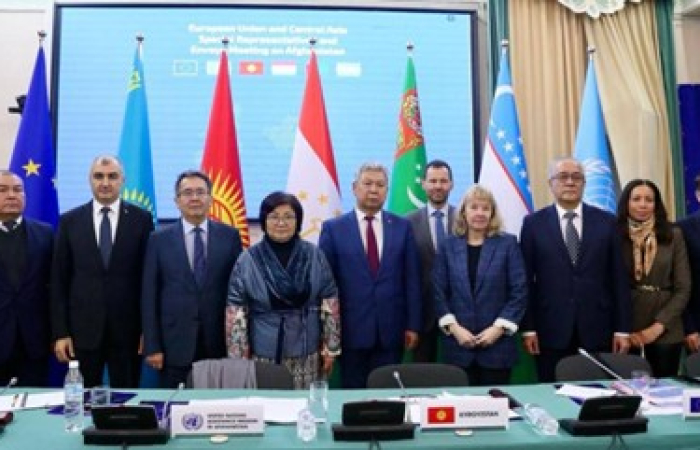
The fifth European Union-Central Asia meeting focusing on Afghanistan took place in Bishkek on 14 February. Discussions centred around the situation in Afghanistan, with particular emphasis placed on finding effective ways to interact with the country’s de facto government. Participants praised the recent United Nations (UN) report on Afghanistan and endorsed UN Secretary-General António Guterres’s initiative to establish the position of UN Secretary-General’s Special Envoy for Afghanistan. Roza Otunbayeva, the Secretary-General’s Special Representative for Afghanistan and Head of the UN Assistance Mission in Afghanistan, also attended the meeting.  The European Union was represented by the EU Special Representative for Central Asia, Terhi Hakkala.