Nezavisimaya Gazeta: Belarusian authorities may send in armed forces to crack down on protesters

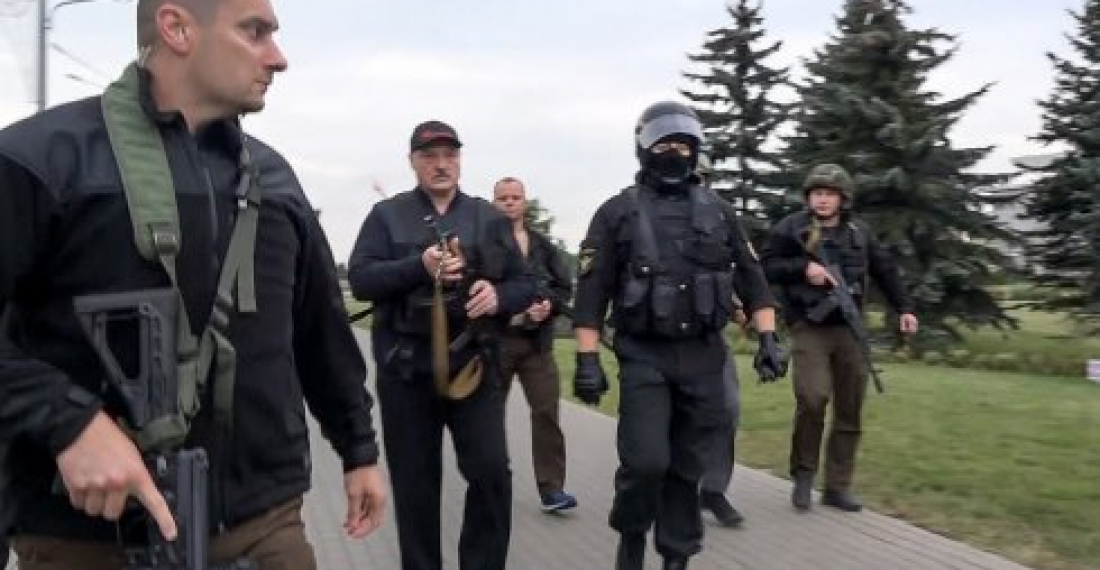
Russia's mass media is very closely covering events in Belarus, where street protests continue following flawed elections earlier this month. Pictures of Belarus president Alexander Lukashenko, arriving at his presidential palace with a Kalashnikov in his hand appears on many Russian media outlets. Lukashenko is seen as an embattled president clinging to Russia for his survival.

The prominent Russian paper, Nezavisimaya Gazeta noted this morning that the protests in Belarus have entered their third week. Meanwhile, President Alexander Lukashenko of Belarus has pointed the spotlight on an external threat, primarily Poland's plans to seize the Grodno region, and the nation's defense chief warned that the armed forces would be sent in to quash the protests, Nezavisimaya Gazeta notes.

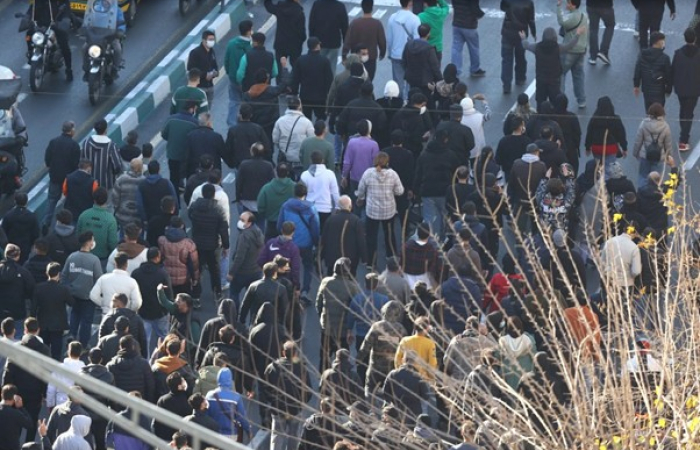
Another round of demonstrations against the outcome of the presidential election and violence against civilians took place on Sunday. About 200,000 people gathered at Independence Square in the country's capital of Minsk. Additionally, at least 20,000 took to the streets in the city of Grodno.

Lukashenko visited the western region of Grodno on Saturday. When addressing the public at a rally, he warned that the protesters had the weekend to make up their minds, otherwise he would employ "tough measures." Defense Minister Viktor Khrenin also sent a warning to the demonstrators, saying that "if peace and order were violated," they would "have to deal not with the police but with the army."

Experts in Minsk have reason to believe that the threat may become a reality. "I am afraid that somber and dramatic events lie ahead that could become part of the scheme that the defense minister had talked about," political scientist Valery Karbalevich told the newspaper. He described the developments in Belarus as a revolution. "The dividing line is quite intriguing as it lies between the authorities and society. We don't see any serious public forces supporting the regime. The rallies allegedly in support of Alexander Lukashenko are organized by the authorities," the expert said.

Although Lukashenko seeks to encourage his supporters to take part in rallies, the expert sees no reason to speak about significant public support. In his view, this is why the standoff won't spill over into a conflict between various groups of the population.

source: commonspace.eu with Nezavisimaya Gazeta and TASS news agency (Moscow)

 

Related articles

Editor's choice
News
Borrell tells the European Parliament that the situation in Afghanistan was critical, but the EU will remain engaged

Borrell tells the European Parliament that the situation in Afghanistan was critical, but the EU will remain engaged

Borrell underlined that the European Union will make every effort to support the peace process and to remain a committed partner to the Afghan people. "Of course, we will have to take into account the evolving situation, but disengagement is not an option.  We are clear on that: there is no alternative to a negotiated political settlement, through inclusive peace talks.
Editor's choice
News
Germany accuses Russia of cyberattacks and disinformation campaign

Germany accuses Russia of cyberattacks and disinformation campaign

The German government holds Russia responsible for a cyberattack on German air traffic control, and for targeted disinformation campaigns before the last federal election. According to the German Foreign Office in Berlin, the incidents could be clearly attributed to the Russian military intelligence service, the GRU. In response, the Russian ambassador to Berlin was summoned to the Foreign Ministry. "We have been observing a massive increase in threatening hybrid activities by Russia for some time now," a spokesperson for the Foreign Ministry stated. These range from disinformation campaigns and espionage to cyberattacks and sabotage attempts. The aim is to divide society, sow distrust, and undermine confidence in democratic institutions. The spokesperson added that with these actions, Russia is "very concretely threatening our security, not only through its war of aggression against Ukraine, but also here in Germany."  The Foreign Ministry spokesperson explained that the cyberattack on air traffic control in August 2024 was clearly attributed to the hacker collective "APT28," known as "Fancy Bear," and to the responsibility of the Russian military intelligence service, the GRU. Furthermore, it could now be "conclusively stated" that Russia had attempted "to influence and destabilize both the last Federal election and the ongoing internal affairs of the Federal Republic of Germany." There was "absolutely irrefutable evidence" for this". The so-called "Storm 1516" campaign, which has been running since 2024, is allegedly backed by "reliable information" that the Moscow-based think tank "Center for Geopolitical Expertise" is behind it. The Center is also said to be supported by Russian military intelligence. Its primary aim is to influence democratic elections in the West. (Click the image to read more).

Popular

Editor's choice
News
Germany accuses Russia of cyberattacks and disinformation campaign

Germany accuses Russia of cyberattacks and disinformation campaign

The German government holds Russia responsible for a cyberattack on German air traffic control, and for targeted disinformation campaigns before the last federal election. According to the German Foreign Office in Berlin, the incidents could be clearly attributed to the Russian military intelligence service, the GRU. In response, the Russian ambassador to Berlin was summoned to the Foreign Ministry. "We have been observing a massive increase in threatening hybrid activities by Russia for some time now," a spokesperson for the Foreign Ministry stated. These range from disinformation campaigns and espionage to cyberattacks and sabotage attempts. The aim is to divide society, sow distrust, and undermine confidence in democratic institutions. The spokesperson added that with these actions, Russia is "very concretely threatening our security, not only through its war of aggression against Ukraine, but also here in Germany."  The Foreign Ministry spokesperson explained that the cyberattack on air traffic control in August 2024 was clearly attributed to the hacker collective "APT28," known as "Fancy Bear," and to the responsibility of the Russian military intelligence service, the GRU. Furthermore, it could now be "conclusively stated" that Russia had attempted "to influence and destabilize both the last Federal election and the ongoing internal affairs of the Federal Republic of Germany." There was "absolutely irrefutable evidence" for this". The so-called "Storm 1516" campaign, which has been running since 2024, is allegedly backed by "reliable information" that the Moscow-based think tank "Center for Geopolitical Expertise" is behind it. The Center is also said to be supported by Russian military intelligence. Its primary aim is to influence democratic elections in the West. (Click the image to read more).