In Davos, Aliyev and Pashinyan court investment. Will they also court each other?

Azerbaijani president Ilham Aliyev and Armenian prime minister, Nikol Pashinyan are both in Davos in Switzerland this week attending the World Economic Forum. Attracting investment is high on their agenda

This year, several world leaders are giving Davos a miss. Among those not attending are US president Trump, Chinese president Xi, French president Macron, and the UK prime minister Theresa May. But business leaders are attending in force, and Davos is considered as the best place to meet them. You can do in four days in Davos a year's worth of meetings, a regular attendee told commonspace.eu.

For Armenian prime minister Nikol Pashinyan this will be the first Davos event. Pashinyan is very keen to attract new investment to Armenia and hopes to use his charm on world business leaders, perhaps with a little help from Armenian diaspora busineses leaders. For Azerbaijani president Ilham Aliyev, Davos is a regular feature of his annual calander. He usually uses it for meetings with leaders of the world energy industry. This year however he kicked off with a series of interviews with TV channels, including Russiya I and the Chinese CGTN channel.

After their quick but effective tete-a-tete in Dushambe last year, there is speculation whether Aliyev and Pashinyan will find a moment in Davos for another chat, as they try to untangle the conflict between their two countries. Both are in Davos to court investment. Will they also court each other?

source: commonspace.eu

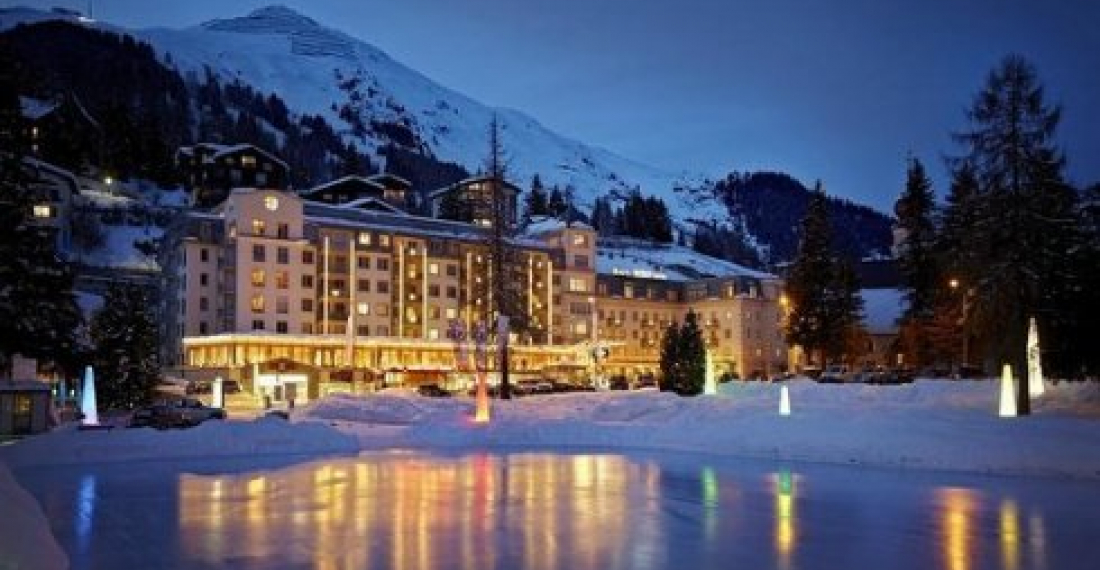
photo: Davos (archive, Switzerland)
Related articles

Editor's choice
News
Donald Tusk: "One for all, and all for one! Otherwise we are finished."

Donald Tusk: "One for all, and all for one! Otherwise we are finished."

Europe is rattled by events in Venezuela, and there are serious concerns that US disregard for international law may have consequences close to home.  The BBC diplomatic correspondent, James Landale, said, the question is how Europe may respond in the longer term to America's military operation in Venezuela. Will it provide a catalyst for the continent to take greater responsibility for its own security in the face of so much instability from what many see as an unreliable ally? Polish prime minister, Donald Tusk, appears to have answered the question, saying on social media: "No-one will take seriously a weak and divided Europe: neither enemy nor ally. It is already clear now. "We must finally believe in our own strength, we must continue to arm ourselves, we must stay united like never before. One for all, and all for one. Otherwise, we are finished." The US seizing of Venezuela's leader has faced strong criticism from both America's friends and foes at an emergency meeting of the United Nations Security Council, held on Monday, 5 January. Many member states agreed with the US that Nicolás Maduro had been an illegitimate and repressive leader. But many also condemned the US military action as a breach of international law and the UN Charter, and they demanded a democratic transition that reflected the will of the Venezuelan people. (click the image to read the full article).

Popular

Editor's choice
News
Donald Tusk: "One for all, and all for one! Otherwise we are finished."

Donald Tusk: "One for all, and all for one! Otherwise we are finished."

Europe is rattled by events in Venezuela, and there are serious concerns that US disregard for international law may have consequences close to home.  The BBC diplomatic correspondent, James Landale, said, the question is how Europe may respond in the longer term to America's military operation in Venezuela. Will it provide a catalyst for the continent to take greater responsibility for its own security in the face of so much instability from what many see as an unreliable ally? Polish prime minister, Donald Tusk, appears to have answered the question, saying on social media: "No-one will take seriously a weak and divided Europe: neither enemy nor ally. It is already clear now. "We must finally believe in our own strength, we must continue to arm ourselves, we must stay united like never before. One for all, and all for one. Otherwise, we are finished." The US seizing of Venezuela's leader has faced strong criticism from both America's friends and foes at an emergency meeting of the United Nations Security Council, held on Monday, 5 January. Many member states agreed with the US that Nicolás Maduro had been an illegitimate and repressive leader. But many also condemned the US military action as a breach of international law and the UN Charter, and they demanded a democratic transition that reflected the will of the Venezuelan people. (click the image to read the full article).