Borrell: The situation between Turkey and the EU is far from ideal

The European Union High Representative for Foreign Affairs and Security, Josep Borrell emphasised the need to take a comprehensive approach in addressing EU-Turkey relations, and called for a more intensive dialogue to start addressing pending issues.

Borrell paid a two-day visit to Turkey and met with Foreign Minister Mevlut Cavusoglu and Defense Minister Hulusi Akar. His visit comes a week before the EU's foreign affairs council and European Parliament will hold special sessions to discuss the ties with Ankara.

Speaking to journalists after the meeting with the Turkish Foreign Minister, Borrell admited that there were serious problems in the relationship, which he described as being far from ideal, but said that both have to make the relations the best possible:

"We cannot abolish geography, whatever happens, Turkey will be a central actor in the Eastern Mediterranean, a neighbour of Europe and an important partner. It is impossible to finish our relations. We have to have relations and they have to be the best possible [ones]. There are many serious issues that require our immediate attention. I want to change for the best the dynamics in our relationship because I believe that we have a mutual interest to get out of this situation and chart a new and positive trajectory, avoiding any kind of incident that could spark more troubles."

Borrell later tweeted 

On his part, Tukish Foreign Minister Mevlut Cavusoglu told journalists after the meeting with Borrell that Turkey has warned the European Union that it will retaliate if Brussels decides to impose new sanctions on it over the ongoing dispute in the eastern Mediterranean ahead of a meeting of the EUs 27 member states which is due to discuss ongoing problems with Turkey.

"We observe that Turkey will be on the agenda of the EU in the coming days. Taking decisions against Turkey will not resolve the existing problems; on the contrary, it will deepen them. If the EU takes additional measures against Turkey, we'll have to respond," Foreign Minister Mevlüt Cavusoglu told a joint press conference with the bloc's foreign minister, Josep Borrell, on July 6 in Ankara.

"If you further sanction Turkey, we also have steps to take in the field, in the eastern Mediterranean," Cavusoglu said.

Both sides agreed to intensify contacts going forward.  "I hope that in the future, once the pandemic will stop imposing constraints, we will be able to increase our contacts, our conversations because we have a lot of things to talk [about], a lot of problems to solve and the common endeavour of improving the relation between Turkey and the European Union£, Borrell stated.

source: commonspace.eu with agencies

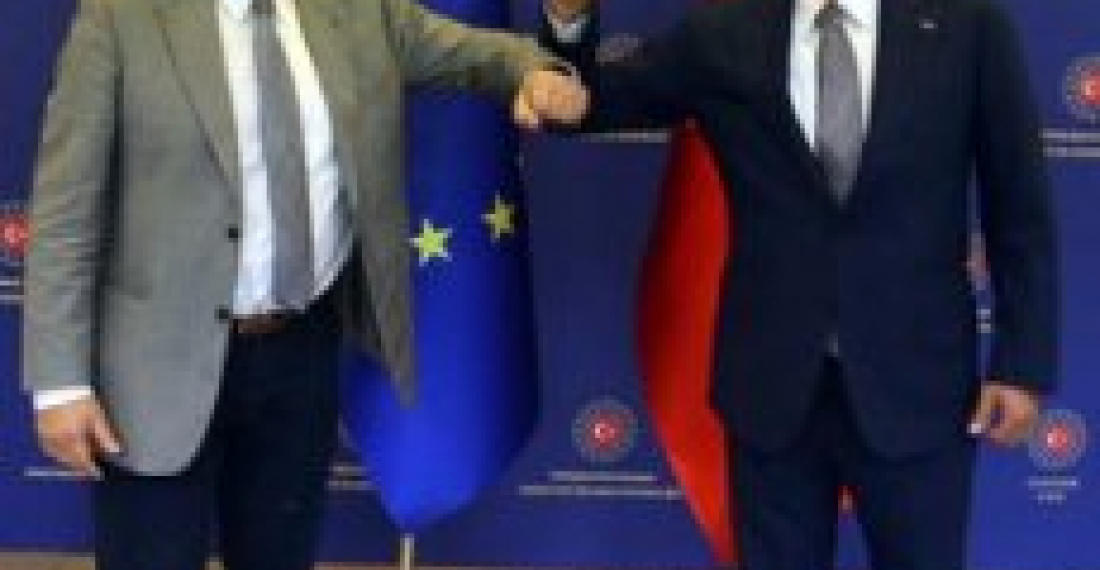
photo: EU High Representative Josep Borrell and Turkish Foreign Minister Mevlut Cavusoglu after their meeting in Ankara on 6 July 2020 (picture courtesy of the Twitter feed of @JosepBorrellF
Related articles

Editor's choice
News
Council of Europe launches new International Claims Commission for Ukraine

Council of Europe launches new International Claims Commission for Ukraine

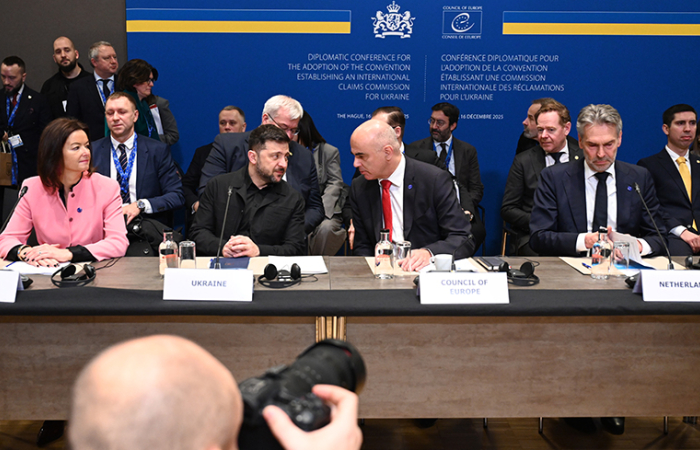
Thirty-four countries and the European Union have signed a new convention establishing an International Claims Commission for Ukraine at a diplomatic conference co-hosted by the 46-nation Council of Europe and the Netherlands in the Hague. The diplomatic conference was attended by leaders and high-level representatives from over 50 states, including the President of Ukraine, Volodymyr Zelenskyy, the President of the Republic of Moldova, Maia Sandu, and the Prime Minister of the Netherlands, Dick Schoof.  “Today marks a major step forward in ensuring accountability for Ukraine. The International Claims Commission represents justice and hope for tens of thousands of victims—our determination that those who have suffered will not be forgotten. I call for quick ratifications so we can get the commission rapidly up and running for the people of Ukraine,” said Council of Europe Secretary General Alain Berset. Ukrainian President Volodymyr Zelenskyy said: “We expect that every mechanism for compensation from the Register of Damage and Claims Commission to the actual payments – will start working and receive strong and sufficient international support, so that people can truly feel that any kind of damage caused by the war can be compensated. This war, and Russia’s responsibility for it, MUST become a clear example – so that others learn not to choose aggression.” “Accountability is about creating the conditions for peace that endures. And therefore, accountability is a condition of security – today and for the future. But accountability is not only about Ukraine. And it is not only about one aggressor and one victim. Accountability is about Europe. About every country in Europe. It is about whether Europe, as a whole, is willing to defend its peace,” said Maia Sandu, President of the Republic of Moldova, which currently holds the Presidency of the Council of Europe’s Committee of Ministers. The Prime Minister of the Netherlands, Dick Schoof, said: “Every day Russia is deliberately bombarding homes, destroying businesses and damaging infrastructure in Ukraine. Russia must compensate Ukraine for the damage caused. That is why we have launched the International Claims Commission for Ukraine and we are honoured to host it.” The International Claims Commission will be the second part of a comprehensive compensation mechanism related to Russia’s war of aggression, building on the existing Register of Damage for Ukraine. The claims commission will be established within the framework of the Council of Europe and will also be open to other countries. The Register of Damage for Ukraine, created in 2023, collects and records compensation claims submitted by individuals, organisations and public bodies in Ukraine. Forty-four states and the European Union have so far joined the Register, which has already received 86,000 claims. The International Claims Commission will review, assess and decide upon claims submitted to the Register of Damage for Ukraine and determine the amount of compensation, if any, which is due in each case. The convention establishing the commission will enter into force once it has been ratified by 25 signatories, as long as sufficient funds have been secured to support its initial work.

Popular