Azerbaijan to restore relations with the European Parliament

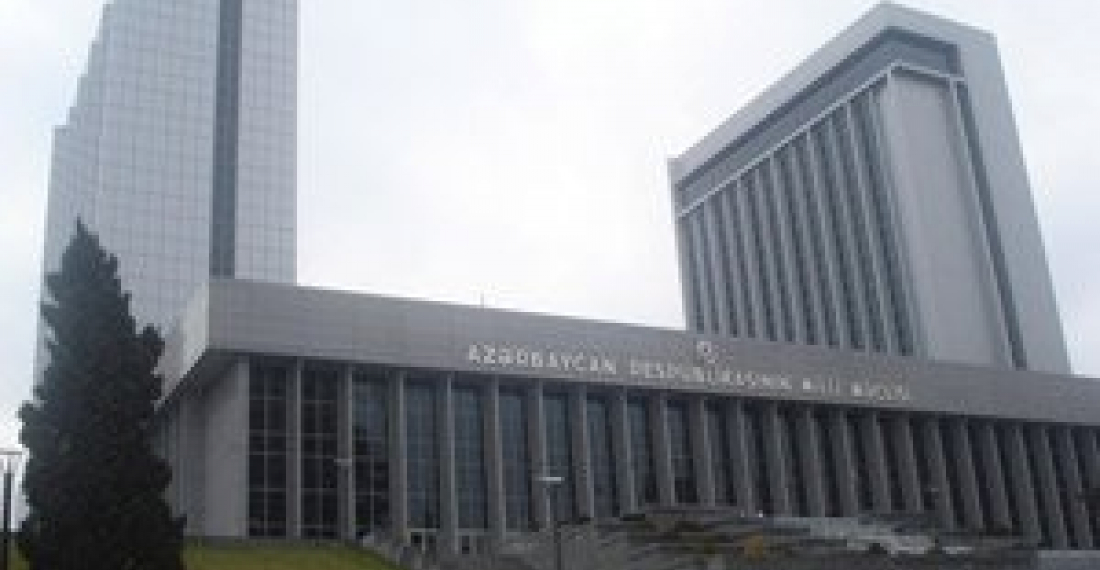
The Azerbaijani Parliament (Milli Meclis) has decided to restore its relations with the European Parliament. The decision was taken on Friday during the first meeting of a new session of the Parliament.

"Azerbaijan wants to build a relationship with the European Union at the highest level. However, mutual interests must be respected,". This was stated by Samed Sayedov, the Chairman of the Foreign Affairs Committee of the Milli Meclis when he presented the resolution for the consideration of the Parliament.

Sayedov said that an official delegation from the European Parliament had travelled to Azerbaijan recently and had frank discussions with the country's leadership and parliament.

Relations between Azerbaijan and the European Parliament reached breaking point last year when the European Parliament on 10 September 2015 adopted a critical resolution on Azerbaijan which triggered a sharp reaction in Azerbaijan

A year later a 15-person delegation of the European Parliament visited Azerbaijan to discuss the issue of repairing relations.

Commonspace.eu
political editor said in a comment that "the decision to restore parliamentary relations between Azerbaijan and the EU is very welcome.The European Parliament is one of the key institutions of the European Union and relations between the EU and Azerbaijan cannot develop if parliamentary relations are non existent. There was a feeling among many MEPs that the resolution of September 2015, whilst saying a lot of things that needed to be said, was clumsily drafted, and gave a very distorted picture of reality. There remain many issues in the bilateral agenda between Azerbaijan and the EU, and concerns about different aspects of Azerbaijan's record on governance and human rights. But with restored parliamentary dialogue it is hoped that these issues can be addressed in an open and frank, but respectful dialogue. There will be those in Azerbaijan, especially among the opposition forces who do not agree with this approach, but they are wrong. What is needed is not less dialogue between Azerbaijan and the EU, but a much more intensified dialogue during which all issues need to be discussed frankly"

source: commonspace.eu
 

Related articles

Editor's choice
News
Aden under curfew, as problem in Yemen's south deepens

Aden under curfew, as problem in Yemen's south deepens

The port city of Aden, in Yemen's south, has been put under curfew, as the rift in the country between  the Saudi led coalition which  backs Yemen's presidential governing council, and the southern forces led by the Southern Transitional Council (STC), deepens. Abdul Rahman al-Mahrami, a member of the Yemeni Presidential Governing Council and commander of the al-Amalik brigades, has ordered a curfew in the temporary capital, Aden, "to maintain security". "A curfew has been imposed throughout Aden Governorate from 9:00 p.m. to 6:00 a.m., in accordance with the instructions of Commander Abdul Rahman al-Mahrami, a member of the Presidential Management Council," the statement said. It states that only security and military personnel, as well as medical and technical teams with approved permits, will be allowed to move in the area during these hours. Yemen's presidential council, which is backed by Saudi Arabia and which already is in a struggle with the Houthi Movement in the north of the country who also occupy the capital Sanaa, two days ago issued an order for the arrest of the head of the Southern Transitional Council (STC),, Aidarous al Zubaidi. The STC have wide support among people in the South, and advocate that South Yemen restores its independence. The coalition warned of further escalation in Aden, long regarded as an STC stronghold, as the Presidential Leadership Council (PLC) chief accused STC leader Aidarous Al Zubaidi of “high treason” and announced the revocation of his membership in the governing body. The moves mark a sharp escalation in tensions within the anti-Houthi camp, despite National Shield Forces, rivals of the STC and former allies, having recently retaken control of Hadhramaut and Mahra from southern fighters. The STC’s takeover of the two regions last month angered Saudi Arabia and contributed to igniting the current internal conflict. (click the picture to read more)

Popular

Editor's choice
News
Aden under curfew, as problem in Yemen's south deepens

Aden under curfew, as problem in Yemen's south deepens

The port city of Aden, in Yemen's south, has been put under curfew, as the rift in the country between  the Saudi led coalition which  backs Yemen's presidential governing council, and the southern forces led by the Southern Transitional Council (STC), deepens. Abdul Rahman al-Mahrami, a member of the Yemeni Presidential Governing Council and commander of the al-Amalik brigades, has ordered a curfew in the temporary capital, Aden, "to maintain security". "A curfew has been imposed throughout Aden Governorate from 9:00 p.m. to 6:00 a.m., in accordance with the instructions of Commander Abdul Rahman al-Mahrami, a member of the Presidential Management Council," the statement said. It states that only security and military personnel, as well as medical and technical teams with approved permits, will be allowed to move in the area during these hours. Yemen's presidential council, which is backed by Saudi Arabia and which already is in a struggle with the Houthi Movement in the north of the country who also occupy the capital Sanaa, two days ago issued an order for the arrest of the head of the Southern Transitional Council (STC),, Aidarous al Zubaidi. The STC have wide support among people in the South, and advocate that South Yemen restores its independence. The coalition warned of further escalation in Aden, long regarded as an STC stronghold, as the Presidential Leadership Council (PLC) chief accused STC leader Aidarous Al Zubaidi of “high treason” and announced the revocation of his membership in the governing body. The moves mark a sharp escalation in tensions within the anti-Houthi camp, despite National Shield Forces, rivals of the STC and former allies, having recently retaken control of Hadhramaut and Mahra from southern fighters. The STC’s takeover of the two regions last month angered Saudi Arabia and contributed to igniting the current internal conflict. (click the picture to read more)