


Azerbaijan prepares for controversial constitutional referendum

Preparations are well under way for a national referendum in Azerbaijan, scheduled for 26 September. the referendum, initiated by the government, seeks popular approval for significant constitutional changes.

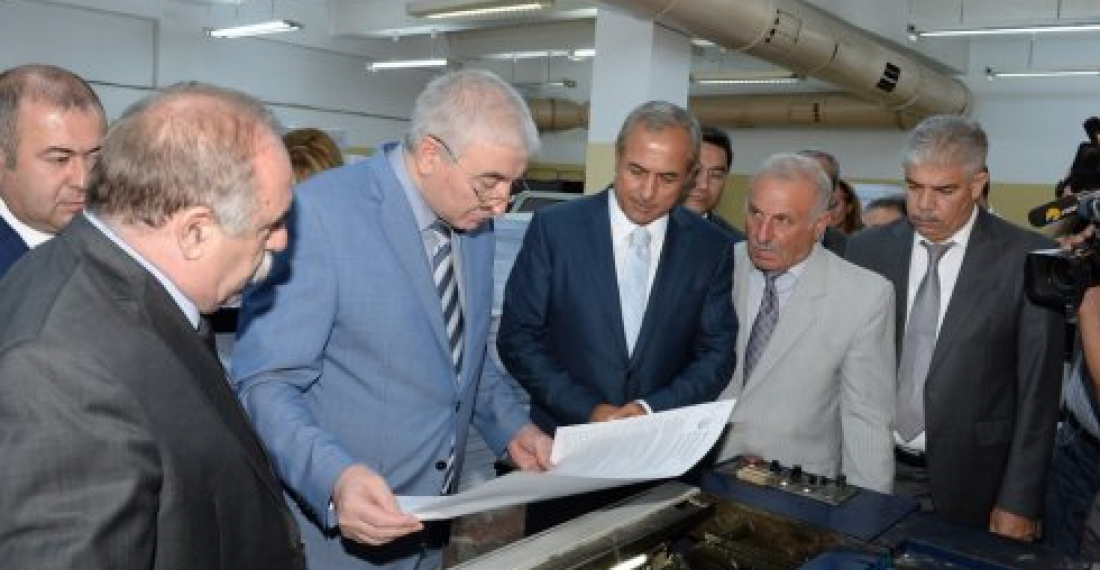
The process for printing 5,280,924 ballot papers has started. It will be done at the printing press of the Azerbaijani Parliament. The Chairman of the Central Elections Commission of Azerbaijan, Mazahir Panahov, visited the printing press to watch the process a few days ago.

Speaking at a seminar organised by the CEC yesterday (Thursday, 18 August), Panahov said that  "The referendum is aimed at protecting stability in Azerbaijan. Azerbaijan is developing rapidly and people's living standards are improving. We held elections at the highest standards. We must  hold this referendum at a high level too."

The theme was echoed by a number of goverrnment speakers at the event. 

"Democracy has a begining, but not an end"

Ziyafat Asgarov, first vice-speaker of Azerbaijani parliament emphasised that the referendum is part of a longer term democratic process in the country, according to a report carried by Trend News Agency

"Azerbaijan's National Leader Heydar Aliyev said that democracy has a beginning, but has no an end. In order to reach the highest level in the construction of a legal state, we have to carry out these changes," Asgarov noted."The referendum meets the people's will and we have to hold it," he added.

He also said the issues raised on the referendum reflect the people's will. Each referendum is a political and economic barometer of a society, Asgarov noted."We must take this step within the state building process," he added.

A number of initiative groups are forming ahead of the referendum to campaign.

Activists arrested ahead of the referendum campaign; outrage in the international community

There has been strong criticism of the Azerbaijani government ahead of the referendum. Many civil rights groups have condemned the arrest over the last few days on a number of political figures and activists Many link the arrests directly to the referendum.

There has been outrage in the international community following the arrest of the Executive Secretary of the opposition "REAL" Movement, Natig Jafarli, as well as the arrests of other activists.

British Minister for Europe and the Americas, Sir Alan Duncan, in a statement said called on Azerbaijan to abide by its international commitments, and to improve its record, on human rights and the rule of law. A similar call came form the United States department of State, Deputy Spokesperson Mark Toner urged the Azerbaijani government "to release these and other activists incarcerated in connection with exercising their fundamental freedoms, to respect the fundamental freedoms of its citizens."

"We urge the Azerbaijani government to allow an open and public dialogue about the direction of the country, particularly in the run-up to the planned September 26 constitutional amendment referendum. We also urge the government to submit the constitutional amendments for a joint Venice Commission and ODIHR Opinion," Mark Toner said in his statement.

Starting Monday, 22 August, commonspace.eu will be running daily coverage of the Azerbaijan referendum and the events around it with news and comments from Azerbaijan, as well as international reaction.

source: commonspace.eu with agencies:

photo: The Chairman of the Central Elections Commission of Azerbaijan supervises the printing of ballot papers for the 26 September constitutional referendum. (picture courtesy of the Press Service of the Azerbaijan Central Elections Commission).
 

Related articles

Editor's choice
News
Council of Europe launches new International Claims Commission for Ukraine

Council of Europe launches new International Claims Commission for Ukraine

Thirty-four countries and the European Union have signed a new convention establishing an International Claims Commission for Ukraine at a diplomatic conference co-hosted by the 46-nation Council of Europe and the Netherlands in the Hague. The diplomatic conference was attended by leaders and high-level representatives from over 50 states, including the President of Ukraine, Volodymyr Zelenskyy, the President of the Republic of Moldova, Maia Sandu, and the Prime Minister of the Netherlands, Dick Schoof.  “Today marks a major step forward in ensuring accountability for Ukraine. The International Claims Commission represents justice and hope for tens of thousands of victims—our determination that those who have suffered will not be forgotten. I call for quick ratifications so we can get the commission rapidly up and running for the people of Ukraine,” said Council of Europe Secretary General Alain Berset. Ukrainian President Volodymyr Zelenskyy said: “We expect that every mechanism for compensation from the Register of Damage and Claims Commission to the actual payments – will start working and receive strong and sufficient international support, so that people can truly feel that any kind of damage caused by the war can be compensated. This war, and Russia’s responsibility for it, MUST become a clear example – so that others learn not to choose aggression.” “Accountability is about creating the conditions for peace that endures. And therefore, accountability is a condition of security – today and for the future. But accountability is not only about Ukraine. And it is not only about one aggressor and one victim. Accountability is about Europe. About every country in Europe. It is about whether Europe, as a whole, is willing to defend its peace,” said Maia Sandu, President of the Republic of Moldova, which currently holds the Presidency of the Council of Europe’s Committee of Ministers. The Prime Minister of the Netherlands, Dick Schoof, said: “Every day Russia is deliberately bombarding homes, destroying businesses and damaging infrastructure in Ukraine. Russia must compensate Ukraine for the damage caused. That is why we have launched the International Claims Commission for Ukraine and we are honoured to host it.” The International Claims Commission will be the second part of a comprehensive compensation mechanism related to Russia’s war of aggression, building on the existing Register of Damage for Ukraine. The claims commission will be established within the framework of the Council of Europe and will also be open to other countries. The Register of Damage for Ukraine, created in 2023, collects and records compensation claims submitted by individuals, organisations and public bodies in Ukraine. Forty-four states and the European Union have so far joined the Register, which has already received 86,000 claims. The International Claims Commission will review, assess and decide upon claims submitted to the Register of Damage for Ukraine and determine the amount of compensation, if any, which is due in each case. The convention establishing the commission will enter into force once it has been ratified by 25 signatories, as long as sufficient funds have been secured to support its initial work.

Popular

Editor's choice
News
Council of Europe launches new International Claims Commission for Ukraine

Council of Europe launches new International Claims Commission for Ukraine

Thirty-four countries and the European Union have signed a new convention establishing an International Claims Commission for Ukraine at a diplomatic conference co-hosted by the 46-nation Council of Europe and the Netherlands in the Hague. The diplomatic conference was attended by leaders and high-level representatives from over 50 states, including the President of Ukraine, Volodymyr Zelenskyy, the President of the Republic of Moldova, Maia Sandu, and the Prime Minister of the Netherlands, Dick Schoof.  “Today marks a major step forward in ensuring accountability for Ukraine. The International Claims Commission represents justice and hope for tens of thousands of victims—our determination that those who have suffered will not be forgotten. I call for quick ratifications so we can get the commission rapidly up and running for the people of Ukraine,” said Council of Europe Secretary General Alain Berset. Ukrainian President Volodymyr Zelenskyy said: “We expect that every mechanism for compensation from the Register of Damage and Claims Commission to the actual payments – will start working and receive strong and sufficient international support, so that people can truly feel that any kind of damage caused by the war can be compensated. This war, and Russia’s responsibility for it, MUST become a clear example – so that others learn not to choose aggression.” “Accountability is about creating the conditions for peace that endures. And therefore, accountability is a condition of security – today and for the future. But accountability is not only about Ukraine. And it is not only about one aggressor and one victim. Accountability is about Europe. About every country in Europe. It is about whether Europe, as a whole, is willing to defend its peace,” said Maia Sandu, President of the Republic of Moldova, which currently holds the Presidency of the Council of Europe’s Committee of Ministers. The Prime Minister of the Netherlands, Dick Schoof, said: “Every day Russia is deliberately bombarding homes, destroying businesses and damaging infrastructure in Ukraine. Russia must compensate Ukraine for the damage caused. That is why we have launched the International Claims Commission for Ukraine and we are honoured to host it.” The International Claims Commission will be the second part of a comprehensive compensation mechanism related to Russia’s war of aggression, building on the existing Register of Damage for Ukraine. The claims commission will be established within the framework of the Council of Europe and will also be open to other countries. The Register of Damage for Ukraine, created in 2023, collects and records compensation claims submitted by individuals, organisations and public bodies in Ukraine. Forty-four states and the European Union have so far joined the Register, which has already received 86,000 claims. The International Claims Commission will review, assess and decide upon claims submitted to the Register of Damage for Ukraine and determine the amount of compensation, if any, which is due in each case. The convention establishing the commission will enter into force once it has been ratified by 25 signatories, as long as sufficient funds have been secured to support its initial work.

