


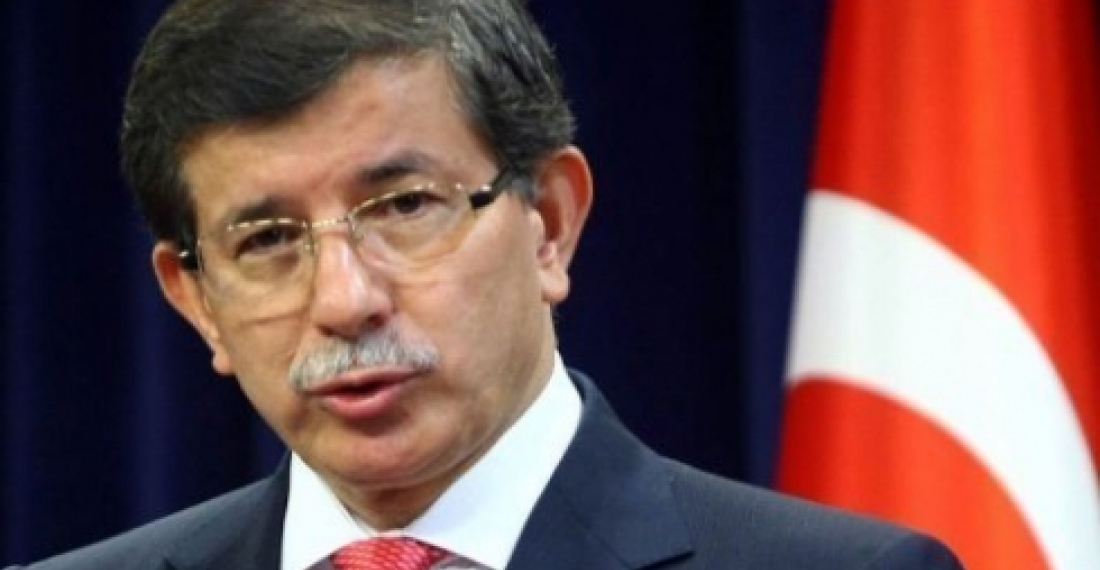
Davutoglu warns of a new cold war in the wider Middle East

The Turkish Foreign Minister, Ahmet Davutoglu is in Tehran on a two day visit for talks with Iranian leaders. The visit was brought forward by a few days in response to increased tensions in the region and as a sectarian crisis developing in Iraq, further conflict in Syria and threat of a military stand off in the Straits of Hormuz casts a shadow over the new year that has just started.

In a comment to the Anatolia News Agency before he left for Tehran the Turkish Foreign Minister said "I want to clearly say that there are some who seek a regional cold war. We are determined to prevent it. A regional sectarian tension would be a suicide for the region."

Davutoglu noted that there was a risk of rising tension which would affect not only Iraq and Syria but also the whole region. However, we are determined to prevent a regional cold war, he added.

Davutoglu said that following his visit to Iran, he would tour Russia and the US within a month, and hold meetings with officials of the EU and Gulf countries, and host foreign ministers of several countries in Turkey. Davutoglu said that Turkey was against escalation of tension in the region, adding that Turkey's Iraq policy was to being close to all groups in that country.

source: commonspace.eu with agency reports

photo: Turkish Foreign Minister Ahmet Davitoglu (archive picture)

Related articles

Editor's choice
News
Donald Tusk: "One for all, and all for one! Otherwise we are finished."

Donald Tusk: "One for all, and all for one! Otherwise we are finished."

Europe is rattled by events in Venezuela, and there are serious concerns that US disregard for international law may have consequences close to home.  The BBC diplomatic correspondent, James Landale, said, the question is how Europe may respond in the longer term to America's military operation in Venezuela. Will it provide a catalyst for the continent to take greater responsibility for its own security in the face of so much instability from what many see as an unreliable ally? Polish prime minister, Donald Tusk, appears to have answered the question, saying on social media: "No-one will take seriously a weak and divided Europe: neither enemy nor ally. It is already clear now. "We must finally believe in our own strength, we must continue to arm ourselves, we must stay united like never before. One for all, and all for one. Otherwise, we are finished." The US seizing of Venezuela's leader has faced strong criticism from both America's friends and foes at an emergency meeting of the United Nations Security Council, held on Monday, 5 January. Many member states agreed with the US that Nicolás Maduro had been an illegitimate and repressive leader. But many also condemned the US military action as a breach of international law and the UN Charter, and they demanded a democratic transition that reflected the will of the Venezuelan people. (click the image to read the full article).

Popular

Editor's choice
News
Donald Tusk: "One for all, and all for one! Otherwise we are finished."

Donald Tusk: "One for all, and all for one! Otherwise we are finished."

Europe is rattled by events in Venezuela, and there are serious concerns that US disregard for international law may have consequences close to home.  The BBC diplomatic correspondent, James Landale, said, the question is how Europe may respond in the longer term to America's military operation in Venezuela. Will it provide a catalyst for the continent to take greater responsibility for its own security in the face of so much instability from what many see as an unreliable ally? Polish prime minister, Donald Tusk, appears to have answered the question, saying on social media: "No-one will take seriously a weak and divided Europe: neither enemy nor ally. It is already clear now. "We must finally believe in our own strength, we must continue to arm ourselves, we must stay united like never before. One for all, and all for one. Otherwise, we are finished." The US seizing of Venezuela's leader has faced strong criticism from both America's friends and foes at an emergency meeting of the United Nations Security Council, held on Monday, 5 January. Many member states agreed with the US that Nicolás Maduro had been an illegitimate and repressive leader. But many also condemned the US military action as a breach of international law and the UN Charter, and they demanded a democratic transition that reflected the will of the Venezuelan people. (click the image to read the full article).


