


FRANCE-PRESIDENT-KARABAKH-COMMENT

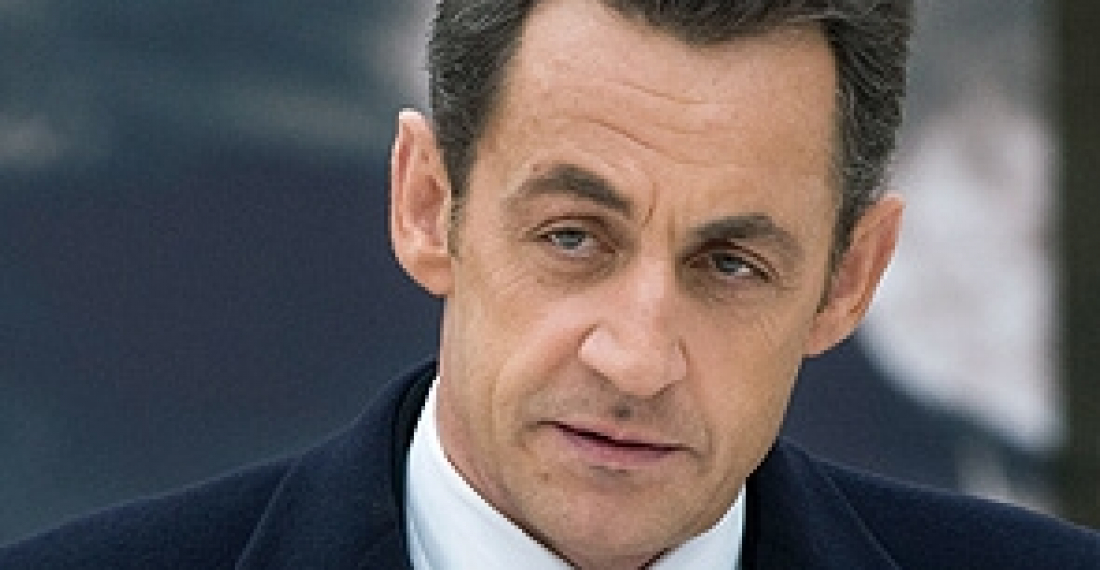
President of France Nicolas Sarkozy expressed hope for establishment of durable peace between Armenia and Azerbaijan, when speaking at a joint press conference with President of Armenia Serzh Sargsyan in Yerevan, Friday.

Nicolas Sarkozy said that resumption of the Armenian-Azerbaijani negotiations within the OSCE Minsk Group is the only solution to the Karabakh conflict. "We can see that it is possible to find points of contact in this problem for establishment of peace," Sarkozy said. He stressed that the South Caucasus region is rather instable and establishment of peace is very importance for development of the two countries. 

France is an OSCE MG Co-chair state alongside with the USA and Russia. The Nagorno-Karabakh conflict broke out on February 28 1988 in the Azerbaijani Sumgait with massacre of Armenians as a peculiar response of Azerbaijanis to the peaceful demand of the Nagorno-Karabakh autonomous Region, part of the Azerbaijani SSR, to unite with the Armenian SSR. This resulted in other pogroms of Armenians in Baku, Kirovabad and other regions of Azerbaijan populated with Armenians. In 1991  Azerbaijan unleashed war against peaceful populations of Nagorno-Karabakh, expulsing ethnic Armenians from the territory of Azerbaijan. Dozens of thousands of peaceful residents on both parties were killed in the military actions, and hundreds of thousands were left homeless and have become refugees. In 1994 in Bishkek in mediation of the OSCE MG, the NKR, Azerbaijan and Armenia signed a Protocol on Ceasefire that is observed more or less so far.

Related articles

Editor's choice
News
Russian attacks against Ukrainian civilians continue

Russian attacks against Ukrainian civilians continue

Rescuers in Ukraine are continuing their search for survivors in the wreckage of a big shopping centre hit by Russia on Friday. Sixteen people were killed and 130 injured when two drones hit the busy centre in Kryvyi Rih in quick succession in what is known as a double-tap strike. Four people are still missing. The search and rescue operation could last for another two days. President Volodymyr Zelensky condemned the "cynical and despicable" attack in which the second drone targeted emergency workers. The sides exchanged more fire overnight, with Ukrainian attacks said to have killed at least four people in Russia, including two children, and three people reported dead by Kyiv as a result of Russian strikes. The death toll from Friday's attack reached 16 after another body was retrieved from the rubble overnight, said Dnipropetrovsk regional head Oleksandr Hanzha. "We're doing everything possible to speed up... the search and rescue operation," he told Ukrainian TV on Saturday morning. (click image tio read more)

Popular

Editor's choice
Interview
Thursday Interview: Murad Muradov

Thursday Interview: Murad Muradov

Today, commonspace.eu starts a new regular weekly series. THURSDAY INTERVIEW, conducted by Lauri Nikulainen, will host  persons who are thinkers, opinion shapers, and implementors in their countries and spheres. We start the series with an interview with Murad Muradov, a leading person in Azerbaijan's think tank community. He is also the first co-chair of the Action Committee for a new Armenian-Azerbaijani Dialogue. Last September he made history by being the first Azerbaijani civil society activist to visit Armenia after the 44 day war, and the start of the peace process. Speaking about this visit Murad Muradov said: "My experience was largely positive. My negative expectations luckily didn’t play out. The discussions were respectful, the panel format bringing together experts from Armenia, Azerbaijan, and Turkey was particularly valuable during the NATO Rose-Roth Seminar in Yerevan, and media coverage, while varied in tone, remained largely constructive. Some media outlets though attempted to represent me as more of a government mouthpiece than an independent expert, which was totally misleading.  Overall, I see these initiatives as important steps in rebuilding trust and normalising professional engagement. The fact that soon a larger Azerbaijani civil society visits to Armenia followed, reinforces the sense that this process is moving in the right direction." (click the image to read the interview in full)


