Ilham Aliev says that Azerbaijan's position on the Karabakh conflict remains unchanged

The President of Azerbaijan, Ilham Aliev, yesterday made a wide-ranging speech to the Cabinet of Ministers in which he touched on domestic and foreign policy issues, and also made a rare referencve to his country's policy on defence procurement

In a defiant reference to the Karabakh conflict the President said "At all international events I have spoken about the Armenian-Azerbaijani conflict over Nagorno-Karabakh and exposed Armenia's policy of aggression. I will continue to expose it at all international events. Our principled position on the settlement of the conflict remains unchanged. The territorial integrity of Azerbaijan must be restored unconditionally, the occupying forces must withdraw from our land. The internationally recognized territorial integrity of our country will be fully restored. I have no doubt about that. We are growing stronger both economically and internationally."

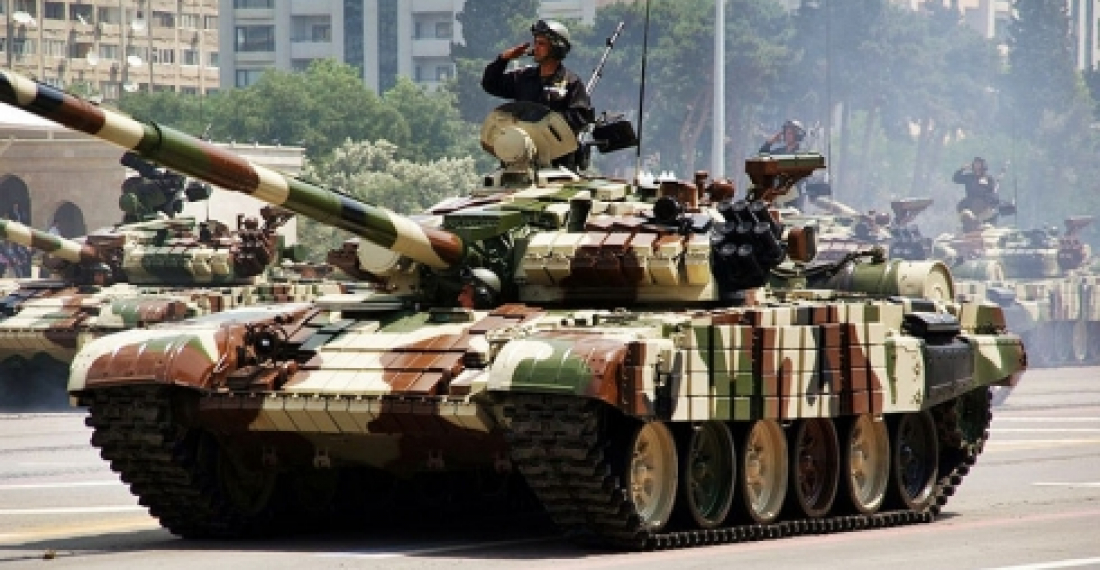
The President also made a rare reference to the policies that Azerbaijan is pursuing with regards to its defence procurement. The President said "Our military capacity is also growing. This area is and will always be in the focus. We are creating a powerful military industry. At the same time, we buy and will continue to buy large volumes of military equipment, weapons and ammunition. Not to mention anti-aircraft guns. We are and will be buying tanks, artillery units, combat aircraft, weaponry, all modern equipment needed for combat. I can say that, as in other areas, we are pursuing a diversified policy in this area too, we don't rely only on one producer. A growing number of countries want to cooperate with us and we have the opportunities for that. Unlike some other countries, we don't get anything for free, we buy everything, and this policy will be continued."

The statement came on the same day that the respected Swedish think-tank, SIPRI, reported that Azerbaijan's increased in military spending in 2011 by 87%, making it the highest in the world.

President Aliev said in his speech "Azerbaijan already has a strong army. All the armed forces are ready and capable of fulfilling any task in the interests of our country. They are ready to restore Azerbaijan's sovereignty over Nagorno-Karabakh and other occupied lands. We simply want to do this without bloodshed, by peaceful means, through talks, and every minute and every day brings us closer to victory. Armenia is plunging into a deep recession, while Azerbaijan is growing stronger. Victory day is nearing us. The day will come when the Azerbaijani flag will fly in Khankandi and Shusha."

On foreign policy, Aliev said that in the first quarter of the year there were "very interesting and serious discussions concerning Azerbaijan in the international arena. As a respectable member of the international community, our country has and will continue to have a say. Our foreign policy is a logical continuation of the internal one. Our foreign policy is aimed at deepening cooperation. We are taking steps in that direction. Our foreign policy is open, clear and unambiguous. Our role in the region and the world is growing. This must be reckoned with."

There has already been a sharp reaction to the speech in Armenia. Vice Speaker of the Armenian National Assembly Eduard Sharmazanov commented on the statement made by the Azerbaijani  leader that a day will come when the Azerbaijani flag will fly in Stepanakert and Shusha.

Sharmanazov said “First of all, Azerbaijan should stop the weapon race and military rhetoric. Secondly, it should prepare its society not for war but peace. Thirdly, if Aliyev wants to see the Azerbaijani flag in Stepanakert very much there is only one way to do that – to establish diplomatic relations with the independent Republic of Artsakh and as a result, the flag of the Republic of Artsakh will raise over the building of the NKR Embassy to Baku and the flag of neighboring Azerbaijan will raise over the building of the Embassy of Azerbaijan in the NKR capital Stepanakert”.

Commonspace.eu political editor said in a comment: "This was a a robust statement by the Azerbaijani leader in which, although he was saying nothing new as such, he has reflected the growing confidence that has been noticed in Azerbaijani diplomacy in the last year or so. There was little or no hint of any progress in the peace negotiations on Karabakh or even a reference to the OSCE Minsk Process. It leaves wide open the speculation that has been going on in recent years and months on Azerbaijan's intentions in this regard. Nothing much will happen in the next six weeks - Armenia is busy with elections and Azerbaijan with Eurovision,  but this speech perhaps gives the first signs of where things will be going in the future."

source: commonspace.eu with the Press Service of the president of Azerbaijan and agencies

picture: Azerbaijani tanks during a military parade in Baku in 2011 (archive picture)

Related articles

Editor's choice
News
UAE says it will withdraw from Yemen, but division emerges in Yemeni presidential council

UAE says it will withdraw from Yemen, but division emerges in Yemeni presidential council

In a move seen as an attempt to de-escalate a crises with Saudi Arabia, the United Arab Emirates, on Tuesday (30th December) announced that it was heeding a call to withdraw its troops from Southern Yemen. UAE says that its presence included counter-terrorism teams that were crucial in fighting against Islamist groups. UAE sources said that parts of Yemen not controlled by the Houthis have had Al Qaeda in the Arab Peninsula (AQAP) operatives using the territory to launch attacks on Europe, the US and Middle East. UAE teams have co-ordinated with American and British special forces and intelligence. The sources added that Emirati forces and their Yemeni allies also helped reverse Houthi gains in the south. including the liberation of Aden port. The small UAE contingent has remained in place since the UAE withdrew most of its military personnel in 2019. The leading English-language newspaper in Abu Dhabi, The National, said that the main UAE force was based at Riyan Mukalla International Airport, with access to fixed-wing aircraft and helicopters, but also operated smaller contingents in the port town Balhaf and Shabwa. "It is understood it also flew a number of drones from the airbase that were able to track terrorist movements, pass information back to its allies and assisted special forces' missions." Meanwhile a division has emerged in Yemen's presidential council after four members denounced what they called the 'unilateral decisions' by the chairman. Four of Yemen’s eight Presidential Leadership Council members on Tuesday denounced an announcement by the council’s chairman accusing him of breaching the governing agreement. Tension between Yemeni leaders has been rising for weeks, underscoring the fragility of the country's already fractured political landscape and further complicating efforts to confront the Iran-backed Houthi rebels. The latest rift took an unprecedented turn on Tuesday morning, marked by a Saudi-led coalition “limited operation” striking combat vehicles Riyadh linked to the Southern Transitional Council, which has three members in the PLC. The PLC Chairman, Rashad al Alimi, on Tuesday said that he was seeking to cancel the joint defence agreement with the UAE. “What has been issued … constitutes a clear violation of the Declaration of the Transfer of Power [agreement], which explicitly stipulates that the Presidential Leadership Council is a collective body whose decisions are taken by consensus, or by majority when consensus is not possible,” the statement by the four members said. “It does not, under any circumstances, allow for unilateral decision-making on sovereign, military, or major political matters." The statement was signed by STC chief Aidarous Al Zubaidi, Faraj Al Bahsani, Tariq Saleh and Abu Zaraa al Muharrami. (click the picture to read the full article).

Popular

Editor's choice
News
UAE says it will withdraw from Yemen, but division emerges in Yemeni presidential council

UAE says it will withdraw from Yemen, but division emerges in Yemeni presidential council

In a move seen as an attempt to de-escalate a crises with Saudi Arabia, the United Arab Emirates, on Tuesday (30th December) announced that it was heeding a call to withdraw its troops from Southern Yemen. UAE says that its presence included counter-terrorism teams that were crucial in fighting against Islamist groups. UAE sources said that parts of Yemen not controlled by the Houthis have had Al Qaeda in the Arab Peninsula (AQAP) operatives using the territory to launch attacks on Europe, the US and Middle East. UAE teams have co-ordinated with American and British special forces and intelligence. The sources added that Emirati forces and their Yemeni allies also helped reverse Houthi gains in the south. including the liberation of Aden port. The small UAE contingent has remained in place since the UAE withdrew most of its military personnel in 2019. The leading English-language newspaper in Abu Dhabi, The National, said that the main UAE force was based at Riyan Mukalla International Airport, with access to fixed-wing aircraft and helicopters, but also operated smaller contingents in the port town Balhaf and Shabwa. "It is understood it also flew a number of drones from the airbase that were able to track terrorist movements, pass information back to its allies and assisted special forces' missions." Meanwhile a division has emerged in Yemen's presidential council after four members denounced what they called the 'unilateral decisions' by the chairman. Four of Yemen’s eight Presidential Leadership Council members on Tuesday denounced an announcement by the council’s chairman accusing him of breaching the governing agreement. Tension between Yemeni leaders has been rising for weeks, underscoring the fragility of the country's already fractured political landscape and further complicating efforts to confront the Iran-backed Houthi rebels. The latest rift took an unprecedented turn on Tuesday morning, marked by a Saudi-led coalition “limited operation” striking combat vehicles Riyadh linked to the Southern Transitional Council, which has three members in the PLC. The PLC Chairman, Rashad al Alimi, on Tuesday said that he was seeking to cancel the joint defence agreement with the UAE. “What has been issued … constitutes a clear violation of the Declaration of the Transfer of Power [agreement], which explicitly stipulates that the Presidential Leadership Council is a collective body whose decisions are taken by consensus, or by majority when consensus is not possible,” the statement by the four members said. “It does not, under any circumstances, allow for unilateral decision-making on sovereign, military, or major political matters." The statement was signed by STC chief Aidarous Al Zubaidi, Faraj Al Bahsani, Tariq Saleh and Abu Zaraa al Muharrami. (click the picture to read the full article).