


Azerbaijan: "Situation tense"; Armenia: "Situation normal".

The Ministries of Defence of Armenia and Azerbaijan have been giving different readings of the situation on the line of contact separating their armed forces. On Thursday the Azerbaijani Ministry of Defence told media sources that the situation was "tense". This, after earlier reports that two Azerbaijani soldiers had been killed earlier this week, and one wounded, as a result of Armenian fire.

The Armenian side however denied that they had been involved in any exchanges with the Azerbaijani military. On Thursday a spokesperson for the Armenian Defence Ministry, Artsrun Hovhannisyan, said that the situation on the border was normal and that "The Armenian side is committed to maintaining the ceasefire regime. The reports on growing tensions along the border are not true."

However both sides also continue to report cease fire violations by the other.

Commonspace.eu political editor said in a comment: "It is usual for Armenia and Azerbaijan to give different versions of events when incidents happen. Usually this is related to sniper fire. Sometimes however either side may try some limited incursions in which case it may or may not want to publicise the incident. These incidents simply reflect the precariousness on the situation on the line of contact and the possibility of an easy escalation, something that has been pointed out many times by the OSCE mediators and others."

source: commonspace.eu with various media outlets

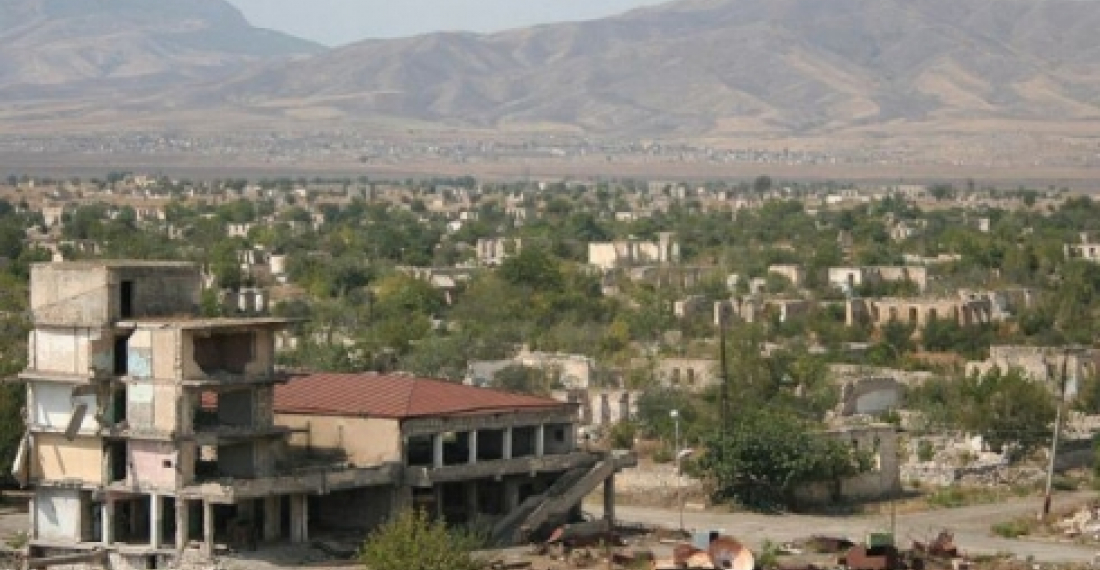
photo: general image of the town of Agdam destroyed by the conflict i the 1990s (archive picture)

Related articles

Editor's choice
News
Ghalibaf in Baku for 20th session of the Conference of the Parliamentary Union of the Member States of the Organization of Islamic Cooperation (OIC)

Ghalibaf in Baku for 20th session of the Conference of the Parliamentary Union of the Member States of the Organization of Islamic Cooperation (OIC)

The 20th session of the Conference of the Parliamentary Union of the Member States of the Organization of Islamic Cooperation (OIC), was held in Baku. Among those attending was the Speaker of the Iranian Parliament (Chairman of the Islamic Consultative Assembly of Iran) Mohammad Bagher Ghalibaf. On Wednesday (24 June) Ghalibaf also met the Azerbaijan  president Ilham Aliyev Aliyev, emphasized that the fraternal Iranian people have recently experienced enormous suffering, and wished peace to the souls of tallen. Noting that the Azerbaijani people and state stood by the Iranian people and state during the war, Aliyev described telephone conversations with Iranian President Masoud Pezeshkian, as well as other contacts at various levels and manifestations of solidarity, as clear examples of this. Stressing that the suspension of the war was greeted with joy by the Azerbaijani side,  Aliyev said that Baku issued an fficial statement welcoming the end of hostiliities “ I wish there were no wars in the region ,” said President Aliyev, noting that both Azerbaijan and Iran suffered from wars in their time. Recalling with satisfaction Mohammad Bagher Ghalibaf's previous visits, preisdent Aliyev touched upon the significance of his participation in the 20th session of the Conference of the Parliamentary Union of Member States of the Organization of Islamic Cooperation (OIC). He expressed hope that this event would contribute to the development of Islamic solidarity. He announced that our country will host the OIC Summit next year and noted that preparatory work has already begun. Aliyev emphasized that Mohammad Bagher Ghalibaf's visit will create a good opportunity to discuss issues related to the bilateral agenda. Ghalibaf expressed gratitude for the support provided by Aliyev, the Azerbaijani state and people during difficult times for Iran. He also expressed gratitude to the Azerbaijani leader for visiting the Iranian embassy in Bakuand expressing condolences over the death of the Supreme Leader of the Islamic Republic of Iran Ayatollah Seyed Ali Khamenei and numerous civilians, as well as for the congratulatory message sent to Ayatollah Seyed Mojtaba Hosseini Khamenei on the occasion of his election as Supreme Leader of the Islamic Republic of Iran. Noting that the war was a great misfortune and tragedy, the Galibaf emphasized that during that period, our country remained committed to good-neighborly relations with Iran, provided humanitarian aid, and the Azerbaijani people stood by Iran. He added that this will forever remain in the memory of the Iranian people. Emphasizing that Azerbaijan and Iran have always stood by each other, even in difficult times, Mohammad Bagher Ghalibaf described this as yet another example of the unity and solidarity of our countries. The guest stated that this war also demonstrated to Iran the importance of contacts with Muslim countries. Mohammad Bagher Ghalibaf noted that during the war, Iran learned who its friends and enemies were. Azerbaijan, as a friendly country, stood by Iran. During the conversation, confidence was expressed in the even more dynamic development of Azerbaijani-Iranian relations in the future, and it was emphasized with satisfaction that the construction of the Agbend-Kelale bridge has already been completed and that the Araz corridor, which runs through Iran, will also serve to expand transport opportunities in the region. At the meeting, an exchange of views took place on the prospects for bilateral relations, including issues of interparliamentary cooperation, and the activities of the intergovernmental commission were touched upon.

Popular

Editor's choice
Interview
Thursday Interview: Murad Muradov

Thursday Interview: Murad Muradov

Today, commonspace.eu starts a new regular weekly series. THURSDAY INTERVIEW, conducted by Lauri Nikulainen, will host  persons who are thinkers, opinion shapers, and implementors in their countries and spheres. We start the series with an interview with Murad Muradov, a leading person in Azerbaijan's think tank community. He is also the first co-chair of the Action Committee for a new Armenian-Azerbaijani Dialogue. Last September he made history by being the first Azerbaijani civil society activist to visit Armenia after the 44 day war, and the start of the peace process. Speaking about this visit Murad Muradov said: "My experience was largely positive. My negative expectations luckily didn’t play out. The discussions were respectful, the panel format bringing together experts from Armenia, Azerbaijan, and Turkey was particularly valuable during the NATO Rose-Roth Seminar in Yerevan, and media coverage, while varied in tone, remained largely constructive. Some media outlets though attempted to represent me as more of a government mouthpiece than an independent expert, which was totally misleading.  Overall, I see these initiatives as important steps in rebuilding trust and normalising professional engagement. The fact that soon a larger Azerbaijani civil society visits to Armenia followed, reinforces the sense that this process is moving in the right direction." (click the image to read the interview in full)

