


Azerbaijan increases rhetoric against Minsk Group. Senior officials have over the last weeks indicated dissatisfaction with the process.

Several senior Azerbaijani state officials have over the last weeks made harsh attacks against the work of the co-Chair of the Minsk Group, and indicated dissatisfaction with the process.  

Azerbaijani displeasure with the Minsk Process, and especially the work of the three co-Chair - diplomats representing France, Russia and the United States is not new. It appears intermittently from time to time, usually reflecting developments within the secretive negotiation process that is supposed to work out a solution to the Nagorno-Karabakh conflict.

It seems however that the present criticism is more sustained and co-ordinated. Officials including the Deputy Head of the Azerbaijani Presidential Administration Novruz Mammedov and the spokesperson of the Foreign Ministry Elman Abdullaev, have regularly made critical remarks, although the Foreign Minister himself, Elmar Mammadyarov has been more considerate, not surprisingly since he is the one who has to deal with the co-Chair in person during the negotiations. The latest to join the fray is the Director of SAM - the Strategic Studies Centre under the President, Farhad Mammadov. Azerbaijani media quote Mammadov as saying that "the latest statement of the OSCE Minsk Group has shown that the mediators are in a certain atmosphere of hopelessness and trying to blame the parties to the conflict of the situation in the negotiations". News.az reports that according to him, first of all the mediators must express a principled stand.

"That is, the OSCE Minsk Group, operating under international law should seek a phased settlement of the Armenian-Azerbaijani conflict, which involves first liberation of the occupied territories of Azerbaijan," he said. According to him, to shift the blame on Armenia and Azerbaijan for the pause in the negotiations is meaningless, and it reflects the desire to shrug off responsibility for a peaceful solution to the Nagorno-Karabakh problem. "Although it is officially stated that the reason for the lack of progress in the peace process is the electoral processes in Azerbaijan, it should be noted that the position of the Azerbaijani society on Nagorno-Karabakh is one. And the main reflector of the people's will is President Ilham Aliyev," said Mammadov, noting that the basic principles of the settlement are also clear and Baku is not going to back away from them.

"At the same time, we cannot accept any political wrangles in Armenia as an excuse to delay the negotiations. The Armenian authorities today control the parliament and official Yerevan has all the levers to conduct a legislative assembly of decision on the Nagorno-Karabakh conflict, " said the head of SAM, recalling that in the near future no election process is scheduled in Armenia. "There is every possibility in the next two years to renew and logically complete the negotiations on the Armenia-Azerbaijan conflict," concluded Mammadov.

Commonspace.eu political editor said in a comment:

"Azerbaijan seems to be repositioning itself, first in order not to be blamed for the current failures in the negotiations but possibly also ahead of a concerted attempt to try to change the negotiating format which it considers to be failing to achieve a settlement of the conflict, and worse perpetuates the status quo.

Whilst Azerbaijan is far from blameless for the current impasse, there is also a certain amount of truth in the Azerbaijani position. The open-ended nature of the Minsk Process, which has plodded along for more than twenty years already without any tangible results, and the instinctive reaction of the personalities involved in the process to defend their record by saying that it could have been worse - a bad peace is better than a good war, as a senior Russian official told the OSCE Permanent Council in Vienna recently - adds to the Azerbaijani frustration.

It is not clear if Azerbaijan is ready yet to walk away from the Minsk Process. The increased and sustained criticism of the Minsk Group can simply be part of a strategy to show strength ahead of the forthcoming Presidential elections. But it is certainly not helpful to an already moribund peace process. Farhad Mammedov's hope that negotiations between Armenia and Azerbaijan within the Minsk Group can be "renewed and logically completed" in the next two years at this point seems like wishful thinking. It can only happen if all the sides involved, Azerbaijan included, show more flexibility and goodwill."


source: Commonspace.eu with additional reporting from news.az

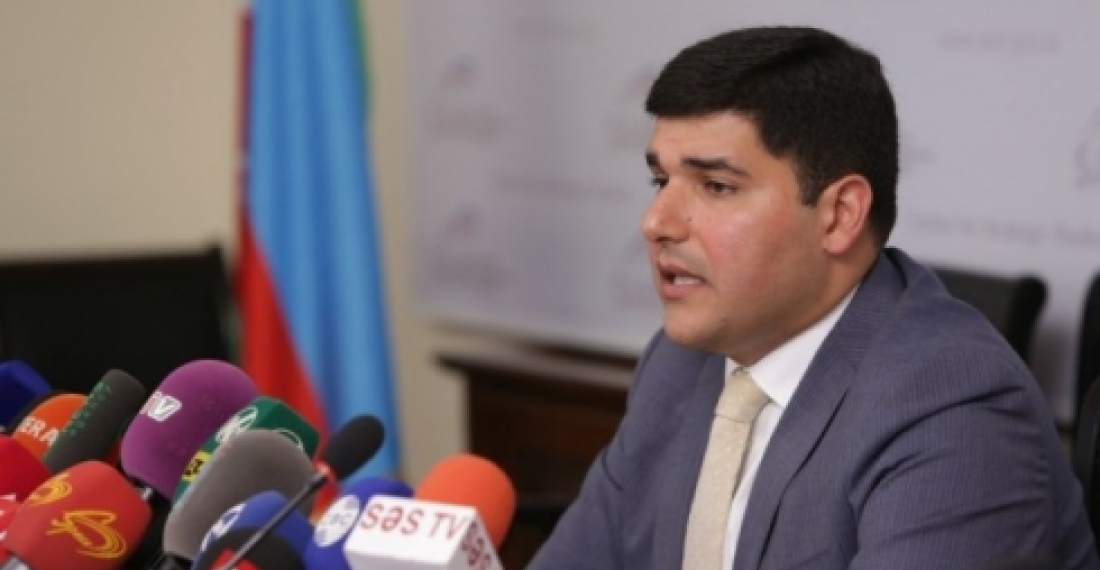
photo: Farhad Mammedov, Director of the Strategic Stidies Centre under the President of Azerbaijan
Related articles

Editor's choice
News
Borrell tells the European Parliament that the situation in Afghanistan was critical, but the EU will remain engaged

Borrell tells the European Parliament that the situation in Afghanistan was critical, but the EU will remain engaged

Borrell underlined that the European Union will make every effort to support the peace process and to remain a committed partner to the Afghan people. "Of course, we will have to take into account the evolving situation, but disengagement is not an option.  We are clear on that: there is no alternative to a negotiated political settlement, through inclusive peace talks.
Editor's choice
News
Germany accuses Russia of cyberattacks and disinformation campaign

Germany accuses Russia of cyberattacks and disinformation campaign

The German government holds Russia responsible for a cyberattack on German air traffic control, and for targeted disinformation campaigns before the last federal election. According to the German Foreign Office in Berlin, the incidents could be clearly attributed to the Russian military intelligence service, the GRU. In response, the Russian ambassador to Berlin was summoned to the Foreign Ministry. "We have been observing a massive increase in threatening hybrid activities by Russia for some time now," a spokesperson for the Foreign Ministry stated. These range from disinformation campaigns and espionage to cyberattacks and sabotage attempts. The aim is to divide society, sow distrust, and undermine confidence in democratic institutions. The spokesperson added that with these actions, Russia is "very concretely threatening our security, not only through its war of aggression against Ukraine, but also here in Germany."  The Foreign Ministry spokesperson explained that the cyberattack on air traffic control in August 2024 was clearly attributed to the hacker collective "APT28," known as "Fancy Bear," and to the responsibility of the Russian military intelligence service, the GRU. Furthermore, it could now be "conclusively stated" that Russia had attempted "to influence and destabilize both the last Federal election and the ongoing internal affairs of the Federal Republic of Germany." There was "absolutely irrefutable evidence" for this". The so-called "Storm 1516" campaign, which has been running since 2024, is allegedly backed by "reliable information" that the Moscow-based think tank "Center for Geopolitical Expertise" is behind it. The Center is also said to be supported by Russian military intelligence. Its primary aim is to influence democratic elections in the West. (Click the image to read more).

Popular

Editor's choice
News
Germany accuses Russia of cyberattacks and disinformation campaign

Germany accuses Russia of cyberattacks and disinformation campaign

The German government holds Russia responsible for a cyberattack on German air traffic control, and for targeted disinformation campaigns before the last federal election. According to the German Foreign Office in Berlin, the incidents could be clearly attributed to the Russian military intelligence service, the GRU. In response, the Russian ambassador to Berlin was summoned to the Foreign Ministry. "We have been observing a massive increase in threatening hybrid activities by Russia for some time now," a spokesperson for the Foreign Ministry stated. These range from disinformation campaigns and espionage to cyberattacks and sabotage attempts. The aim is to divide society, sow distrust, and undermine confidence in democratic institutions. The spokesperson added that with these actions, Russia is "very concretely threatening our security, not only through its war of aggression against Ukraine, but also here in Germany."  The Foreign Ministry spokesperson explained that the cyberattack on air traffic control in August 2024 was clearly attributed to the hacker collective "APT28," known as "Fancy Bear," and to the responsibility of the Russian military intelligence service, the GRU. Furthermore, it could now be "conclusively stated" that Russia had attempted "to influence and destabilize both the last Federal election and the ongoing internal affairs of the Federal Republic of Germany." There was "absolutely irrefutable evidence" for this". The so-called "Storm 1516" campaign, which has been running since 2024, is allegedly backed by "reliable information" that the Moscow-based think tank "Center for Geopolitical Expertise" is behind it. The Center is also said to be supported by Russian military intelligence. Its primary aim is to influence democratic elections in the West. (Click the image to read more).

