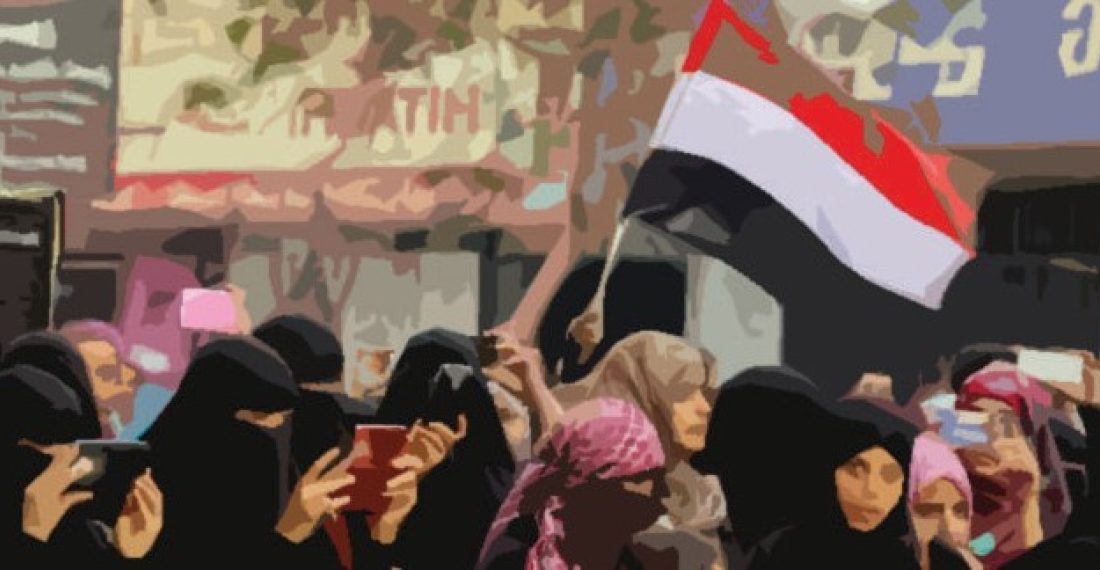
"Women can make a valuable and multifaceted contribution to the peace process in Yemen, whether it be national or local, political or societal," argues Nuha Al-Junaid in this piece for commonspace.eu. "Not only can women tackle humanitarian issues because of their personal lived experiences of war, they also have an important role in confronting violence and extremism, shaping, guiding and leading various peace and national reconciliation endeavours. The role of women in the peace building process is different but essential, and their presence is a precondition for achieving a fair, comprehensive and sustainable peace."
Women experience the tragic reality of war in Yemen in ways that are unique, multiple, and painful. They suffer from physical and psychological abuse, economic uncertainty, and increased sexual violence, as well as having to deal with the detention or death of loved ones.
They are frequently marginalised and experience considerable war-related poverty, all compounded by the fact that they were already discriminated against even in peacetime. However, the reality of being a woman in wartime Yemen can vary considerably depending on age and familial situation. Young girls, pregnant women, new mothers, mothers whose children have been killed in the conflict, or widows, all bring their different experiences of life in wartime Yemen.
Women are not only victims of war, however. They can be active members of society with tangible aspirations, interests and a vision for the future, possessing solid foundations that enable them to resolve conflicts and manage crises. Yemeni women are well-placed to build a future that is better than the present.
Women can and must play a key role in the peace building process
How women can participate in the peace building process both during and after the conflict in Yemen varies greatly because of the many different roles women play in society. Indeed, women are often considered the most important element protecting the system of family and social cohesion in wartime because of the multiple societal roles that they may occupy simultaneously.
Women already lie at the heart of small family units, and as mothers they already play a fundamental role in forming the basic building blocks of society and bringing up peaceful future generations. Alongside “traditional duties”, women in wartime Yemen also provide nursing services, shelter and supplies for the wounded and fighters, take on traditionally male duties in men’s absence, and generally save families from disintegration.
This breadth of experience that women in Yemen possess across various demographics means they are often very capable of articulating the needs of vulnerable groups who are often overlooked, such as widows, missing persons, refugees or displaced persons. Women’s potential role in peace building across numerous and varying societal demographics should therefore not be underestimated, as they have an important role to play across the various domains, initiatives and tracks in the Yemen peace process.
Track 1
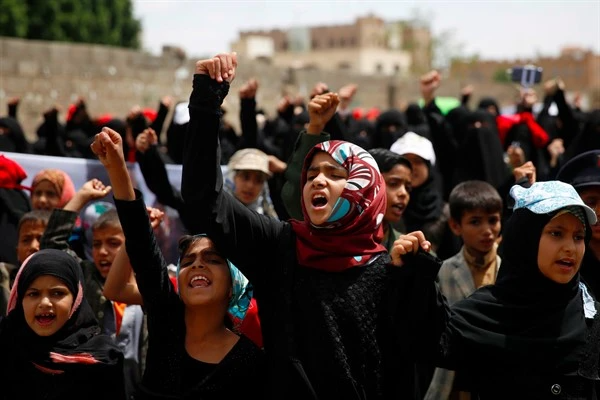
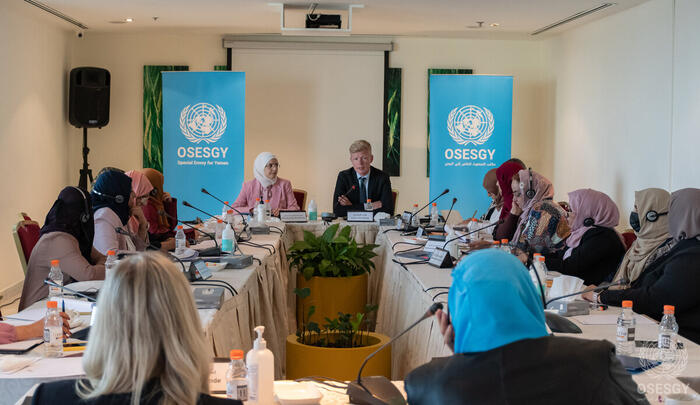
Women must participate in high-level diplomacy because any peace that comes out of the negotiating table in which women do not participate is a peace that is neither complete, comprehensive, nor sustainable.
During negotiations, drafting constitutions and implementing agreements, the conflicting parties should show their commitment to women and sensitivity to their concerns by insisting on female representation as a precondition for negotiation. This could be by involving women both in the warring parties’ delegations, or through their participation as observers or mediators who are not affiliated with any political organisation or party to the conflict. Here one should also study the participation of women in previous peace building processes in other countries experiencing conflict.
Of course, an important part of formal mechanisms is the formation, training and qualification of any committees and bodies that either take part in or result from formal negotiations between the parties to the conflict. These may include, but are not limited to de-escalation committees and disarmament committees. Women should be present here too.
The presence of women at the negotiating table would enhance their representation as a rule, obliging parties to seriously build agreements that do not overlook or impinge on women's rights and needs. Such a measure would contribute to the peace being more just, inclusive and sustainable.
Track 1.5 and Track 2
Women can also play a role in track 1.5 and track 2 initiatives. While remaining sensitive to Yemeni norms and traditions, women can get involved in initiatives and methods promoting community peace, mediation, prisoner exchange, and national or social conflict resolution. This could again be as intermediaries and advisors, but also as civil society leaders, representatives, supporters, influencers and mobilisers.
Furthermore, there can be no real peace without national reconciliation - key to building peace in any country experiencing conflict - and it is here where women have a particular role to play. There can also be no lasting, fruitful and fulfilling national reconciliation without there being transitional justice, and therefore women must also work towards consolidating national reconciliation by promoting tasks and jobs to not only achieve justice and compensation for those affected, but also to achieve lasting and positive change.
But reaching a point where women do indeed take the lead in track 1.5 and track 2 initiatives in peace building and national reconciliation will not happen spontaneously. Serious effort must be expended on actually empowering women to do so, refusing to accept them as simply passive victims of conflict. Indeed, in order to be successful any female involvement must be designed to be horizontal and inclusive, rather than vertical and authoritative.
Measures to this effect could include: presenting ideas and projects that advocate for the involvement of women in national reconciliation through conferences and workshops; building women’s capacity and equipping them with the knowledge and skills needed for their roles in regional and national reconciliation projects; and improving women’s genuine real-life access to the reconciliation decision-making processes, in cooperation with local and international organisations, and the relevant government ministries.
Concurrent to this, there ought to be a formal partnership between any reconciliation mechanism that emerges, and international women’s organisations, to support the reconciliation project and to achieve stability and societal cohesion that addresses women’s concerns too. More broadly, civil society should coordinate with the Ministries of Education and Higher Education to establish educational and cultural activities to promote the concepts of reconciliation, tolerance, and the rejection of sectarianism too.
In order for this change to be lasting, however, it is not enough to have formal processes involving women that become removed from the realities of day-to-day life. Therefore, there must be greater cooperation between civil society and the relevant state institutions in monitoring the situation of displaced women, and women and girls from ethnic and religious minorities. Information resulting from this monitoring must be properly studied, resulting in real and tangible projects that make a difference in working towards a stable and cohesive society.
Recalibrating society to include and address women’s concerns
Women's participation in negotiating the establishment of transitional justice mechanisms is a must. Policies implemented within the framework of these mechanisms must be gender-sensitive if they are to advance women’s status in society. Ensuring gender equality is essential because some transitional justice measures can affect women negatively, for example by reinforcing gender stereotypes, inappropriately dealing with issues of sexual violence, failing to integrate all groups of women, or accidentally creating new obstacles or difficulties.
As mentioned previously, women have a real role to play in the reconstruction of all economic, political, cultural and social fields in Yemen. Female representation in all these fields should be guaranteed, not only because excluding women would directly harm them, but it would also deprive the country of what women can bring to the table in the recovery and reconciliation process.
Conclusion
Women can make a valuable and multifaceted contribution to the peace process in Yemen, whether it be national or local, political or societal. Not only can women tackle humanitarian issues because of their personal lived experiences of war, they also have an important role in confronting violence and extremism, shaping, guiding and leading various peace and national reconciliation endeavours. The role of women in the peace building process is different but essential, and their presence is a precondition for achieving a fair, comprehensive and sustainable peace.