Water Reservoir sparks diplomatic tussel

The Council of Europe has debated two motions criticizing Armenian behaviour in Nagorno-Karabakh, adopting one and rejecting the other, sparking strong reactions from politicians in the region.

The first resolution, which was adopted by the council’s parliamentary assembly (PACE) in Strasbourg on Tuesday, said those who live in the regions of Azerbaijan which border Nagorno-Karabakh are deliberately deprived of water, with Armenian engaging in “environmental aggression”.

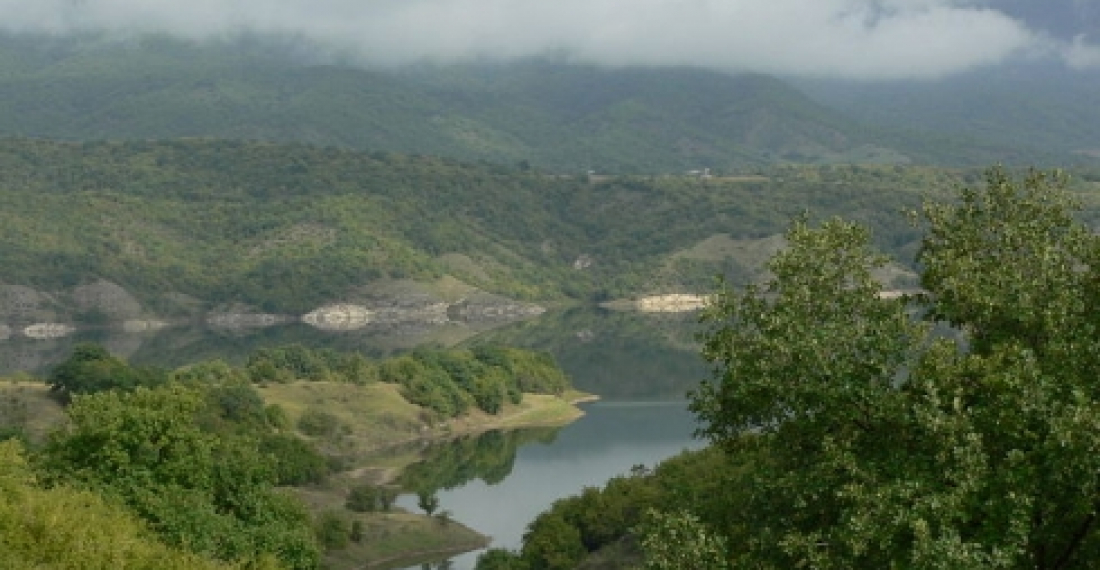
The Sarsang reservoir, located within the Nagorno-Karabakh region, has not been properly maintained since the early-1990s conflict, despite many Azerbaijanis relying on it, according to the report prepared by Milica Markovic, a Bosnian parliamentarian,

The reservoir was built in the 1970s by Soviet authorities, and became a hot button issue after control of it passed between sides following the early 1990s war between Azerbaijan and Armenia.

Its state of disrepair could lead to a “major disaster with great loss of human life”, and the humanitarian situation merits “the immediate withdrawal of Armenian armed forces from the region concerned” to allow experts to inspect the reservoir, Markovic’s motion said.

Armine Alexanyan, deputy minister of foreign affairs for the self-declared Nagorno-Karabakh Republic, said the reservoir is located in Karabakh territory which cannot be violated under international law, so inspectors cannot enter without an invitation.

Armenian defense minister Seyran Ohanyan also criticised the motion, saying Karabakhians should be allowed focus on their own security.

However Hikmat Hajiyev, spokesman for the Azerbaijani foreign ministry, said Armenian military actions in Nagorno-Karabakh and surrounding territories have created humanitarian and environmental problems for Azerbaijani citizens living in the region. He supported the PACE motion.

“The document also underlines the fact that the lack of regular maintenance work for over 20 years on the Sarsang reservoir, located in one of the areas of Azerbaijan occupied by Armenia, poses a danger to the whole border region,” he told Azernews.

Critics of the motion said Markovic did not visit the reservoir before submitting her motion, but her supporters, including Hajiyev, have said Armenian authorities cancelled a prospective trip.

A second motion, proposed by British representative Robert Walter, criticized the “escalation of violence in Nagorno-Karabakh and the other occupied territories of Azerbaijan” by Armenian troops, and called on them to leave the region. It was narrowly rejected.

Sources: commonspace.eu with armenianow.com and azernews.az.

photo: The Sarsang Reservoir (photo by Sergei Yakovlev)

Related articles

Editor's choice
News
Borrell tells the European Parliament that the situation in Afghanistan was critical, but the EU will remain engaged

Borrell tells the European Parliament that the situation in Afghanistan was critical, but the EU will remain engaged

Borrell underlined that the European Union will make every effort to support the peace process and to remain a committed partner to the Afghan people. "Of course, we will have to take into account the evolving situation, but disengagement is not an option.  We are clear on that: there is no alternative to a negotiated political settlement, through inclusive peace talks.
Editor's choice
News
Germany accuses Russia of cyberattacks and disinformation campaign

Germany accuses Russia of cyberattacks and disinformation campaign

The German government holds Russia responsible for a cyberattack on German air traffic control, and for targeted disinformation campaigns before the last federal election. According to the German Foreign Office in Berlin, the incidents could be clearly attributed to the Russian military intelligence service, the GRU. In response, the Russian ambassador to Berlin was summoned to the Foreign Ministry. "We have been observing a massive increase in threatening hybrid activities by Russia for some time now," a spokesperson for the Foreign Ministry stated. These range from disinformation campaigns and espionage to cyberattacks and sabotage attempts. The aim is to divide society, sow distrust, and undermine confidence in democratic institutions. The spokesperson added that with these actions, Russia is "very concretely threatening our security, not only through its war of aggression against Ukraine, but also here in Germany."  The Foreign Ministry spokesperson explained that the cyberattack on air traffic control in August 2024 was clearly attributed to the hacker collective "APT28," known as "Fancy Bear," and to the responsibility of the Russian military intelligence service, the GRU. Furthermore, it could now be "conclusively stated" that Russia had attempted "to influence and destabilize both the last Federal election and the ongoing internal affairs of the Federal Republic of Germany." There was "absolutely irrefutable evidence" for this". The so-called "Storm 1516" campaign, which has been running since 2024, is allegedly backed by "reliable information" that the Moscow-based think tank "Center for Geopolitical Expertise" is behind it. The Center is also said to be supported by Russian military intelligence. Its primary aim is to influence democratic elections in the West. (Click the image to read more).

Popular

Editor's choice
News
Germany accuses Russia of cyberattacks and disinformation campaign

Germany accuses Russia of cyberattacks and disinformation campaign

The German government holds Russia responsible for a cyberattack on German air traffic control, and for targeted disinformation campaigns before the last federal election. According to the German Foreign Office in Berlin, the incidents could be clearly attributed to the Russian military intelligence service, the GRU. In response, the Russian ambassador to Berlin was summoned to the Foreign Ministry. "We have been observing a massive increase in threatening hybrid activities by Russia for some time now," a spokesperson for the Foreign Ministry stated. These range from disinformation campaigns and espionage to cyberattacks and sabotage attempts. The aim is to divide society, sow distrust, and undermine confidence in democratic institutions. The spokesperson added that with these actions, Russia is "very concretely threatening our security, not only through its war of aggression against Ukraine, but also here in Germany."  The Foreign Ministry spokesperson explained that the cyberattack on air traffic control in August 2024 was clearly attributed to the hacker collective "APT28," known as "Fancy Bear," and to the responsibility of the Russian military intelligence service, the GRU. Furthermore, it could now be "conclusively stated" that Russia had attempted "to influence and destabilize both the last Federal election and the ongoing internal affairs of the Federal Republic of Germany." There was "absolutely irrefutable evidence" for this". The so-called "Storm 1516" campaign, which has been running since 2024, is allegedly backed by "reliable information" that the Moscow-based think tank "Center for Geopolitical Expertise" is behind it. The Center is also said to be supported by Russian military intelligence. Its primary aim is to influence democratic elections in the West. (Click the image to read more).