Theme

Domestic Politics

Stories related to the internal politics of states and various domestic issues. 

Editor's choice
Monday Commentary
Monday Commentary: 2025 was a momentous year for the South Caucasus

Monday Commentary: 2025 was a momentous year for the South Caucasus

The year 2025 has ended up being a momentous year for the South Caucasus, writes Dennis Sammut in his Monday Commentary. Armenia-Azerbaijan relations have been redefined, with consequences for the whole region and beyond. That huge development overshadowed key moments in the domestic trajectory of the two countries, which however have deep consequences for the two countries, and even beyond. It has also been a tumultuous year for Georgia too. The country has been gripped in a political crisis throughout 2025, with no obvious end in sight. Whatever the domestic arguments, on the international stage Georgia is today a shadow of what it used to be until recently. It not only has lost the chance of joining the European Union any time soon, but it has also lost its position as the leading South Caucasus country. Today, in the new reality of the region, it lags as a tired third. Important as 2025 was, it ended with a lot of unfinished business. So 2026 will also be crucial for the three countries. Since regaining its statehood in 1991 after the dissolution of the Soviet Union, Armenia-Azerbaijan relations have been defined by war. The two fought open wars, wars of attrition, and propaganda wars, incessantly. Tens of thousands of people lost their lives, and hundreds of thousands were displaced. Many had lost hope that the two could try the alternative – i.e. peaceful co-existence. Yet in 2025 they were proven wrong.
Editor's choice
News
Germany accuses Russia of cyberattacks and disinformation campaign

Germany accuses Russia of cyberattacks and disinformation campaign

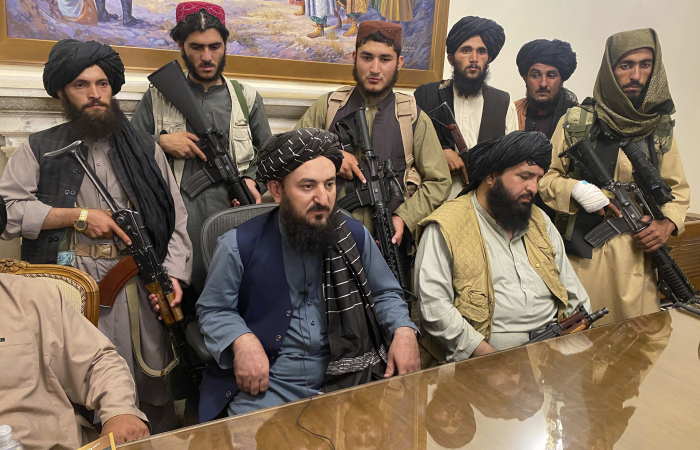
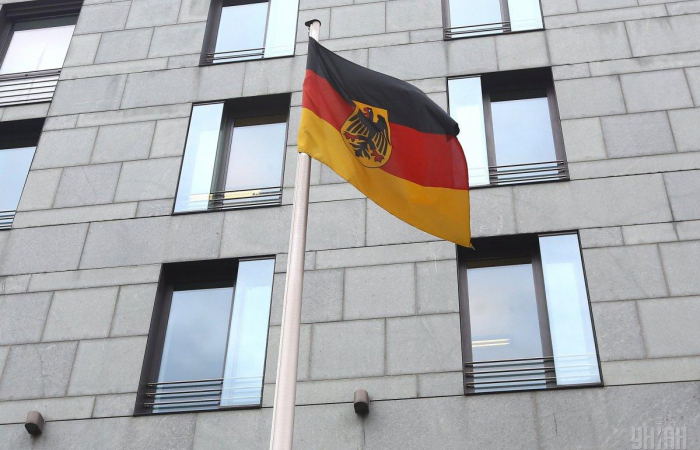
The German government holds Russia responsible for a cyberattack on German air traffic control, and for targeted disinformation campaigns before the last federal election. According to the German Foreign Office in Berlin, the incidents could be clearly attributed to the Russian military intelligence service, the GRU. In response, the Russian ambassador to Berlin was summoned to the Foreign Ministry. "We have been observing a massive increase in threatening hybrid activities by Russia for some time now," a spokesperson for the Foreign Ministry stated. These range from disinformation campaigns and espionage to cyberattacks and sabotage attempts. The aim is to divide society, sow distrust, and undermine confidence in democratic institutions. The spokesperson added that with these actions, Russia is "very concretely threatening our security, not only through its war of aggression against Ukraine, but also here in Germany."  The Foreign Ministry spokesperson explained that the cyberattack on air traffic control in August 2024 was clearly attributed to the hacker collective "APT28," known as "Fancy Bear," and to the responsibility of the Russian military intelligence service, the GRU. Furthermore, it could now be "conclusively stated" that Russia had attempted "to influence and destabilize both the last Federal election and the ongoing internal affairs of the Federal Republic of Germany." There was "absolutely irrefutable evidence" for this". The so-called "Storm 1516" campaign, which has been running since 2024, is allegedly backed by "reliable information" that the Moscow-based think tank "Center for Geopolitical Expertise" is behind it. The Center is also said to be supported by Russian military intelligence. Its primary aim is to influence democratic elections in the West. (Click the image to read more).

Filter archive

Publication date
Editor's choice
Analysis
Questions remain as to who was behind deadly protests in Uzbekistan’s Karakalpakstan region

Questions remain as to who was behind deadly protests in Uzbekistan’s Karakalpakstan region

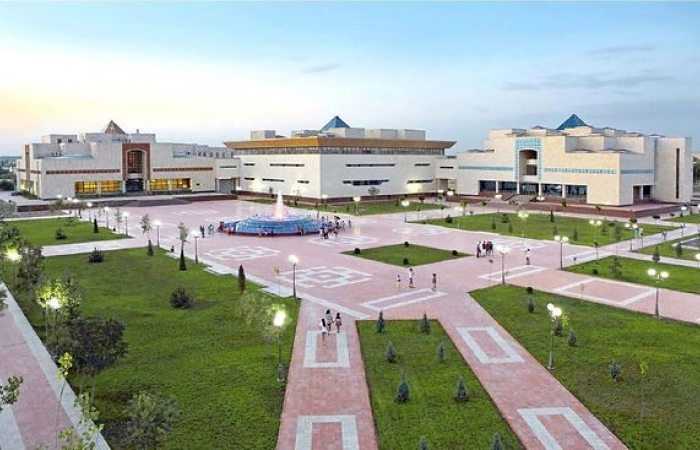
Two weeks after violent protests rocked Uzbekistan’s Karakalpakstan region, speculation continues about who was behind the turmoil that appeared to take officials in the capital, Tashkent, completely by surprise. This despite the fact that the reasons that triggered the unrest appear to be clear, namely proposed constitutional changes that promised to weaken the autonomy of the region, which occupies a territory, of 166,590 sq kms, and has a population of 1.9 million. Official reports say that 18 civilians were killed during the protests, 94 hospitalised, and hundreds more injured. The Uzbek Government has blamed unspecified foreign forces for being behind the unrest. Uzbekistan is a tightly managed country, where such unrest is by and large unheard of, and where the only country that has the potential to provoke such wide-spread disturbances is Russia, given its longstanding and deep rooted influence in Central Asia. Some Uzbek diplomats in Europe have been briefing that the disturbances were part of a planned “colour revolution”, although they did not quite explain what they meant by that. Uzbekistan is known to have been under considerable pressure from  Moscow in recent years to join Russia-led regional structures, such as the Eurasian Economic Union and the CSTO military alliance, but president Shavkat Mirziyoyev has so far resisted the pressure.
Editor's choice
News
Tens of thousands in pro European rally in Tbilisi

Tens of thousands in pro European rally in Tbilisi

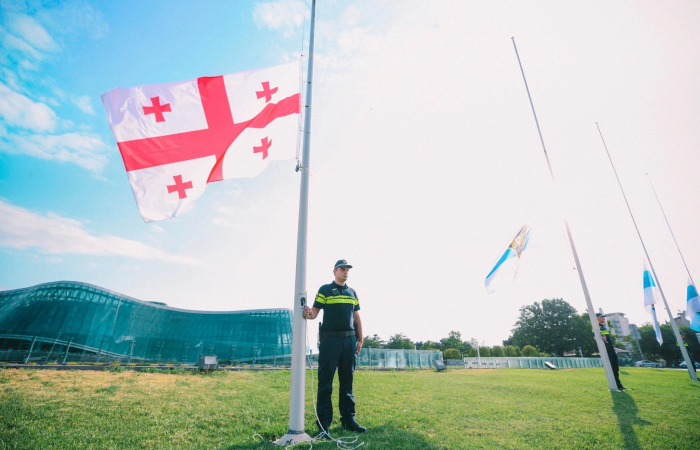
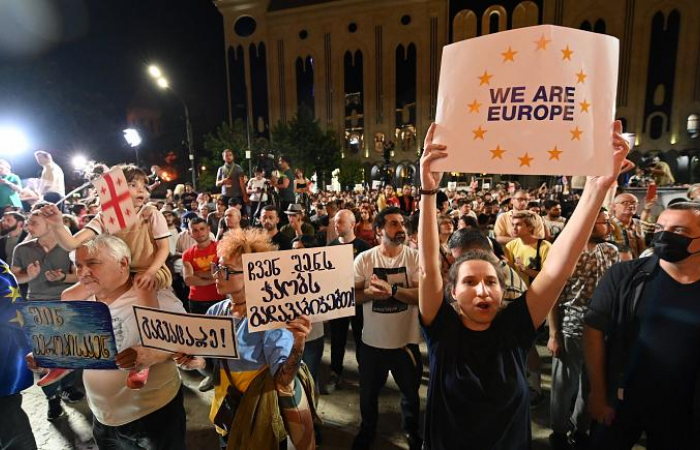
Tens of thousands of Georgians attended a pro European rally in Tbilisi on Monday (20 June) amid continuing controversy about the country's European asspirations. On Friday, the European Commission recommended to EU leaders to give Georgia a membership perspective, but stopped short of granting the country the same candidate status as it recommended for Ukraine and Moldova. The three countries, sometimes referred to as the "Trio" countries recently submitted an application for full membership of the European Union. The EU on its part has dealt with the applications with unusual speed, motivated primarily by a wish to send a positive signal to Ukraine as it continues to resist a Russian military invasion. The Commission has recommended to give candidate status to Ukraine and Moldova but stopped short of doing so as regards Georgia. "It is up to Georgia to accelerate (the reforms) and move towards this open door," commented Commission President Ursula von der Leyen. "Georgia must now come together politically to design a clear path towards structural reform and the EU,"  Commission President Ursula von der Leyen said on twitter. "So we recommend to grant Georgia the European perspective, but to come back and assess how it meets a number of conditions before granting it candidate status."
Editor's choice
News
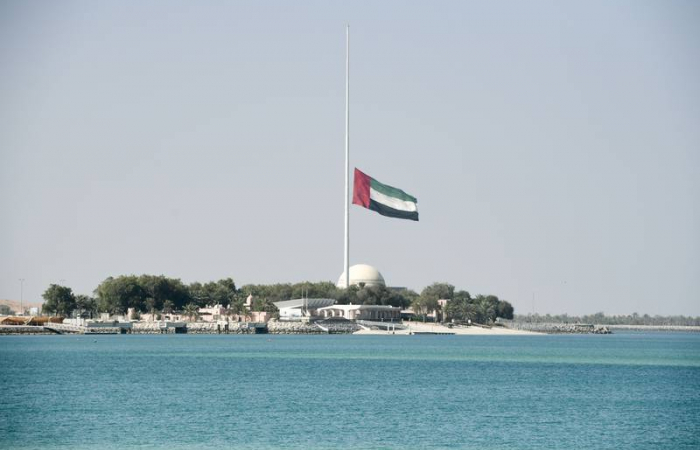
The Emirates in mourning following the death of Sheikh Khalifa

The Emirates in mourning following the death of Sheikh Khalifa

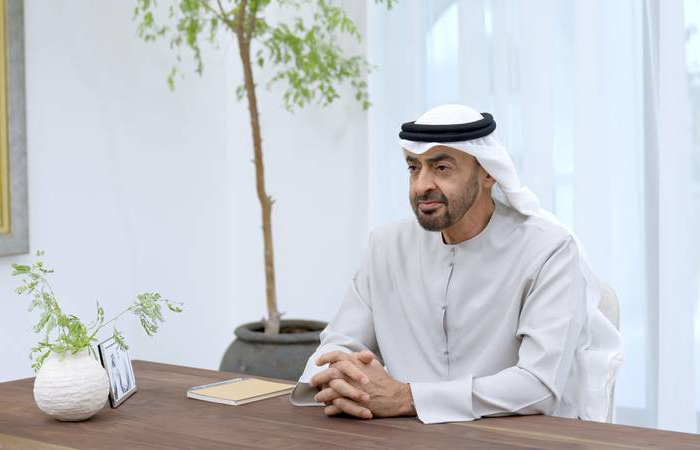
The United Arab Emirates (UAE) have started a forty days mourning period after the death was announced yesterday of the country's second president, Sheikh Khalifa bin Zayed al Nahyan. Khalifa succeeded his father as Ruler of Abu Dhabi and President of the UAE in 2004. However since 2014, following a stroke, he has played only a symbolic role in public life, with most day to day government decisions taken by his heir and brother, Crown Prince Mohammed bin Zayed. Sheikh Khalifa was laid to rest on Saturday (14 May) in the UAE capital Abu Dhabi.  The United Arab Emirates is a federation of seven emirates, each of which still have control over many internal issues. However all defence, foreign policy and security issues are decided at the federal level. The accession of Sheikh Mohammed as president is not automatic, since the rulers of the seven emirates will have to meet in the next thirty days to formally elect the new president. But tradition and real politik has it that the Ruler of Abu Dhabi, by far the richest and the strongest of the seven emirates, gets the position of President.