Theme

Domestic Politics

Stories related to the internal politics of states and various domestic issues. 

Editor's choice
News
Germany accuses Russia of cyberattacks and disinformation campaign

Germany accuses Russia of cyberattacks and disinformation campaign

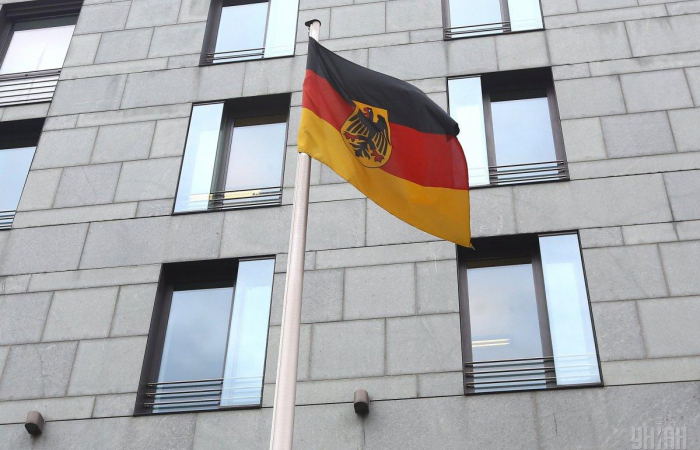
The German government holds Russia responsible for a cyberattack on German air traffic control, and for targeted disinformation campaigns before the last federal election. According to the German Foreign Office in Berlin, the incidents could be clearly attributed to the Russian military intelligence service, the GRU. In response, the Russian ambassador to Berlin was summoned to the Foreign Ministry. "We have been observing a massive increase in threatening hybrid activities by Russia for some time now," a spokesperson for the Foreign Ministry stated. These range from disinformation campaigns and espionage to cyberattacks and sabotage attempts. The aim is to divide society, sow distrust, and undermine confidence in democratic institutions. The spokesperson added that with these actions, Russia is "very concretely threatening our security, not only through its war of aggression against Ukraine, but also here in Germany."  The Foreign Ministry spokesperson explained that the cyberattack on air traffic control in August 2024 was clearly attributed to the hacker collective "APT28," known as "Fancy Bear," and to the responsibility of the Russian military intelligence service, the GRU. Furthermore, it could now be "conclusively stated" that Russia had attempted "to influence and destabilize both the last Federal election and the ongoing internal affairs of the Federal Republic of Germany." There was "absolutely irrefutable evidence" for this". The so-called "Storm 1516" campaign, which has been running since 2024, is allegedly backed by "reliable information" that the Moscow-based think tank "Center for Geopolitical Expertise" is behind it. The Center is also said to be supported by Russian military intelligence. Its primary aim is to influence democratic elections in the West. (Click the image to read more).
Filter archive

Publication date
Editor's choice
News
France, Germany and Poland face the brunt of Russian disinformation attacks

France, Germany and Poland face the brunt of Russian disinformation attacks

France, Germany, and Poland have become "permanent" targets of Russian disinformation attacks in the lead-up to the European Parliament (EU) elections this week, a senior EU official reported on Tuesday (4 June). The EU has consistently warned that Russia would intensify its disinformation campaigns as the June 6-9 vote approaches. "There are three big countries under permanent attack [from Russia]: France, Germany, and Poland," said EU Commissioner Vera Jourova, citing research by the European Digital Media Observatory, of which AFP is a part. She highlighted an increase in "more massive disinformation attacks on specific topics."
Editor's choice
News
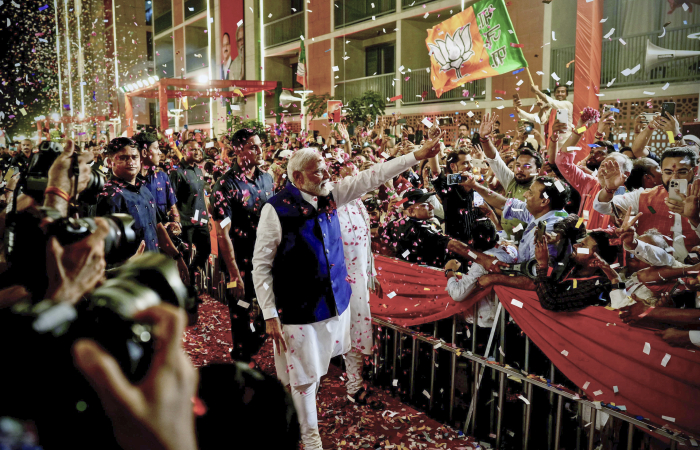
Indian Prime Minister Narendra Modi wins the general elections in India but falls short of gaining a majority in parliament

Indian Prime Minister Narendra Modi wins the general elections in India but falls short of gaining a majority in parliament

Indian Prime Minister Narendra Modi declared victory for his alliance on Wednesday (5 June) in India's general election, claiming a mandate to advance his agenda despite his party losing seats to a stronger-than-expected opposition, which challenged his mixed economic record and polarising politics. 
Editor's choice
News
UN agency UNRWA urgently suspends aid to Rafah

UN agency UNRWA urgently suspends aid to Rafah

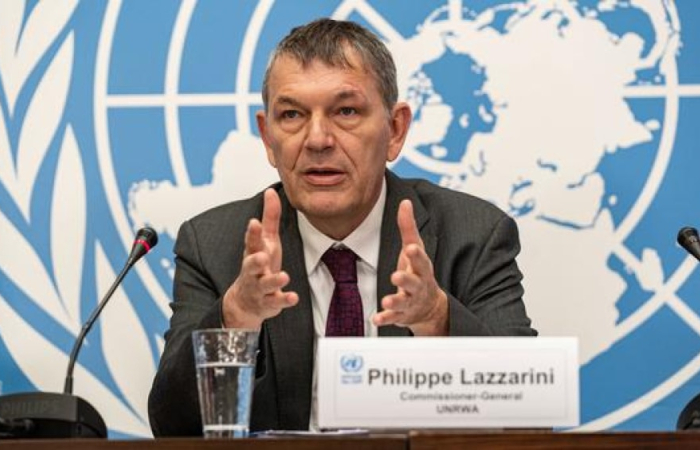
The United Nations Relief and Works Agency for Palestine Refugees in the Near East (UNRWA) has suspended its operations in Rafah. Philippe Lazzarini, the head of the organisation that provides aid to Palestinian refugees, conveyed this information on Saturday evening (1 June) via X. 
Editor's choice
Editorial
Approaching the end game for Armenia-Azerbaijan peace

Approaching the end game for Armenia-Azerbaijan peace

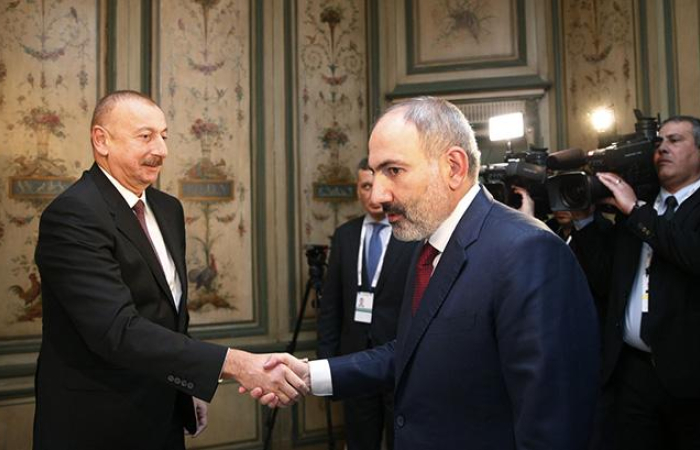
Nikol Pashinyan has taken Armenia on a long journey, and brought it close to peace with Azerbaijan. Few if any believed that he could achieve what has been done so far. It is true that Azerbaijani military superiority, the victory in 2020, and the puzzling events of September 2023, which saw the overnight collapse of the Armenian political project in Nagorno-Karabakh and the subsequent exodus of the entire Armenian population from the territory, in many ways pre-determined what is about to follow. But given the entrenched nationalist positions and hard-line narratives that have traditionally characterised Armenia’s political thinking, even these developments were not enough to guarantee peace. The last part of the journey had to be done in the minds of Armenians, and Pashinyan set about doing this with conviction and determination, challenging the narrative of a historical Armenia, that is only the imagination of the nationalist elites and advocating instead, "a real" Armenia with fixed border.
Editor's choice
Opinion
Opinion: The anatomy of the current protests in Armenia

Opinion: The anatomy of the current protests in Armenia

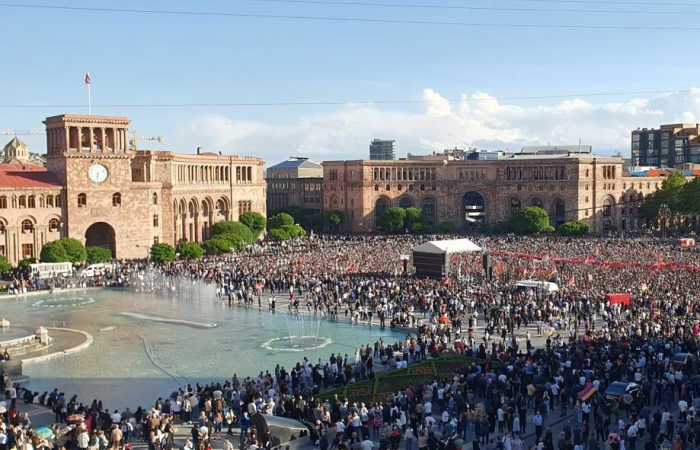
Armenia is still absorbing the implications of the protests that overwhelmed Yerevan on May 9. On April 19, 2024, the Armenian and Azerbaijani border delimitation and demarcation commissions signed the protocol on the delimitation and demarcation process in the Tavush region of Armenia. That agreement granted Azerbaijan control over a patch of territory along that border that had been officially part of Soviet Azerbaijan but controlled by Armenia since the dissolution of the Soviet Union in 1991.
Editor's choice
Opinion
Opinion: Political Uncertainty in Armenia Should Not Disrupt Azerbaijan Normalisation

Opinion: Political Uncertainty in Armenia Should Not Disrupt Azerbaijan Normalisation

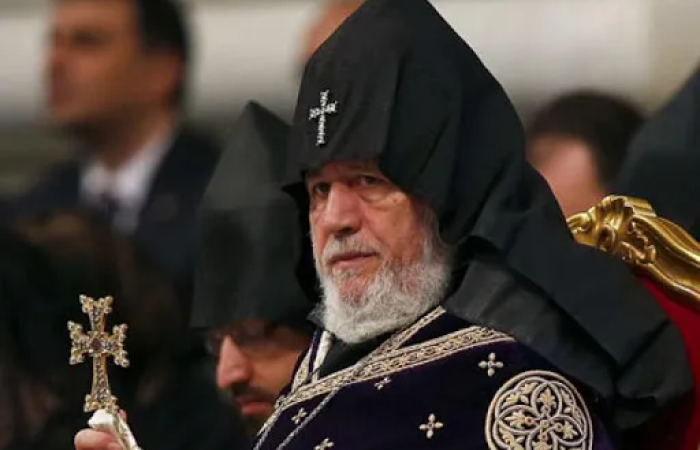
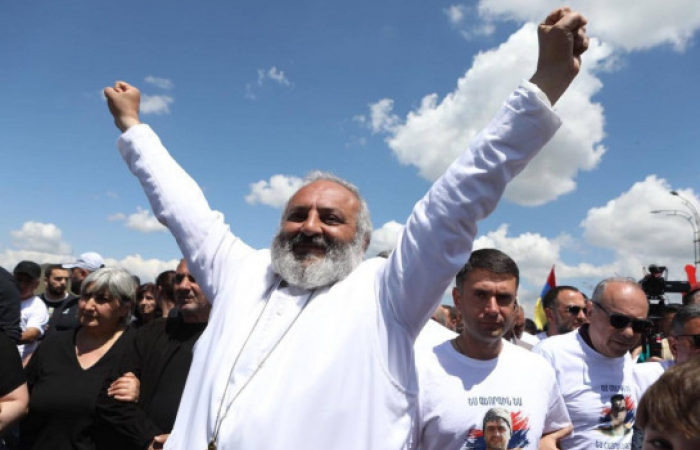
The Armenian opposition had up to now failed to come up with a leader who could unite it in its quest to overthrow Nikol Pashinyan. "That could change if a new political force led by a charismatic and populist alternative were to emerge. This month, the opposition hoped they have  such an alternative in Bagrat Galstanyan, Archbishop of the Tavush Diocese of the Armenian Apostolic Church, write Onnik Krikorian for commonspace.eu. Leading protests against the recent delimitation and demarcation of the Gazakh-Tavush section of the Armenia-Azerbaijan border, the cleric managed to rally up to 30,000 people in Yerevan’s Republic Square earlier this month, the largest public gathering since Pashinyan’s own in 2018.
Editor's choice
News
Macron travels to New Caledonia to solve the crisis on volatile territory

Macron travels to New Caledonia to solve the crisis on volatile territory

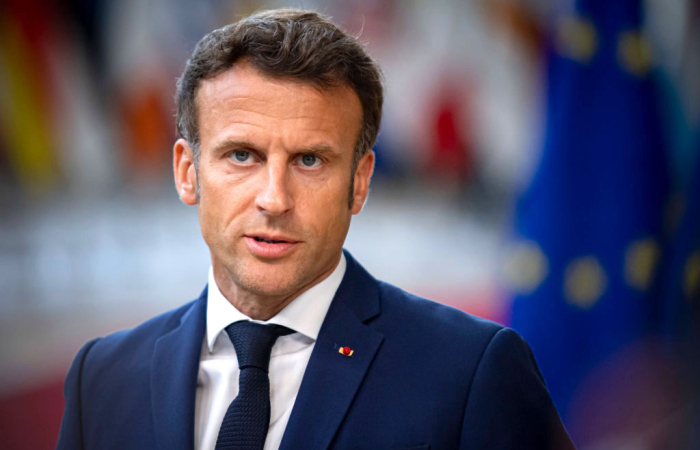
French President Emmanuel Macron embarked on a flight to New Caledonia Tuesday night (21 May) to address an ongoing crisis following a violent insurrection on the French territory. The archipelago, over 15,000 kilometres from mainland France, has become a top priority for the government after a week of violent protests left six people dead. The protests, between pro-independence supporters and French loyalists, were triggered by the French National Assembly’s vote to allow all citizens who have been living in New Caledonia for over 10 years to elect the local legislature. Voting in these elections has previously been reserved for citizens who settled in the archipelago before 1998 or their descendants. Pro-independence forces argue that expanding the electorate would further reduce the influence of the indigenous Kanak population, whose share of the population has decreased since France took control of the territory over 170 years ago. Proponents of the reform argue it is a democratic necessity, noting that current rules exclude even certain New Caledonia-born citizens from voting.