Theme

Diplomacy

Editor's choice
News
Council of Europe launches new International Claims Commission for Ukraine

Council of Europe launches new International Claims Commission for Ukraine

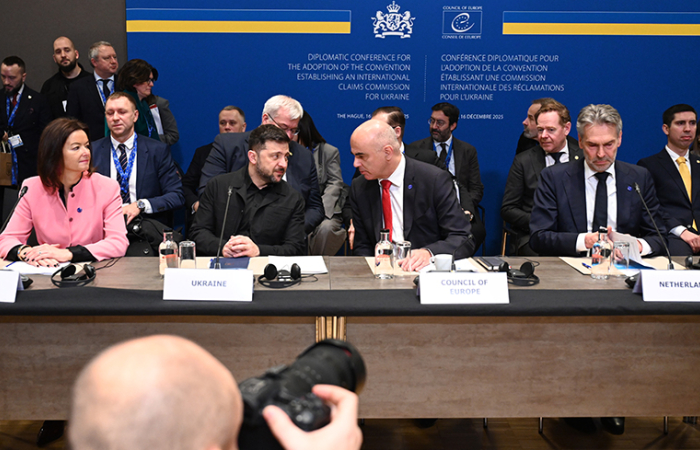
Thirty-four countries and the European Union have signed a new convention establishing an International Claims Commission for Ukraine at a diplomatic conference co-hosted by the 46-nation Council of Europe and the Netherlands in the Hague. The diplomatic conference was attended by leaders and high-level representatives from over 50 states, including the President of Ukraine, Volodymyr Zelenskyy, the President of the Republic of Moldova, Maia Sandu, and the Prime Minister of the Netherlands, Dick Schoof.  “Today marks a major step forward in ensuring accountability for Ukraine. The International Claims Commission represents justice and hope for tens of thousands of victims—our determination that those who have suffered will not be forgotten. I call for quick ratifications so we can get the commission rapidly up and running for the people of Ukraine,” said Council of Europe Secretary General Alain Berset. Ukrainian President Volodymyr Zelenskyy said: “We expect that every mechanism for compensation from the Register of Damage and Claims Commission to the actual payments – will start working and receive strong and sufficient international support, so that people can truly feel that any kind of damage caused by the war can be compensated. This war, and Russia’s responsibility for it, MUST become a clear example – so that others learn not to choose aggression.” “Accountability is about creating the conditions for peace that endures. And therefore, accountability is a condition of security – today and for the future. But accountability is not only about Ukraine. And it is not only about one aggressor and one victim. Accountability is about Europe. About every country in Europe. It is about whether Europe, as a whole, is willing to defend its peace,” said Maia Sandu, President of the Republic of Moldova, which currently holds the Presidency of the Council of Europe’s Committee of Ministers. The Prime Minister of the Netherlands, Dick Schoof, said: “Every day Russia is deliberately bombarding homes, destroying businesses and damaging infrastructure in Ukraine. Russia must compensate Ukraine for the damage caused. That is why we have launched the International Claims Commission for Ukraine and we are honoured to host it.” The International Claims Commission will be the second part of a comprehensive compensation mechanism related to Russia’s war of aggression, building on the existing Register of Damage for Ukraine. The claims commission will be established within the framework of the Council of Europe and will also be open to other countries. The Register of Damage for Ukraine, created in 2023, collects and records compensation claims submitted by individuals, organisations and public bodies in Ukraine. Forty-four states and the European Union have so far joined the Register, which has already received 86,000 claims. The International Claims Commission will review, assess and decide upon claims submitted to the Register of Damage for Ukraine and determine the amount of compensation, if any, which is due in each case. The convention establishing the commission will enter into force once it has been ratified by 25 signatories, as long as sufficient funds have been secured to support its initial work.

Filter archive

Publication date
Editor's choice
Analysis
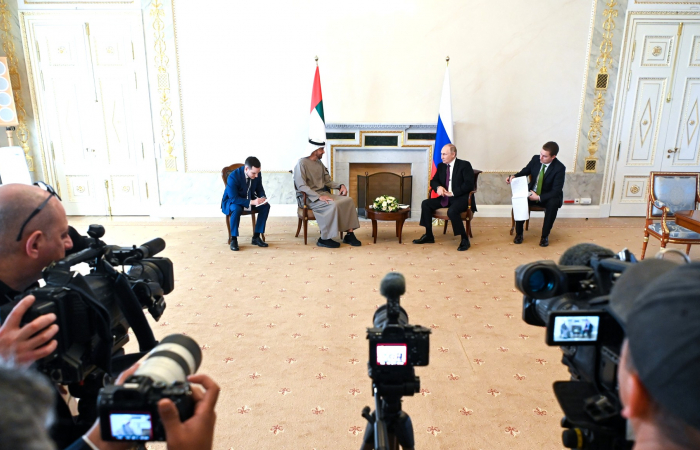
Analysis: Mohammed bin Zayed meets Putin in Moscow as Gulf states ponder the new world order

Analysis: Mohammed bin Zayed meets Putin in Moscow as Gulf states ponder the new world order

The president of the United Arab Emirates (UAE), met in Moscow on Tuesday (11 October) with president Valdimir Putin of Russia. Putin warmly greeted his UAE guest at the Kostantinovsky Palace. The visit comes as Gulf states ponder about the new world order, Even before the Russian invasion of Ukraine, the world order that had emerged at the end of the Cold War had clearly run out of steam. Russia and the West, instead of partners in the international system through membership of the G8, cooperation in space, and extensive arms control agreements, became first rivals, and, since February this year, enemies. China, whose rise over the last four decades as an economic power was first admired, has subsequently become a “systematic rival”. As it verges on superpower status it has become more assertive and less predictable. The US and its allies are seriously worried.  For the countries of the Gulf this new world order is uncharted waters. During the Cold War the Gulf was first a British lake, and later an American one. The American shield protected the Gulf states against intruders. When Iraq invaded Kuwait and occupied it in 1990, the US and its allies led the international community in a fightback, and Saddam Hussein was driven back across the border with a bloody nose. When he tried to rear his head again, the West finished him off. Then there was Iran. A huge American presence, with other allies in the wings, saw off Iranian ambitions in the region. It seemed that US-GCC relations were set in stone. Yet as the world reverted back to a multipolar state - the parameters of which are as yet undefined - it was only the naïve who thought that the GCC states will simply slide back to their old role of doing the USA's bidding in return for protection. Things in the Gulf have changed dramatically in the last six decades, and in the last decade in particular, in political terms the region is unrecognisable. In Abu Dhabi, Riyadh, Doha and elsewhere the national interest has been re-defined. 
Editor's choice
Monday Commentary
Monday Commentary: Success in Prague

Monday Commentary: Success in Prague

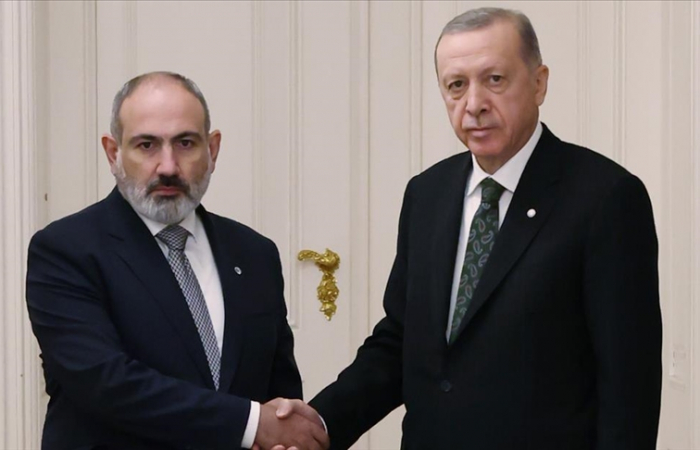
On 6 October in Prague, the leaders of 44 European countries gathered in the historic settings of Prague Castle for the first meeting of the European Political Community (EPC). Such an initiative was needed. The war in Ukraine, Russia’s bellicose postures, and the threat of an energy crisis caused by the disruption of Russian energy supplies have helped focus the minds of European leaders. Prague offered an opportunity to discuss and analyse and approximate positions. Important discussions on the margins of the main event, such as the quadripartite meeting with Armenia and Azerbaijan and the Turkey-Armenia leaders meeting, contributed to the process of resolving some of the more intractable problems of the last decades. The work of the European Political Community needs now to be taken forward. In future, the biggest task of the EPC will be to engage Russia. But not yet. For the moment the Community has done what is needed, which is to contribute to build a united front against Russian aggression in Ukraine. It must continue to do so until Russian aggression ends.
Editor's choice
News
Armenia and Azerbaijan recognise each other's territorial integrity and sovereignty

Armenia and Azerbaijan recognise each other's territorial integrity and sovereignty

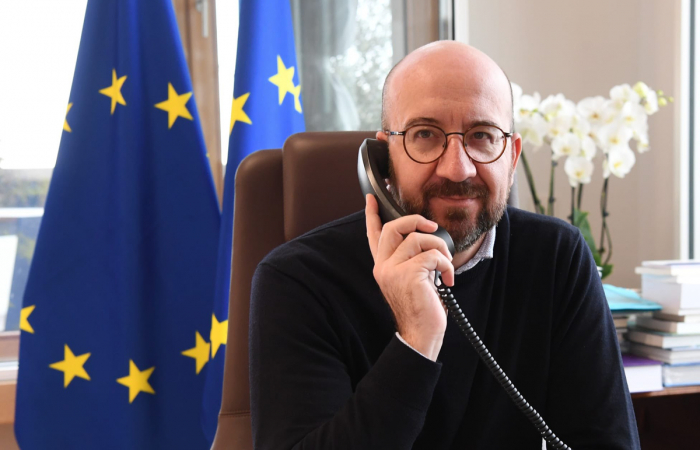
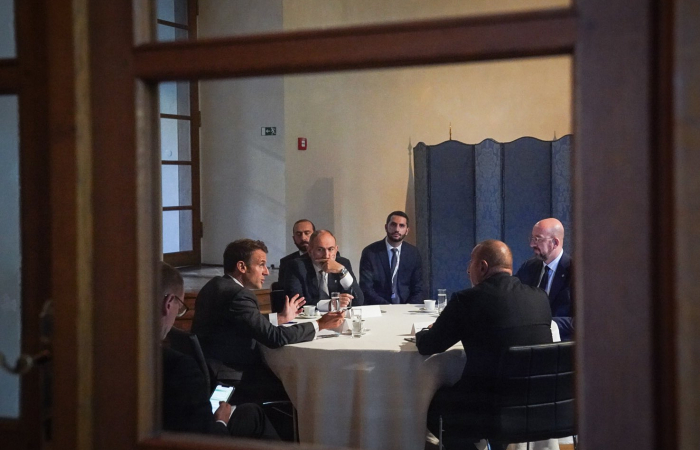
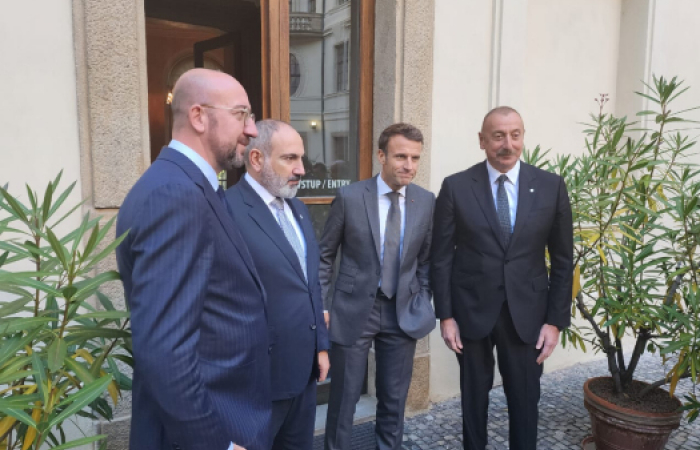
After hours of negotiations, with the mediation of European Council president Charles Michel, and French president Emanuel Macron, the leaders of Armenia and Azerbaijan , Nikol Pashinyan and Ilham Aliyev, have taken a historic step towards lasting peace. Both countries have recognised each other's territorial integrity and sovereignty, and committed to tangible steps to establish peace and stability in the region. President Macron tweeted early this morning "Tonight, Armenia and Azerbaijan confirmed their commitment to the Charter of the United Nations and the Alma Ata 1991 Declaration through which both recognize each other's territorial integrity and sovereignty." The four leaders held two long sessions of negotiations on the margins of the summit of the European Political Community which was launched at Prague Castle on Thursday afternoon (6 October). It is also understood that a number of other decisions were taken. It was agreed that the EU will deploy on the Armenian side of the Armenia-Azerbaijan border a civilian monitoring mission, for a period of two months starting from October.
Editor's choice
News
First Summit of the European Political Community opens in Prague

First Summit of the European Political Community opens in Prague

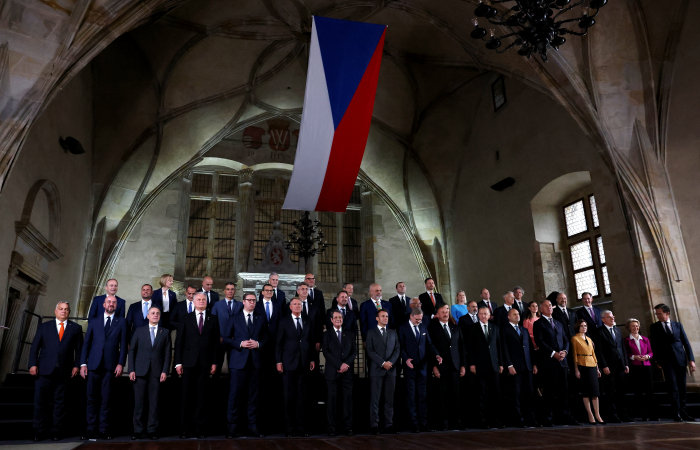
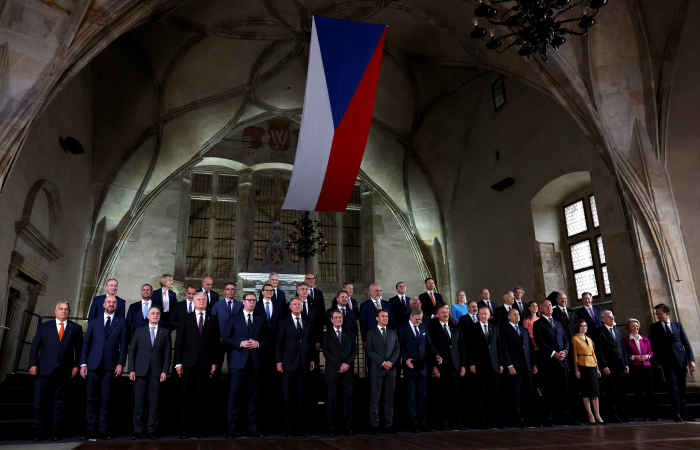
In the historic settings of Prague Castle, leaders from across Europe gathered on Thursday for the first summit of the European Political Community. Apart from the leaders of the 27 EU member states, leaders from non EU member states are also attending, including Albania, Armenia, Azerbaijan. Bosnia and Herzegovina, Georgia, Iceland, Kosovo, Liechtenstein, Moldova, Montenegro, North Macedonia, Norway, Serbia, Switzerland, Turkey, Ukraine and the United Kingdom With the dramatic consequences of Russia’s aggression war, EU leaders agreed during the European Council meeting in June 2022 to launch the European Political Community with the aim of bringing together countries on the European continent. The ambition is to bring leaders together on the European continent and to foster their cooperation on issues of common interest, revolving around peace and security, the economic situation, energy and climate, and migration and mobility. No formal written outcome of the European Political Community is envisaged. After the traditional family photo, the meeting kicked off with a round table discussion on peace and security in Europe. This story will be updated throughout the day.
Editor's choice
News
Leaders gather in Prague for first summit of European Political Community

Leaders gather in Prague for first summit of European Political Community

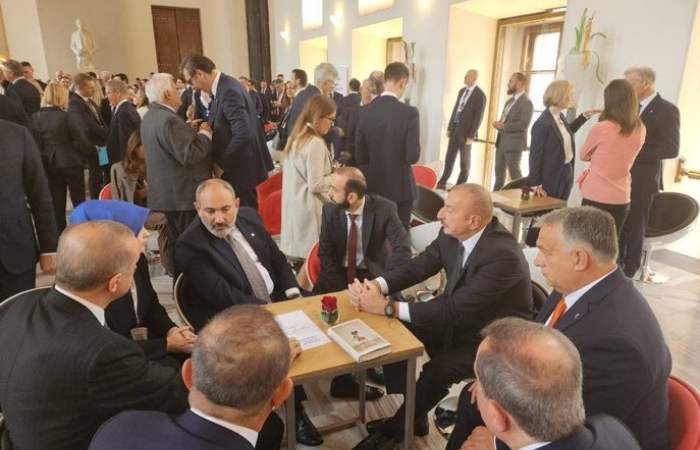
Leaders from across Europe have gathered at Prague Castle for the launch of the European Political Community. Apart from the leaders of the 27 EU member states, leaders from non EU member states are also attending, including Albania, Armenia, Azerbaijan. Bosnia and Herzegovina, Georgia, Iceland, Kosovo, Liechtenstein, Moldova, Montenegro, North Macedonia, Norway, Serbia, Switzerland, Turkey, Ukraine and the United Kingdom An unusual scene, even before the summit had started was of Armenian Prime Minister Nikol Pashinyan, Azerbaijan President Ilham Aliyev and Turkish President Recip Tayip Erdogan meeting informally before the opening of the summit. This story will be updated throughout the day.