Theme

Diplomacy

Editor's choice
News
Council of Europe launches new International Claims Commission for Ukraine

Council of Europe launches new International Claims Commission for Ukraine

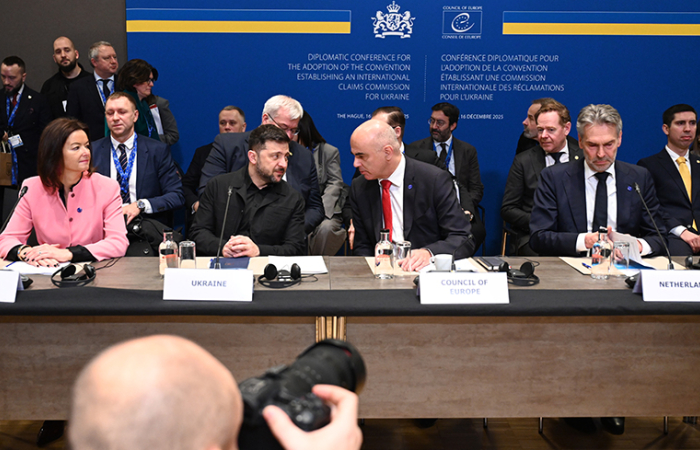
Thirty-four countries and the European Union have signed a new convention establishing an International Claims Commission for Ukraine at a diplomatic conference co-hosted by the 46-nation Council of Europe and the Netherlands in the Hague. The diplomatic conference was attended by leaders and high-level representatives from over 50 states, including the President of Ukraine, Volodymyr Zelenskyy, the President of the Republic of Moldova, Maia Sandu, and the Prime Minister of the Netherlands, Dick Schoof.  “Today marks a major step forward in ensuring accountability for Ukraine. The International Claims Commission represents justice and hope for tens of thousands of victims—our determination that those who have suffered will not be forgotten. I call for quick ratifications so we can get the commission rapidly up and running for the people of Ukraine,” said Council of Europe Secretary General Alain Berset. Ukrainian President Volodymyr Zelenskyy said: “We expect that every mechanism for compensation from the Register of Damage and Claims Commission to the actual payments – will start working and receive strong and sufficient international support, so that people can truly feel that any kind of damage caused by the war can be compensated. This war, and Russia’s responsibility for it, MUST become a clear example – so that others learn not to choose aggression.” “Accountability is about creating the conditions for peace that endures. And therefore, accountability is a condition of security – today and for the future. But accountability is not only about Ukraine. And it is not only about one aggressor and one victim. Accountability is about Europe. About every country in Europe. It is about whether Europe, as a whole, is willing to defend its peace,” said Maia Sandu, President of the Republic of Moldova, which currently holds the Presidency of the Council of Europe’s Committee of Ministers. The Prime Minister of the Netherlands, Dick Schoof, said: “Every day Russia is deliberately bombarding homes, destroying businesses and damaging infrastructure in Ukraine. Russia must compensate Ukraine for the damage caused. That is why we have launched the International Claims Commission for Ukraine and we are honoured to host it.” The International Claims Commission will be the second part of a comprehensive compensation mechanism related to Russia’s war of aggression, building on the existing Register of Damage for Ukraine. The claims commission will be established within the framework of the Council of Europe and will also be open to other countries. The Register of Damage for Ukraine, created in 2023, collects and records compensation claims submitted by individuals, organisations and public bodies in Ukraine. Forty-four states and the European Union have so far joined the Register, which has already received 86,000 claims. The International Claims Commission will review, assess and decide upon claims submitted to the Register of Damage for Ukraine and determine the amount of compensation, if any, which is due in each case. The convention establishing the commission will enter into force once it has been ratified by 25 signatories, as long as sufficient funds have been secured to support its initial work.


Filter archive

Publication date
Editor's choice
Editorial
Editorial: the surge towards peace across the Muslim Middle East is an expression of pragmatism, not heavenly inspiration

Editorial: the surge towards peace across the Muslim Middle East is an expression of pragmatism, not heavenly inspiration

Although we are in the middle of the holy month of Ramadan, and peace is in the air across the whole of the Muslim Middle East, commonspace.eu writes in this editorial that "problems are being patched up, not resolved. Many of the causes or factors that triggered the conflicts in the first place remain as acute as ever. But for the moment the region is exhausted. Visionary leaders need time and space to implement their reforms; others such as the Iranian clerical regime, need time to regroup after being rattled by internal and external turmoil. There is then the issue of the wider picture. The Gulf region has for decades been the epicentre of geopolitical rivalry, which often overspilled into violence. It appears to be now losing this unenviable role. Open warfare is ongoing on the European continent following the Russian invasion of Ukraine in February 2022. This is unlikely to end any time soon."
Editor's choice
Monday Commentary
Opinion: The claim that a multipolar world is necessarily a better one is a fallacy

Opinion: The claim that a multipolar world is necessarily a better one is a fallacy

The European and Global international system is broken. Whilst others have contributed to its decline and subversion in the past, it was Russia’s actions in Ukraine, and other parts of the former Soviet space before that, that have dealt it the decisive fatal blow."What is desperately needed in the international system are rules, and the mechanism to ensure that these rules are abided with", writes Dennis Sammut in today's Monday Commentary. "Multi-polarity may sound like an attractive solution, especially to small countries who have been under pressure from bigger players or international actors, but with closer inspection, on its own, it is not."
Editor's choice
Commentary
Commentary: is this the end of the love affair between Georgia and the United States?

Commentary: is this the end of the love affair between Georgia and the United States?

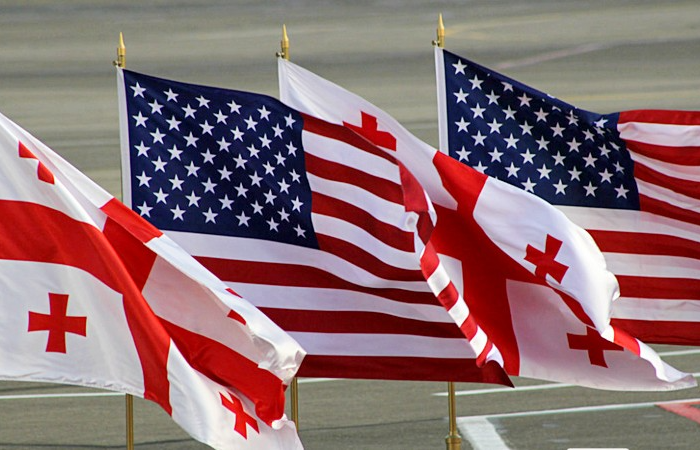
The imposition of US sanctions against four Georgian judges now makes the rift between the US and Georgian governments formal, writes commonspace.eu in this commentary. "It will have consequences, and both sides have much to lose. The GD government may decide to drift further away from the US. Given that any relations with Moscow remain, in Georgian domestic political terms, toxic, its room for manoeuvre is limited. That does not mean that most Georgians want their country to become a US client state either. But it is unlikely that Georgian nationalist sensibilities are going to be disturbed by the fact that Judge Maisuradze and company cannot travel to the US. But there are always things the GD government can do, some without too much attention in the public eye, to further erode US influence. Weakening the two pillars of US engagement with Georgia is now likely to become a GD priority."
Editor's choice
News
Finland officially joins NATO military alliance

Finland officially joins NATO military alliance

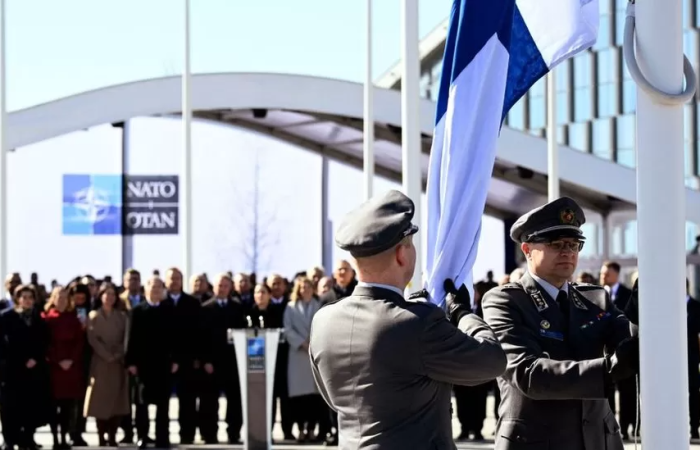
Finland has officially joined the NATO military alliance after handing over the instrument of accession in a ceremony at the NATO headquarters in Brussels on Tuesday (4 April). Finland has therefore become the 31st member of the bloc, and in doing so has doubled the length of NATO's border with Russia. Previously, the only NATO member states who shared a border with Russia were Norway, Estonia, Latvia, Lithuania and Poland. "It’s a great day for Finland and an important day for Nato,” said Finland’s president, Sauli Niinistö. "Russia tried to create a sphere around them and … we’re not a sphere. I’m sure Finns themselves feel more secure that we are living in a more stable world." The NATO Secretary General Jens Stoltenberg said, "This will make Finland safer and NATO stronger...President Putin had a declared goal of the invasion of Ukraine to get less Nato along its borders and no more membership in Europe, he's getting exactly the opposite." Finland and their nordic neighbour Sweden both abandoned decades of military non-alignment to apply for NATO after Russia launched its full-scale invasion of Ukraine in February 2022. With an active force of about 30,000, and able to call on 250,000 reserves, Finland has a well-equipped and trained armed forces.
Editor's choice
Commentary
Commentary: Yemen is where the resilience of the Iran-Saudi deal will be tested

Commentary: Yemen is where the resilience of the Iran-Saudi deal will be tested

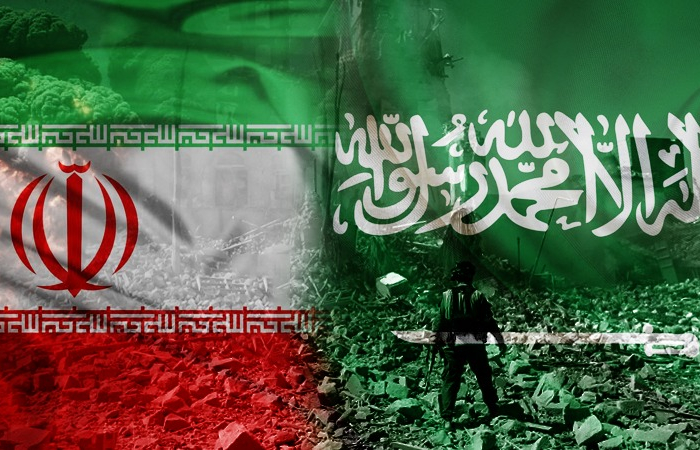
Developments in Yemen over the last days do not augur well for the 10 March Iran-Saudi Arabia normalisation deal, writes commonspace.eu in this commentary, writing that "it is in Yemen where the biggest test for the resilience of the Beijing agreement will come, sooner rather than later." On 10 March in Beijing, Iran and Saudi Arabia together with China signed an agreement that amongst other things provides for the restoration of diplomatic relations between Tehran and Riyadh. The agreement has many other provisions, and remains confidential, but it is widely understood that it contains provisions for lessening tensions in the region and taking the heat out of some hotspots where the two regional powers continue to look each other in the eye. Yemen invariably is at the top of the agenda.
Editor's choice
News
Hungarian Parliament approves Finland NATO membership

Hungarian Parliament approves Finland NATO membership

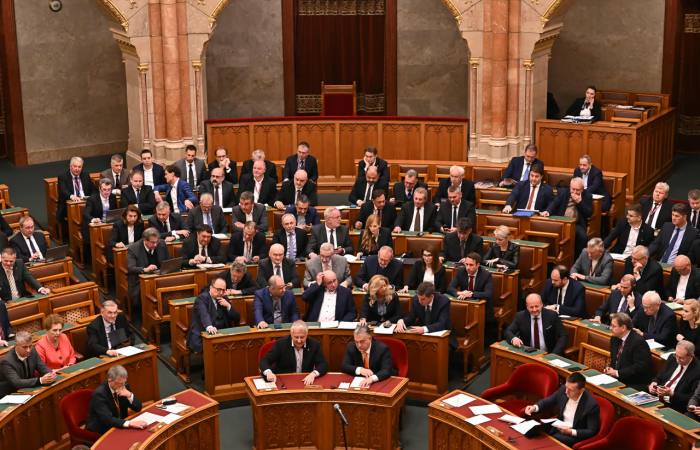
Over 10 months after Finland applied to join the NATO military alliance, the Hungarian Parliament has ratified Finland's application to the currently 30-member bloc in a vote on Monday (27 March). The vote was passed by 182 votes for and only 6 votes against. In order to become a NATO member, an applicant country must be approved by every member state individually, and following Hungary's approval yesterday only one country remains, Turkey. Turkey's approval of Finland's application to NATO is indeed expected soon as the country after the country's parliamentary committee on foreign affairs approved their application last week. A parliamentary vote on accession is expected before the country's presidential elections on 14 May. Yesterday's vote comes after months of delay in both Budapest and Ankara over Finland and Sweden's NATO membership prospects. While Hungarian officials had spent months insisting that they simply busy with other business, at the end of last month the Hungarian Prime Minister Viktor Orbán threatened to throw a spanner in the works over Finland and Sweden's history of open criticism of rule-of-law in Hungary.