Theme

Diplomacy

Editor's choice
News
Council of Europe launches new International Claims Commission for Ukraine

Council of Europe launches new International Claims Commission for Ukraine

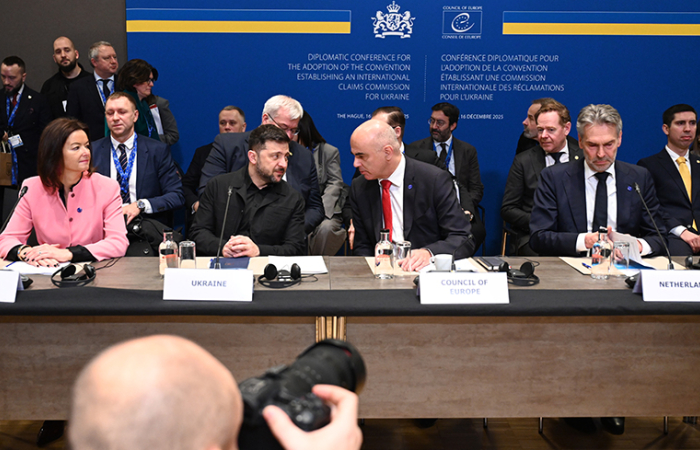
Thirty-four countries and the European Union have signed a new convention establishing an International Claims Commission for Ukraine at a diplomatic conference co-hosted by the 46-nation Council of Europe and the Netherlands in the Hague. The diplomatic conference was attended by leaders and high-level representatives from over 50 states, including the President of Ukraine, Volodymyr Zelenskyy, the President of the Republic of Moldova, Maia Sandu, and the Prime Minister of the Netherlands, Dick Schoof.  “Today marks a major step forward in ensuring accountability for Ukraine. The International Claims Commission represents justice and hope for tens of thousands of victims—our determination that those who have suffered will not be forgotten. I call for quick ratifications so we can get the commission rapidly up and running for the people of Ukraine,” said Council of Europe Secretary General Alain Berset. Ukrainian President Volodymyr Zelenskyy said: “We expect that every mechanism for compensation from the Register of Damage and Claims Commission to the actual payments – will start working and receive strong and sufficient international support, so that people can truly feel that any kind of damage caused by the war can be compensated. This war, and Russia’s responsibility for it, MUST become a clear example – so that others learn not to choose aggression.” “Accountability is about creating the conditions for peace that endures. And therefore, accountability is a condition of security – today and for the future. But accountability is not only about Ukraine. And it is not only about one aggressor and one victim. Accountability is about Europe. About every country in Europe. It is about whether Europe, as a whole, is willing to defend its peace,” said Maia Sandu, President of the Republic of Moldova, which currently holds the Presidency of the Council of Europe’s Committee of Ministers. The Prime Minister of the Netherlands, Dick Schoof, said: “Every day Russia is deliberately bombarding homes, destroying businesses and damaging infrastructure in Ukraine. Russia must compensate Ukraine for the damage caused. That is why we have launched the International Claims Commission for Ukraine and we are honoured to host it.” The International Claims Commission will be the second part of a comprehensive compensation mechanism related to Russia’s war of aggression, building on the existing Register of Damage for Ukraine. The claims commission will be established within the framework of the Council of Europe and will also be open to other countries. The Register of Damage for Ukraine, created in 2023, collects and records compensation claims submitted by individuals, organisations and public bodies in Ukraine. Forty-four states and the European Union have so far joined the Register, which has already received 86,000 claims. The International Claims Commission will review, assess and decide upon claims submitted to the Register of Damage for Ukraine and determine the amount of compensation, if any, which is due in each case. The convention establishing the commission will enter into force once it has been ratified by 25 signatories, as long as sufficient funds have been secured to support its initial work.

Filter archive

Publication date
Editor's choice
News
Garibashvili and Michel discuss Georgia EU accession in Brussels

Garibashvili and Michel discuss Georgia EU accession in Brussels

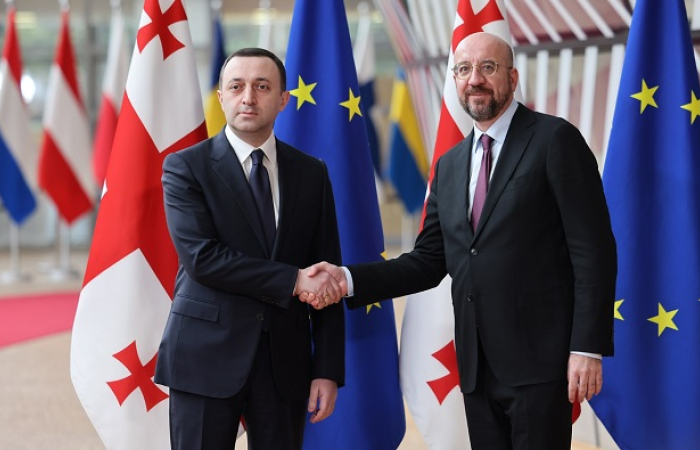
The Prime Minister of Georgia Irakli Garibashvili and the President of the European Council Charles Michel met in Brussels on Tuesday (25 April) to review Georgia's progress towards membership of the EU. According to a press release from the Georgian government, "Irakli Garibashvili briefed the President of the European Council about Georgia’s efforts toward fulfilling the European Commission’s 12 priorities and pointed out that, in this process, the authorities maintain continuous consultations with EU institutions and member states, also the Venice Commission and OSCE/ODIHR." Garibashvili also stressed the importance of granting Georgia candidate status by the end of the year because "a large portion of the recommendations has been fulfilled". The Georgian Prime Minister also argued that EU-Georgia Association Agreement, the Deep and Comprehensive Free Trade Agreement (DCFTA) with the EU, visa-free travel, and the recently granted European perspective "demonstrate Georgia’s progress toward European integration". 
Editor's choice
News
Borrell addresses European Parliament on EU-China relations

Borrell addresses European Parliament on EU-China relations

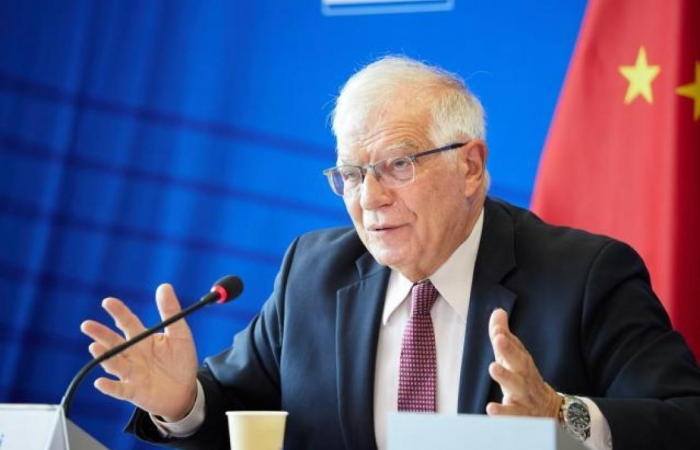
The Vice-President of the European Commission and European Union High Representative for Foreign Affairs and Security Policy Josep Borrell addressed the European Parliament on Tuesday (18 April) on "The need for a coherent strategy for EU-China Relations”. Beginning by recognising that different member states have different interests vis-a-vis China, Borrell said, "if we want to define a coherent EU strategy towards China, it is necessary for each and every EU actor to exercise their respective roles and responsibilities in accordance with, and in full respect of, the Treaties. "The main focus of his address was on integrating "economic security" into wider "national security" strategies. "This concept of ‘national security’ - ‘economic security’ - will have a determining influence on the way we conceive our foreign relations," Borrell said, adding that the EU should aim to replicate the strategies of the USA and Japan in this regard. Borrell said the four key issues in the EU's relationship with China are "values, economic security, Taiwan, and Ukraine".
Editor's choice
Editorial
Editorial: Chinese strategy in Central Asia aims to keep the west out, the Russians down, and everyone else on the margin

Editorial: Chinese strategy in Central Asia aims to keep the west out, the Russians down, and everyone else on the margin

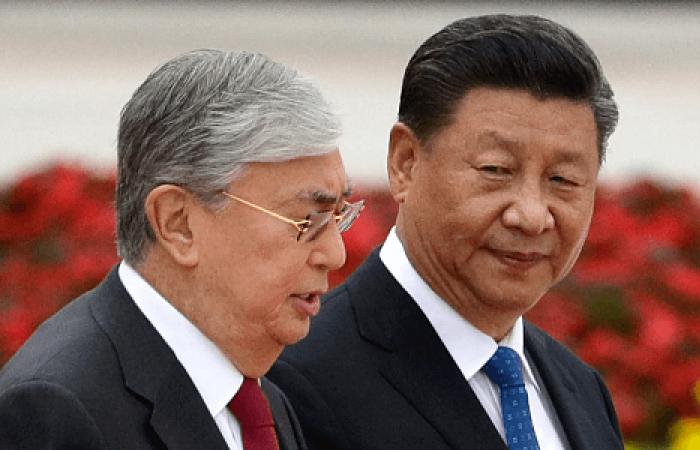
Events of the past year have unleashed a new "Great Game" in Central Asia, writes commonspace.eu in this editorial. "The plan, it seems, builds on China’s “Belt and Road” programme, but there also now appears to be a much stronger political angle to China’s engagement. China is worried that Russia’s increasing weakness is creating a vacuum in Central Asia that others may be tempted to fill. It is determined to get there first. China’s approach seems to be to keep the west out, the Russians down, and everyone else on the margin." There is little doubt that the big loser in this “great game in the new era” is Russia. But the Kremlin at this point has little choice but to try to cut its losses. It desperately needs China’s support - at least economically, politically and diplomatically, if not militarily - as it tries to sort out the mess it created for itself in Ukraine, and resist Western sanctions imposed after its invasion.
Editor's choice
News
Qatar and Bahrain agree to restore diplomatic ties

Qatar and Bahrain agree to restore diplomatic ties

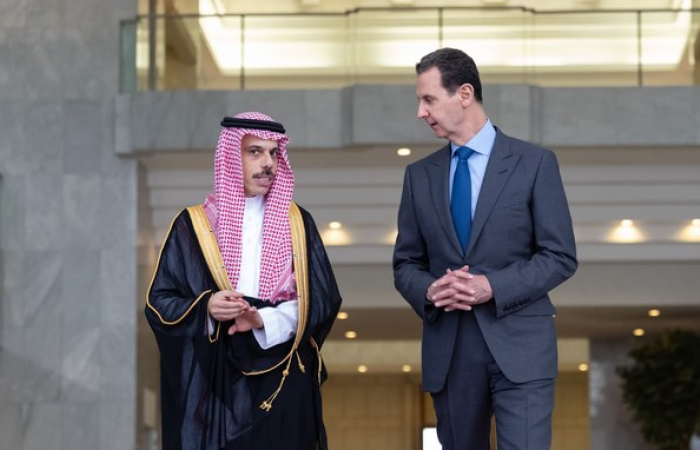
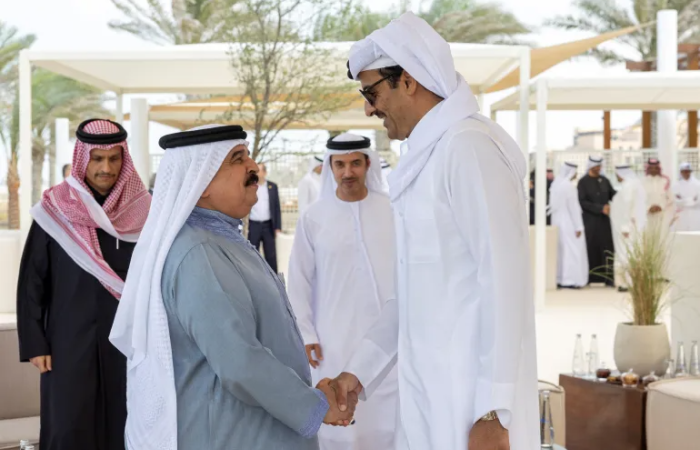
Qatar and Bahrain have announced that they have agreed on restoring diplomatic ties after a meeting on Wednesday (12 April) at the headquarters of the Gulf Cooperation Council (GCC) General Secretariat in Riyadh, Saudi Arabia. According to a statement released by the Qatari foreign ministry, both sides agreed to "enhance the Gulf unity and integration according to the GCC Charter". The agreement ends a dispute that began in 2017, when Bahrain, Saudi Arabia, the United Arab Emirates and Egypt, imposed a diplomatic blockade on Qatar alleging it had worked to support "terrorism", backed hardline groups, maintained too close ties with Iran, and had meddled in those countries' internal affairs. Doha has always firmly denied the allegations. Saudi Arabia, Bahrain, the UAE and Egypt had banned Qatari planes and ships from using their airspace and waters, as well as cutting trade links. All but Bahrain resumed these ties in 2021, however, but UAE and Qatar have not yet opened their respective embassies. The agreement between Bahrain and Qatar is the latest in a series of regional rapprochements. Most significant was the 10 March deal struck between Saudi Arabia and Iran to normalise relations between them.