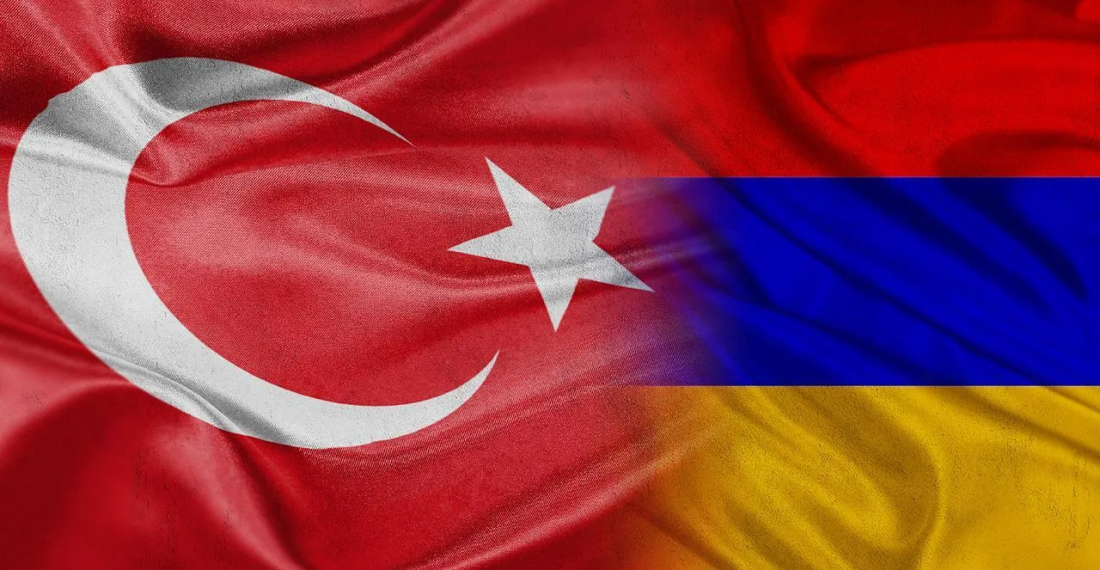
"The devastating earthquake in Turkey, and Armenia's decision to provide humanitarian assistance and send rescue teams, have however opened a new window of opportunity for revitalizing the stalled [normalization] process," writes Benyamin Poghosyan for commonspace.eu. "Turkey assessed the Armenian government's gesture positively, and the Armenian foreign minister's visit to Turkey made it possible to advance the implementation of agreements reached in 2022. And yet, "earthquake diplomacy" will not lead to short-term breakthroughs in bilateral relations."
Devastating earthquakes of 7.8 and 7.5 magnitudes struck southern Turkey on 6 February 2023. By 10 April, the death toll had passed 50,000, while the number of wounded passed 100,000. More than 12,000 buildings were destroyed, and large-scale rescue operations were underway. Besides the immense human tragedy, the earthquake had domestic and foreign policy implications for Turkey. The country faces crucial presidential and parliamentary elections scheduled for 14 May.
The authorities have been arresting owners of construction companies, chief engineers and architects whose companies were acting in the areas affected by the earthquake. Many new buildings collapsed due to the earthquake, and Turkish society raised questions about the possible disregard of construction norms and rules. Part of this criticism is directed against the country’s political leadership and President Erdogan; the ruling AKP hopes these arrests will allow them to shift the blame.
The earthquake triggered an immediate international response, as many countries dispatched rescue teams and humanitarian aid to the affected areas. Armenia, which faced horrific implications from the devastating earthquake in December 1988, decided to provide humanitarian assistance to its neighbour, even though the two countries do not have diplomatic relations.
"Earthquake diplomacy"
Prime Minister Pashinyan expressed his condolences to President Erdogan during a phone call held on 7 February; more than two dozen Armenian rescue workers arrived in Turkey the next day. In addition to dispatching a rescue team to Turkey, the Armenian government decided to send humanitarian assistance. On 11 February 2023, for the first time in the last 30 years, trucks passed the Armenia-Turkey land border via the Margara bridge. On 15 February 2023, Armenian foreign minister visited Turkey and met with his Turkish counterpart.
In late 2021, Armenia and Turkey launched a new attempt to normalize relations and appointed special envoys who held their first meeting in Moscow in January 2022. Several more meetings took place in 2022, including a meeting between Prime Minister Pashinyan and President Erdogan on 6 October 2022, in Prague. Armenia and Turkey reached several minor agreements, including the decision to open the land border for third-country citizens, which still needs to be implemented, and to launch direct cargo flights. However, no breakthrough was achieved after more than one year of negotiations.
Humanitarian assistance provided by Armenia to Turkey after the 6 February earthquake and the visit of the Armenian foreign minister to Turkey has brought the Armenia-Turkey normalization process back into the spotlight. Turkey positively assessed the steps taken by Armenia and reiterated its commitment to implement agreements reached in 2022. Meanwhile, with the Turkish political establishment focused on upcoming presidential and parliamentary elections, relations with Armenia are not currently Turkey’s priority, and any shifts in bilateral relations are only possible after the elections.
After the discussions between the special representatives, and the meeting between the Armenian and Turkish leaders in Prague, it became clear that Turkey still views normalization between Armenia and Azerbaijan as the primary condition for any breakthrough in Armenia-Turkey relations. Azerbaijan had been instrumental in derailing the 2008-2010 football diplomacy using energy transit and intervention in Turkish domestic policy. Presently, Azerbaijan has even more influence over Turkey, given its large-scale investments in the Turkish economy.
No short-term breakthroughs between Armenia and Turkey are likely
The devastating earthquake in Turkey, and Armenia's decision to provide humanitarian assistance and send rescue teams, have however opened a new window of opportunity for revitalizing the stalled process. Turkey assessed the Armenian government's gesture positively, and the Armenian foreign minister's visit to Turkey made it possible to advance the implementation of agreements reached in 2022. And yet, "earthquake diplomacy" will not lead to short-term breakthroughs in bilateral relations.
Turkey needs to deal with the aftermath of the earthquake, and handle the May 2023 elections, and thus relations with Armenia are nowhere near the top of the agenda for either the government or the opposition. However, the Armenian government's decision to supply humanitarian aid to Turkey was the right step that may create favourable conditions for the resumption of talks after the elections.
Regardless of the May 2023 election results, Turkey will continue to take into account Azerbaijan's position in negotiations with Armenia. Turkey has a South Caucasus strategy, and it is the strategy of the Turkish state, not just President Erdogan. In this context, it will be highly challenging, if not impossible, for Armenia to separate Armenia-Turkey negotiations from Armenia-Azerbaijan process.
Thus, complete normalization of bilateral relations, including the opening of the Armenia-Turkey land border and the establishment of diplomatic relations, is unlikely until Armenia and Azerbaijan reach a settlement. However, symbolic steps, such as opening borders for third-country nationals and renovating the Ani bridge, can positively affect regional security architecture and contribute to stability in the South Caucasus.