Theme

Diplomacy

Editor's choice
News
Council of Europe launches new International Claims Commission for Ukraine

Council of Europe launches new International Claims Commission for Ukraine

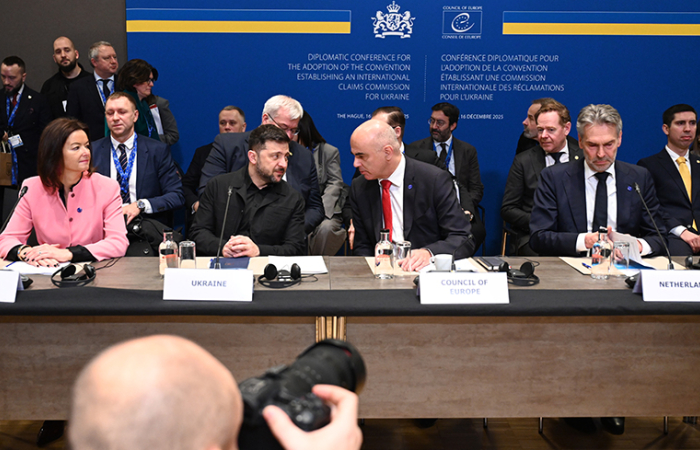
Thirty-four countries and the European Union have signed a new convention establishing an International Claims Commission for Ukraine at a diplomatic conference co-hosted by the 46-nation Council of Europe and the Netherlands in the Hague. The diplomatic conference was attended by leaders and high-level representatives from over 50 states, including the President of Ukraine, Volodymyr Zelenskyy, the President of the Republic of Moldova, Maia Sandu, and the Prime Minister of the Netherlands, Dick Schoof.  “Today marks a major step forward in ensuring accountability for Ukraine. The International Claims Commission represents justice and hope for tens of thousands of victims—our determination that those who have suffered will not be forgotten. I call for quick ratifications so we can get the commission rapidly up and running for the people of Ukraine,” said Council of Europe Secretary General Alain Berset. Ukrainian President Volodymyr Zelenskyy said: “We expect that every mechanism for compensation from the Register of Damage and Claims Commission to the actual payments – will start working and receive strong and sufficient international support, so that people can truly feel that any kind of damage caused by the war can be compensated. This war, and Russia’s responsibility for it, MUST become a clear example – so that others learn not to choose aggression.” “Accountability is about creating the conditions for peace that endures. And therefore, accountability is a condition of security – today and for the future. But accountability is not only about Ukraine. And it is not only about one aggressor and one victim. Accountability is about Europe. About every country in Europe. It is about whether Europe, as a whole, is willing to defend its peace,” said Maia Sandu, President of the Republic of Moldova, which currently holds the Presidency of the Council of Europe’s Committee of Ministers. The Prime Minister of the Netherlands, Dick Schoof, said: “Every day Russia is deliberately bombarding homes, destroying businesses and damaging infrastructure in Ukraine. Russia must compensate Ukraine for the damage caused. That is why we have launched the International Claims Commission for Ukraine and we are honoured to host it.” The International Claims Commission will be the second part of a comprehensive compensation mechanism related to Russia’s war of aggression, building on the existing Register of Damage for Ukraine. The claims commission will be established within the framework of the Council of Europe and will also be open to other countries. The Register of Damage for Ukraine, created in 2023, collects and records compensation claims submitted by individuals, organisations and public bodies in Ukraine. Forty-four states and the European Union have so far joined the Register, which has already received 86,000 claims. The International Claims Commission will review, assess and decide upon claims submitted to the Register of Damage for Ukraine and determine the amount of compensation, if any, which is due in each case. The convention establishing the commission will enter into force once it has been ratified by 25 signatories, as long as sufficient funds have been secured to support its initial work.

Filter archive

Publication date
Editor's choice
News
Chairmanship of Non-Aligned Movement passes from Azerbaijan to Uganda

Chairmanship of Non-Aligned Movement passes from Azerbaijan to Uganda

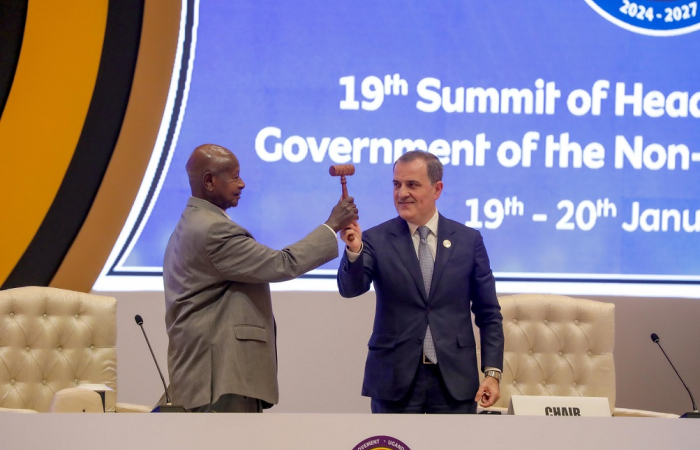
The chairmanship of the Non-Aligned Movement, a grouping of 120 countries, mainly in the global South, passed on Friday morning from Azerbaijan to Uganda. President Yoweri Museveni was elected by acclamation as the chair of the 19th NAM Heads of State and Government Summit taking over from Ilham Aliyev. Azerbaijani foreign minister, Jeyhun Bayramov, represented the outgoing president Aliyev. He congratulated Uganda and President Museveni for assuming the NAM chairmanship and promised that his country will extend all the necessary support to ensure success of the movement. “Azerbaijan chairmanship has done its best to make the voice of our members heard in all possible platforms with successful initiatives and there’s no doubt that Uganda’s chairmanship will continue with this legacy, even further building upon it,” he said. “At this historic moment, after four years of proudly chairing the movement, we are handing over the chairmanship to the Republic of Uganda with a rich substantial and institutional legacy and we are confident that Uganda will further enhance the development feasibility of the movement and strengthen unity among its member states. I would like to reiterate that our passion and determination for the success of NAM will always remain strong and we will continue to contribute to the just cause.”
Editor's choice
News
EU, AU and US say crises in Sudan and in Ethiopia-Somalia relations threaten regional stability in the Horn of Africa

EU, AU and US say crises in Sudan and in Ethiopia-Somalia relations threaten regional stability in the Horn of Africa

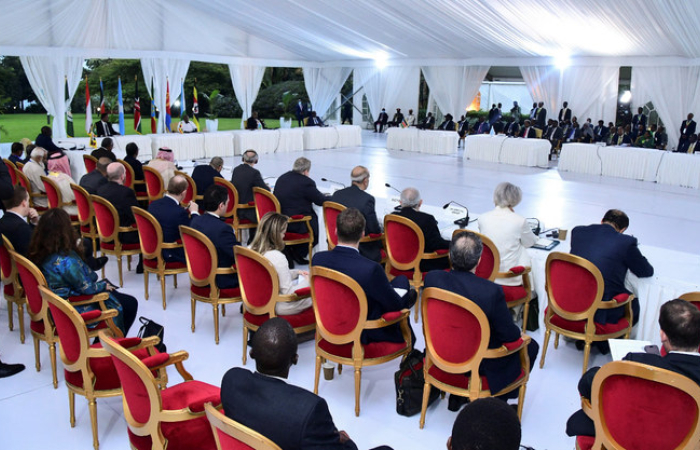
The African Union, European Union, and United States called Thursday (18 January) for an immediate cease-fire and constructive dialogue between warring factions in Sudan. They also called for an end to tension between Somalia and Ethiopia over an agreement signed between Ethiopia and Somalia’s breakaway region Somaliland. Representatives of the AU, EU and US spoke in Kampala, Uganda, after the meeting of an East African regional bloc. They said the two crises are threatening regional stability in the Horn of Africa. Annette Weber, the EU special envoy for the Horn of Africa, said the two crises have a common link with Red Sea, which she called a critical waterway carrying 10 percent of global cargo. Weber also said there needs to be a collective response among Horn of Africa countries against attacks on ships by Yemen-based Houthi rebels. Regarding Somalia, the AU, EU and US said they recognize the country’s sovereignty, unity and territorial integrity, including the breakaway region of Somaliland.
Editor's choice
Opinion
Opinion: Can BRICS be Armenia's salvation?

Opinion: Can BRICS be Armenia's salvation?

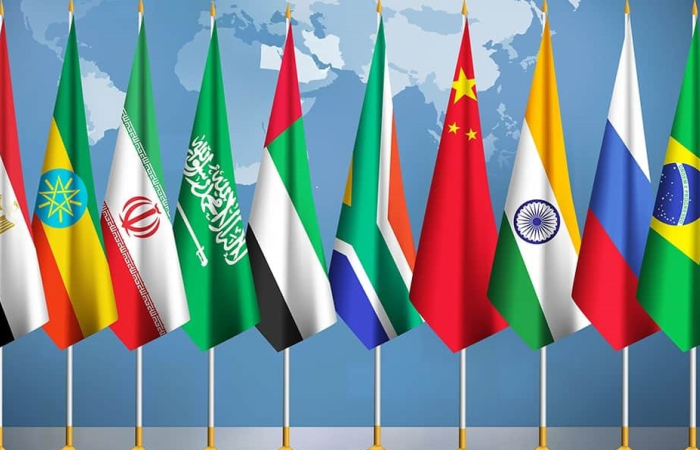
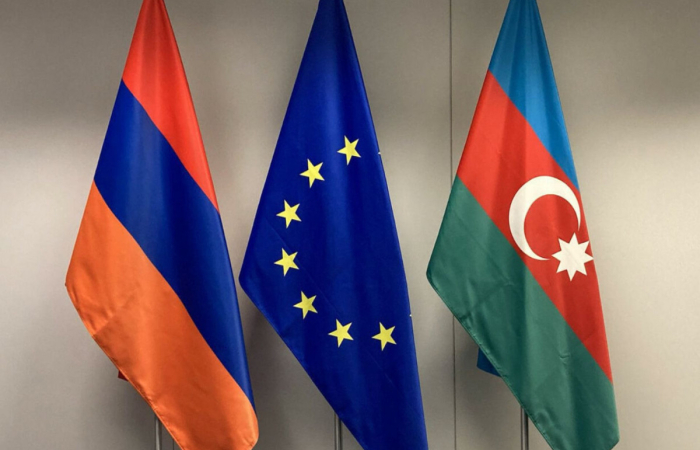
Egypt, Ethiopia, Iran, Saudi Arabia, and the United Arab Emirates have become full members of BRICS as from 1 January. Iran's membership brought BRICS to Armenia's doorstep, making Yerevan an immediate neighbour of the group. Benyamin Poghosyan in this op-ed for commonspace.eu says that given that currently, Armenia is in the painstaking process of re-assessing and re-evaluating its foreign policy. Armenia should carefully look into ways to expand its cooperation with BRICS member states: "first of all in the economic area, inviting BRICS investments into the infrastructure and other projects in Armenia. Armenia is in active discussions with Iran, India, and UAE to bring their investments into Armenia, and there is potential to have Chinese involvement through the Belt and Road Initiative. The possibility of receiving funding from the BRICS New Development Bank for various projects, which can be implemented by BRICS member companies, should be studied too."
Editor's choice
News
Commentary: encircled by war, violence and turmoil, can the six GCC countries sustain their quest for development?

Commentary: encircled by war, violence and turmoil, can the six GCC countries sustain their quest for development?

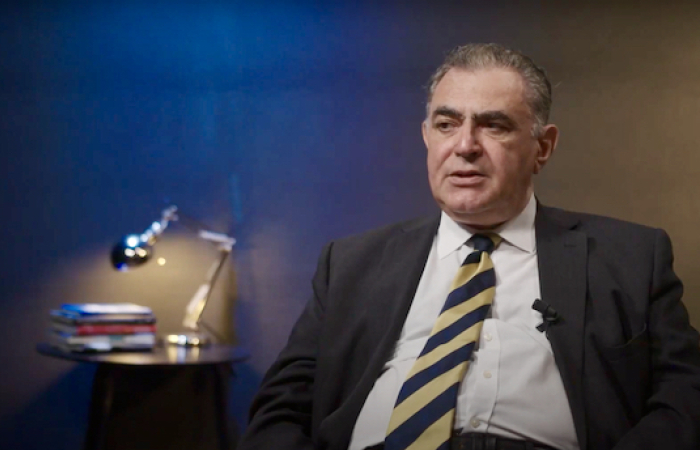
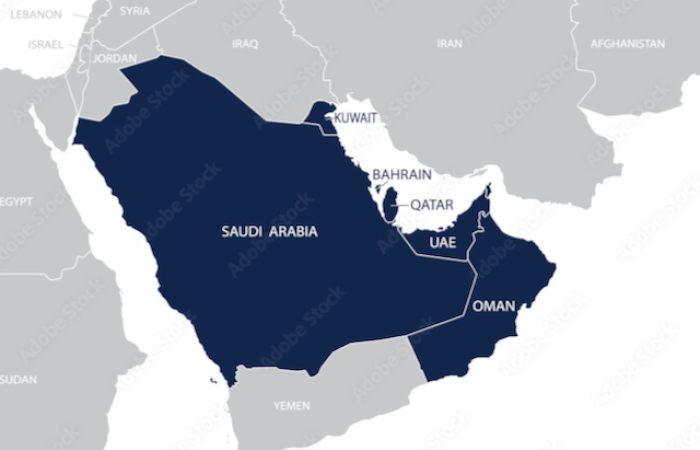
The six Gulf monarchies that form the Gulf Co-operation Council (GCC) – Bahrain, Kuwait, Oman, Qatar, Saudi Arabia and the United Arab Emirates – project themselves as islands of peace and stability regardless of their difficult neighbourhood. For some time now their main focus has been the development of their economies – this to ensure that they can maintain their prosperity as the world transits away from hydrocarbon energy resources which up to now has been their main source of income. This they need to do not least to sustain the high standard of living to which their citizens have got used to. Ambitious plans, many costing tens of billions of euros to be implemented, are now in place. Most depend on peace, stability and tranquillity for their success. These attributes are these days in short supply in the wider region in which the GCC countries sit. An unprecedented level of war, crises and turmoil encircles the six countries. In this commentary commonspace.eu Managing Editor, Dr Dennis Sammut says that questions arise if the Gulf Monarchies have what it takes – not just in financial resources, and those things these resources can buy - but also in terms of wisdom, internal cohesion and strategic depth, to weather the storms of the future. Even if they are able to navigate the geopolitics of the moment, what impact is the tension that surrounds the region having on its domestic politics? Are the grandiose economic plans still viable, or is a more modest approach going to be necessary?
Editor's choice
News
UN Security Council adopts strongly-worded resolution condemning Houthi attacks on Red Sea shipping

UN Security Council adopts strongly-worded resolution condemning Houthi attacks on Red Sea shipping

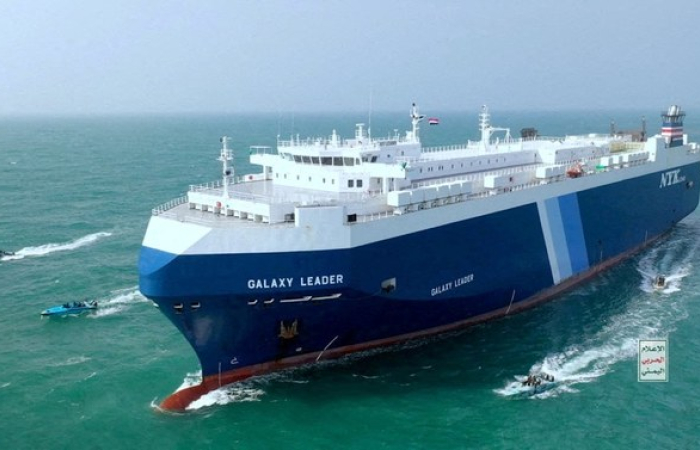
The United Nations Security Council on Wednesday evening (10 January) adopted a resolution condemning Houthi attacks against international maritime shipping in the Red Sea. The resolution condemns “in the strongest terms” multiple Houthi attacks on ships in the Red Sea over the past two months, which have raised concerns over disruptions in global trade and regional security.  The council demanded that the group immediately cease such behavior and release the Galaxy Leader, a Japan-operated cargo ship with links to an Israeli businessman, and its 25 crew members.   Authored by the US and Japan, the resolution stated that there should be respect for international law that upholds the exercise of navigational rights and freedoms by operators of merchant and commercial vessels. It also noted that member states have the right to defend their vessels from attacks.  Since mid-November 2023, the Houthi rebels have repeatedly attacked commercial vessels in the Red Sea, at last count 24 times, and threatened to continue to do so until Israel ends its war on Gaza.   The capture of the Galaxy Leader was followed by an attempt to seize another commercial ship in the Gulf of Aden on Nov. 26. There have now been almost daily, and indiscriminate, attacks in the Red Sea.  Prior to voting on the draft resolution, Council members voted on three amendments to the text that Russia had proposed, none of which were adopted. In all three votes, four members voted in favor (Algeria, China, Russia, and Sierra Leone), two members voted against (the UK and the US), and nine members abstained. The Council then voted on the Japan-US draft text, without any of the Russian amendments, which received 11 votes in favor and four abstentions (Algeria, China, Mozambique, and Russia). The draft text was adopted as resolution 2722.