Theme

Diplomacy

Editor's choice
News
Council of Europe launches new International Claims Commission for Ukraine

Council of Europe launches new International Claims Commission for Ukraine

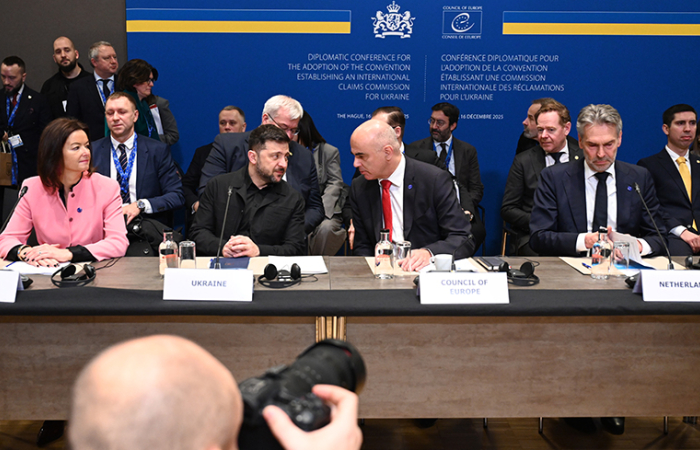
Thirty-four countries and the European Union have signed a new convention establishing an International Claims Commission for Ukraine at a diplomatic conference co-hosted by the 46-nation Council of Europe and the Netherlands in the Hague. The diplomatic conference was attended by leaders and high-level representatives from over 50 states, including the President of Ukraine, Volodymyr Zelenskyy, the President of the Republic of Moldova, Maia Sandu, and the Prime Minister of the Netherlands, Dick Schoof.  “Today marks a major step forward in ensuring accountability for Ukraine. The International Claims Commission represents justice and hope for tens of thousands of victims—our determination that those who have suffered will not be forgotten. I call for quick ratifications so we can get the commission rapidly up and running for the people of Ukraine,” said Council of Europe Secretary General Alain Berset. Ukrainian President Volodymyr Zelenskyy said: “We expect that every mechanism for compensation from the Register of Damage and Claims Commission to the actual payments – will start working and receive strong and sufficient international support, so that people can truly feel that any kind of damage caused by the war can be compensated. This war, and Russia’s responsibility for it, MUST become a clear example – so that others learn not to choose aggression.” “Accountability is about creating the conditions for peace that endures. And therefore, accountability is a condition of security – today and for the future. But accountability is not only about Ukraine. And it is not only about one aggressor and one victim. Accountability is about Europe. About every country in Europe. It is about whether Europe, as a whole, is willing to defend its peace,” said Maia Sandu, President of the Republic of Moldova, which currently holds the Presidency of the Council of Europe’s Committee of Ministers. The Prime Minister of the Netherlands, Dick Schoof, said: “Every day Russia is deliberately bombarding homes, destroying businesses and damaging infrastructure in Ukraine. Russia must compensate Ukraine for the damage caused. That is why we have launched the International Claims Commission for Ukraine and we are honoured to host it.” The International Claims Commission will be the second part of a comprehensive compensation mechanism related to Russia’s war of aggression, building on the existing Register of Damage for Ukraine. The claims commission will be established within the framework of the Council of Europe and will also be open to other countries. The Register of Damage for Ukraine, created in 2023, collects and records compensation claims submitted by individuals, organisations and public bodies in Ukraine. Forty-four states and the European Union have so far joined the Register, which has already received 86,000 claims. The International Claims Commission will review, assess and decide upon claims submitted to the Register of Damage for Ukraine and determine the amount of compensation, if any, which is due in each case. The convention establishing the commission will enter into force once it has been ratified by 25 signatories, as long as sufficient funds have been secured to support its initial work.

Filter archive

Publication date
Editor's choice
News
Rutte visits Ukraine on first working trip as NATO chief

Rutte visits Ukraine on first working trip as NATO chief

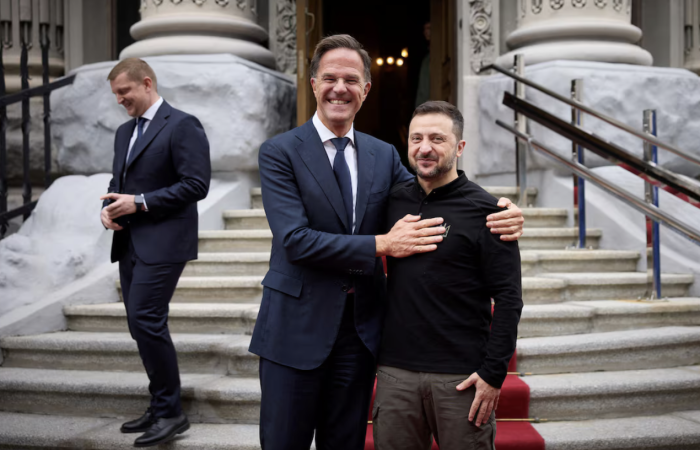
NATO's new Secretary General Mark Rutte visited Kyiv on Thursday (3 October). It is Rutte's first working trip since officially taking office earlier this week. Earlier, Rutte announced that Ukraine's NATO membership would be one of the spearheads of his policy.
Editor's choice
News
Increase in cooperation between Vietnam and Azerbaijan

Increase in cooperation between Vietnam and Azerbaijan

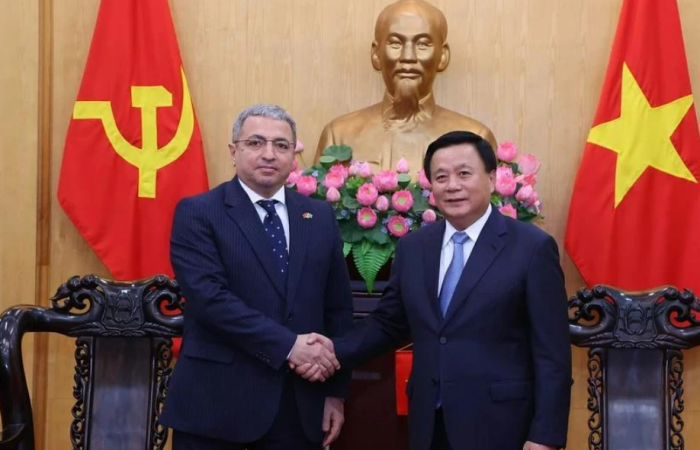
Politburo member Nguyen Xuan Thang met the Azerbaijani ambassador in Hanoi on Tuesday (1 October). Thang said that this year marks a big anniversary in the relationship between Vietnam and Azerbaijan. It is the 65th anniversary of President Ho Chi Minh's visit to Baku. Thang reaffirmed Vietnam’s commitment to strengthening its friendship and cooperation with traditional allies like Azerbaijan. 
Editor's choice
News
US to provide $20 million in security assistance to Armenia

US to provide $20 million in security assistance to Armenia

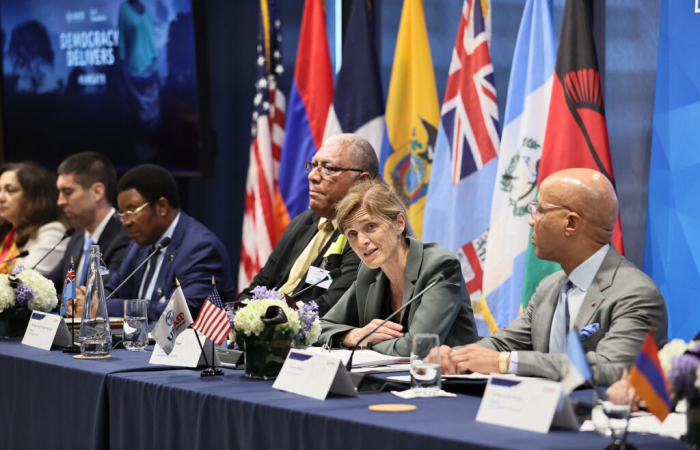
The United States has announced a $20 million aid package to strengthen Armenia's cyber, border and energy security, USAID Administrator Samantha Power announced at a Democracy Delivers Initiative event in New York. The event, co-hosted by US Secretary of State Antony Blinken, was attended by Armenian Prime Minister Nikol Pashinyan.
Editor's choice
News
UN General Assembly - 79th session in New York

UN General Assembly - 79th session in New York

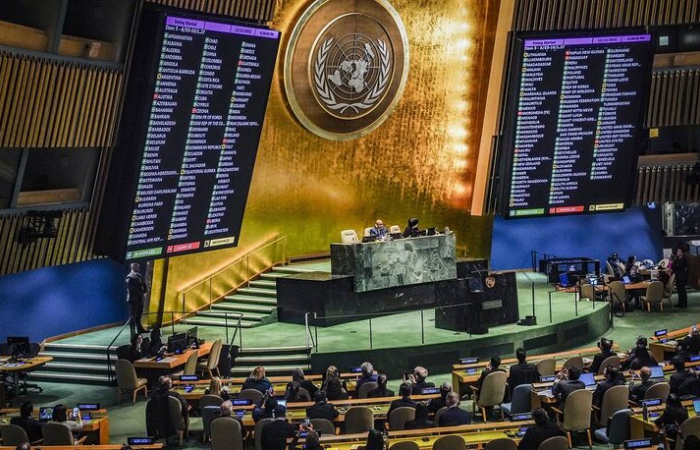
The UN General Assembly has begun its 79th session in New York. World leaders gathered to underline their goals, although many voices against the UN structure could not be overheard. Amid ongoing conflicts in Gaza, Ukraine, Sudan and most recently Lebanon, the session focused largely on the UN's ineffectiveness in its primary role - peacekeeping.
Editor's choice
News
China's commerce minister claims new EU tariffs on electric cars will hurt trade

China's commerce minister claims new EU tariffs on electric cars will hurt trade

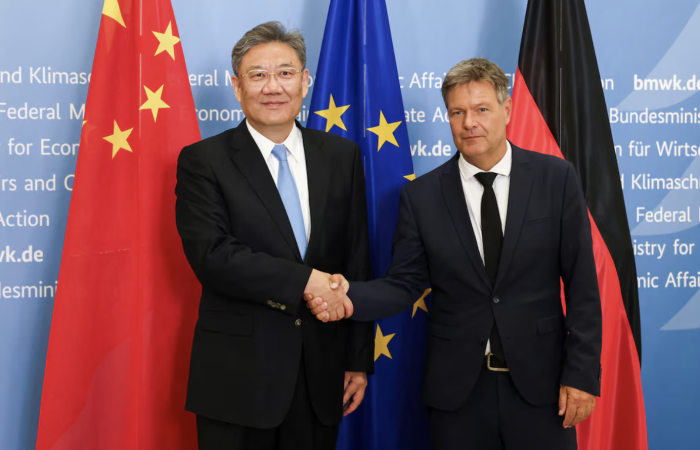
China's Commerce Minister Wang Wentao has expressed concern that the European Union's decision to impose tariffs on electric vehicles (EVs) will "seriously hamper" trade and investment cooperation and negatively affect both China and Germany. During talks with German Vice-Chancellor and Economics Minister Robert Habeck on Tuesday (17 September), Wang stressed the importance of finding a solution in line with World Trade Organization rules to avoid escalating trade tensions between China and the EU. The European Commission is considering final tariffs of up to 35.3% on Chinese-made electric vehicles, on top of the standard 10% import duty on cars.
Editor's choice
Opinion
External interventions undermine Armenia-Azerbaijan peace process

External interventions undermine Armenia-Azerbaijan peace process

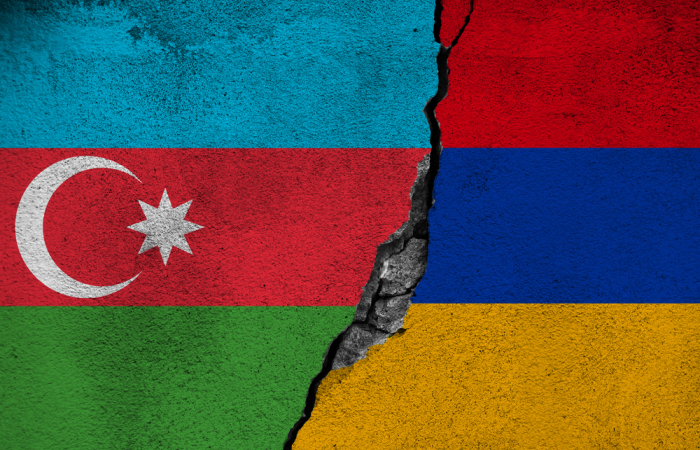
The conflict between Armenia and Azerbaijan, two republics in the South Caucasus, has never been solely about their bilateral relations. Regional and distant powers have long sought to influence the conflict, pursuing their own strategic interests. This dynamic persisted even after the Second Karabakh War (27 September – 10 November 2020), which ended the core dispute between Armenia and Azerbaijan by bringing an end to the occupation of Azerbaijan’s Karabakh region. As the fourth anniversary of the war’s onset – also known as the 44-Day War – approaches, Baku and Yerevan continue to struggle with the peace process. Meanwhile, the most significant post-war initiative, the reopening of regional transportation and communication links, is facing increasing complications. Today, the often destructive involvement of external powers has become a major obstacle to the normalisation of Armenia-Azerbaijan relations and the implementation of regional transport projects.
Editor's choice
Opinion
Armenia–Azerbaijan normalisation is unlikely without solving humanitarian issues

Armenia–Azerbaijan normalisation is unlikely without solving humanitarian issues

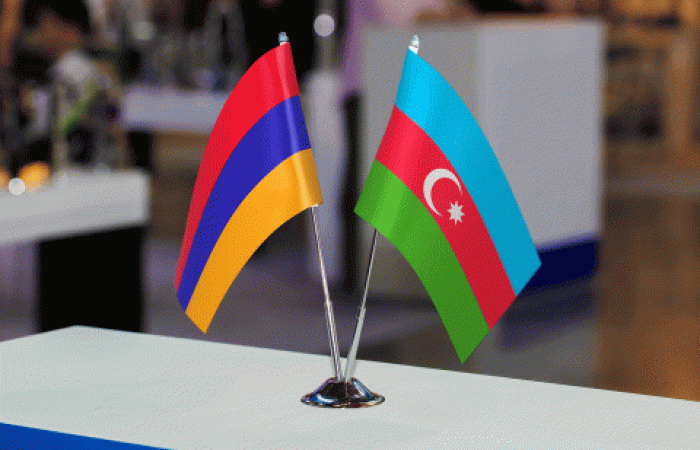
Since the 2020 Nagorno-Karabakh War, negotiations between Armenia and Azerbaijan have gone through a series of ups and downs that often resemble a rollercoaster. Periods of heightened optimism have been followed by abrupt breaks in talks, as seen in late 2022 and 2023. After Armenia and Azerbaijan signed a joint statement in December 2023, early 2024 brought renewed hope to the process. In March-April 2024, Yerevan accepted Azerbaijani demands concerning four villages along the northern part of their shared border. Azerbaijan announced its intention to make the COP29 United Nations Climate Summit in Azerbaijan in November 2024 a “COP of peace,” fostering a growing belief that an agreement might be reached by that date. However, the new or reinforced sine qua non-preconditions by President Aliyev—such as amendments to the Armenian constitution and the dissolution of the Organization for Security and Cooperation in Europe (OSCE) Minsk Group established to seek a peaceful solution to the Nagorno-Karabakh conflict—have significantly dampened expectations that even a framework agreement outlining basic principles could be signed by the end of 2024.